
Blanching and shocking are essential techniques to help you preserve vegetables’ color, texture, and nutrients. First, you briefly boil the vegetables in water or steam to stop enzyme activity and set their color. Then, immediately immerse them in ice water to halt the cooking process, locking in freshness and crunch. Done correctly, these methods boost shelf life and quality. Keep exploring to discover tips on perfecting these steps for the best results.

Get kitchen staples and gadgets delivered free — and shop member deals
- Fast, free delivery on millions of items
- Access to Prime Big Deal Days deals on October 6–7
- Prime Video, Amazon Music and more included
Key Takeaways
- Blanching involves briefly boiling vegetables to set color and texture, while shocking rapidly cools them to halt cooking.
- Immediate immersion in ice water after blanching preserves vibrant color, crispness, and nutrients.
- Proper timing during blanching prevents nutrient loss, especially of water-soluble vitamins like C and B vitamins.
- The combined process enhances shelf life, flavor, and appearance of vegetables for freezing or further use.
- Overblanching can damage texture and reduce nutritional quality; precise timing is essential for optimal results.
Have you ever wondered how different cooking techniques can transform simple ingredients into flavorful dishes? One technique that often gets overlooked but is incredibly effective is blanching and shocking vegetables. These methods are essential tools in vegetable preservation, helping you maintain the quality and flavor of your produce long after harvest. When done correctly, blanching and shocking can substantially improve nutrient retention, ensuring that your vegetables retain their vitamins, minerals, and vibrant color.
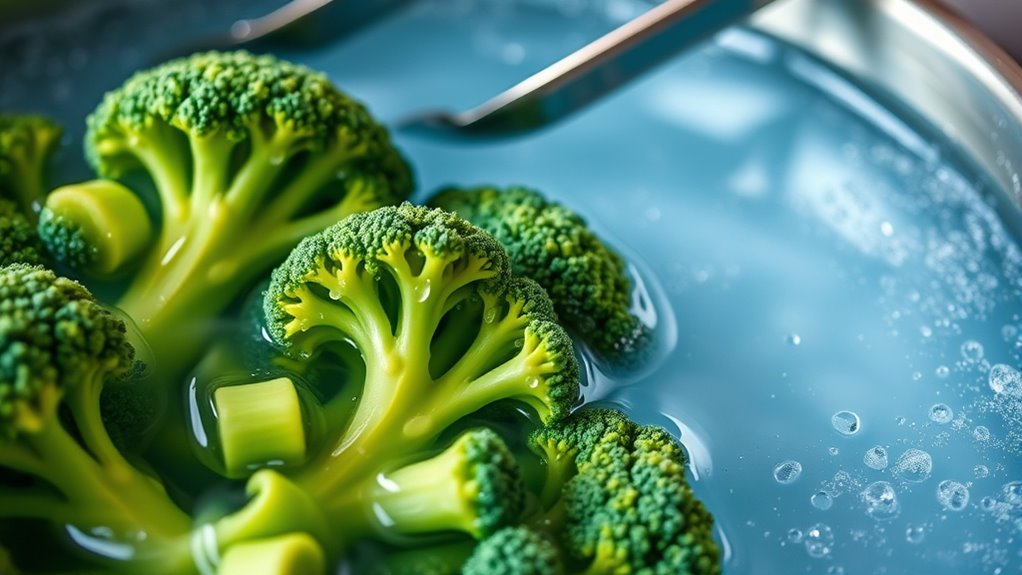
Blanching involves briefly boiling vegetables in water or steam, which helps to set their color, improve texture, and kill surface bacteria. It’s a quick process—usually just a few minutes—yet it packs a punch in terms of preserving freshness. The key here is timing. Overblanching can lead to nutrient loss, especially water-soluble vitamins like vitamin C and B vitamins, so it’s important to keep a close eye on the clock. You want to stop the cooking process the moment the vegetables are tender but still retain their bright hue and crunch. This precision ensures you’re not sacrificing nutrients or flavor unnecessarily.
Blanch quickly to preserve color, texture, and nutrients without overcooking.
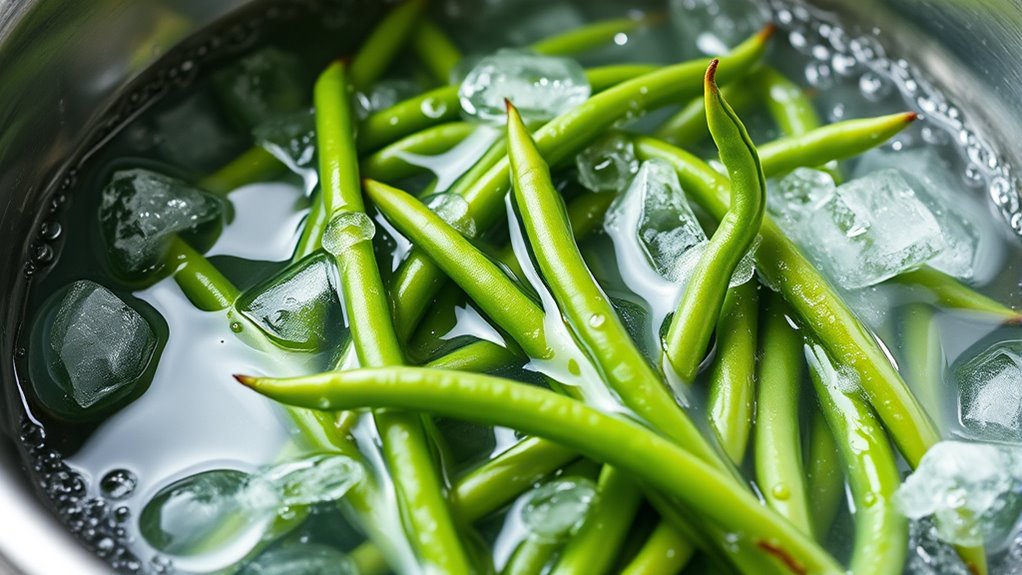
Once the vegetables have been blanched, the shocking step comes into play. You immediately submerge them into ice water or an ice bath. This rapid cooling halts the cooking process instantly, locking in the vegetables’ color, texture, and nutritional content. The shock of cold water prevents overcooking, which can cause nutrient degradation and mushiness. It also helps to preserve the vegetable’s vibrant appearance, making your dishes more appealing. Plus, shocking makes handling easier—your vegetables won’t be slippery or overly soft, so they’re ready for freezing, further cooking, or serving.
This combination of blanching and shocking is especially valuable if you’re planning to store vegetables for later use. Freezing vegetables after this process helps preserve their flavor, texture, and nutrients over time. Proper vegetable preservation means you’re not just freezing produce; you’re locking in nutrients and maintaining the quality of your ingredients. When you take the time to do it right, you’ll notice the difference in your final dishes—more vibrant, flavorful, and nutritious.
vegetable blanching and shocking set
As an affiliate, we earn on qualifying purchases.
As an affiliate, we earn on qualifying purchases.
Frequently Asked Questions
How Do I Tell When Vegetables Are Perfectly Blanched?
You’ll know vegetables are perfectly blanched when they turn vibrant in color and become tender yet still crisp. Keep an eye on their texture; they should feel firm but not raw. Remove them from the boiling water and plunge into ice water immediately—this shocks the vegetables, stopping the cooking process and helping preserve their color and texture. Timing is key, usually around 30 seconds to a few minutes, depending on the vegetable.
Can I Reuse the Boiling Water for Blanching?
Yes, you can reuse the boiling water for blanching, but keep in mind that water reuse may affect flavor preservation. As you reuse it, the water can lose some of its heat and starch, which might slightly reduce its effectiveness. To maintain ideal results, consider replenishing the water if it cools too much or becomes cloudy. Reusing water saves time and resources while still effectively blanching vegetables.
What Are Common Mistakes to Avoid During Blanching?
You should avoid overcooking vegetables during blanching, as it can lead to soggy, mushy results. Make sure to keep the water at a rolling boil and time it precisely to prevent uneven blanching. Also, don’t forget to immediately shock the vegetables in ice water after blanching to stop the cooking process. Reusing boiling water can cause uneven blanching and affect the final texture, so consider using fresh water if needed.
How Long Can I Store Blanched Vegetables?
You can store blanched vegetables for about 8-12 months if you’re serious about freezer feng shui. Keep them in airtight containers or freezer bags, squeezing out excess air like a stressed chef. For the best texture and flavor, follow proper freezing tips, like labeling with dates and avoiding freezer burn. Remember, even frozen veggies have a shelf life—so don’t let that bag sit forever, or you’ll regret it!
Is Blanching Necessary for All Types of Vegetables?
Blanching isn’t necessary for all vegetables, but it offers key benefits. It helps preserve vegetable textures, stops enzyme actions that cause spoilage, and enhances color and flavor. If you’re planning to freeze vegetables, blanching is highly recommended to retain quality. For immediate consumption, you can skip it, especially with softer or already cooked vegetables. Consider each vegetable’s characteristics and your storage plans when deciding whether to blanch.
Conclusion
Now that you know how to blanch and shock vegetables like a pro, you’re ready to elevate your cooking game. Remember, these techniques help preserve flavor, color, and texture—making your dishes restaurant-worthy. So next time you’re cooking, channel your inner Julia Child and impress your friends with perfectly cooked greens. It’s almost like having a secret recipe from the original MasterChef himself. Happy cooking!
Halloween Picks
halloween
As an affiliate, we earn on qualifying purchases.