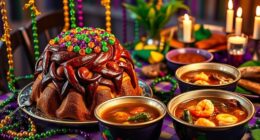
Jamaican Black Cake, also known as Rum Fruitcake, is a rich, moist treat deeply rooted in Caribbean celebrations. You soak dried fruits in rum or alternatives for weeks to develop its signature fruity flavor and dark color. The cake symbolizes joy and togetherness during holidays, weddings, and special occasions. Its dense crumb and deep flavors have been passed down through generations. If you keep exploring, you’ll discover more about its cultural significance and how to customize it to your taste.
Key Takeaways
- Jamaican Black Cake is a traditional Caribbean fruitcake made with dried fruits soaked in rum.
- It features a dense, moist texture with deep, rich flavors enhanced by caramelization.
- The cake symbolizes festive celebrations, family bonding, and cultural heritage in Caribbean communities.
- Ingredient substitutions like non-alcoholic liquids or gluten-free flours allow customization while preserving tradition.
- The aging process of the cake, often weeks, deepens flavors and enhances its moistness and richness.
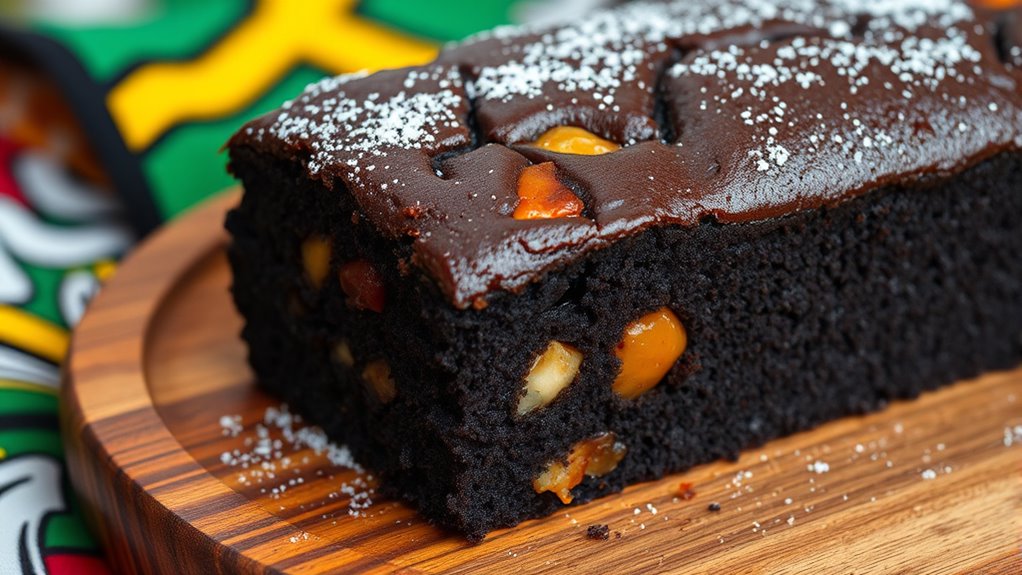
Have you ever tasted Jamaican Black Cake? If not, you’re missing out on a rich, flavorful tradition that’s deeply woven into Caribbean celebrations. This dense, decadent fruitcake is more than just a dessert; it’s a symbol of festive traditions that bring families and communities together. During holidays, weddings, and special occasions, the aroma of this cake fills homes, signaling a time of joy and togetherness. Its vibrant history is rooted in centuries-old recipes, passed down through generations, each adding their own touch. Making Jamaican Black Cake is a cherished ritual, often involving soaking dried fruits in rum for weeks ahead of time, allowing flavors to meld beautifully. This process enhances the cake’s moistness and depth, making each bite a true indulgence.
When preparing Jamaican Black Cake, ingredient substitutions are common, especially for those with dietary restrictions or limited access to traditional ingredients. For example, if you can’t find traditional dried fruits like currants, raisins, or prunes, you can substitute with dried apricots or cranberries, chopped finely. Some bakers replace traditional rum with non-alcoholic alternatives like fruit juices or flavored extracts, ensuring the cake remains moist and flavorful without alcohol. Sugar can also be adapted; if you’re looking to reduce sweetness, using honey or maple syrup works well and adds a unique twist. Additionally, some prefer to use gluten-free flour blends for a celiac-friendly version, which still yields a dense, rich cake. These ingredient substitutions allow you to customize the recipe to your taste and dietary needs, without compromising the cake’s traditional essence. Understanding the cultural significance**** of Jamaican Black Cake enhances appreciation for its role in celebrations and community bonding.
The process of making Jamaican Black Cake involves more than just mixing ingredients. It’s about patience, care, and respecting the cultural significance behind each step. The dark, almost black color of the cake comes from a slow caramelization of molasses or browning, giving it a distinctive look and flavor. The cake’s texture should be moist, with a dense crumb that holds the rich, fruity flavors well. As it ages, the flavors deepen, making it even more irresistible. Many families even wrap their cakes in parchment paper and store them in cool, dark places for weeks, allowing the flavors to mature. Whether you stick to traditional ingredients or opt for substitutions, the key is to honor the festive traditions that make Jamaican Black Cake such a celebrated treat. It’s more than just a dessert; it’s a celebration of culture, history, and community in every slice.
Frequently Asked Questions
How Long Can Jamaican Black Cake Be Stored?
You can store Jamaican Black Cake for up to six months if you keep it in an airtight container in a cool, dark place. Proper storage helps prevent spoilage and maintains its rich flavor. For longer storage, wrap it tightly in plastic wrap and refrigerate, which can extend its shelf life to a year. Always check for signs of spoilage, like mold or an off smell, before enjoying it.
What Are the Traditional Occasions for Serving Black Cake?
You typically serve Jamaican Black Cake during festive celebrations like Christmas, weddings, and special family gatherings, where it’s a symbol of cultural traditions. Its rich flavors and significance make it a highlight at these occasions. You might also enjoy it during New Year’s festivities or other milestone events, as sharing the cake reinforces community bonds and honors heritage. Its presence elevates any celebration with a touch of Caribbean history and flavor.
Can the Recipe Be Adapted for Dietary Restrictions?
Think of your Black Cake recipe as a flexible dance partner—you can teach it new moves! You can adapt it for dietary restrictions by exploring gluten-free options and vegan substitutions. Swap out traditional ingredients with almond or coconut flour, plant-based margarine, and vegan-friendly fruit preserves. With a little creativity, you’ll still enjoy that rich, flavorful cake, all while respecting your dietary needs.
How Does Aging Affect the Flavor of Black Cake?
Aging considerably enhances the flavor development of black cake by allowing the fermentation process to deepen its richness. As you age it, the cake absorbs the flavors of rum, spices, and dried fruits, creating a complex, well-rounded taste. This process also helps meld the ingredients, resulting in a moist, flavorful cake. The longer you age it, the more pronounced and sophisticated the flavor becomes, making it a true Jamaican delicacy.
Are There Regional Variations of Black Cake in Jamaica?
You might think all Jamaican black cakes are the same, but regional variations showcase diverse ingredients and cultural influences. In rural areas, you’ll find cakes made with local spices and fruits, while urban versions may incorporate more modern ingredients like dried cherries or nuts. These differences reflect Jamaica’s rich cultural tapestry, blending African, European, and Caribbean flavors. Exploring these regional styles lets you experience the island’s culinary diversity firsthand.
Conclusion
So, next time you indulge in Jamaican Black Cake, remember it’s more than just a sweet treat — it’s a testament to patience and tradition. You might think you’re just enjoying a rich, fruity dessert, but secretly, you’re tasting centuries of history and culture. Ironically, this cake’s true magic lies in how it transforms humble ingredients into a symbol of celebration. Sometimes, the sweetest moments come from the most unexpected, time-consuming traditions.