
To serve champagne perfectly, keep it chilled but not ice-cold, around 45-50°F, to preserve its aroma and bubbles. Use a flute or tulip-shaped glass to concentrate the scents, holding the cork firmly when opening to avoid splashes. Pour gently down the side of the glass, and during toasts, maintain eye contact and handle the glass with care. Mastering these simple steps will elevate your experience—continue to explore more ways to perfect your bubbly ritual.
Key Takeaways
- Serve champagne chilled between 45-50°F (7-10°C) to preserve bubbles and aroma.
- Use flute or tulip-shaped glasses to concentrate flavors and enhance aroma.
- Open the bottle carefully, holding the cork firmly, and turn slowly to prevent popping and spilling.
- Pour gently along the glass’s side to minimize foam and maintain carbonation.
- During toasts, make eye contact, hold the glass at a slight angle, and avoid excessive clinking.

Have you ever wondered what makes champagne so special? It’s not just the bubbles or the fancy bottles; it’s also the rich cultural traditions that surround its production and celebration. Champagne has a long history rooted in France, where centuries-old customs dictate how it’s enjoyed and appreciated. These traditions influence everything from how you serve it to the way you perceive its value. For example, many cultures have specific rituals for opening a bottle, pouring, and toasting, all designed to honor the drink and enhance its experience. Understanding these customs can deepen your appreciation and make your champagne moments more memorable.
When it comes to choosing champagne, you’ll encounter the terms vintage and non-vintage, which substantially impact the drink’s flavor, age, and overall character. Vintage champagne is made from grapes harvested in a single exceptional year, and it’s typically aged longer before release. This aging allows complex flavors to develop, making vintage bottles often more refined and expressive, perfect for special occasions. Non-vintage champagnes, on the other hand, blend grapes from multiple years to maintain a consistent house style. They are usually fresher, more approachable, and versatile for everyday celebrations. Knowing when to choose vintage versus non-vintage can elevate your serving experience; a vintage might be reserved for milestones, while non-vintage works beautifully for casual gatherings or when you want a reliable, lively bubbly.
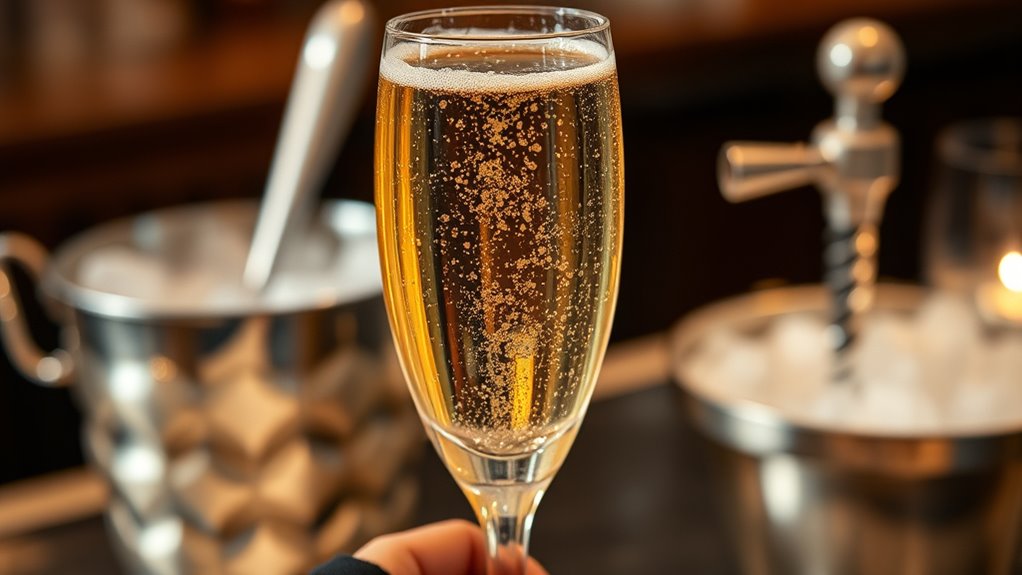
Serving champagne properly isn’t just about the right glassware; it’s also about respecting these traditions. For instance, many cultures prefer to serve champagne chilled, but not ice-cold, to preserve its aroma and delicate bubbles. Using a flute or tulip-shaped glass helps concentrate the aromas and keeps the bubbles lively longer. When opening a bottle, hold the cork firmly and turn the bottle slowly to avoid the pop and spray of bubbles, which can be seen as a breach of etiquette in some circles. Pour gently, starting from the center of the glass and working outward, to minimize foam and maximize the drink’s elegance. Toasting is often a key moment; maintain eye contact and hold your glass at a slight angle to avoid spilling. These practices, rooted in tradition, help you savor champagne in a respectful, celebratory manner.
Top picks for "champagne practic serv"
Open Amazon search results for this keyword.
As an affiliate, we earn on qualifying purchases.
Frequently Asked Questions
What Are the Ideal Glassware Types for Serving Champagne?
You should serve sparkling wine in a flute-shaped glass. This type of glass enhances the experience by preserving the bubbles and directing the aroma to your nose. The tall, narrow design of a flute helps keep the wine carbonated longer, ensuring you enjoy the lively effervescence. Using a proper champagne flute elevates your drinking experience and allows the delicate flavors and bubbles of your sparkling wine to shine.
How Do Temperature Variations Affect Champagne Taste and Bubbles?
Think of your champagne as a delicate melody; temperature fluctuations can disrupt its harmony. When you maintain temperature stability, you preserve its fresh flavor and lively bubbles, ensuring each sip is pure joy. Too warm, and the bubbles fade, making the drink flat and dull. Too cold, and the flavors get muted, losing their vibrancy. Keep it at the ideal temperature, and your champagne remains crisp, flavorful, and bubbly.
Can Champagne Be Stored for Long Periods Without Losing Quality?
Yes, you can store champagne for long periods without losing quality if you focus on proper storage conditions. Keep bottles in a cool, dark place with a consistent temperature, ideally around 55°F, and lay them horizontally to prevent cork drying out. Proper bottle aging enhances flavors over time, especially for vintage champagnes. Avoid temperature fluctuations and vibrations, which can harm bubbles and overall taste, ensuring your bubbly remains vibrant and enjoyable.
What Are Common Mistakes to Avoid When Opening a Champagne Bottle?
You might think opening champagne is simple, but avoid common mistakes like mishandling the cork or overpouring. Proper cork handling is essential; twist gently and keep the bottle at an angle to prevent sudden pops or spills. Also, avoid overpouring to keep the bubbles intact and prevent overflow. By practicing these steps, you’ll open your champagne smoothly, preserving its quality and impressing your guests.
How Does the Aging Process Influence Different Types of Champagne?
Champagne aging greatly influences its flavor and texture. During bottle maturation, Champagne develops complexity, with aged varieties often showing richer, deeper notes compared to fresher, more vibrant young bottles. Longer Champagne aging enhances the wine’s mousse and smoothness, creating a more refined experience. Whether you prefer a lively, youthful Champagne or a mature, layered one, understanding how Champagne aging impacts these differences helps you appreciate each bottle’s unique qualities.
Conclusion
Now that you know the basics, serving champagne becomes like orchestrating a sparkling symphony. With proper chilling, gentle pouring, and elegant glassware, you’ll turn every sip into a graceful dance of bubbles and flavor. Remember, the way you serve bubbly sets the tone for celebration. So, embrace these best practices and let your champagne experience sparkle just like the finest flute of effervescent joy. Cheers to making every moment truly sparkling!