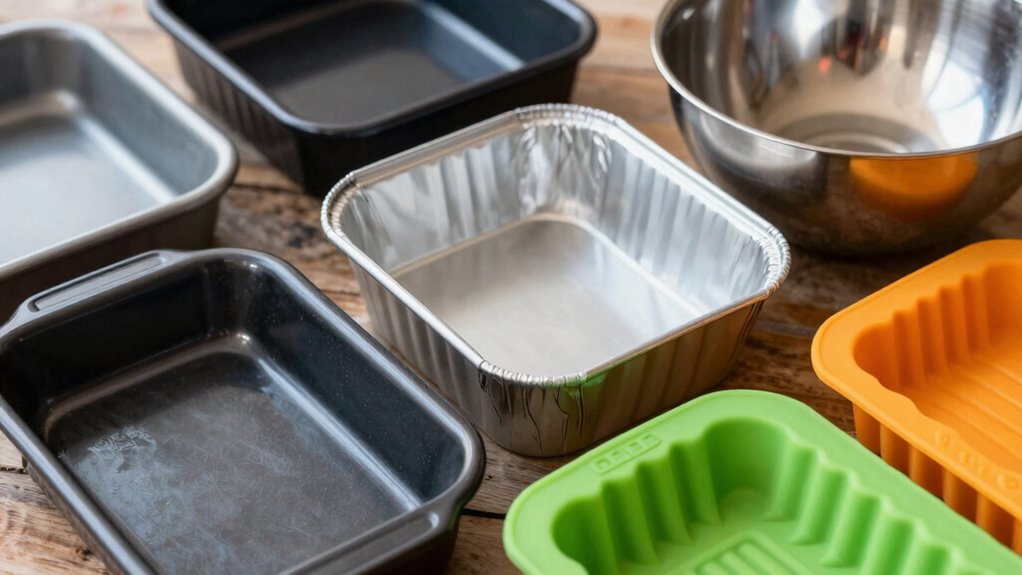

When choosing bakeware, consider the material’s heat conduction, durability, and ease of cleaning. Metal options like aluminum or aluminized steel heat evenly and are great for crisp edges, while glass heats more gently and allows visibility. Silicone is flexible and easy to release, perfect for delicate baked goods. Ceramic offers slow, even heat but may chip over time. Understanding these differences helps you pick the best for your baking style — more details to come.

Get kitchen staples and gadgets delivered free — and shop member deals
- Fast, free delivery on millions of items
- Access to Prime Big Deal Days deals on October 6–7
- Prime Video, Amazon Music and more included
Key Takeaways
- Understand different materials like metal, glass, ceramic, silicone, and enameled cast iron for specific baking needs and results.
- Consider heat distribution and thermal conductivity to ensure even baking and prevent hot spots.
- Evaluate durability, maintenance, and long-term safety based on material wear, coating quality, and ease of cleaning.
- Choose eco-friendly options such as silicone or recycled metals for sustainability and environmental impact.
- Match bakeware styles and materials to your baking frequency, preferred recipes, and aesthetic preferences for optimal performance.
As an affiliate, we earn on qualifying purchases.
The Ultimate Guide to Choosing Bakeware Materials
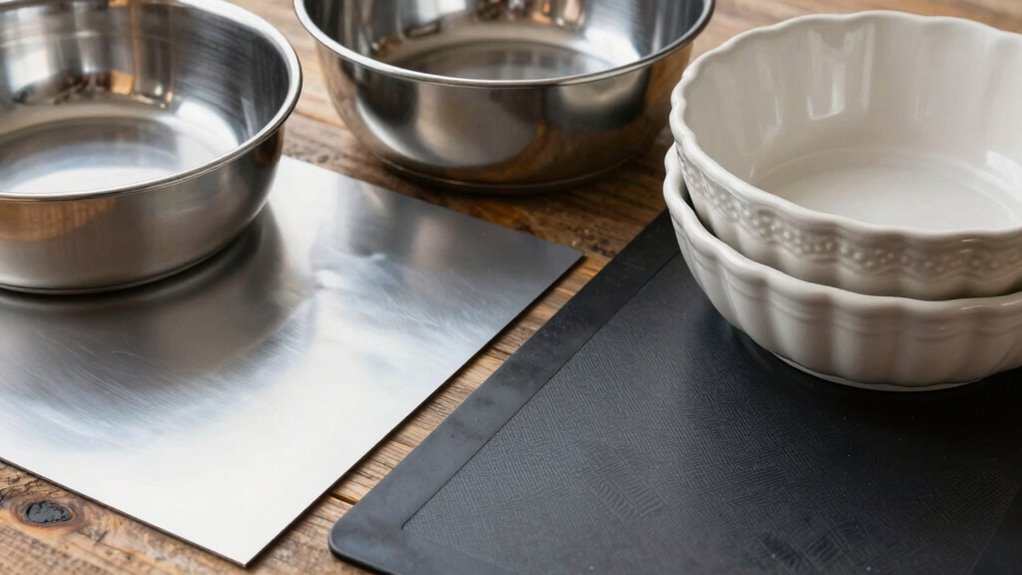
Choosing the right bakeware material can greatly impact your baking outcomes, so it’s essential to understand the options available. If you love colorful designs, many bakeware pieces come with vibrant patterns that brighten your kitchen and inspire your baking. Additionally, eco-friendly options are becoming popular, allowing you to choose sustainable materials like silicone or recycled metals. These environmentally conscious choices often perform well and reduce your carbon footprint. Keep in mind that materials like ceramic or glass may offer unique aesthetic appeal with colorful patterns, while also being eco-friendly. Selecting bakeware that combines attractive designs with eco-conscious materials helps you create delicious treats while caring for the planet. Understanding heat distribution in different materials can also help you achieve more consistent baking results. Considering the color accuracy of your bakeware can enhance visual appeal and make it easier to monitor your baked goods during the process. Furthermore, knowing about thermal conductivity can guide you in selecting materials that provide even heating, improving your overall baking success. An awareness of material durability can also help you choose pieces that last longer through frequent use. Additionally, paying attention to maintenance requirements can ensure your bakeware remains in top condition over time. Your choice can enhance your baking experience and reflect your style and values.
What Are the Best Bakeware Materials for Home Baking?
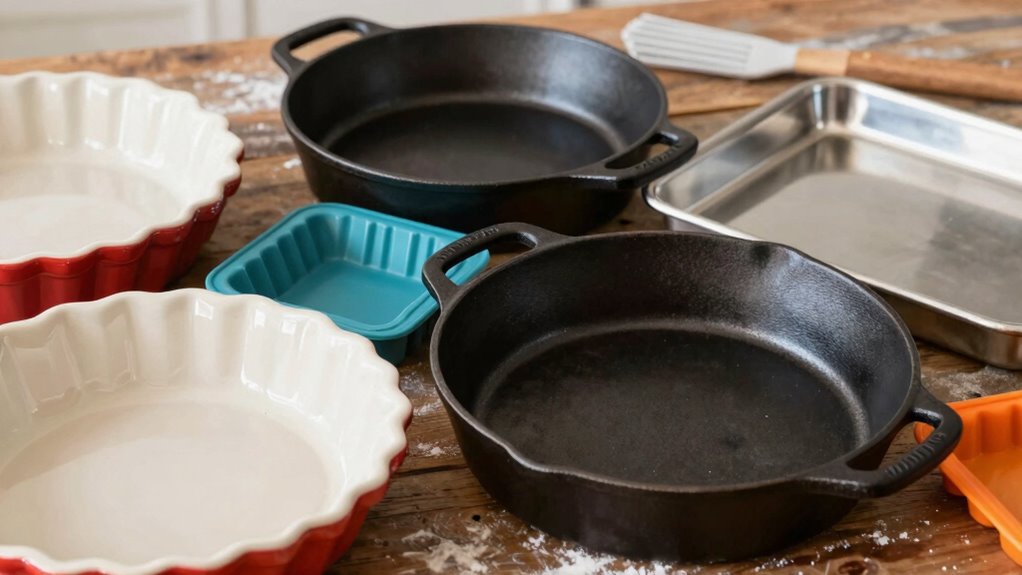
When selecting the best bakeware materials for home baking, durability and heat distribution are key factors to contemplate. You want materials that heat evenly for perfect cakes and cookies, while also lasting through frequent use. For instance, metal options like aluminized steel conduct heat well and are great for cake decorating, giving you crisp edges. Glass bakeware heats evenly and lets you see your baked goods easily, aiding in monitoring during bakeware storage. Silicone offers flexibility and easy release for delicate items. Ceramic provides excellent heat retention for slow, even baking. Finally, enameled cast iron combines durability with superior heat retention, ideal for hearty recipes. Understanding the baking process can help you choose the right material for consistent results and to simplify your baking process. Considering the heat transfer properties of each material can also improve your baking outcomes and ensure your treats come out just right. Additionally, knowing how different materials handle thermal expansion can prevent cracking or warping over time, ensuring your bakeware lasts longer. Being aware of material durability helps in selecting pieces that withstand frequent use without damage, especially when combined with proper maintenance practices.
How Do Non-Stick Coatings Impact Your Baking Results?
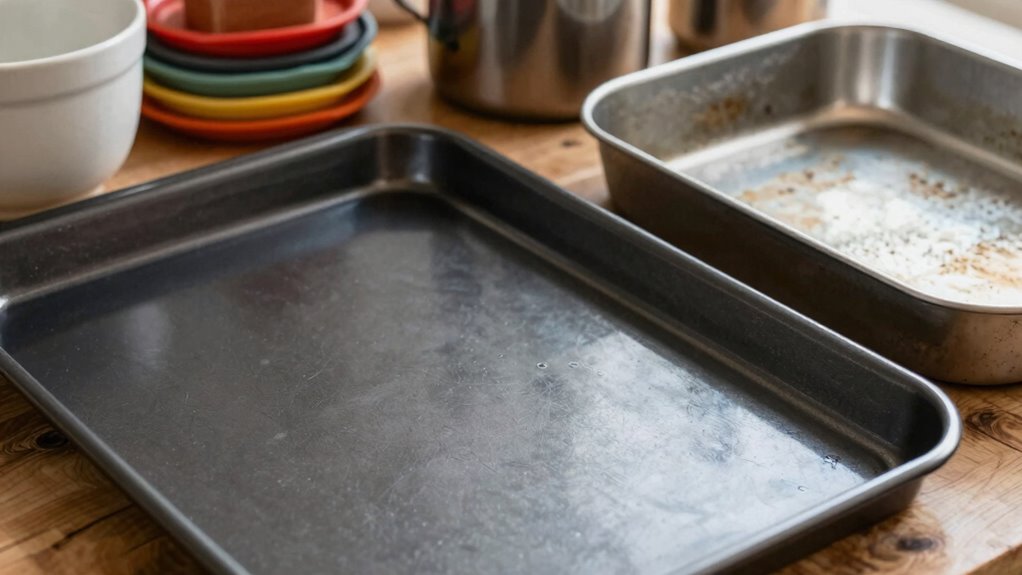
Non-stick coatings considerably influence your baking results by making it easier to release delicate baked goods and reducing the need for excessive greasing or flouring. This can help achieve cleaner, more professional-looking treats. However, the non-stick durability varies between brands and types, affecting how long the coating remains effective without peeling or scratching. It’s important to choose bakeware with proven coating safety, especially if you prefer healthier baking without chemical residues. A high-quality coating not only enhances non-stick performance but also minimizes the risk of harmful chemicals leaching into your food. Keep in mind that proper care, like avoiding metal utensils, can extend the life of your non-stick surface, ensuring consistent results and safer baking experiences over time. Additionally, understanding the early detection of potential issues can help maintain the integrity of your bakeware. Regularly inspecting your bakeware for signs of coating wear can prevent unexpected failures and help you replace or refurbish your bakeware before it impacts your results. Implementing proper cleaning techniques is crucial for preserving the coating’s longevity and effectiveness, and being aware of signs of wear can help you replace or refurbish your bakeware before it impacts your results. By choosing durable and safe non-stick coatings, you can enjoy more reliable baking outcomes and extend the lifespan of your bakeware.
Are Metal and Glass Bakeware Suitable for Your Oven?

Both metal and glass bakeware are popular choices for oven baking, each offering distinct advantages and considerations. Metal bakeware heats quickly and is durable, making it ideal for high-temperature baking and roasting. Glass bakeware, on the other hand, is non-reactive and provides excellent oven safety, allowing you to monitor your food as it bakes. When choosing, consider your oven’s temperature limits and your need for even heat distribution. Metal offers high material durability but can warp over time if exposed to extreme heat. Additionally, understanding sound healing science reveals how specific materials can influence heat distribution and overall baking results. Proper material selection can enhance your baking experience by optimizing heat transfer and ensuring even cooking. Being aware of the thermal properties of each material can help you choose the best bakeware for different recipes and baking techniques, especially as material durability impacts long-term use in the oven. Recognizing how baking techniques interact with different materials can also improve your results and extend the lifespan of your bakeware.
Which Bakeware Materials Provide Even Heat for Perfect Bakes?
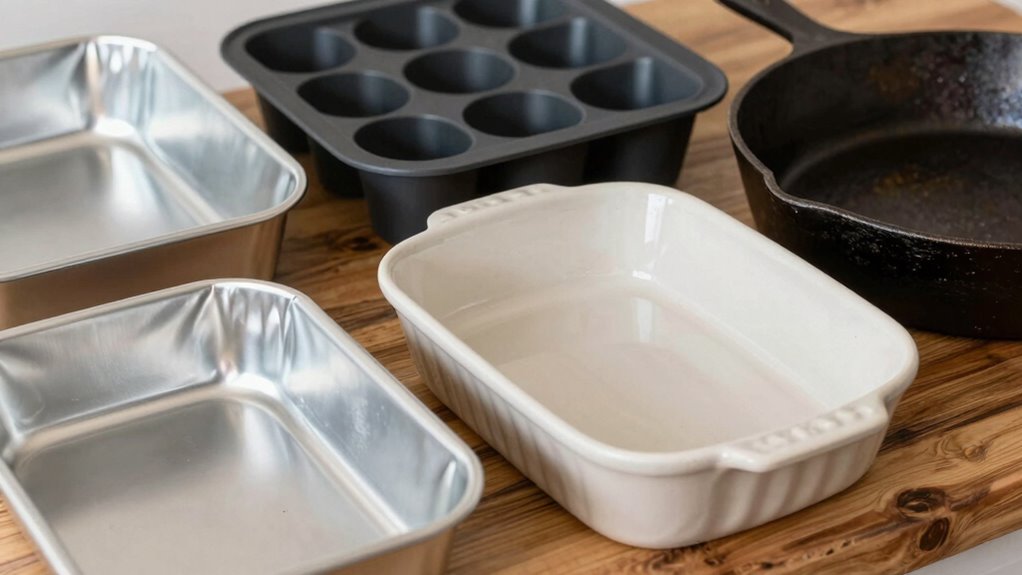
Certain materials excel at providing even heat distribution, which is essential for achieving perfectly baked goods. Ceramic textures are known for their ability to conduct heat uniformly, reducing hot spots that can cause uneven baking. Their thick, dense composition guarantees consistent heat flow, leading to better rise and browning. Silicone flexibility also plays a role in even heating, especially in bakeware with flexible sides. It distributes heat evenly across the surface, minimizing hot spots and ensuring thorough baking. While silicone doesn’t conduct heat as well as ceramic, its flexibility allows for better contact and heat transfer in certain designs. Choosing bakeware with ceramic textures or incorporating silicone flexibility can make a noticeable difference in the quality of your baked goods, leading to more consistent results. Additionally, understanding the heat conduction properties of different materials can help you select the best bakeware for your needs. Recognizing how material composition influences heat transfer can further refine your choice for optimal baking performance. A deeper understanding of thermal conductivity can guide you in selecting bakeware that heats evenly and prevents hotspots. Moreover, paying attention to the material thickness can impact the overall heat distribution and baking outcome.
How Durable Is Your Bakeware? A Guide to Longevity and Maintenance

Choosing bakeware with durable materials guarantees your investment lasts through many successful bakes. The longevity of your bakeware depends on material safety, quality, and how well you maintain it. To maximize durability, consider storage considerations—keep bakeware in a dry, stable environment to prevent warping or corrosion. Some materials, like heavy-duty metal or high-quality silicone, resist chipping and cracking over time. Proper care guarantees your bakeware stays in good shape and safe to use. Remember, avoid sudden temperature changes that can cause damage. Regularly inspect your bakeware for signs of wear, such as scratches or dents. Proper storage, gentle cleaning, and selecting sturdy materials will extend your bakeware’s life and maintain its safety for many baking adventures. Understanding material safety can help you choose the best options for long-term use.
How Easy Is It to Clean Different Types of Bakeware?
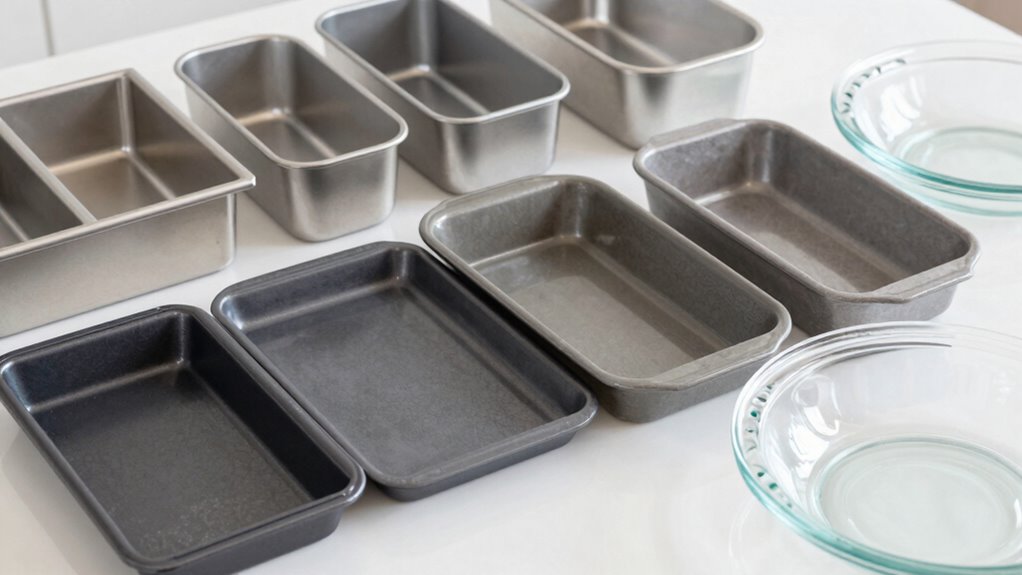
Cleaning bakeware can be straightforward or challenging, depending on the material. Non-stick surfaces, like those made from coated metals, are generally easy to clean because of their stain resistance, allowing you to wipe away residues quickly. However, they can be prone to scratches, which may increase cleaning challenges over time. Glass bakeware is usually simple to wash and resists stains well, but baked-on food can sometimes be stubborn if not soaked promptly. Ceramic-coated pans often have good stain resistance, but they can chip or stain if scrubbed aggressively. Uncoated metals, like aluminum or cast iron, might require more effort due to baked-on grime, and some materials can stain or discolor easily. Overall, understanding each material’s stain resistance helps you choose bakeware that’s easier to maintain.
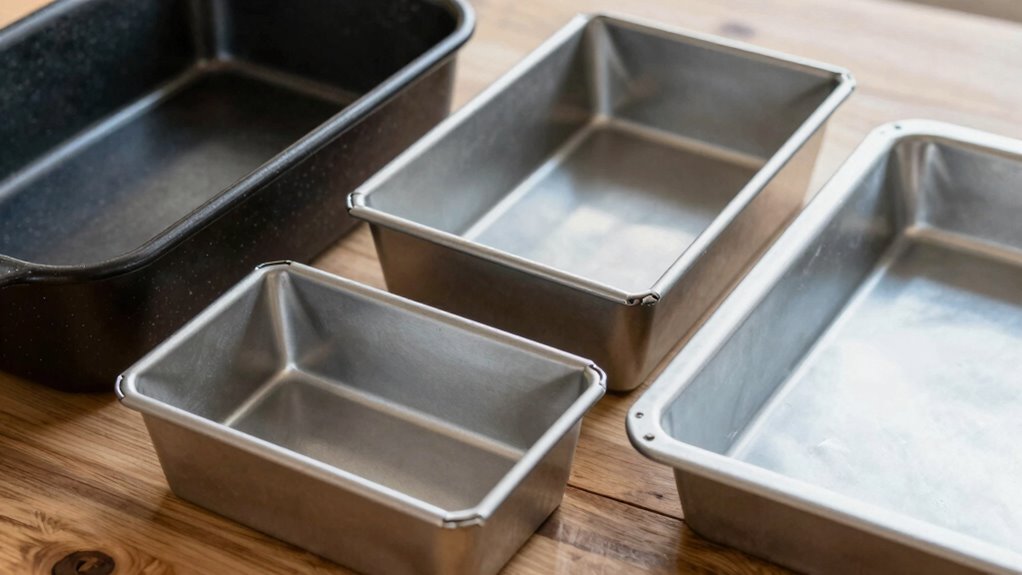
Deciding how much to spend on quality bakeware depends on your baking frequency, skill level, and long-term goals. Budget options are great if you bake occasionally; they’re affordable but may lack material durability. Premium bakeware, although pricier, offers superior durability and consistent results, making it a worthwhile investment for frequent bakers. To compare costs effectively:
- Consider the long-term value versus initial cost
- Assess the material durability for daily use
- Look at brand reputation and warranty
- Balance your baking needs with your budget
- Remember that a higher price often means better heat distribution
A proper cost comparison helps you avoid unnecessary expenses or subpar results. Whether you choose budget or premium, focus on durability and how often you’ll use your bakeware to make the best choice for your baking style.
Which Bakeware Material Matches Your Baking Style?
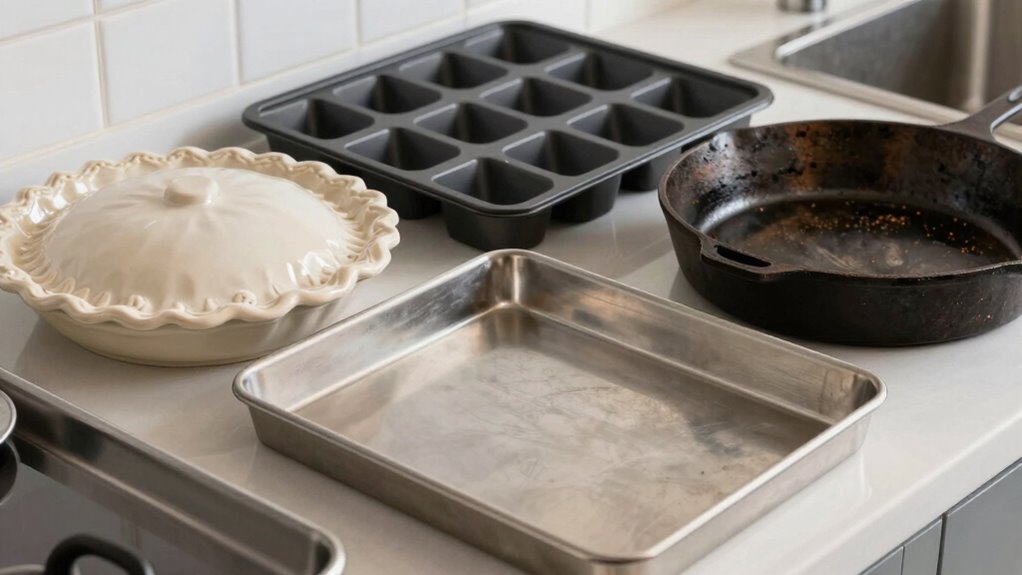
The type of bakeware material you select should align with your baking style to guarantee the best results and durability. If you prioritize material sustainability, look for eco-friendly options like silicone or recycled metals, which minimize environmental impact. For frequent baking of delicate pastries, aluminized steel provides even heat distribution, essential for consistent results. If aesthetic appeal matters, consider ceramic or glazed options, which add visual charm to your kitchen. Keep in mind that some materials, such as non-stick coatings, may require gentle cleaning but offer convenience. Your choice should reflect both your baking habits and your values—whether you seek eco-conscious materials or stylish pieces that elevate your kitchen’s look. Matching your bakeware to your style ensures satisfaction and performance in every bake.
Final Tips for Picking the Perfect Bakeware Set
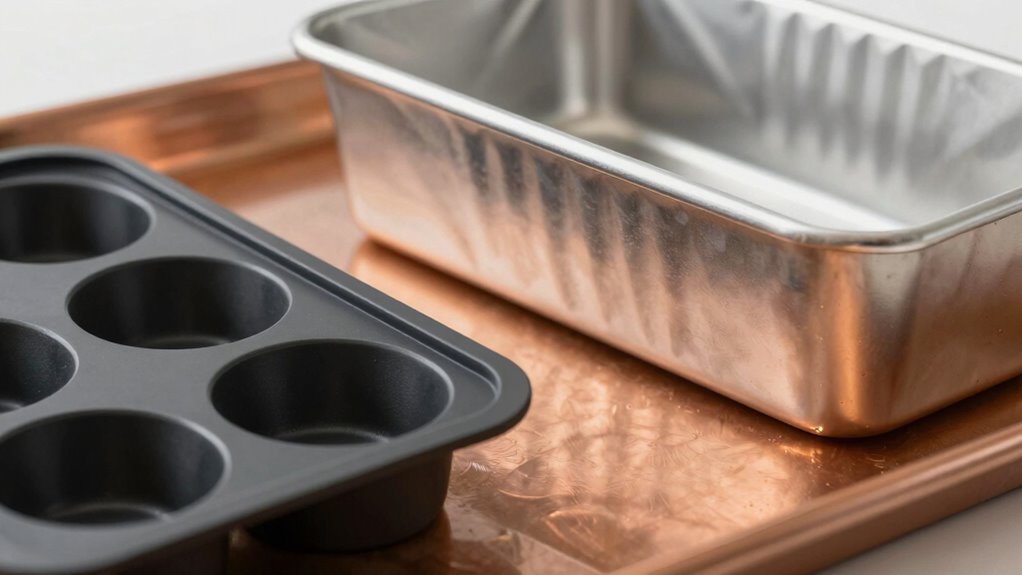
When choosing the perfect bakeware set, consider your baking needs and how often you bake. Think about the types of baked goods you make most often and select materials that suit those recipes. Prioritize baking safety by choosing durable, non-toxic options. Also, keep storage tips in mind—opt for nesting pieces or stackable sets to save space. Look for even heat distribution to prevent burning or undercooking. Check for easy-to-clean surfaces and dishwasher safety if you prefer convenience. Don’t forget to contemplate your kitchen’s storage space and how the set fits into your routine. Finally, invest in versatile pieces that can handle different recipes, ensuring your bakeware remains functional and safe for years to come.
Frequently Asked Questions
Are There Health Concerns With Certain Bakeware Materials?
Yes, some bakeware materials can pose health concerns. Look for options with non-toxic coatings to avoid harmful chemicals leaching into your food. Lead-free ceramics are safe choices because they don’t contain toxic metals. You should also check for BPA-free plastics or anodized aluminum. Choosing bakeware made from these safe materials helps you bake confidently, knowing you’re minimizing exposure to potentially harmful substances.
How Do Bakeware Materials Affect Baking Time?
Think of bakeware materials as silent conductors of heat. Your choice impacts cooking temperature and heat conduction, which directly influence baking time. Metal pans, with excellent heat conduction, often shorten baking times, while glass or ceramic bakeware may require longer. So, when you pick your bakeware, consider how its material will conduct heat and adjust your cooking temperature and time accordingly for perfect results.
Can I Use Metal Bakeware in a Convection Oven?
Yes, you can use metal bakeware in a convection oven. Metal compatibility is high, and most metal pans are safe for convection oven safety because they conduct heat well and withstand high temperatures. Just make certain your pans are oven-safe and avoid using thin or non-stick coatings that might warp or degrade. Always follow manufacturer instructions to prevent any issues and enjoy even, efficient baking.
Are There Eco-Friendly Bakeware Options Available?
Yes, eco-friendly bakeware options are available. You can choose biodegradable options made from natural materials that break down safely in compost. Additionally, look for bakeware made from recycled materials, which reduces waste and environmental impact. These options are a great way to enjoy baking while supporting sustainability. Just make certain the bakeware suits your specific needs, and you’ll bake responsibly without sacrificing quality or performance.
What Is the Safest Bakeware Material for Acidic Foods?
If you’re cooking acidic foods, the safest bakeware material is glass. Acidic food interaction can cause metal leaching in materials like aluminum or reactive metals, risking health. Glass prevents bakeware corrosion and guarantees your food stays pure. It’s durable, non-reactive, and prevents corrosion, making it the best choice. Protect your recipes and health by choosing glass, especially when baking or roasting with acidity involved.
Conclusion
Choosing the right bakeware is like finding the perfect pair of shoes—you’ll enjoy every step more. Consider your baking style, budget, and the materials that match your needs. Whether you prefer non-stick, glass, or metal, selecting the right set guarantees your baked goods turn out just right. Take your time, do your research, and you’ll find bakeware that feels like a custom fit—making each baking session a true delight.
NFL season / tailgating Picks
team gear
As an affiliate, we earn on qualifying purchases.