
In Thai fish sauce, higher nitrogen levels indicate a stronger, more umami-rich flavor, often linked to longer fermentation. These nitrogen measurements, mainly ammonia content, serve as a key marker of quality and flavor depth. Regional differences and production methods also influence nitrogen content and taste profiles. If you want to understand how these levels relate to grade and flavor, stick with us to learn more about how fermentation improves your fish sauce’s quality.
Key Takeaways
- Higher nitrogen (ammonia) levels indicate stronger, more umami-rich Thai fish sauces, reflecting longer fermentation and higher quality.
- Nitrogen content serves as a key indicator for grading fish sauce quality and flavor intensity.
- Regional production methods influence nitrogen levels, with eastern coastal sauces typically having higher nitrogen and pungency.
- Longer fermentation processes increase nitrogen levels, resulting in more complex, richer flavors in the fish sauce.
- Lower nitrogen levels suggest milder, lighter sauces suited for delicate dishes, while higher levels indicate more robust, flavorful options.
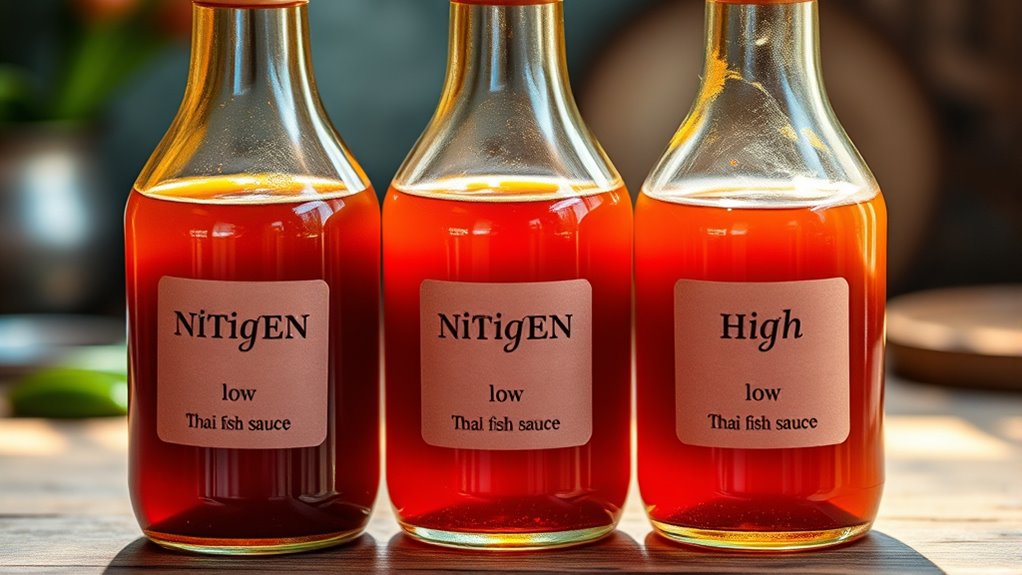
Thai fish sauce, a staple ingredient in many dishes, varies considerably in quality depending on its grade. When you’re selecting fish sauce, understanding how the fermentation process influences its flavor can make a significant difference. The fermentation process involves aging fish and salt for months or even years, allowing natural enzymes and bacteria to develop complex flavors. Higher-grade fish sauces typically undergo longer, more controlled fermentation, resulting in a richer, more nuanced taste. Cheaper varieties might be produced through quicker methods, which often sacrifice depth for speed. As a result, the fermentation process directly impacts not just the flavor but also the aroma and clarity of the final product. The nitrogen levels in fish sauce serve as a key indicator of its strength and umami richness, reflecting the extent of protein breakdown during fermentation. These nitrogen levels are often measured through ammonia content, which further correlates with the sauce’s overall quality and flavor profile. Regional variations also play a vital role in the quality and characteristics of Thai fish sauce. Different areas in Thailand have distinct methods and traditions for producing fish sauce, which contributes to variations in taste and nitrogen levels. For example, fish sauces from the eastern coastal regions tend to be saltier and more pungent, while those from the central areas often feature a milder, sweeter profile. These regional differences influence the nitrogen content, which serves as a key indicator of the sauce’s strength and umami intensity. Higher nitrogen levels generally mean a more potent, flavorful sauce, making it suitable for dishes that require a bolder taste. Conversely, lower nitrogen levels produce a milder sauce, ideal for delicate recipes or as a table condiment. Paying attention to production methods can also provide insight into the quality and flavor nuances of different fish sauces. Additionally, understanding the fermentation duration helps in selecting a product that matches your flavor preferences. By paying attention to these nuances, you can elevate your cooking and guarantee you’re using the best grade for each dish.
Top picks for "thai fish sauce"
Open Amazon search results for this keyword.
As an affiliate, we earn on qualifying purchases.
Frequently Asked Questions
How Is Fish Sauce Traditionally Made in Thailand?
You might wonder how Thai fish sauce is traditionally made. It involves a fermentation process where salted fish, often anchovies, are left to ferment in large vats for several months. Regional variations influence the ingredients and fermentation time, resulting in distinct flavors. During this process, enzymes break down proteins into amino acids, creating the umami-rich sauce. This traditional method highlights local practices and natural fermentation to produce authentic Thai fish sauce.
Can Nitrogen Levels Vary Between Different Fish Sauce Brands?
Imagine you’re tasting two different brands of Thai fish sauce. You’ll notice that nitrogen levels can differ because of variations in fermentation methods and ingredient quality. These factors influence the amount of nitrogen, which affects flavor intensity. So, yes, nitrogen levels do vary between brands, reflecting their unique production processes. This variation helps distinguish premium sauces from more standard ones, ensuring you get the flavor profile you prefer.
Are Higher Nitrogen Levels Always Better for Flavor?
You might think higher nitrogen levels mean better flavor, but that’s not always true. Higher nitrogen can boost flavor intensity, but it doesn’t guarantee quality. Preservation techniques also play a role in maintaining flavor. Ultimately, the best fish sauce balances nitrogen levels with proper preservation, so you get a rich, authentic taste without overpowering or off-putting notes. Trust your palate rather than just nitrogen content.
How Should I Store Fish Sauce to Maintain Quality?
You should store fish sauce in a cool, dark place to keep its quality intact. Use an airtight container to prevent contamination and preserve its flavor. Proper storage extends its shelf life, ensuring it remains fresh and flavorful for months. Avoid exposing it to direct sunlight or heat, which can degrade the quality. Following these storage tips helps maintain the rich taste of your fish sauce over time.
Is There a Difference in Health Benefits Between Grades?
You wonder if different fish sauce grades affect health benefits. Generally, higher-grade fish sauces with more nitrogen levels have better nutritional content, offering richer amino acids and fewer additives. This can positively impact health implications, like improved digestion and immune support. Lower grades might contain more preservatives or fillers, potentially reducing nutritional value. So, choosing higher-grade fish sauce can give you better health benefits and more natural flavor.
Conclusion
By understanding the nitrogen levels in Thai fish sauce, you can truly discover the secret to its rich, umami flavor. These grades aren’t just numbers; they’re the key to experiencing the sauce’s full potential—like tasting the ocean’s essence in every drop. So next time you pick up a bottle, remember, you’re holding a liquid treasure that could transform your dishes into culinary masterpieces. Immerse yourself in the flavor world and savor the magic!