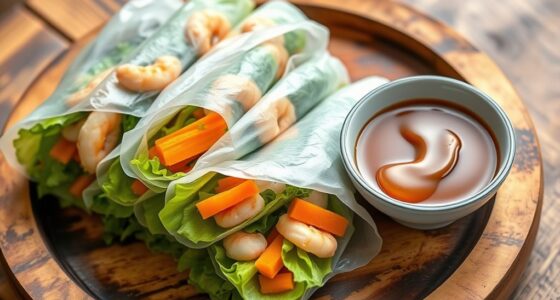
Hosting a DIY sushi roll party is a fun way to bond with friends while enjoying delicious, customized sushi. Arrange fresh ingredients like sushi-grade fish, crisp vegetables, and authentic rice at your station, making sure everything is prepared for easy assembly. Use a bamboo mat for rolling and keep hands moist for smooth handling. Encourage creativity and laughter as everyone crafts their own rolls. If you’d like tips on perfecting your techniques and sourcing ingredients, keep exploring for more insights.
Key Takeaways
- Set up a well-organized sushi station with ingredients, tools, and moist hands for easy assembly.
- Prepare a variety of fresh, high-quality ingredients to encourage creativity and ensure safety.
- Demonstrate proper rolling techniques using bamboo mats and gentle pressure for even, attractive sushi.
- Include fun elements like dipping sauces and unique ingredient combinations to enhance the experience.
- Emphasize enjoying the process, sharing tips, and celebrating your homemade sushi creations together.

Hosting a DIY sushi roll party is a fun and interactive way to enjoy a delicious meal with friends. It’s a chance to get creative, learn new skills, and share a memorable experience. To make your sushi night a success, start with understanding sushi rolling techniques. Proper technique guarantees your rolls are tidy and flavorful. Begin by preparing a bamboo sushi mat, which helps shape the roll evenly. Keep your hands moist to prevent rice from sticking, and handle the ingredients gently to avoid crushing delicate fish or vegetables. When rolling, apply even pressure and use a gentle, rolling motion to seal the edges. Practice makes perfect, so don’t worry if your first few attempts aren’t picture-perfect. Focus on having fun and refining your skills with each roll.
Equally important is sushi ingredient sourcing. Quality ingredients make all the difference in flavor and safety. Shop at reputable grocery stores or specialty Asian markets for fresh seafood, sushi-grade fish, and authentic sushi rice. Look for suppliers who guarantee freshness and proper handling of fish to reduce health risks. For vegetables, choose crisp cucumber, ripe avocado, and other colorful additions to enhance both taste and presentation. Don’t forget to source nori (seaweed), soy sauce, wasabi, and pickled ginger, which add essential flavors and traditional accompaniments. You can also consider sourcing unique ingredients like eel sauce or tobiko to elevate your rolls. When selecting ingredients, prioritize freshness over price, especially for raw fish, and always ensure they are stored properly before use.
Setting up your station is key to a smooth sushi-making experience. Arrange all your ingredients and tools within easy reach. Have bowls of water nearby to keep your hands moist, and prepare small dishes for soy sauce and wasabi. Consider pre-cooking or pre-slicing some ingredients to save time during the party. As you and your friends start assembling, encourage everyone to experiment with combinations and enjoy the process. Share tips on sushi rolling techniques, such as how to evenly distribute ingredients and how to seal the edges properly. Remember, the goal isn’t perfection but having fun and savoring each bite. With good ingredient sourcing and practicing your sushi rolling techniques, you’ll create delicious, visually appealing sushi rolls that everyone will love. Hosting this kind of party not only satisfies your craving for sushi but also builds lasting memories around the art of sushi making.

Bamboo Sushi Rolling Mat
Made of bamboo
As an affiliate, we earn on qualifying purchases.
As an affiliate, we earn on qualifying purchases.
Frequently Asked Questions
What Are the Essential Safety Tips for Handling Raw Fish?
When handling raw fish, you should always practice proper fish handling to prevent foodborne illnesses. Keep raw fish separate from other ingredients to avoid cross contamination. Use separate cutting boards and knives for raw fish and cooked foods, and wash your hands thoroughly afterward. Store fish at the correct temperature, ideally on ice, and consume it promptly. These safety tips help make sure your sushi experience is both delicious and safe.
How Do I Store Leftover Sushi Ingredients Properly?
When it comes to leftover sushi preservation, don’t let it sit idle—act quickly. Store sushi ingredients properly by wrapping leftovers tightly in plastic wrap or using airtight containers to prevent drying out or absorbing other odors. Keep the sushi in the refrigerator at or below 40°F (4°C), and consume within 24 hours. This way, you’re playing it safe and making sure your sushi ingredient storage stays fresh and delicious.
Can I Make Sushi Rolls Without Specialized Tools?
Yes, you can make sushi rolls without specialized tools. Focus on mastering basic sushi rolling techniques using a clean kitchen towel or plastic wrap to shape the rolls. Use a sharp knife for clean cuts, and get creative with sushi presentation ideas like colorful fillings or garnishes. Practice makes perfect, and with patience, you’ll create delicious, visually appealing sushi even without traditional tools.
What Are Suitable Vegan Alternatives for Sushi Fillings?
You can easily find vegan alternatives for sushi fillings, such as vegan seafood and plant-based proteins like tofu, tempeh, or jackfruit. These options mimic the texture and flavor of traditional ingredients, making your sushi delicious and cruelty-free. Experiment with marinating or seasoning your plant-based proteins to enhance taste. Incorporating vegan seafood and plant-based proteins guarantees your sushi is both satisfying and suitable for a vegan diet.
How Do I Prevent Sushi From Falling Apart During Rolling?
To prevent your sushi from falling apart during rolling, focus on your rolling technique and rice consistency. Use a gentle but firm pressure when rolling, ensuring you keep the ingredients tightly packed. Make sure your rice is sticky enough—not too dry or wet—so it holds together well. Keep the mat steady and roll slowly, pressing lightly to seal everything securely, resulting in a neat, intact sushi roll.

OCEANZEN Atlantic Salmon Sashimi Grade – 6 Packs (2 x 6 oz Skinless Fillets per Pack), Fresh-Cut & Flash-Frozen – Premium Quality, Sustainably Sourced – 4.5 lbs
HEARTY FISH FILLETS: Each pack contains 2 x 6 oz pre-cut portions, packaged in skin-tight wrapping to ensure…
As an affiliate, we earn on qualifying purchases.
As an affiliate, we earn on qualifying purchases.
Conclusion
Hosting a DIY sushi roll party isn’t just fun—it’s a chance to bond and get creative in the kitchen. Some say eating sushi is just about taste, but research shows sharing food like this can boost social connection and well-being. So, next time you host, remember: it’s not only about perfect rolls but also about making memories. Trust the science—your friends will appreciate the effort and the shared experience even more than the sushi itself.

Global Grub DIY Sushi Making Kit – Sushi Kit With Ingredients – Sushi Rice, Nori Sushi Seaweed, Sushi Rice Seasoning, Sesame Seeds, Wasabi Powder – Bamboo Rolling Mat, Instructions, Makes 48 Pieces
LET THE GOOD TIMES ROLL: Take your love of sushi to a whole new level by learning to…
As an affiliate, we earn on qualifying purchases.
As an affiliate, we earn on qualifying purchases.

ELFULLY 16 Pcs Sushi Plate Set, Melamine Sushi Serving Dishes, Japanese Dinnerware Sets with 4 Sushi Trays, 4 Soy Sauce Bowls 4 Pairs of Chopsticks and Holders, Wedding Housewarming Gift, Black
Complete Set: You will receive 4 sushi plate sets, each including 4 sushi trays, 4 soy sauce bowls,…
As an affiliate, we earn on qualifying purchases.
As an affiliate, we earn on qualifying purchases.