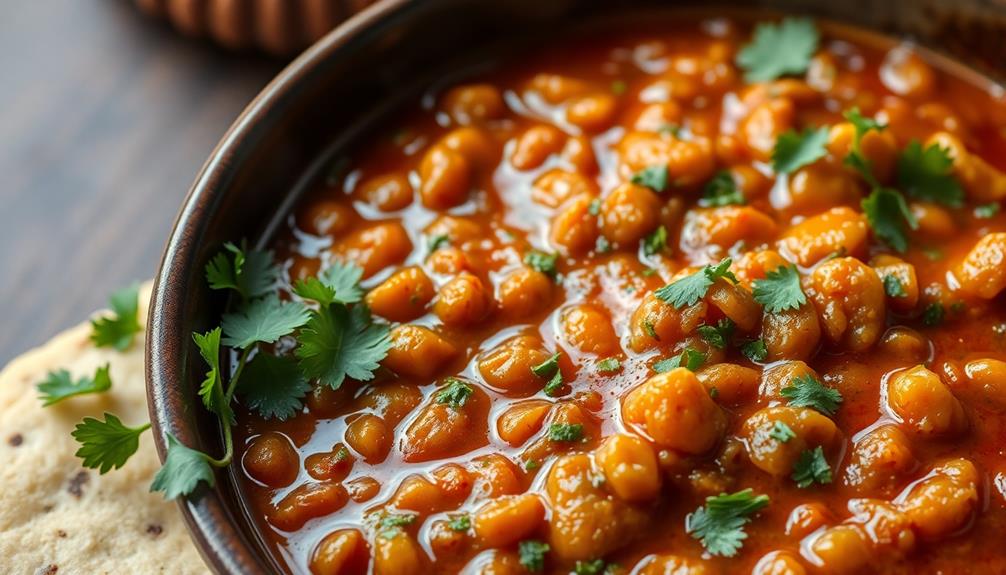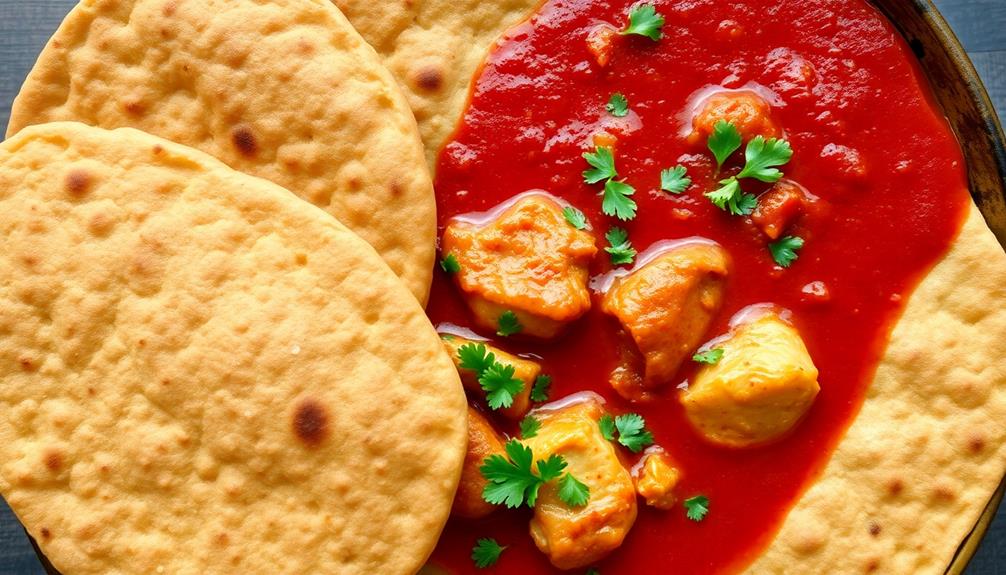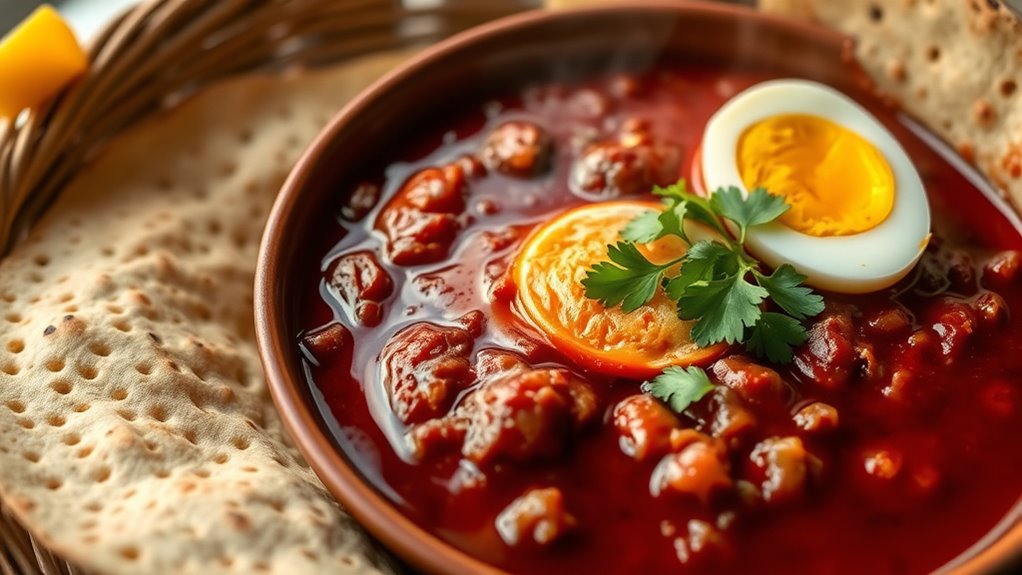

Ethiopian Doro Wat and Injera bring you a vibrant, flavorful tradition rooted in centuries of culture. Doro Wat’s bold spices like berbere and ginger create a fiery, aromatic stew, while injera’s spongy, tangy texture comes from days of fermentation from teff flour. Sharing this meal with others symbolizes unity, community, and respect for heritage. If you keep exploring, you’ll discover the rich history and cultural significance behind this beloved Ethiopian culinary practice.
Key Takeaways
- Doro Wat features a carefully curated spice blend including berbere, garlic, ginger, and fenugreek, creating a fiery, aromatic flavor.
- Injera’s fermentation from teff flour produces a spongy, tangy bread that symbolizes resilience and Ethiopian hospitality.
- Both dishes reflect Ethiopia’s rich cultural heritage, with spices and fermentation practices passing through generations.
- Sharing injera and Doro Wat emphasizes community, unity, and Ethiopian social customs.
- These traditional foods embody Ethiopia’s history, identity, and culinary pride, connecting families and honoring cultural traditions.

Have you ever wondered what makes Ethiopian Doro Wat and Injera a beloved culinary duo? The answer lies in the rich tapestry of flavors and cultural traditions intertwined with each dish. At the heart of Doro Wat’s bold taste is meticulous spice blending. You’ll notice that the dish isn’t just spicy for the sake of heat; it’s a carefully curated combination of spices like berbere, paprika, garlic, ginger, and sometimes fenugreek. This spice blend is essential, creating a complex flavor profile that’s both fiery and aromatic, and it’s what truly sets Doro Wat apart from other stews. When you prepare or enjoy this dish, you’re not just eating food—you’re experiencing a centuries-old tradition that has been passed down through generations. The spices used aren’t random; they carry cultural significance, representing Ethiopia’s history and its connection to the land and its people. Berbere, for example, isn’t just a spice blend but a symbol of Ethiopian identity, often homemade and unique to each family or region. This careful spice blending isn’t just about flavor—it’s a reflection of cultural heritage, social customs, and shared history. Every spoonful of Doro Wat is a celebration of these traditions.
Injera, the sourdough flatbread that perfectly accompanies Doro Wat, also holds deep cultural significance. Its spongy texture and tangy taste come from a fermentation process that can take several days, involving teff flour, water, and time. This process isn’t just about making bread—it’s a communal activity that brings families and communities together. When you tear a piece of injera and scoop up the stew, you’re participating in a tradition that emphasizes sharing and unity. The unique taste and texture of injera symbolize resilience and adaptability, as teff is a hardy grain suited to Ethiopia’s climate. It’s more than just a bread; it’s a cultural icon representing Ethiopian hospitality and identity. The way injera is served—placed on a large communal platter, with Doro Wat ladled on top—fosters a sense of togetherness. As you partake in this meal, you’re engaging with a profound cultural practice that has endured for centuries, uniting people through food. Additionally, the process of making injera involves authentic sourcing of ingredients and traditional fermentation techniques that preserve its cultural integrity.
Together, Doro Wat and Injera embody Ethiopia’s culinary soul—rich in history, culture, and tradition. Every bite connects you to generations of Ethiopians who have preserved these recipes, not just as nourishment but as a way of life. The spice blending and cultural significance behind each element invite you to experience more than just flavors; they offer a glimpse into Ethiopia’s vibrant heritage.
Frequently Asked Questions
What Are the Traditional Beverages Served With Doro Wat and Injera?
You typically enjoy Ethiopian coffee and Tej honey wine with Doro Wat and Injera. Ethiopian coffee, often prepared in a traditional ceremony, complements the spicy flavors nicely. Tej, a honey wine, adds a sweet, bubbly touch that balances the rich, savory dishes. These beverages enhance your dining experience, connecting you to Ethiopia’s cultural traditions and making your meal more memorable.
How Do Regional Variations Affect the Preparation of Doro Wat?
Did you know that regional variations influence over 60% of traditional Ethiopian dishes? When preparing doro wat, you’ll notice that regional ingredients and cooking techniques markedly shape its flavor and texture. In some areas, people use more berbere spice blends, while others prefer different types of chicken or cooking methods like slow simmering or quick braising. These differences make each regional version unique and deeply connected to local traditions.
Can Doro Wat and Injera Be Made Vegan or Vegetarian?
Yes, you can make Doro Wat and Injera vegan or vegetarian. For a vegan adaptation, replace chicken with plant-based protein like tofu or seitan, and use vegetable broth instead of animal-based stock. Vegetarian alternatives include hearty vegetables or mushrooms. You still get the rich, spicy flavors, and the traditional injera pairs perfectly. Just adjust the seasonings and ingredients, and you’ll enjoy a delicious, plant-based version of this classic Ethiopian dish.
What Are the Health Benefits of Ethiopian Spices Used?
Ethiopian spices are your immune system’s best friends, packed with spice antioxidants and herbal anti-inflammatories. These vibrant flavors act like natural warriors, fighting off free radicals and calming inflammation. When you include spices like turmeric, cumin, and berbere in your meals, you boost your health with their powerful properties. Think of them as nature’s medicine cabinet, offering delicious protection that keeps you feeling your best.
How Is the Fermentation Process of Injera Traditionally Maintained?
You maintain the fermentation process of injera by using traditional fermentation techniques, which involve a natural starter culture made from teff flour and water. You keep the batter in a warm environment, allowing wild yeasts and bacteria to develop naturally. Regularly, you feed the starter with fresh flour and water, ensuring active fermentation. This process can take several days, resulting in a sour, spongy injera with authentic flavor and texture.
Conclusion
Imagine yourself stepping into a bustling Ethiopian kitchen, where the rich aroma of Doro Wat and the soft, spongy Injera greet you like old friends. Each bite is a journey through time, a dance of flavors that paints the canvas of tradition. As you savor this vibrant feast, you become part of a story that’s been shared over generations—a tapestry woven with spice, love, and culture. Embrace it, and let it carry you home.