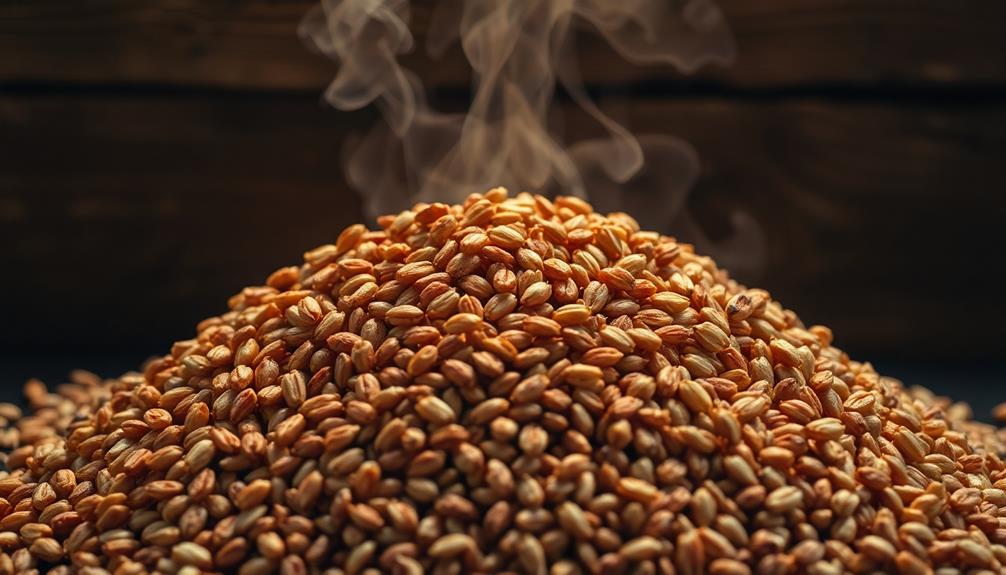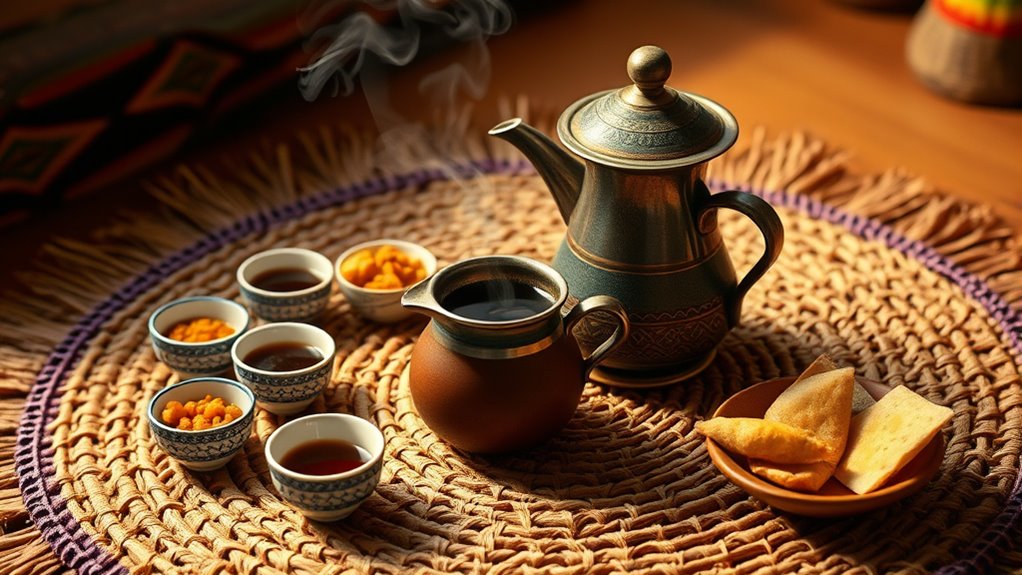

Experience East African cuisine through Ethiopia’s famous coffee ceremony, a warm social ritual that involves roasting green beans, grinding them by hand, and brewing in a traditional jebena over fire. Along with the coffee, you’ll enjoy snacks like roasted chickpeas and spiced popcorn, symbolizing community and cultural pride. This ceremony highlights hospitality, craftsmanship, and regional flavors—offering a rich taste of Ethiopia’s vibrant heritage. Keep exploring to discover more about this mesmerizing tradition.
Key Takeaways
- The Ethiopian coffee ceremony is a communal ritual involving roasting, grinding, and brewing coffee, emphasizing hospitality and social bonding.
- Traditional snacks like roasted chickpeas, spiced popcorn, and bread accompany the coffee, reflecting local ingredients and culinary traditions.
- Coffee in East Africa symbolizes community, respect, and cultural pride, playing a vital role in social and spiritual life.
- The ceremony highlights craftsmanship and regional agricultural products, showcasing East Africa’s rich culinary heritage.
- This cultural practice fosters connection, embodies hospitality, and offers sensory experiences of aroma, taste, and social interaction.
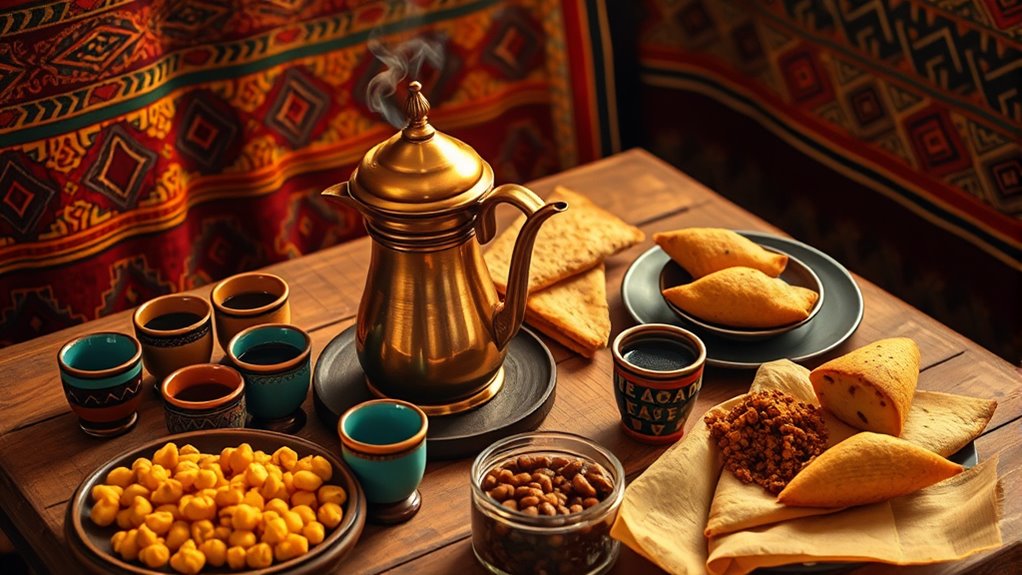
Have you ever wondered what makes East African cuisine so lively and diverse? It’s a rich tapestry of flavors, traditions, and history that come together in every bite and sip. One of the most mesmerizing aspects is the Ethiopian coffee ceremony, a ritual that highlights the importance of coffee preparation in the region. When you participate in this ceremony, you’re not just drinking coffee; you’re experiencing a cultural expression. The process begins with the host carefully roasting green coffee beans over an open flame, filling the air with a fragrant aroma that instantly awakens your senses. Once roasted, the beans are ground using traditional methods, often with a mortar and pestle, emphasizing the communal nature of the experience. The ground coffee is then brewed in a special pot called a jebena, which is placed over the fire. As the coffee brews, it’s customary to serve it in small cups, often accompanied by traditional snacks that balance the rich, bold flavors of the brew. These snacks might include roasted chickpeas, spiced popcorn, or small pieces of bread, each offering a taste of local culture.
The Ethiopian coffee ceremony isn’t just about drinking coffee; it’s a social ritual that fosters connection and respect. The host’s careful preparation and the shared experience underscore the significance of hospitality in East African culture. While coffee takes center stage, the traditional snacks served alongside play an equally essential role. They’re often simple yet flavorful, reflecting local ingredients and culinary techniques passed down through generations. These snacks serve as a perfect complement to the coffee’s complexity, offering a variety of textures and tastes that enhance the overall experience. Additionally, the spiritual significance of coffee in East African society highlights its role beyond mere consumption, symbolizing community bonds and cultural identity.
In East Africa, the art of coffee preparation is revered, and it’s often seen as a symbol of community and hospitality. Participating in this ritual gives you a glimpse into the region’s soul, where every step shows care and craftsmanship. Alongside this, the traditional snacks tell their own story—of local agriculture, cultural exchange, and everyday life. Whether you’re savoring a freshly brewed cup of coffee or nibbling on a traditional snack, you’re immersing yourself in the rich cultural fabric that makes East African cuisine so unique. It’s a celebration of flavors, traditions, and connections that invites you to appreciate the depth and warmth of this lively culinary heritage.
Frequently Asked Questions
What Are the Traditional Utensils Used in the Ethiopian Coffee Ceremony?
In the Ethiopian coffee ceremony, you use traditional utensils like a jebena for brewing, which is a round, clay coffee pot. You pour the coffee carefully during coffee pouring, ensuring a smooth, controlled flow. A small cup called a buna tetu is used for serving, allowing guests to enjoy the rich aroma. These utensils create an authentic experience, enhancing the ritual of coffee serving and celebrating Ethiopian hospitality.
How Is the Coffee Roasted Traditionally in Ethiopia?
You traditionally roast coffee in Ethiopia by first selecting fresh coffee beans from the coffee plant cultivation. You spread the beans in a pan over open flame, stirring constantly to guarantee even roasting. During this process, you might notice the aroma of fermentation as the beans develop their rich flavor. The roasting enhances the coffee bean fermentation process, revealing complex aromas and preparing the beans for grinding and brewing.
What Are Popular East African Snacks Served During the Coffee Ceremony?
Like a treasure chest of flavors, East African snacks add sparkle to your coffee experience. During the coffee ceremony, you’ll often enjoy popcorn, roasted chickpeas, or small pieces of bread called injera. These coffee accompaniments complement the rich, aromatic brew perfectly. You can also find fried plantains or sweet pastries, making each sip even more delightful. These snacks turn a simple coffee ritual into a warm, inviting celebration of community.
How Long Does the Traditional Ethiopian Coffee Ceremony Typically Last?
The traditional Ethiopian coffee ceremony usually lasts about an hour, though it can extend depending on social settings. You’ll experience traditional coffee brewing techniques like roasting beans over an open flame, grinding them fresh, and brewing in a jebena. This ceremony holds deep cultural significance, symbolizing hospitality and community. As you participate, you’ll see how each step reflects Ethiopia’s rich heritage and the importance of sharing coffee with others.
Are There Regional Variations in East African Coffee Preparation Methods?
Think of East Africa’s coffee as a tapestry, each region adding its unique thread. You’ll find variations in regional brewing techniques that influence the coffee flavor profiles, from Ethiopia’s traditional clay pots to Kenya’s pour-over methods. These differences reflect local tastes and cultural influences, making each cup a distinct experience. So, when you explore East African coffee, you’re savoring more than a beverage—you’re tasting diverse traditions.
Conclusion
So, next time you sip that Ethiopian coffee, remember you’re tasting centuries of tradition, roasted and brewed with a dash of ceremony. Snack on injera or spicy lentils and pretend you’re a local—no passport needed. Who knew East African cuisine could turn a simple coffee break into a cultural adventure? Just don’t blame us if you start craving injera at your next board meeting. It’s a flavorful journey you might never want to end!