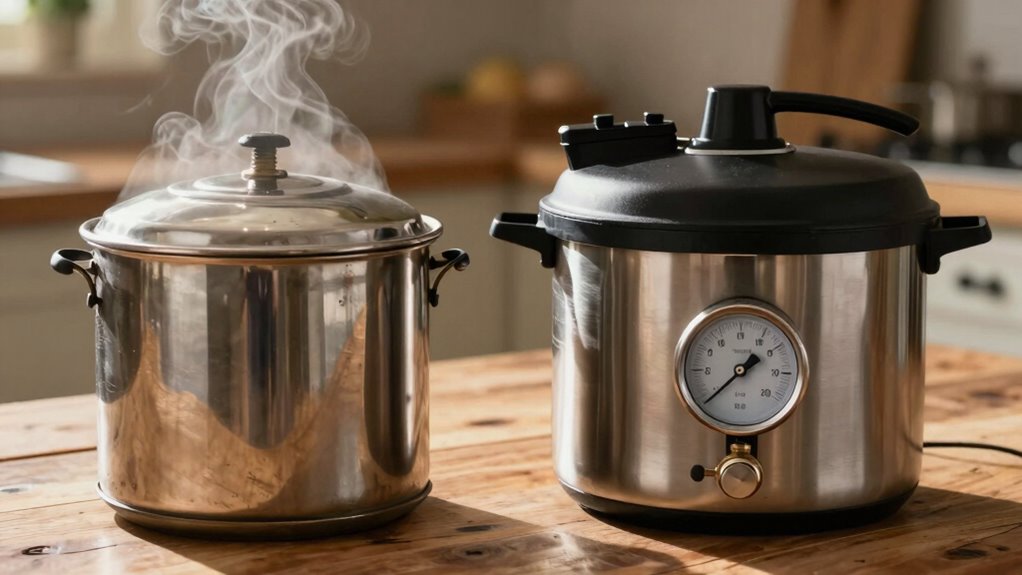

When choosing between steam and pressure canners, safety depends on proper use and understanding of food types. Steam canners are safe for high-acid foods like fruits and jams, but only if used correctly and for specific times. Pressure canners are essential for low-acid foods like vegetables and meats, requiring careful handling to prevent underprocessing and explosions. Knowing when and how to use each method can protect your health, and more important safety tips await you as you explore further.
Key Takeaways
- Pressure canners are essential for low-acid foods to reach temperatures above 212°F for safe preservation.
- Steam canners are suitable for high-acid foods and are generally safer, with less risk of explosive failure.
- Proper use, regular maintenance, and accurate processing times are critical for both canning methods to ensure safety.
- Using the wrong canner for the food type or neglecting altitude adjustments increases food safety risks.
- Following manufacturer instructions and safety guidelines minimizes the risk of underprocessing and potential explosions.

Kitchen Crop Steam Canner with Temperature Indicator (Stainless Steel Steam Canner)
- Safe and Easy to Use: Cool-touch handles for safe handling
- Efficient and Lightweight: Uses 80% less water, quicker heat-up
- Built-in Temperature Indicator: Simplifies timing with internal gauge
As an affiliate, we earn on qualifying purchases.
As an affiliate, we earn on qualifying purchases.
How Do Steam and Pressure Canners Work?
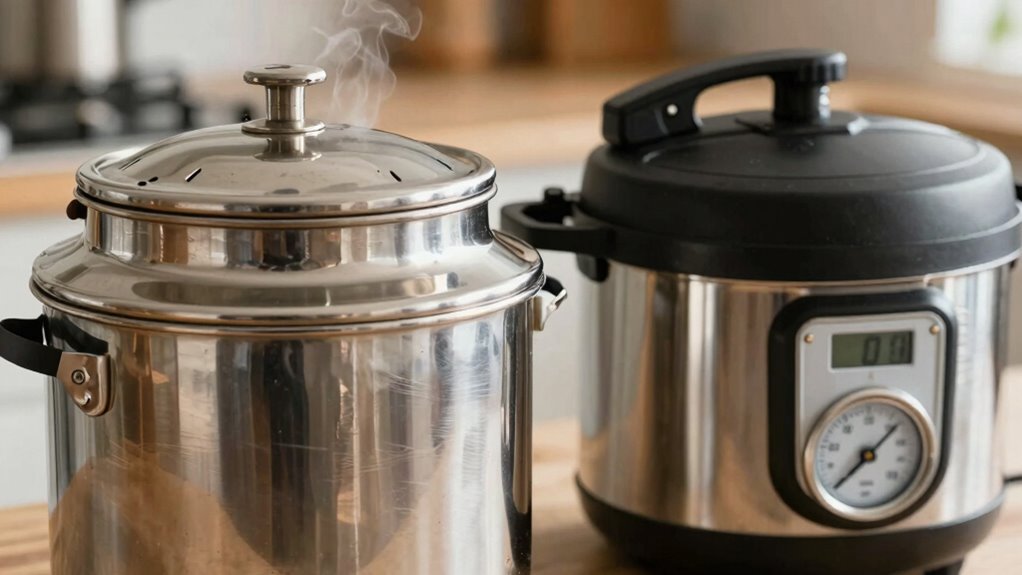
Steam and pressure canners both use heat to destroy bacteria and enzymes in food, but they operate differently. Steam technology in a steam canner depends on the buildup of steam to reach temperatures around 212°F, using hot steam to preserve food. It’s simple, with a small amount of water, and heats quickly, making it efficient. Pressure canners, on the other hand, use a sealed chamber to trap steam and increase pressure, raising temperatures above 212°F. This higher heat ensures thorough sterilization, especially for low-acid foods. Canning efficiency depends on how well each method maintains consistent temperatures. Steam canners excel in energy efficiency and ease of use, while pressure canners provide more reliable sterilization for a wider range of foods. Both rely on heat, but their mechanisms and effectiveness differ. Regional flavors and insights also influence the choice of canning method to preserve traditional tastes and beverages, highlighting the importance of understanding canning safety and proper techniques.
What Are the Safety Risks of Each Canning Method?
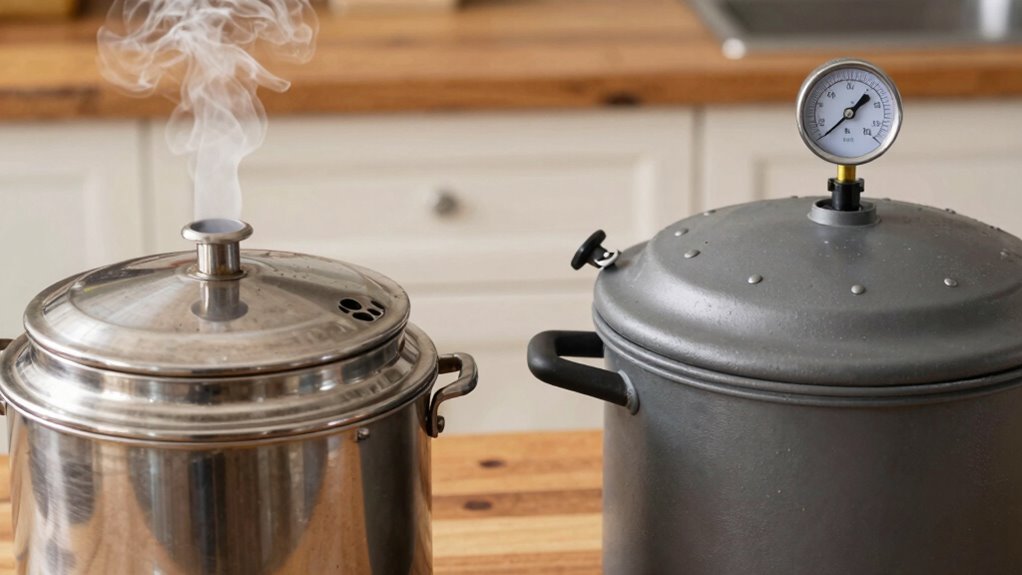
Both steam and pressure canners carry safety risks if not used properly. You might underprocess your jars, risking food spoilage, or face the danger of explosive failures if pressure builds up too high. Understanding these risks helps you take the right precautions to keep your canning safe. Additionally, ensuring proper maintenance and understanding the specific canning techniques can significantly reduce potential hazards. Proper pressure regulation is essential to prevent dangerous malfunctions during the process. Being aware of how to manage air quality in your environment can also help prevent accidents related to canning fumes or equipment malfunction. Regularly inspecting your equipment and staying informed about best practices for safe canning can further reduce the chances of accidents.
Risk of Underprocessing
Have you ever wondered what happens if canning isn’t done correctly? Underprocessing is a significant risk that can compromise food safety and your health considerations. If you don’t process jars long enough or at the right pressure, bacteria like Clostridium botulinum can survive, leading to dangerous foodborne illnesses. Steam canners, which operate at lower temperatures, may increase the risk if not used properly, especially with low-acid foods. Pressure canners, while more effective at killing bacteria, also require precise timing and pressure levels. Insufficient processing in either method leaves your preserved food vulnerable to spoilage and toxin formation. To ensure safety, you must follow recommended processing times and techniques carefully, minimizing the risk of underprocessing and protecting your health. Understanding digital content and research can help you stay informed about best practices for safe canning methods.
Potential for Explosive Failure
While canning methods are designed to be safe when used correctly, each carries a potential risk of explosive failure if safety protocols are ignored. Steam canners, which operate at lower pressures, generally pose fewer explosive hazards but still require strict attention to safety precautions. Pressure canners, on the other hand, reach higher pressures that increase the risk of explosive failure if the pressure gauge malfunctions or vents improperly. Failing to monitor pressure levels or neglecting safety checks can lead to dangerous explosions, risking injury and spoilage. Always make certain your equipment is in good condition, follow manufacturer instructions, and use proper safety precautions. Recognizing these risks helps you prevent potential explosive hazards and maintain a safe canning environment. Additionally, understanding how to manage heat buildup and ensure proper wiring can help prevent electrical hazards associated with canning equipment. Proper pressure regulation is crucial to avoid dangerous pressure surges, and being aware of safety standards can further reduce risks during operation. Regularly inspecting and maintaining your canning equipment enhances overall safety and minimizes the chance of accidents. Being familiar with emergency procedures can also be a valuable part of maintaining a safe canning setup.
When Is It Safe to Use a Steam Canner?

You should use a steam canner only with specific foods that are suitable for this method, such as acidic fruits and vegetables. Make certain to follow accurate processing times to guarantee safety and quality. If you’re unsure, consult reliable guidelines before deciding if a steam canner is appropriate. Additionally, understanding essential survival gear items can help you be prepared for emergencies that might occur during processing or storage. Knowing the safety guidelines for canning methods can further ensure your preservation efforts are both safe and successful. Being aware of the recommended food types for steam canning can also prevent foodborne illnesses and ensure optimal results. To ensure safety, it is also important to recognize the proper equipment needed for effective steam canning. Proper indoor air quality and humidity control during processing can help maintain a safe environment and prevent the buildup of moisture that might lead to mold or spoilage.
Proper Food Types
Steam canners are best suited for processing high-acid foods such as jams, jellies, pickles, and certain fruits. These foods naturally have the acidity needed for safe canning without a pressure process. Using a steam canner helps preserve flavor and maintains the food’s fresh taste, making it ideal for these items. Additionally, steam canners support texture retention, which is essential for foods like pickles and soft fruits. Proper food acidity levels are crucial for ensuring safety, so always verify the acidity before canning. However, they’re not suitable for low-acid foods like vegetables or meats, which require pressure canning for safety. Always check food acidity levels before choosing your canning method. Properly selected food types guarantee safe, delicious results while protecting the quality of your preserved foods.
Accurate Processing Times
Accurate processing times are essential to guarantee safety and quality when using a steam canner. If you don’t follow recommended times, you risk underprocessing, which can compromise flavor preservation and safety, or overprocessing, which may affect texture and storage considerations. To ensure proper results, keep these points in mind:
- Always follow tested processing times specific to your food type and jar size.
- Use a reliable timer to avoid guesswork.
- Adjust times if altitude changes, as it impacts processing requirements.
- Recognize that incorrect timing can lead to spoilage or compromised flavor, affecting your storage options.
- Proper canner maintenance is crucial to ensure your equipment functions correctly and maintains safety standards.
Adhering to precise times ensures your canned goods stay safe, flavorful, and suitable for storage.
How to Safely Use a Pressure Canner?

Using a pressure canner safely requires careful attention to guidelines and proper operation. Always check the manufacturer’s instructions before starting, and verify your canner is in good condition. Use the correct amount of water and never overfill, as this can compromise safety and affect the aesthetic appeal of your canned goods. Maintain steady pressure throughout the process, adjusting the heat as needed, to guarantee thorough processing and flavor enhancement. Be vigilant during venting and watch for the pressure gauge, making sure it stays within the recommended range. Properly securing the lid and following the specified processing time are essential. This careful approach not only guarantees safety but also preserves the quality and appearance of your preserved foods. Following safety guidelines is crucial to prevent accidents and ensure successful canning.
Common Canning Mistakes to Avoid
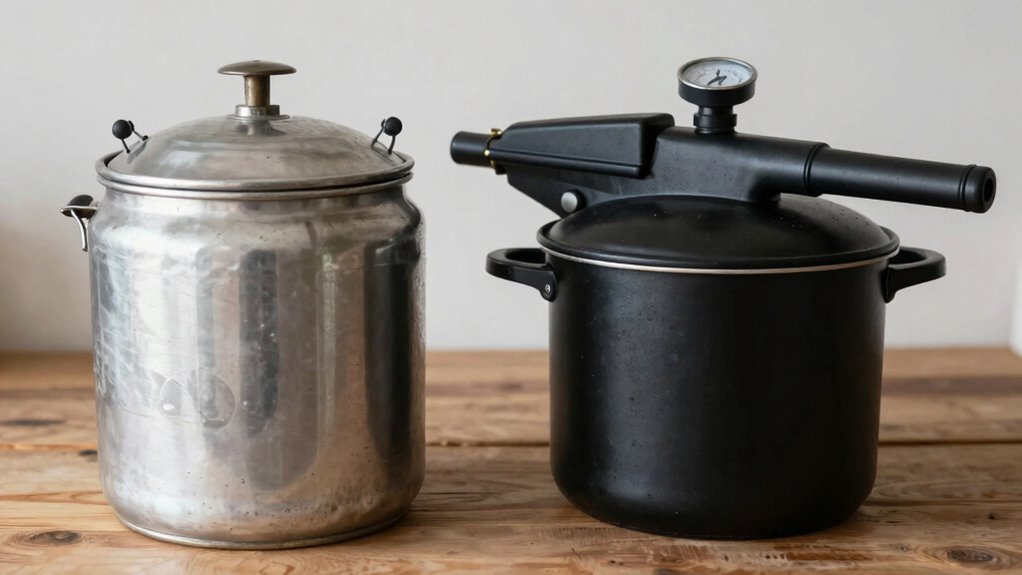
Many common canning mistakes can compromise both safety and the quality of your preserved foods, so it’s essential to be aware of and prevent them. Falling for canning myths can lead to unsafe practices, such as using outdated methods or ignoring recommended preservation techniques. To guarantee success, steer clear of these errors:
- Using the wrong jars or lids, which can cause spoilage.
- Not properly sterilizing jars before filling.
- Overfilling or underfilling jars, affecting sealing and preservation.
- Ignoring altitude adjustments, which can impact processing times and safety.
- Overlooking proper food safety practices that are crucial for preventing contamination and spoilage. Understanding astrological signs and how they may influence your confidence can also help you approach canning with a positive mindset and attention to detail. Additionally, familiarizing yourself with preservation techniques can help ensure your methods are current and effective. Incorporating the latest food preservation research can further enhance the safety and longevity of your canned goods.
Avoid these pitfalls by sticking to tested preservation techniques and debunking canning myths. Proper knowledge helps you produce safe, high-quality canned foods and keeps your family protected.
Choosing the Right Canner for Your Preservation Goals
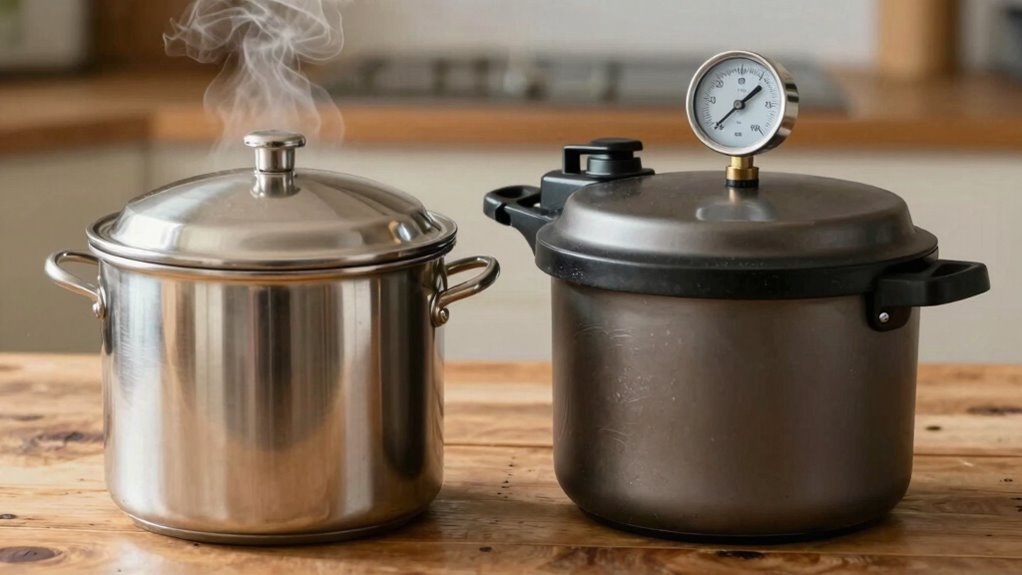
Choosing the right canner depends on your preservation goals and the types of foods you plan to store. If you’re focusing on low-acid foods like vegetables and meats, a pressure canner is essential for safety. For high-acid foods such as fruits and jams, a steam canner may suffice. Consider your available space and budget when selecting equipment. Proper canning accessories, like jar lifters and sealing tools, guarantee safety and efficiency. Storage techniques also matter; well-organized shelves and moisture-proof containers protect your preserved foods. Here’s a quick comparison:
| Canner Type | Suitable Foods | Key Accessories |
|---|---|---|
| Steam Canner | High-acid foods | Jar rack, steam vent |
| Pressure Canner | Low-acid, meats, vegetables | Pressure gauge, safety valve |
Match your needs with these factors to preserve safely and effectively.
Frequently Asked Questions
Can I Use a Steam Canner for Low-Acid Foods?
You shouldn’t use a steam canner for low-acid foods because steam sterilization isn’t reliable for them. Low-acid foods, like vegetables and meats, require the higher temperatures achieved with pressure canning to guarantee safety. Relying on a steam canner may leave canning jars with bacteria or spores. For these foods, always opt for a pressure canner to properly process and preserve your jars safely.
How Do I Know if My Pressure Canner Is Functioning Properly?
You can check if your pressure canner is functioning properly by inspecting the gasket for cracks or wear, ensuring the pressure gauge reads accurately, and testing the safety valves. Regular canning jar safety depends on maintaining proper pressure and seals, so follow canner maintenance tips like cleaning parts thoroughly and storing it properly. Always verify pressure levels with a calibration weight or gauge to keep your canning safe and effective.
Are Electric Canners as Safe as Traditional Models?
Did you know electric canners often have over 10 safety features? They’re generally as safe as traditional models, thanks to modern canning technology designed for electric safety. Electric canners automate temperature and pressure controls, minimizing human error. However, always follow manufacturer instructions and make certain your unit is well-maintained. With proper use, electric canning can be just as safe, providing peace of mind while preserving your home-canned goods.
What Are the Signs of a Malfunctioning Pressure Canner?
You’ll know your pressure canner is malfunctioning if it doesn’t maintain proper pressure, which you can tell by irregular pressure release or fluctuating gauge readings. Check the seal integrity—if the gasket is cracked or damaged, it can cause pressure loss. Also, watch for steam escaping from anywhere except the vent. These signs indicate it’s time to inspect, repair, or replace your pressure canner to guarantee safe, effective canning.
How Often Should I Replace or Upgrade My Canning Equipment?
You should replace or upgrade your canning equipment every 5 to 10 years, depending on usage and condition. Check the durability of your canning jars regularly, looking for cracks or chips, to guarantee safety. Staying current with kitchen safety standards is vital, so update your pressure or steam canner if it shows signs of wear or doesn’t meet current safety guidelines. Regular upgrades help prevent accidents and preserve food quality.
Conclusion
Choosing between steam and pressure canners is like steering through a culinary jungle—you need the right tools to safely tame the wild flavors. With a clear understanding of each method’s safety lines, you’ll steer clear of pitfalls and confidently preserve your bounty. Remember, your kitchen’s safety is the compass guiding every jar. Trust your knowledge, follow the rules, and turn your canning adventure into a delicious, worry-free journey through the preserves of your own making.