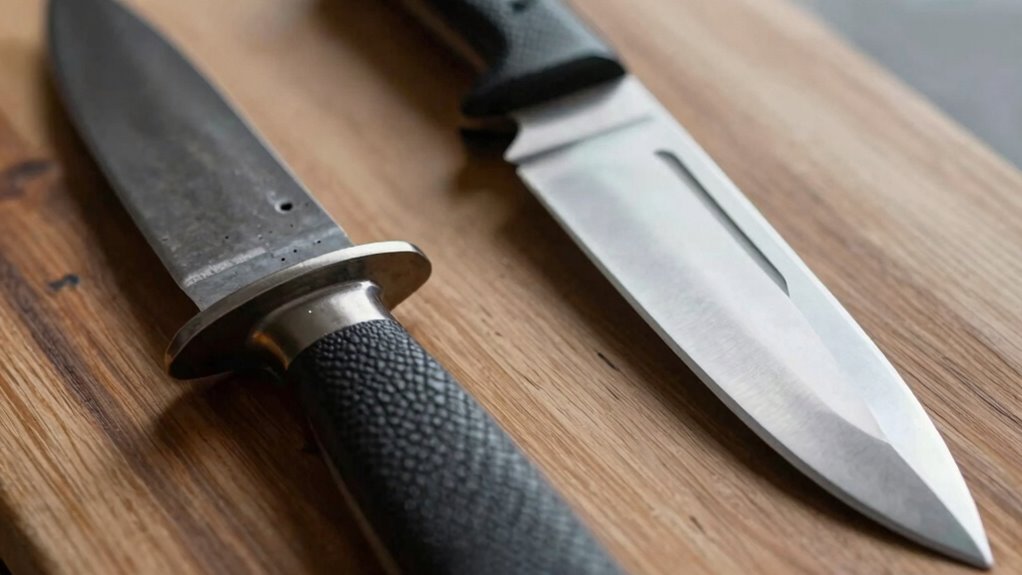

When you handle a forged knife, you’ll immediately notice its weight, sturdy feel, and balanced design, perfect for heavy-duty tasks. Stamped knives, on the other hand, are lighter and more maneuverable, which makes precise, quick cuts easier. Forged knives tend to be thicker and more robust, offering durability and long-lasting sharpness, while stamped knives require more frequent sharpening. To discover which type suits your style and tasks best, keep exploring more details and insights.

Get kitchen staples and gadgets delivered free — and shop member deals
- Fast, free delivery on millions of items
- Access to Prime Big Deal Days deals on October 6–7
- Prime Video, Amazon Music and more included
Key Takeaways
- Forged knives feel heavier and more balanced, providing a sturdy, confident grip during cutting tasks.
- Stamped knives are lighter and more maneuverable, ideal for quick, precise cuts.
- Forged knives offer a more solid, substantial feel due to their thicker, robust blades.
- Stamped knives feel lighter in hand, reducing fatigue during extended use.
- The difference in weight and balance is noticeable immediately, influencing comfort and cutting efficiency.
As an affiliate, we earn on qualifying purchases.
How Are Forged and Stamped Knives Made, and What Does That Mean for Durability?
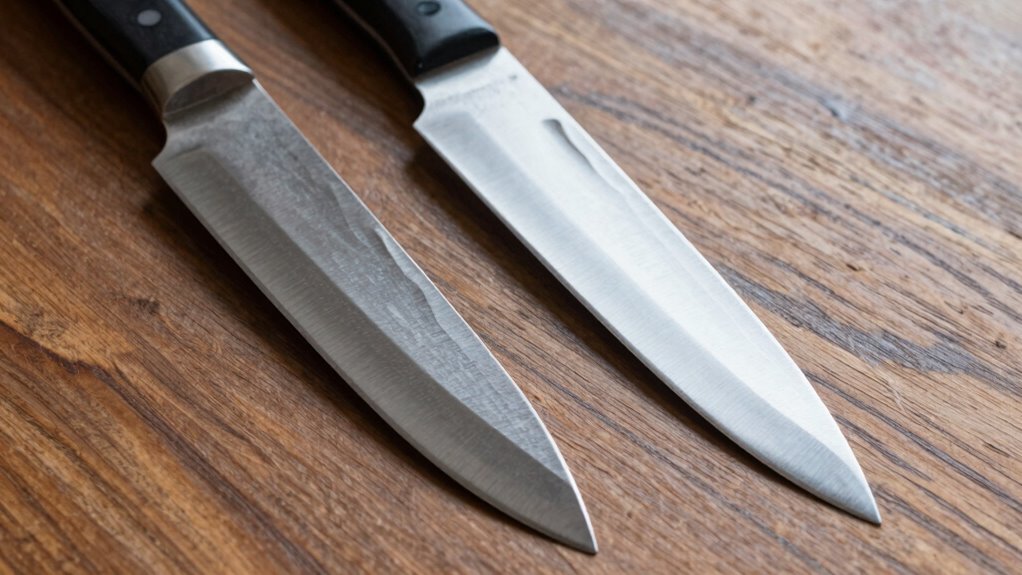
To understand the durability differences between forged and stamped knives, it’s important to know how they’re made. Knife craftsmanship plays a key role in this process, influencing the knife’s strength and longevity. Forged knives are crafted from a single piece of high-quality steel that’s heated and shaped through hammering or pressing. This method creates a dense, uniform structure, making the blade more durable and resistant to chipping. In contrast, stamped knives are cut from large sheets of steel using a die, then sharpened. Material differences matter here; stamped blades tend to be thinner and less robust because they lack the layered, forged structure. These manufacturing techniques directly impact how well the knife withstands regular use, with forged knives generally offering superior durability. Additionally, the impact of manufacturing technology can influence the overall quality and performance of the knife over time.
How Does Weight and Balance Affect Your Cutting Power?
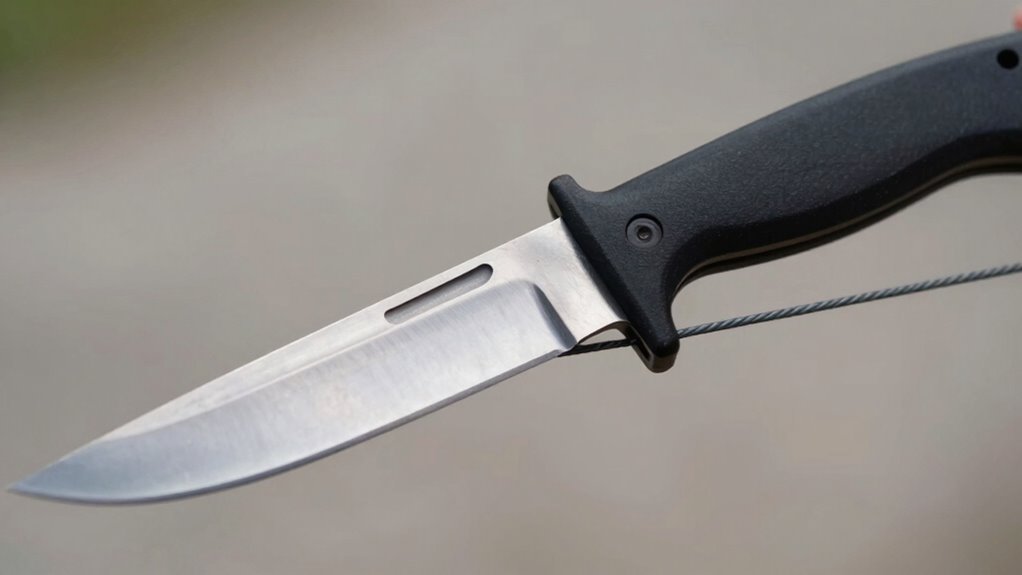
The weight and harmony of a knife directly influence your cutting efficiency and comfort. A well-balanced knife feels natural in your hand, reducing fatigue and enhancing knife ergonomics. Heavier blades generate more momentum, making cutting through tough ingredients easier, while lighter knives offer agility for delicate tasks. Proper balance ensures your wrist remains steady, increasing cutting precision. Imagine this:
| Heavy & Unbalanced | Perfectly Balanced | Light & Agile |
|---|---|---|
| Difficult control | Precise control | Quick maneuvering |
| Fatigue fast | Comfort for hours | Responsive feel |
| More force needed | Less effort | Sharp, clean cuts |
| Struggles with finesse | Smooth, effortless | Precise slicing |
Achieving optimal knife balance can significantly improve your overall cutting experience. Your choice in weight and harmony determines how comfortably and accurately you cut, affecting overall performance. Regularly inspecting and maintaining your knife care and hygiene ensures your tools and accessories remain in optimal condition for safe use. Additionally, understanding the material composition of your knives can influence their durability and performance over time.
How Sharp Are Forged and Stamped Knives, and How Do You Keep Them Sharp?

Both forged and stamped knives can achieve impressive sharpness, but how they hold that edge varies due to their manufacturing processes. Forged knives tend to maintain their sharpness longer because their thicker, more robust blade resists dulling. Stamped knives, while initially sharp, may require more frequent sharpening to maintain cutting performance. Proper knife maintenance is key—regular honing helps realign the edge, while occasional sharpening restores its sharpness. Your cutting techniques also matter; using a gentle, controlled motion reduces unnecessary wear. Avoid cutting on hard surfaces like glass or stone, which can dull blades quickly. Manufacturing processes significantly influence the durability and sharpness retention of the blades. Blade durability is also affected by the type of steel used and how it’s treated during production. With consistent care and proper technique, both types of knives can stay sharp, ensuring clean cuts and efficient food prep over time.
What Are the Best Uses for Forged vs. Stamped Knives?

Forged and stamped knives are suited to different tasks based on their construction and durability. Forged knives excel in heavy-duty tasks like butchering or chopping, thanks to their strength and balance. Stamped knives are ideal for precision work, such as slicing fruits or vegetables, due to their lighter weight and sharpness. When considering knife aesthetics, forged knives often feature a more refined finish, appealing to those who value craftsmanship. Price comparison shows stamped knives are generally more affordable, making them suitable for everyday use. Use forged knives for demanding tasks that require durability, and opt for stamped knives for quick, delicate cuts. Both types serve specific needs, so choose based on your kitchen tasks and aesthetic preferences. Additionally, understanding the long-term maintenance of each type can help extend their lifespan and performance. Proper care, including cleaning and storage, can significantly impact the durability and safety of both forged and stamped knives.
Which Knife Is Right for Your Kitchen: Making the Choice Based on Feel and Function?
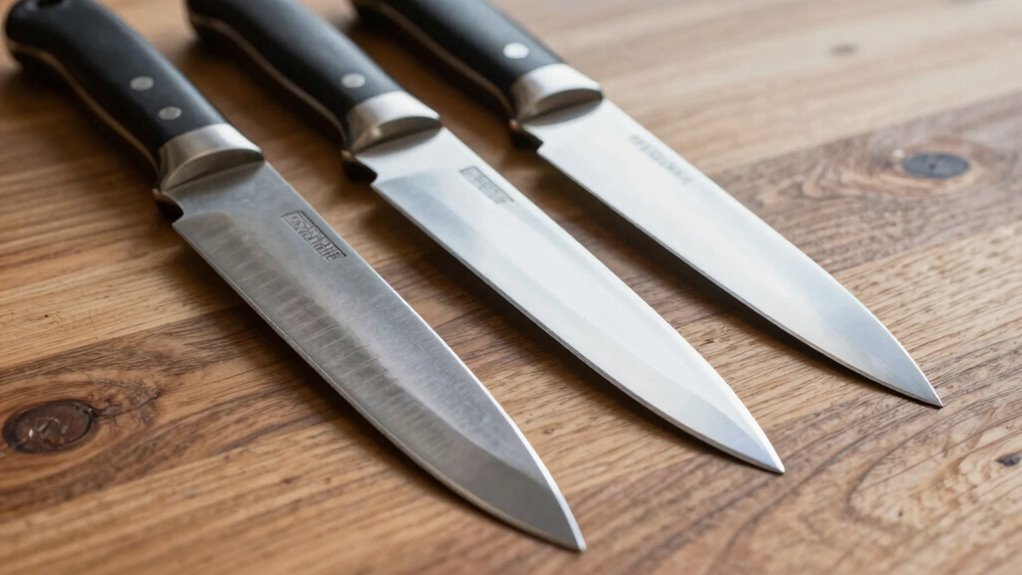
Choosing the right knife for your kitchen depends largely on how it feels in your hand and the tasks you’ll use it for most often. Knife aesthetics play a role in your comfort and confidence, so select a design that appeals to you. Material differences are also key—stainless steel blades offer durability, while high-carbon steel provides sharpness and edge retention. Forged knives tend to feel heavier and more balanced, offering better control, while stamped knives are lighter and more maneuverable. Consider the weight, balance, and grip of each knife to find one that feels natural during use. Ultimately, your choice should match your cooking style, comfort, and the types of tasks you perform most often in your kitchen.
Frequently Asked Questions
Are Forged Knives More Expensive Than Stamped Knives?
Yes, forged knives are generally more expensive than stamped knives. You’ll notice their higher cost reflects better kitchen aesthetics and superior craftsmanship, which contributes to their durability and balance. For culinary precision, forged knives offer a more consistent edge and feel more comfortable in your hand. Though pricier, investing in a forged knife can elevate your cooking experience and maintain its sharpness longer, making it worthwhile for serious chefs and enthusiasts alike.
Can Stamped Knives Be Just as Durable as Forged Ones?
You might think stamped knives can’t match forged ones in durability, but don’t be fooled. Thanks to advanced manufacturing precision, stamped blades now boast impressive strength and blade flexibility, making them surprisingly resilient. While forged knives traditionally excel, high-quality stamped knives can withstand daily use and last years. So, don’t dismiss stamped knives—they can be just as durable, especially when craftsmanship focuses on perfecting manufacturing precision.
How Long Do Forged and Stamped Knives Typically Last?
Forged knives generally last longer because they have greater blade strength, which helps prevent chipping or breaking over time. Stamped knives, while often less durable, can still serve you well with proper care, but they may need replacement sooner. Your cutting precision can stay sharp longer in forged knives, especially with regular honing and maintenance. Overall, forged blades tend to have a longer lifespan, often lasting decades with proper care.
Do Different Brands Impact the Performance of Forged vs. Stamped Knives?
You might think brand reputation and material quality don’t matter much, but they greatly impact performance. A reputable brand with high-quality materials ensures your forged or stamped knife stays sharp longer and handles better. Cheaper or lesser-known brands often cut corners, resulting in blades that dull quickly or feel less balanced. So, investing in trusted brands with top-quality materials guarantees you better durability and cutting precision, regardless of whether the knife is forged or stamped.
Is Maintenance Different Between Forged and Stamped Knives?
Maintenance differs slightly between forged and stamped knives. You’ll notice forged blades often have better blade flexibility, making them more durable, but they may require more careful sharpening techniques to maintain their edge. Stamped knives are usually easier to sharpen and keep sharp with less effort. Both need regular honing and proper cleaning, but forged knives tend to need more attention to preserve their shape and performance over time.
Conclusion
Choosing between forged and stamped knives ultimately comes down to your needs and preferences. Remember, a good tool is only as strong as the hands that wield it, so pick what feels right and suits your cooking style. Whether you opt for durability or affordability, knowing the difference will help you make an informed decision. As the saying goes, “A sharp knife is a chef’s best friend,” so choose wisely and enjoy every cut!
Halloween Picks
halloween
As an affiliate, we earn on qualifying purchases.