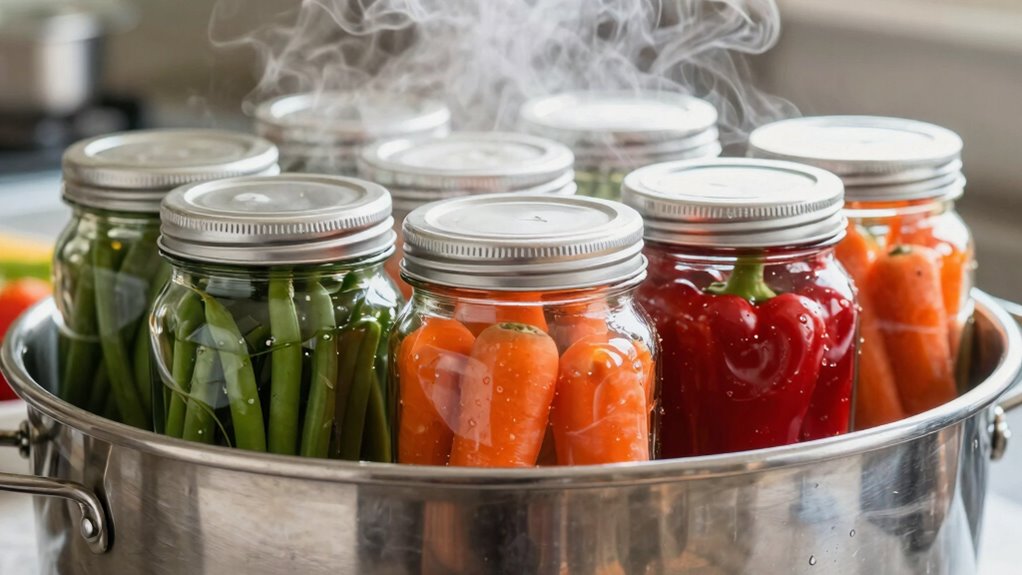
If you’re preserving low-acid foods like vegetables, meats, or dairy, pressure canning isn’t optional—you must do it to keep your food safe. This method destroys bacteria like *Clostridium botulinum* that thrive in such foods, preventing dangerous toxins. Water bath canning simply won’t reach the high temperatures needed. Want to guarantee your preserves are safe and delicious? Keep going to discover essential tips and techniques for proper pressure canning.
Key Takeaways
- Low-acid foods like vegetables and meats require pressure canning to reach temperatures that destroy harmful bacteria and spores.
- Water bath canning is ineffective and unsafe for low-acid foods, making pressure canning the necessary method.
- Proper pressure canning ensures food safety, preventing botulism and other foodborne illnesses in low-acid foods.
- Following tested processing times and maintaining equipment accuracy are essential for safe pressure canning.
- Pressure canning preserves the quality and extends the shelf life of low-acid foods, making it a non-negotiable safety rule.

T-fal 22-Quart Aluminum Pressure Canner, 3 PSI Settings, Home Canning, Includes Racks & Canning Guide, Large Capacity, Pressure & Water Bath Canning for Vegetables, Meats, Seafood & Fruits, Silver
Durable Aluminum Construction: Discover the power of our pressure canner, designed to provide a long-lasting and reliable performance,…
As an affiliate, we earn on qualifying purchases.
As an affiliate, we earn on qualifying purchases.
Why Some Foods Must Be Pressure Canned for Safety
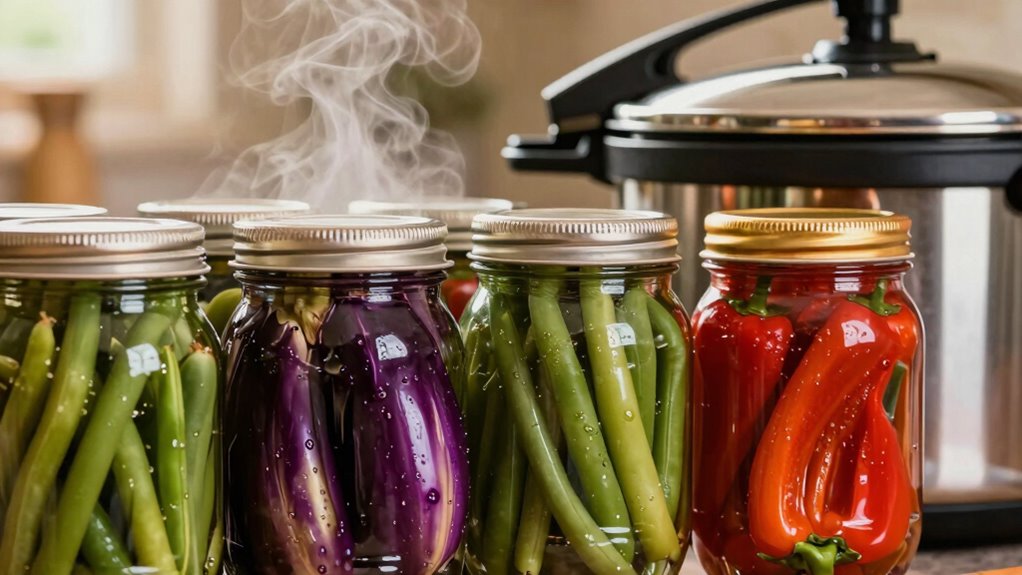
Some foods require pressure canning because their low acidity levels make them vulnerable to dangerous bacteria, such as Clostridium botulinum. Pressure canning guarantees these bacteria are destroyed by reaching higher temperatures than boiling water can provide. When you pressure can, you preserve not just safety but also flavor enhancement, maintaining the food’s natural taste. It also helps with texture preservation, preventing foods from becoming mushy or overly soft. Without proper pressure, these foods can develop harmful bacteria that thrive in low-acid environments. By following pressure canning rules, you assure your preserved foods stay safe, flavorful, and retain their original texture. This method is essential for safely storing vegetables, meats, and other low-acid foods that can’t be safely processed using water bath canning. Proper technique ensures that the food is processed at the correct temperature and pressure for safety and quality.
T-fal 22-Quart Aluminum Pressure Canner, 3 PSI Settings, Home Canning, Includes Racks & Canning Guide, Large Capacity, Pressure & Water Bath Canning for Vegetables, Meats, Seafood & Fruits, Silver
Durable Aluminum Construction: Discover the power of our pressure canner, designed to provide a long-lasting and reliable performance,…
As an affiliate, we earn on qualifying purchases.
As an affiliate, we earn on qualifying purchases.
Why Water Bath Canning Isn’t Safe for Low-Acid Foods
Water bath canning is unsafe for low-acid foods because it doesn’t reach the high temperatures needed to destroy harmful bacteria like Clostridium botulinum. Without proper heat, these bacteria can survive and produce toxins, risking your health. While water bath canning might enhance flavor and preserve texture in high-acid foods like fruit jams, it’s ineffective for low-acid items such as vegetables or meats. These foods require the intense heat of pressure canning to ensure safety. Relying on water bath methods for low-acid foods can lead to spoilage and serious foodborne illnesses. To keep your preserved foods safe and delicious, always use pressure canning for low-acid items, protecting both flavor integrity and texture while eliminating dangerous bacteria. Proper heat application is crucial for food safety and maintaining the quality of preserved foods, especially since food safety standards emphasize the importance of correct canning techniques. Additionally, understanding piercing and hygiene practices helps prevent contamination that could compromise the safety of your canned goods. Ensuring proper temperature control during the canning process further minimizes risks and guarantees a safe, long-lasting product. Proper techniques also help prevent the growth of bacteria that thrive in improper canning environments.

Mcupper Glass Mason Jars 16 oz with Airtight Lids and Bands – 15 Pack Regular Mouth Pint Canning Jars for Pickling, Meal Prep, Overnight Oats, Dry Food & DIY Crafts – Includes 24 Stickers & Brush
Premium Food-Safe Glass & Durability: Crafted from 100% food-grade glass, these mason jars 16 oz with lids are…
As an affiliate, we earn on qualifying purchases.
As an affiliate, we earn on qualifying purchases.
Top Foods That Require Pressure Canning to Prevent Spoilage
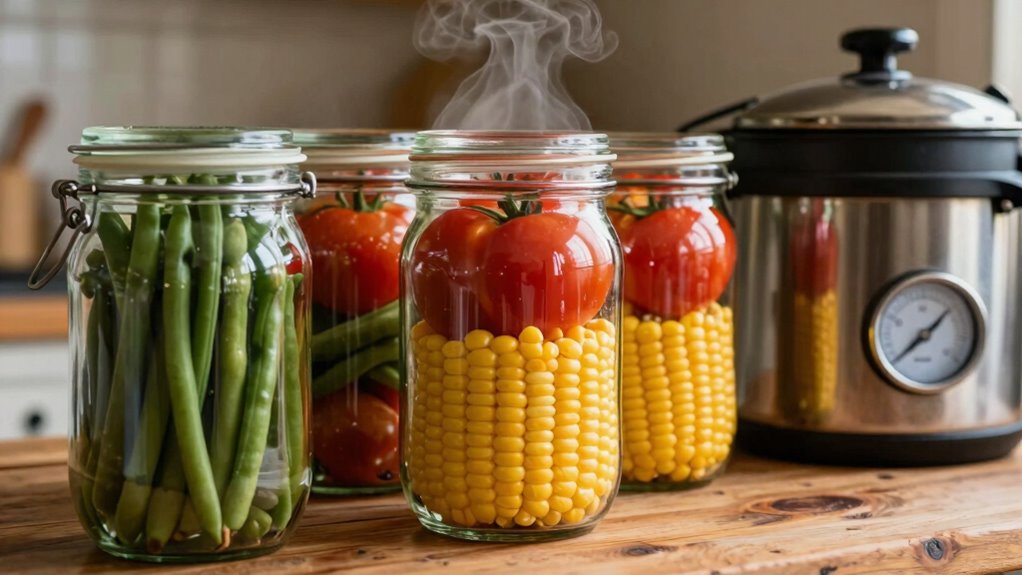
Many low-acid foods need pressure canning to stay safe and prevent spoilage. You must follow proper processing techniques to guarantee these foods are preserved correctly. Knowing which foods require pressure canning helps you avoid foodborne illnesses and enjoy your preserved goods safely. Proper testing accuracy of your equipment ensures reliable results during the canning process. Additionally, understanding the nutritional benefits of certain foods can motivate proper preservation methods to retain maximum health value. Being aware of food safety guidelines is essential to prevent contamination and ensure the longevity of your canned items. Recognizing the importance of proper processing times also plays a critical role in maintaining food safety and quality. Incorporating water bath versus pressure methods appropriately can further enhance the safety and quality of your preserved foods.
Low-Acid Food Safety
Have you ever wondered why certain foods must be pressure canned rather than processed in a water bath? Low-acid foods, like vegetables, meats, and dairy, can harbor bacteria that cause spoilage or dangerous toxins. To guarantee food safety, you need the high heat of pressure canning, which destroys these harmful organisms. Using proper canning jars, you can safely preserve these foods for months or even years. Without pressure, these foods risk botulism and other foodborne illnesses. Think of it as a crucial step in food preservation, protecting your family from health hazards.
| Low-Acid Foods | Why Pressure Canning is Necessary |
|---|---|
| Green beans, corn, carrots | To kill bacteria and spores |
| Meat, poultry, seafood | To prevent dangerous toxin formation |
| Dairy products | To eliminate spoilage pathogens |
| Mushrooms | To ensure complete sterilization |
| Soups, stews | To lock in freshness and safety |
Proper Processing Techniques
To prevent spoilage and guarantee safety, pressure canning is essential for certain foods that are prone to bacterial growth and toxin formation. Proper processing techniques assure these foods stay safe and fresh. Start by thoroughly cleaning your canning jars and lids, and sterilize them in boiling water or a dishwasher on high heat. When filling jars, leave the recommended headspace and remove air bubbles. Use a pressure canner to process jars at the correct pressure and time specified for each food type. Always follow the manufacturer’s instructions for your canner. Once processing is complete, carefully cool jars and check seals. Proper kitchen sterilization and adherence to processing guidelines are key to preventing spoilage and guaranteeing your preserved foods remain safe to eat. Additionally, understanding the correct processing times and pressures is crucial for ensuring safety and preventing bacterial growth.

50332 3-Piece Pressure Regulator 5-10-15lb Canning Weight for Presto Pressure Cooker Canner 0178107 0178410 0175107 0174510 0175510 0177001 0174001 6803571
【3-PIECE PRESSURE REGULATOR】Our 50332 canner pressure regulator consists of the pressure regulator body and two 5-pound weight rings….
As an affiliate, we earn on qualifying purchases.
As an affiliate, we earn on qualifying purchases.
How to Pressure Can Fruits and Vegetables
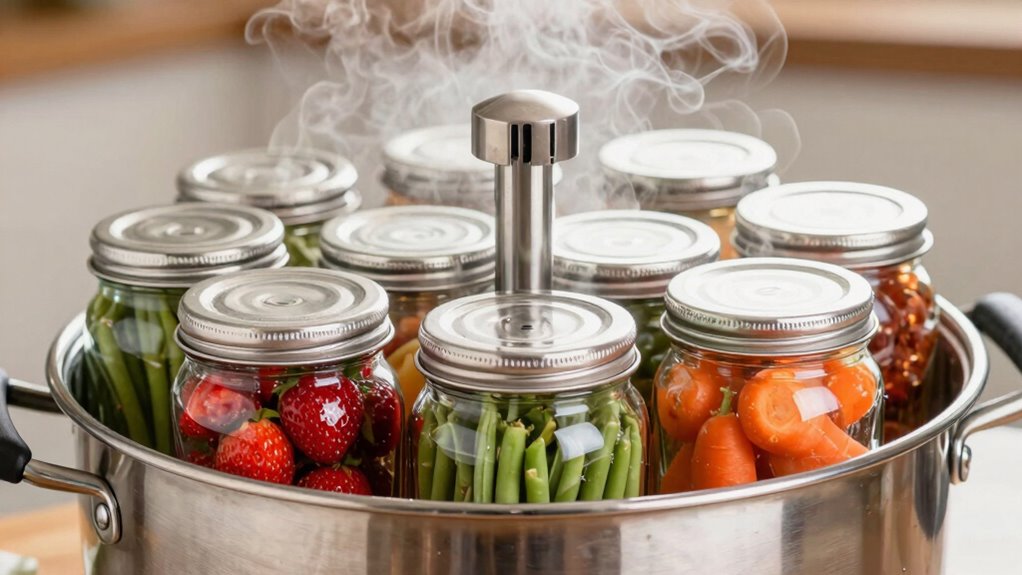
Wondering how to safely preserve your fruits and vegetables? Start by choosing clean, sterilized canning jars designed for pressure canning. Fill them with your prepared produce, leaving the recommended headspace. Use a proper canning rack to prevent jars from touching the bottom of the pressure cooker. Secure the lids tightly but don’t over-tighten. Before processing, double-check your pressure gauges for accuracy; faulty gauges can compromise safety. Use a tested processing time and pressure for your specific food type, adjusting for altitude if needed. Once the pressure reaches the correct level, process the jars for the recommended time. After canning, allow jars to cool undisturbed. Proper pressure canning guarantees your fruits and vegetables are preserved safely and stored for future enjoyment. Additionally, understanding the seasons for different fruits and vegetables can help you select the best produce for canning at peak freshness. Knowing your pressure canning equipment is essential to ensure safety and success in your preservation efforts. Familiarizing yourself with hive health and the role of drone bees can also help you understand the importance of healthy pollination for your garden crops. Maintaining optimal conditions during the canning process, such as appropriate temperature control, is crucial for preventing spoilage and ensuring food safety. Being aware of weather patterns and meteorological advice can also help plan your canning schedule around optimal conditions.
Common Mistakes to Avoid When Pressure Canning

Are you aware of the common mistakes that can compromise your pressure canning efforts? One major error is not properly sealing your canning jars, which leads to spoilage. Always make certain jars are clean and rims are free of debris. Over-tightening or under-tightening lids can prevent proper sealing. Another mistake involves neglecting the pressure valves; incorrect pressure levels can result in unsafe food. Use a reliable pressure gauge and follow your canner’s instructions precisely. Additionally, improper disposal of used canning equipment can impact eco-friendliness, so consider eco-friendly disposal tips for your gear. Being aware of food safety guidelines is also essential to ensure your preserved foods remain safe to consume. Developing a systematic testing process to verify pressure levels and seals can help prevent these issues. Remember, consistent monitoring techniques are key to safe and effective pressure canning. Regularly checking your pressure gauges and maintaining your equipment can further ensure safety and longevity.
Benefits of Using Pressure Canning for Long-Term Food Storage
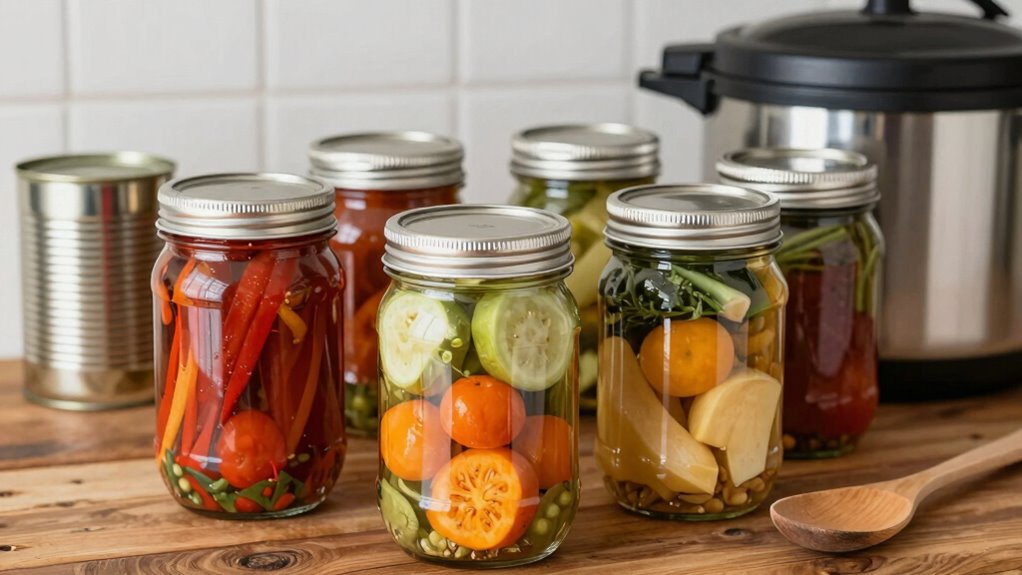
Pressure canning offers a reliable way to preserve foods for the long term, ensuring you have access to nutritious meals even when fresh produce isn’t in season. Using sturdy canning jars, you can safely store everything from vegetables to meats, maintaining food quality over time. The process destroys bacteria and spores, making your food preservation efforts safe and effective. Plus, pressure canning helps retain essential nutrients and flavors, so your stored foods stay delicious. It is especially important for canning low-acid foods, which require pressure canning techniques to ensure safety. It also reduces waste by extending the shelf life of homemade goods. Additionally, understanding food safety principles is crucial for successful preservation and avoiding spoilage. Properly processed jars can prevent botulism and other health hazards associated with improper canning. With properly processed jars, you can stockpile meals for emergencies or busy days. This method provides peace of mind, knowing your food is preserved safely and ready when you need it most.
FAQs About Pressure Canning Safety and Techniques

When you’re pressure canning, it’s essential to use the right equipment and follow proper processing times to guarantee safety. You should also pay attention to safety tips and precautions to prevent accidents or spoilage. Addressing common questions about these techniques helps you confidently preserve food without risks.
Proper Canning Equipment
Having the right canning equipment is essential for safe and effective pressure canning. Proper tools guarantee your food is preserved safely and maintains quality. Key items include sturdy canning jars that seal properly, preventing spoilage. Accurate pressure gauges on yourcanner ensure you maintain the correct pressure during processing, which is vital for safety. You also need a reliable pressure canner designed for pressure canning, not just boiling water baths. A canning rack helps keep jars steady, while a jar lifter makes handling hot jars safer. Additionally, having a timer guarantees you process each batch for the correct duration. Investing in quality equipment minimizes risks and guarantees your canned foods are safe and delicious.
Correct Processing Times
How do you guarantee your canned foods are safe and properly preserved? The key lies in following correct processing times. Using the right processing duration for each food ensures harmful bacteria are killed and flavors are preserved. Accurate timing also helps maintain flavor preservation, keeping your products tasting fresh. Always adhere to tested recipe guidelines and pressure canning charts—these provide specific times for different foods and jar sizes. Proper equipment maintenance is essential; verify your pressure canner functions correctly and maintains consistent pressure throughout the process. Skipping or rushing these steps can compromise safety and quality. By respecting the recommended processing times and keeping your equipment in good condition, you can enjoy delicious, safe canned foods with confidence.
Safety Tips and Precautions
Ensuring safety while pressure canning is vital to prevent foodborne illnesses and spoilage. To do so, follow proper techniques and stay aware of common canning myths that can compromise safety. Always use tested recipes and adhere to the correct processing times. Regular equipment maintenance is essential; check seals, gauges, and valves before each use to confirm everything functions properly. Be cautious of misconceptions about pressure canning—many canning myths suggest shortcuts that can lead to unsafe results. Keep your canner clean and store it in a dry, accessible place. Additionally, make sure your jars are properly sterilized and lids are in good condition. Proper safety precautions protect your health and guarantee delicious, safe preserved foods.
Frequently Asked Questions
Can I Use a Regular Canner for Pressure Canning at Home?
You shouldn’t use a regular canner for pressure canning at home. Instead, opt for a pressure canner designed specifically for this purpose, which guarantees proper heat and pressure levels. Make certain to use proper canning jars and sealing lids to prevent spoilage. Regular canners don’t provide the necessary pressure control, risking unsafe food. Always follow tested recipes and guidelines to keep your canned foods safe and shelf-stable.
How Do I Determine the Correct Pressure for Different Foods?
You determine the correct pressure by following safety guidelines and adjusting for altitude. Check your pressure canner’s manual and specific recipes, as they provide the exact pressure settings needed. Remember, higher altitudes require increased pressure to guarantee safety, so don’t ignore altitude adjustments. Trust the guidelines—accurate pressure is vital to prevent spoilage and make certain your preserved foods stay safe to enjoy later.
What Are Signs of Spoilage in Improperly Canned Foods?
If your canned food shows signs of spoilage, look for mold growth or a foul smell. You might notice cloudy liquid or bulging lids too. Be alert for botulism symptoms like dizziness, nausea, or difficulty breathing if you consume spoiled food. Never taste questionable food, as it could be dangerous. When in doubt, discard the jar to protect yourself from potential health risks, including botulism.
Is There a Difference Between Pressure Canning and Pressure Cooking?
Pressure canning and pressure cooking serve different purposes in cooking safety. Pressure canning uses specialized canning equipment to sterilize and preserve foods at high temperatures, preventing bacteria growth. Pressure cooking, on the other hand, is a method for preparing meals quickly with a pressure cooker. While they both involve pressure, pressure canning prioritizes safety and preservation, making it essential for long-term storage, unlike pressure cooking meant for immediate eating.
How Long Can Pressure-Canned Foods Be Safely Stored?
You can safely store pressure-canned foods for up to a year if you follow proper canning safety guidelines. Always check for signs of spoilage, like leaks or bulging lids, before consuming. To minimize botulism risks, guarantee your jars are processed correctly and stored in a cool, dark place. Properly sealed and stored, pressure-canned foods maintain quality and safety for about 12 months.
Conclusion
Think of pressure canning as your shield against spoilage, guarding your home pantry like a knight protecting treasure. When you follow the rules, you guarantee your canned foods remain safe and delicious for years to come. Skipping steps or taking shortcuts is like leaving the gate open—danger lurks. So, embrace the process with confidence, and let pressure canning be your trusty sword in the battle for long-lasting, safe food storage.