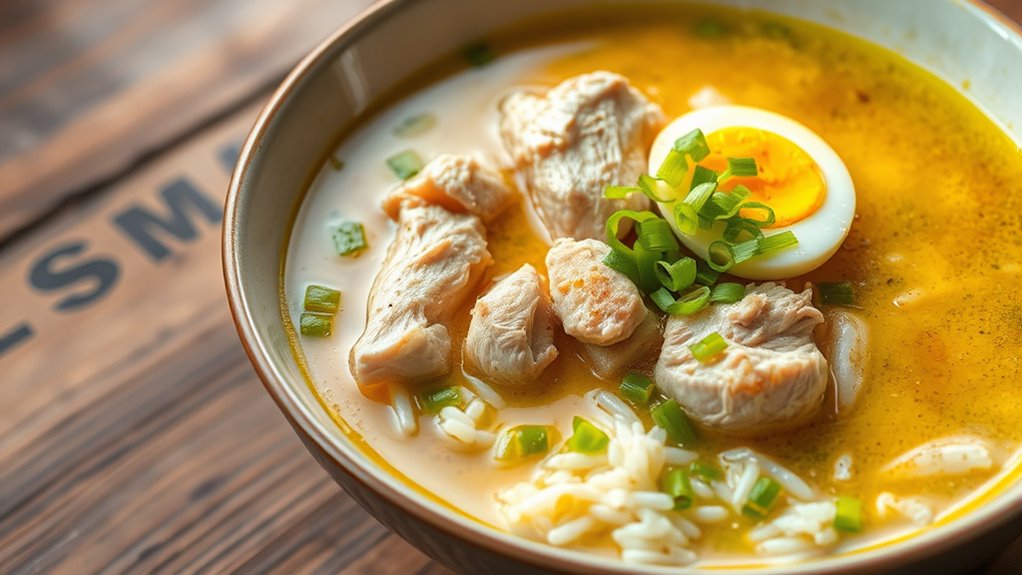

Filipino Arroz Caldo is a comforting chicken rice porridge that reflects the country’s resilience, rich traditions, and regional flavors. You’ll notice how ginger, garlic, and scallions create layers of warmth and aroma, while shredded chicken adds hearty protein. Variations across regions include seafood, eggs, and colorful annatto oil, showcasing diverse local influences. This dish embodies Filipino values of sharing and community. If you keep exploring, you’ll discover even more about this soulful, storied comfort food.
Key Takeaways
- Arroz Caldo is a Filipino comfort food symbolizing resilience and community, often enjoyed during cold mornings or healing.
- Its core ingredients include rice, chicken, ginger, garlic, and scallions, creating a hearty, warming porridge.
- Regional variations incorporate seafood, smoked fish, calamansi, or annatto oil, reflecting local flavors and ingredients.
- The dish demonstrates Filipino culinary adaptability, blending traditional roots with regional influences.
- Arroz Caldo embodies cultural pride, nourishing both body and spirit while highlighting Filipino heritage and regional diversity.

Have you ever wondered how a simple bowl of soup can tell a story about a culture? Filipino arroz caldo is a perfect example. This comforting chicken rice porridge isn’t just about nourishment; it’s a dish woven with history, tradition, and regional influences. As you plunge into its flavors, you’ll notice how traditional ingredients shape its identity, reflecting the Philippines’ rich culinary tapestry.
The core of arroz caldo revolves around traditional ingredients like rice, chicken, ginger, garlic, and scallions. These staples give the dish its hearty, warm character. The rice is cooked slowly in chicken broth until it reaches a creamy consistency, creating a porridge that’s both satisfying and soothing. The chicken is often shredded into bite-sized pieces, adding protein and texture, while ginger lends a distinctive warmth and aroma. Garlic and scallions provide depth and freshness, balancing the richness of the dish. These ingredients are common across many Filipino households, making arroz caldo a familiar comfort food for most.
Arroz caldo’s hearty core features rice, chicken, ginger, garlic, and scallions, creating a comforting, nourishing Filipino classic.
What makes arroz caldo fascinating are its regional variations. Depending on where you’re in the Philippines, ingredients and preparation methods change subtly, offering a glimpse into local tastes and resources. In some regions, you might find the addition of smoked fish or seafood, giving a different layer of flavor. Others might include hard-boiled eggs or even a squeeze of calamansi for a citrusy tang. Some cooks add annatto oil for a vibrant orange hue and a hint of earthiness, while others prefer a simpler, more straightforward approach. These variations highlight how regional preferences and available ingredients influence the dish, making each bowl a unique expression of local culture.
Despite these differences, arroz caldo maintains its core identity as a comforting, nourishing dish. It’s often served during special occasions, cold mornings, or when someone’s feeling under the weather, emphasizing its role as a restorative meal. The preparation methods might differ, but the essence remains the same: a communal dish that brings people together, offering warmth and familiarity. Incorporating regional culinary influences demonstrates how Filipino cuisine adapts traditional ingredients to local tastes and resources. As you immerse yourself in different versions of arroz caldo across the Philippines, you’ll see how regional variations adapt traditional ingredients to local tastes, illustrating the versatility and resilience of Filipino culinary heritage.
In the end, arroz caldo isn’t just about ingredients. It’s a story in a bowl—one that reflects Filipino resilience, regional diversity, and a shared love for comforting food. Each spoonful offers a taste of history, made anew with each cook and region. It’s a dish that invites you to appreciate how simple ingredients can tell a complex and beautiful cultural story.
Frequently Asked Questions
What Are the Origins of Arroz Caldo?
You might not know it, but arroz caldo originates from Spanish and Chinese influences, blending into Filipino breakfast traditions. This rice porridge variation became popular in the Philippines during the Spanish colonization, evolving into a comforting dish often enjoyed in the morning. Its hearty, savory flavor makes it a favorite among rice porridge variations, providing warmth and nourishment at the start of your day.
Can Arroz Caldo Be Made Vegetarian?
You can absolutely turn arroz caldo into a vegetarian masterpiece, transforming it into a comforting bowl that still sings with flavor. Use hearty vegetarian substitutes like mushrooms, tofu, or tempeh to mimic the texture of chicken, and add flavor enhancements like ginger, garlic, and vegetable broth. These ingredients create a symphony of taste, ensuring every spoonful delivers warmth and satisfaction, just like the original, but kinder to your plant-based cravings.
What Are Traditional Toppings for Arroz Caldo?
You typically top arroz caldo with a ginger garnish, which adds a fragrant, spicy kick. Hard boiled eggs are also common, sliced in half or quarters, providing richness and protein. Some like to sprinkle chopped scallions or fried garlic for extra flavor. These toppings enhance the comforting qualities of the dish, making each spoonful warm, hearty, and full of traditional Filipino taste.
How Long Does Arroz Caldo Stay Fresh?
You should consume arroz caldo within 3 to 4 days for peak freshness. Store it in an airtight container and follow proper food storage and refrigeration tips to keep it safe. Reheat thoroughly before eating, and avoid leaving it at room temperature for more than two hours. Always check for signs of spoilage, like sour smell or mold, before enjoying leftovers.
Are There Regional Variations of Arroz Caldo in the Philippines?
You’ll find that arroz caldo varies across the Philippines, with over 7,000 islands each adding regional flavors. In Luzon, expect a richer broth with boiled eggs, while Visayas dishes feature local spices. Mindanao’s version might include unique ingredients like coconut milk. These ingredient differences make each regional variation distinct, giving you a flavorful journey through Filipino cuisine, where every bowl tells a local story through its flavors.
Conclusion
As you savor the comforting embrace of Filipino Arroz Caldo, remember you’re tasting more than just a dish—you’re experiencing a warm symphony of tradition and heart. Each spoonful is like a gentle hug from distant lands, weaving stories in every bite. So, let this soulful soup remind you that food is a universal language, connecting souls across oceans. Embrace the journey, for in each bowl, a world of warmth awaits to soothe your spirit.