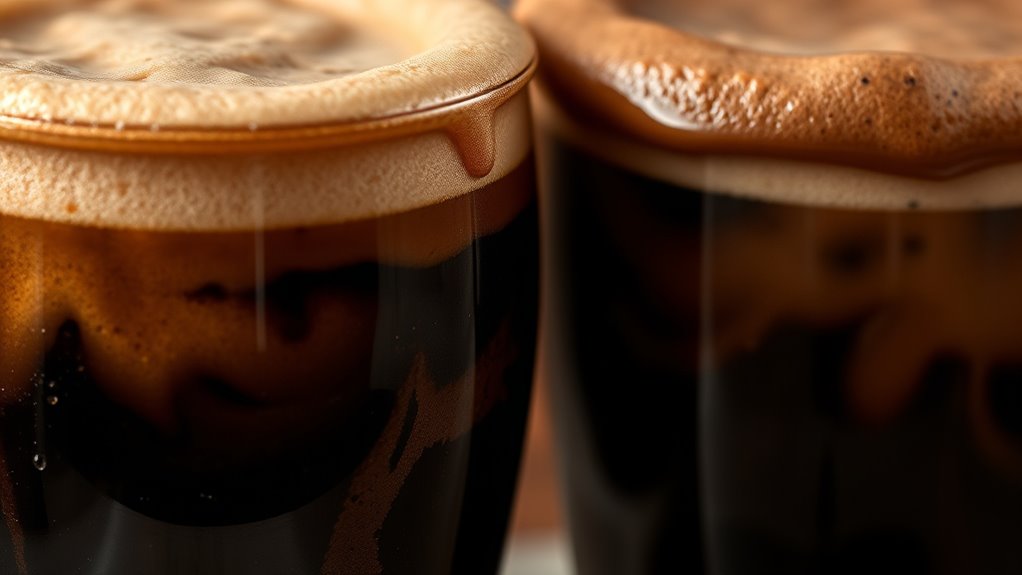

During winter, you should savor rich stouts and porters that deliver warmth and complex flavors. These beers feature roasted malts, chocolate, and coffee notes that evoke cozy feelings and satisfy your palate. Craft breweries often emphasize techniques like extended fermentation and roasting to develop depth and smoothness. By exploring different styles, you can appreciate each brew’s craftsmanship. Keep exploring these flavorful winter favorites to discover more about their unique profiles and brewing secrets.
Key Takeaways
- Stouts and porters offer rich, roasted flavors that evoke cozy winter feelings and provide warming comfort.
- Brewing techniques like toasting grains and cold steeping enhance their complex, velvety textures.
- Ingredient choices such as cacao, vanilla, or coffee add dessert-like qualities to winter craft beers.
- Extended fermentation ensures balanced, smooth beers with layered aroma profiles perfect for winter sipping.
- Craft breweries emphasize nuanced methods to craft distinct, flavorful stouts and porters suited for cold weather.
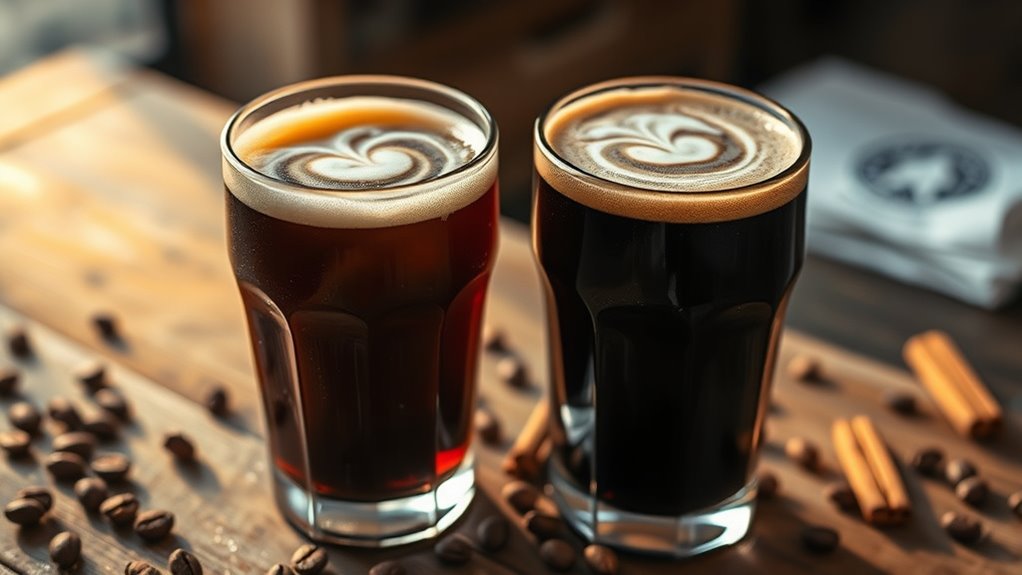
As the temperatures drop and winter settles in, there’s no better way to warm up than with a hearty, flavorful craft beer. When you’re seeking comfort in a glass, stouts and porters stand out as perfect choices. These dark beers are known for their rich beer flavor profiles—think roasted malt, chocolate notes, and hints of coffee—that evoke the cozy feeling of winter. But what truly makes these beers special is how brewers craft them through specific brewing techniques to enhance their depth and complexity.
Understanding brewing techniques helps you appreciate why stouts and porters taste the way they do. For instance, the use of roasted malt is fundamental. Brewers toast barley or other grains at high temperatures to develop those signature dark, roasted flavors. This technique not only influences the flavor profile but also affects the beer’s body and mouthfeel, making each sip satisfying and warming. Some brewers go a step further by adding ingredients like coffee, chocolate, or spices during the brewing process, creating layers of flavor that deepen your experience. Brewing techniques play a crucial role in shaping the final product’s character and complexity.
Brewers toast grains at high temperatures to develop rich, roasted flavors and enhance mouthfeel.
The brewing process for stouts and porters often involves longer fermentation times. This allows the flavors to meld and mature, producing a smooth, balanced beer with a complex aroma. Cold brewing methods, like cold steeping roasted grains, can also intensify the roasted character without introducing bitterness, giving you that velvety texture you crave on cold nights. These techniques help craft beers develop their distinctive profiles, making each one a unique winter indulgence.
You’ll find that many craft breweries emphasize the nuances of their brewing techniques to bring out specific beer flavor profiles suited for winter. For example, a dry Irish stout might focus on a dry, bitter finish with a hint of roasted barley, while a chocolate porter may have added cacao or vanilla to enhance its dessert-like qualities. The careful selection of ingredients and precise control over brewing temperatures and fermentation stages result in beers that not only warm you but also delight your palate with their complexity.
As you explore different stouts and porters this winter, pay attention to how the brewing techniques influence the flavors. Each sip offers a glimpse into the brewer’s skill, turning a simple beer into a rich, warming experience. Whether you prefer the boldness of a roasted stout or the smooth richness of a porter, their carefully crafted beer flavor profiles are perfect companions for chilly evenings. Cheers to discovering the art behind these winter favorites!

Craft A Brew – Irish Stout – Beer Making Kit – Make Your Own Craft Beer – Complete Equipment and Supplies – Starter Home Brewing Kit – 1 Gallon
Make your own beer – be more than a beer drinker; be a beer maker! this craft beer…
As an affiliate, we earn on qualifying purchases.
As an affiliate, we earn on qualifying purchases.
Frequently Asked Questions
What Food Pairs Best With Winter Stouts and Porters?
You’ll want to pair winter stouts and porters with rich cheese pairings like blue cheese or aged cheddar to enhance their roasted flavors. Spicy foods, such as chili or spicy sausages, also complement their deep, malty notes. Avoid overly sweet or delicate dishes, as they can clash with the boldness of these beers. Embrace hearty, savory foods for a perfect winter pairing experience.
How Should Craft Beers Be Stored for Winter Freshness?
Keep your craft beers fresh as a daisy by storing them correctly. Think of temperature control as your secret weapon—ideally, keep your stouts and porters in a cool, consistent environment, around 55°F. A cellar storage setup is perfect for this, providing stable conditions that prevent spoilage. Avoid temperature swings and direct sunlight, which can ruin the beer’s flavor. Proper storage guarantees your winter brews stay rich and flavorful all season long.
Are There Seasonal Variations in the Brewing Process?
Yes, there are seasonal variations in the brewing process. You’ll notice adjustments in seasonal ingredients, like spices or roasted malts, to suit the time of year. Additionally, brewing temperature variations are common; brewers often lower temperatures for certain styles or increase them to enhance flavors. These tweaks help craft beers like stouts and porters develop richer, more complex profiles that reflect the season’s essence.
What Are the Alcohol Content Ranges for Winter Craft Beers?
Think of winter craft beers as cozy fires with varying flames—some flicker gently, others burn brightly. Their alcohol strength typically ranges from 4.5% to 8%, but brewing variations can push that higher or lower. Stouts and porters often sit comfortably in this range, offering warmth without overwhelming. So, when you pick a winter brew, you’re choosing an alcohol content that matches your desire for comfort and complexity.
How Do Craft Stouts and Porters Differ From Commercial Versions?
You’ll notice craft stouts and porters differ from commercial versions because small batch brewing allows for more attention to detail, resulting in richer flavors and unique profiles. They often use high-quality, carefully sourced ingredients, which enhance complexity and depth. Commercial beers tend to be more standardized, but craft brewers focus on innovation and authenticity, giving you a more distinct, flavorful experience in each sip.

Coffee Porter Premium Beer Kit
UNIQUE FLAVOR PROFILE – Delivers bold chocolate and roasted coffee aromas and tastes.
As an affiliate, we earn on qualifying purchases.
As an affiliate, we earn on qualifying purchases.
Conclusion
As winter settles in, exploring rich stouts and porters can warm your soul. Did you know that the craft beer industry has seen a 15% increase in winter seasonal sales over the past year? This surge reflects our love for bold, comforting flavors during colder months. So, next time you cozy up, try a craft beer that’s as inviting as the season itself. Cheers to discovering new favorites and embracing winter’s flavorful offerings!

Russian Imperial Stout Homebrew Beer Ingredient Kit
Intense roast flavor with a huge malt influence Full-bodied dark brew, intense roast flavor
As an affiliate, we earn on qualifying purchases.
As an affiliate, we earn on qualifying purchases.

Libbey Beer Tasting Sampler Glass (#249), 5oz – Set of 4
5oz beer tasting sampler or side water glass
As an affiliate, we earn on qualifying purchases.
As an affiliate, we earn on qualifying purchases.