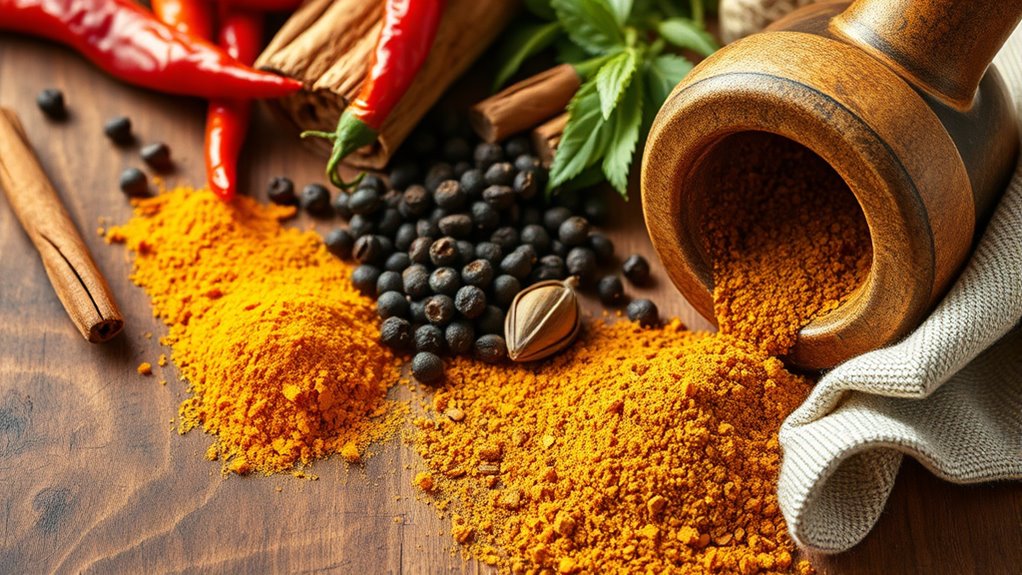

To spice up your dishes, start by roasting whole spices like cinnamon, cloves, and cumin to release their full aroma, then grind them into a fine powder. Use your homemade garam masala in curries, stews, or roasted vegetables, adding just a small amount to enhance warmth and depth without overpowering. Balancing the spices is key, and mastering its preparation elevates your cooking. Continue exploring how each spice transforms your meals and your culinary skills.
Key Takeaways
- Roast whole spices like cinnamon, cloves, and cumin to enhance their aroma before grinding into garam masala.
- Combine and grind spices in small batches for a fresh, vibrant flavor tailored to your taste.
- Use garam masala sparingly in curries, stews, or roasted vegetables to add warmth and depth.
- Store homemade garam masala in an airtight container away from light to preserve its potency.
- Adjust spice ratios based on regional variations and personal preference for a balanced, fragrant blend.
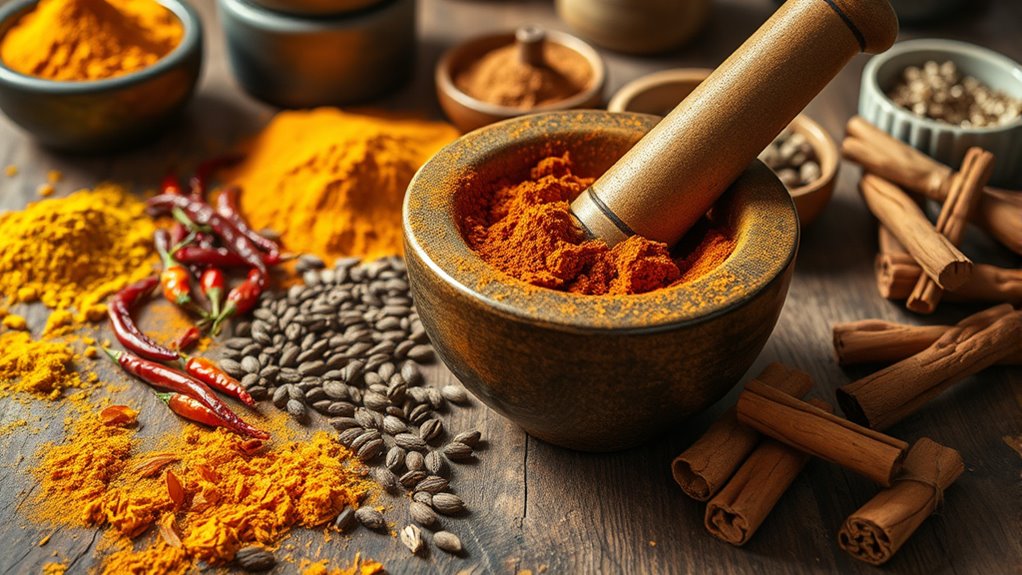
Have you ever wondered what gives Indian dishes their warm, aromatic flavor? The answer lies in garam masala, a spice blend that’s both essential and versatile in Indian cuisine. To truly appreciate it, you should understand its history origins and flavor profile. Garam masala’s roots trace back centuries in India, where it evolved from traditional spice mixes used to enhance both taste and medicinal properties. The word “garam” means “hot” or “warm,” referring not just to spice heat but to the warming effect it’s believed to have on the body. Historically, each region developed its own version, reflecting local ingredients and culinary traditions. Over time, garam masala became a cornerstone of Indian cooking, symbolizing the rich, diverse spice trade that connected India with distant lands. Today, it’s a symbol of Indian culinary identity, but its origins are a testament to centuries of cultural exchange and adaptation.
When it comes to its flavor profile, garam masala is a harmonious blend of warm, earthy, and fragrant notes. It typically includes spices like cinnamon, cardamom, cloves, cumin, coriander, and black pepper. Some variations may add nutmeg, mace, or bay leaves, depending on regional preferences. The combination creates a complex aroma that’s both inviting and robust. The warmth isn’t just about heat; it’s a gentle, comforting heat that awakens the senses. The spices work together to add depth and richness to dishes—whether in curries, stews, or roasted vegetables—without overpowering the main ingredients. When you use garam masala, you’re not just adding flavor; you’re infusing your dish with a sense of tradition and cultural history. The blend’s aromatic qualities come from the roasting and grinding process, which releases essential oils and intensifies the fragrance.
Understanding its origins and flavor profile helps you appreciate how to use garam masala effectively. You’ll find that a little goes a long way, so sprinkle it thoughtfully to enhance dishes without overwhelming them. Whether you buy a pre-made blend or make your own, the key is balancing the spices to suit your taste. Toasting the whole spices before grinding boosts their aroma and flavor, making your dishes truly stand out. As you experiment with garam masala, remember that its history reflects centuries of culinary evolution, and its flavor profile offers a warm, fragrant experience that can elevate any Indian-inspired meal. So next time you cook, embrace this ancient blend and enjoy the rich tapestry of flavors it brings to your table.

McCormick Gourmet Garam Masala Blend, 1.7 Oz
Aromatic mixture adds warm, sweet flavor to a range of dishes
As an affiliate, we earn on qualifying purchases.
As an affiliate, we earn on qualifying purchases.
Frequently Asked Questions
Can I Make Garam Masala Without Roasting the Spices?
Yes, you can make garam masala without roasting the spices, but spice roasting enhances the flavor and aroma markedly. If you skip this step, your garam masala will have a milder, less intense flavor. To improve flavor enhancement without roasting, toast the spices lightly in a dry pan just until fragrant, then grind. This method preserves freshness while boosting aroma, giving your spice blend a richer, more complex taste.
How Long Can Homemade Garam Masala Be Stored?
You can store homemade garam masala for up to 6 months if kept in an airtight container, away from direct sunlight and heat. To maintain spice freshness, make small batches and use clean utensils when scooping. After this period, the flavor may diminish, so it’s best to replace it to guarantee your dishes stay flavorful. Regularly check for any loss of aroma or signs of spoilage before use.
Is Garam Masala Suitable for All Dietary Restrictions?
Did you know that over 10% of the global population has dietary restrictions? Garam masala generally suits most diets, but you should check ingredient labels for gluten or allergens. For vegetarians, it’s naturally plant-based, but you can make vegetarian adjustments by avoiding non-vegan additives. Gluten-free options are easily achieved by ensuring your spice blend contains no wheat or gluten additives. Always verify ingredients to match your specific dietary needs.
Can I Substitute Garam Masala With Other Spice Blends?
Yes, you can substitute garam masala with other spice blend alternatives. If you don’t have garam masala, try using curry powder, Chinese five-spice, or a mix of cumin, coriander, and cinnamon as flavor substitution options. Keep in mind that these alternatives will alter the dish’s flavor profile, so adjust quantities to suit your taste. Experimenting with different spice blends can add unique twists to your recipes.
What Are Some Common Dishes That Use Garam Masala?
You probably think garam masala is just for Indian curries, but it’s actually a secret weapon in lentil dishes and even roasted vegetables. Its warm, aromatic spices elevate stews, rice dishes, and grilled meats, transforming simple meals into flavorful masterpieces. So next time you’re cooking, don’t forget to sprinkle some garam masala—your taste buds will thank you for the unexpected burst of warmth and depth it adds.

Elevated Damsko 2.5-inch Premium Stainless Steel Culinary Herb & Spice Grinder Mill for Kitchen Use
Engineered from solid stainless steel for exceptional durability, a polished professional look, and dependable longevity in both home…
As an affiliate, we earn on qualifying purchases.
As an affiliate, we earn on qualifying purchases.
Conclusion
Now that you know how to make and use garam masala, you can elevate any dish with its warm, aromatic flavor. Did you know that spices like garam masala can contain antioxidants that boost your health? Incorporating this spice blend into your cooking not only enhances taste but also offers potential health benefits. So go ahead, experiment and spice up your meals—your taste buds and body will thank you!

Ceramic Seasoning Container Spice Jar, Home Kitchen Seasoning Box Food Storage Container with Bamboo Lid and Bamboo Tray, Ceramic Spoon 200 ml (7 oz), Set of 3 Bottles, Suitable for Kitchen
【Unique design】: Fashionable and elegant ceramic design, suitable for kitchen and dining table, highlighting the elegant and modern…
As an affiliate, we earn on qualifying purchases.
As an affiliate, we earn on qualifying purchases.

Rani Garam Masala Indian 11-Spice Blend 3oz (85g) PET Jar ~ All Natural, Salt-Free | Vegan | No Colors | Gluten Friendly | NON-GMO | Kosher | Indian Origin
You'll LOVE our Garam Masala Spice Blend by Rani Brand–Here's Why:
As an affiliate, we earn on qualifying purchases.
As an affiliate, we earn on qualifying purchases.