
Hibiscus adds striking color, tangy flavor, and health benefits to your drinks and dishes. You can brew vibrant teas, infuse syrups or cocktails, and use it as a natural food coloring. Its antioxidants support your immune system and promote heart health. Whether in traditional beverages, salads, desserts, or garnishes, hibiscus offers versatile culinary possibilities that can make your meals both beautiful and nutritious. Keep exploring to open more creative ways to incorporate this unique ingredient.
Key Takeaways
- Hibiscus adds vibrant color and tart flavor to a variety of beverages and dishes, enhancing visual appeal and taste.
- It is commonly used in teas, syrups, cocktails, and traditional recipes like Mexican aguas frescas and Middle Eastern spice blends.
- Rich in antioxidants, hibiscus promotes health benefits such as improved heart health, blood pressure regulation, and anti-inflammatory effects.
- Its versatility allows culinary experimentation in desserts, salads, marinades, and garnishes, expanding creative presentation options.
- Hibiscus is a natural, caffeine-free ingredient offering a healthful, visually striking alternative to synthetic colorings and flavorings.
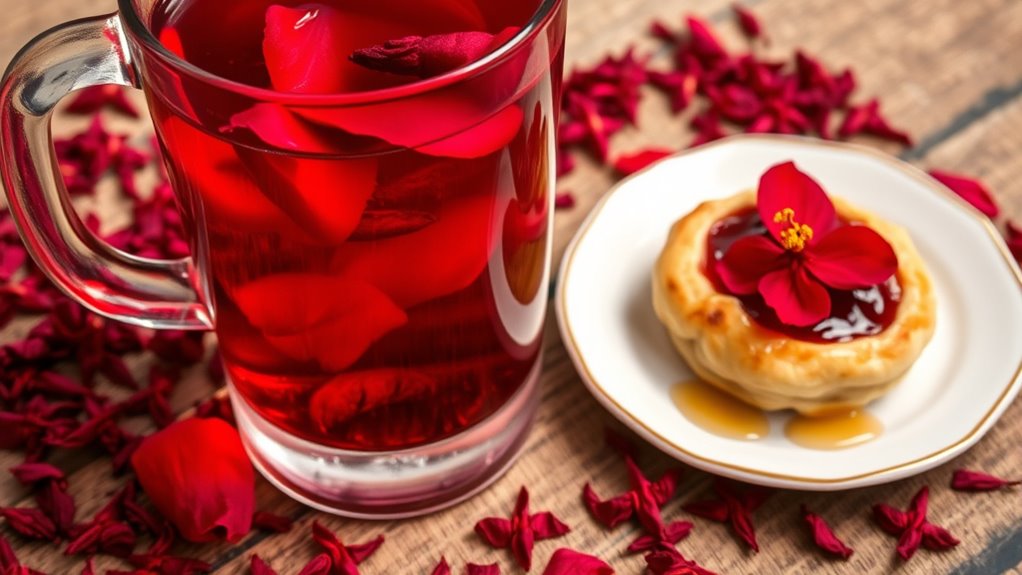
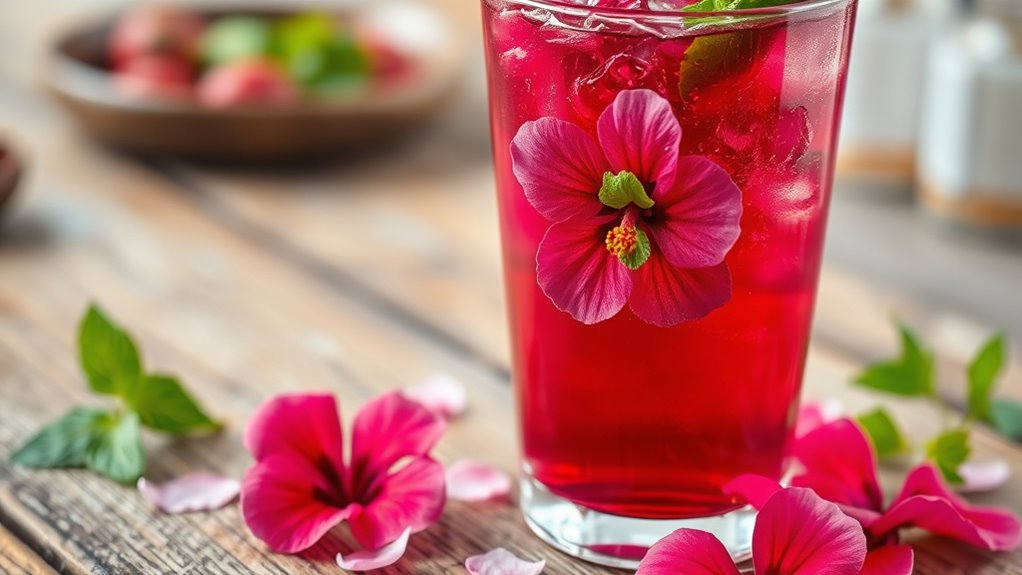
Hibiscus is a vibrant flower that adds both color and flavor to a variety of drinks and dishes. When you incorporate hibiscus into your culinary repertoire, you reveal a world of both aesthetic appeal and health benefits. Its deep red petals not only make your beverages and dishes visually striking but also bring a tangy, cranberry-like flavor that can elevate simple recipes to something special. From refreshing teas to tangy sauces, hibiscus offers versatile culinary uses that cater to a wide range of tastes. You might find yourself brewing a bright, ruby-colored tea that’s loaded with antioxidants or adding dried hibiscus petals to salads and desserts for a splash of tartness and visual contrast. Its culinary uses are extensive, spanning from traditional Mexican aguas frescas to Middle Eastern spice blends, making it a go-to ingredient for adventurous cooks. Incorporating hibiscus into your diet can also be a natural way to support cardiovascular health due to its rich antioxidant content.
When it comes to health benefits, hibiscus truly shines. Rich in antioxidants like flavonoids and anthocyanins, consuming hibiscus can help combat free radicals and reduce oxidative stress. This means it may support your immune system, lower blood pressure, and promote overall heart health. Many studies suggest that drinking hibiscus tea regularly can contribute to better cardiovascular health, thanks to its ability to help manage hypertension naturally. Plus, hibiscus acts as a gentle diuretic and may aid in digestion, helping you feel lighter and more energized. Its natural compounds also have anti-inflammatory properties, which can be beneficial for reducing inflammation and supporting joint health. Because hibiscus is low in calories and free from caffeine, it’s an excellent choice for anyone seeking a healthful, flavorful alternative to sugary drinks.
In the kitchen, you’ll find that hibiscus is incredibly adaptable. You can steep dried petals to create a vibrant tea or infuse it into syrups, cocktails, and even desserts like jellies and sorbets. Its tartness pairs well with sweeteners like honey or agave, allowing you to craft balanced beverages and dishes. In cooking, hibiscus can be used to make marinades that tenderize meats or add a zesty kick to fruit salads. Its bright hue also makes it a natural coloring agent, perfect for garnishing cakes or creating eye-catching drinks. Whether you’re exploring traditional recipes or inventing new ones, hibiscus invites you to experiment with flavors and presentation. Its culinary uses are as expansive as your imagination, and its health benefits make it a smart ingredient to incorporate into your diet. So, next time you’re looking for a splash of color, a burst of flavor, or a boost to your health, consider hibiscus—you won’t be disappointed.

Nespresso Original, Capriccio, Medium Roast, 50-Count Espresso Coffee Pods
- Rich and Refreshing Flavor: Deep, distinctive espresso with lively aromatics
- Light Roast Profile: Preserves acidity and develops rich flavor
- Perfect Espresso Size: Brew 1.35 oz of traditional espresso
As an affiliate, we earn on qualifying purchases.
Frequently Asked Questions
Can Hibiscus Be Used in Savory Recipes?
Yes, you can use hibiscus in savory recipes. Its tart, floral flavor pairing works well with ingredients like shrimp, chicken, or pork, adding a bright, tangy note. In culinary applications, hibiscus is great in marinades, sauces, or salsas, providing a unique twist. Just keep in mind that its vibrant color and bold flavor can enhance the visual appeal and complexity of your savory dishes.
What Is the History of Hibiscus in Culinary Traditions?
Imagine stepping into a culinary time machine—hibiscus has a rich history woven into many cultures. Its vibrant red hue symbolizes life and health, making it a staple in traditional drinks and dishes worldwide. Historically, hibiscus held cultural significance, used in ceremonies and medicinal practices. Its journey through culinary traditions highlights its enduring appeal, turning simple ingredients into stories that bloom across generations.
Are There Health Risks Associated With Hibiscus Consumption?
You should be aware that hibiscus consumption can pose health risks if you’re allergic to it, leading to allergic reactions. Additionally, hibiscus may interact with medications like blood pressure drugs, causing unwanted effects. If you’re pregnant or on medication, it’s best to consult your healthcare provider before including hibiscus in your diet. While generally safe for many, being cautious helps prevent potential hibiscus allergy issues or drug interactions.
How Do I Select Quality Dried Hibiscus for Cooking?
Think of selecting dried hibiscus as choosing a jewel for your culinary crown. Look for vibrant, deep-red petals with a fragrant, fruity aroma—these signal freshness. Store dried hibiscus in an airtight container away from sunlight to maintain its color and flavor. When selecting fresh hibiscus, guarantee the petals are tender and free from mold or discoloration. Quality dried hibiscus promises a bright, tangy kick in every dish or drink.
Can Hibiscus Be Used as a Natural Food Coloring?
Yes, you can use hibiscus as a natural dye to add vibrant color and enhance your dishes. When you steep dried hibiscus in hot water, it releases a rich red hue, making it perfect for color enhancement in foods like frosting, sauces, or beverages. Just strain the liquid and use it as a natural dye, knowing it not only colors but also adds a subtle tart flavor to your culinary creations.
Conclusion
So, seize the spectacular, sensational, and savory side of hibiscus. Incorporate its vibrant flavor into your drinks and dishes, delighting diners and daring taste buds. With its bold brightness and beautiful bloom, hibiscus offers a world of wellness and wonder. Simply sip, savor, and celebrate this stunning, star ingredient. Let hibiscus elevate every eating experience, enriching your culinary creations with its unique, unmistakable allure. Embrace the extraordinary and enjoy the essence of this enchanting ingredient.