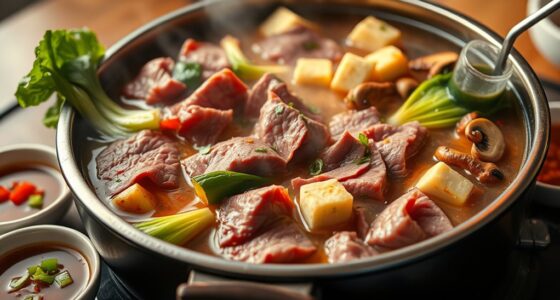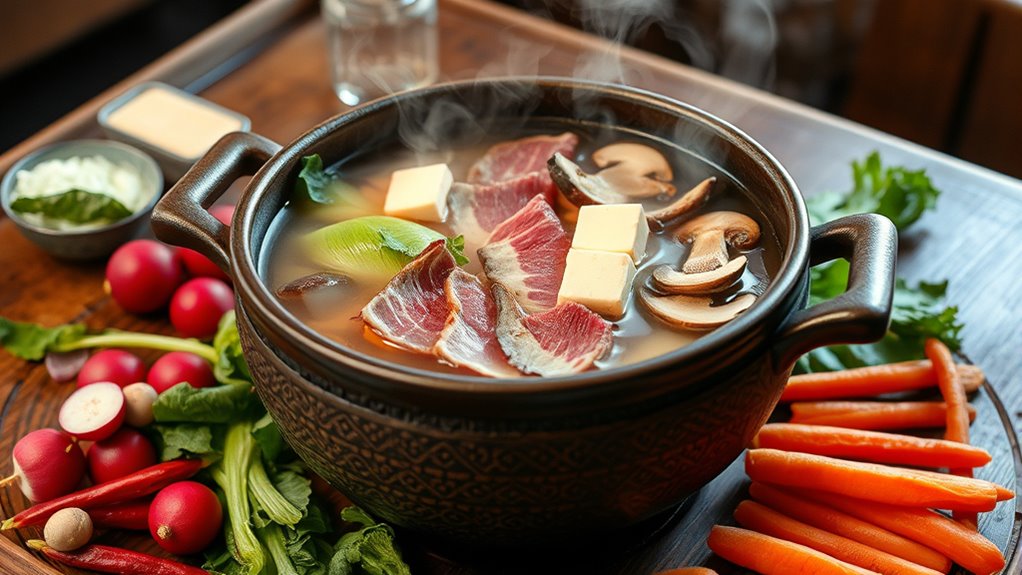

Japanese hot pot, or nabe, is a warm, communal winter dish where you share a simmering pot filled with flavorful broth and fresh ingredients like vegetables, meats, or seafood. It’s perfect for bringing people together and customizing flavors to suit everyone’s taste. The dish’s variety of broths, from miso to spicy chili, makes it both comforting and exciting. Keep exploring to discover how you can create a delicious, personalized nabe experience at home.

Get kitchen staples and gadgets delivered free with Prime
- Fast, free delivery on millions of items
- Prime Video, Amazon Music and more included
- Member-only deals all year
Key Takeaways
- Nabe is a traditional Japanese communal dish enjoyed during winter, emphasizing shared dining and seasonal ingredients.
- It features various broth types like kombu, miso, or spicy kimchi, customizable to taste and season.
- Fresh ingredients such as vegetables, thinly sliced meats, and seafood are essential for authentic flavor.
- Preparing nabe involves balancing flavors and sourcing high-quality, seasonal ingredients for the best experience.
- Sharing a hot pot fosters social connection, conversation, and warmth, making it an integral part of Japanese winter culture.
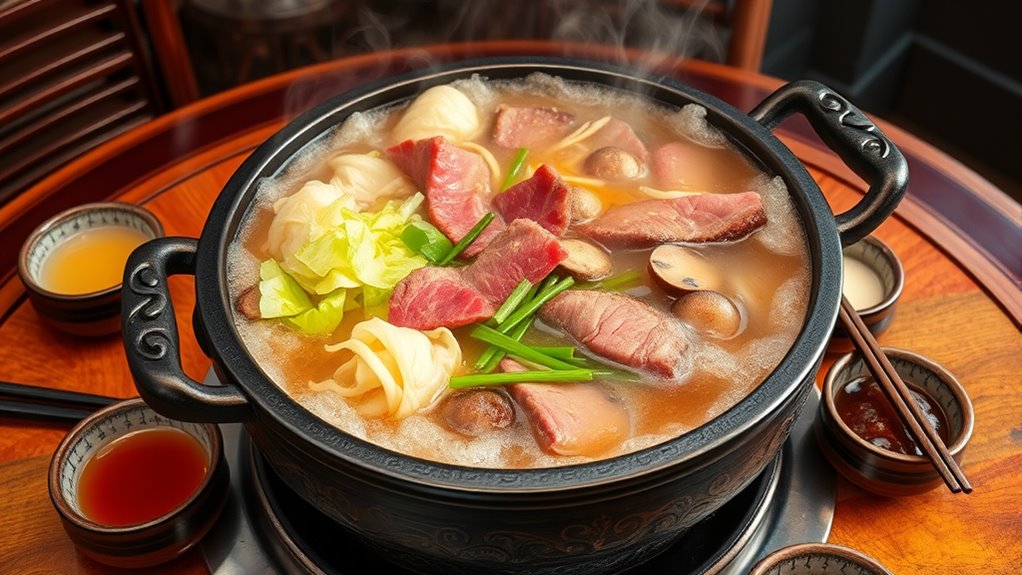
Japanese hot pot, known as nabe, is a comforting and versatile dish that brings people together around a simmering pot of flavorful broth. When you prepare nabe, you have the opportunity to explore a variety of soup variations that suit your taste and the season. Whether you prefer a clear kombu-based broth, a spicy miso base, or a rich, creamy tofu soup, there’s a nabe style for everyone. The key to creating a delicious hot pot lies in selecting the right ingredients and balancing flavors, which makes ingredient sourcing an important step. You can find fresh vegetables, thinly sliced meats, and seafood at local markets or Asian grocery stores, ensuring quality and freshness that elevate your dish.
As you get started, consider what type of soup variation you want to serve. If you love a light, umami-rich broth, a kombu dashi stock is simple to prepare and enhances the natural flavors of the ingredients you add. For a heartier, more robust flavor, a miso-based soup adds depth and warmth, perfect for winter evenings. Spicy lovers might opt for a kimchi or spicy chili broth, bringing heat and complexity to your nabe. The beauty of nabe is that you can customize each pot to suit your preferences and those of your guests, creating a communal experience with endless flavor combinations.
When sourcing your ingredients, think about the quality and freshness of what you choose. Thinly sliced beef or pork, often used for quick cooking in the hot pot, should be tender and fresh, which you can typically find at specialty meat counters or Asian markets. Fresh vegetables like Napa cabbage, shiitake mushrooms, and daikon radish not only add texture and flavor but also contribute to the broth’s richness. Seafood options such as shrimp or fish fillets can be added for extra depth, especially if you’re aiming for a seafood nabe. Sourcing ingredients from reputable providers ensures you get the best possible flavors, and seasonal produce can make your hot pot even more delicious and sustainable.
Ultimately, the success of your nabe depends on your ingredient sourcing and the soup variations you choose. With thoughtful selection and a bit of creativity, you’ll craft a communal winter meal that’s both nourishing and satisfying. The act of sharing a hot pot encourages conversation and connection, making it more than just a meal—it’s a warm tradition that brings everyone together around the simmering broth.
As an affiliate, we earn on qualifying purchases.
Frequently Asked Questions
What Are the Traditional Regional Variations of Nabe?
You’ll find that regional variations of nabe highlight local ingredients and seasonal flavors. For example, in Hokkaido, you might enjoy seafood-based nabe with fresh crab and salmon, perfect for winter. In the Kansai region, lighter broths with vegetables and tofu are popular. These variations reflect seasonal ingredients and regional tastes, making each nabe experience unique and tailored to local culinary traditions.
How Do I Customize the Broth for Different Flavors?
You can customize your nabe broth by adjusting the broth seasoning to match your preferred flavor profile. Add miso for a rich, umami taste, or soy sauce for saltiness and depth. For a spicy kick, include chili paste or ginger. Incorporate flavor enhancements like sake or citrus for brightness. Tweak the seasoning ingredients as you cook, tasting and adjusting to create a broth that perfectly suits your mood and ingredients.
Which Ingredients Are Best for Vegetarian Nabe?
You should use a vegetarian broth made from kombu, shiitake mushrooms, and miso for rich flavor. Add plant-based ingredients like tofu, Napa cabbage, carrots, daikon, mushrooms, and bok choy to make your nabe hearty and delicious. These ingredients absorb the broth’s flavors beautifully, creating a satisfying vegetarian nabe experience. Feel free to experiment with other vegetables and seasonings to customize it to your taste.
How Do I Serve Nabe to Large Groups?
Serving nabe to large groups is like orchestrating a lively symphony. You should set up a big communal pot at the center, encouraging guest participation by letting everyone add ingredients and serve themselves. Use serving etiquette by offering small bowls for each person and shared utensils for the ingredients. Keep the broth simmering, replenish ingredients as needed, and guarantee everyone feels involved and comfortable, creating a warm, shared dining experience.
What Are Some Popular Dipping Sauces for Nabe?
You can try popular dipping sauces like ponzu or sesame paste for nabe. Aim for a sauce consistency that’s smooth but not too runny, making it easy to coat your ingredients. Use a gentle dipping technique, submerging your cooked items briefly to soak up the flavor without overpowering the broth. Adjust the sauce amount to your taste, and enjoy the rich, savory experience with each bite.
Conclusion
As you gather around the steaming nabe, you become part of a warm tapestry of flavors and friendship. This communal meal isn’t just about sustenance; it’s a dance of ingredients and conversations, weaving hearts closer with each bubbling sip. Embrace the shared experience, letting the pot’s warmth seep into your soul. In the end, Japanese hot pot isn’t just food—it’s a poetic symphony that transforms ordinary winter nights into cherished memories.
Halloween Picks
halloween
As an affiliate, we earn on qualifying purchases.