
As Lunar New Year approaches, practicing making dumplings and spring rolls helps you connect with centuries-old traditions and brings families together. You’ll fold dumplings symbolizing wealth and prosperity, and wrap spring rolls representing harmony. This hands-on activity not only preserves cultural stories but also adds warmth and excitement to your celebration. Keep exploring, and you’ll discover more ways to honor this vibrant holiday through festive foods and meaningful shared rituals.
Key Takeaways
- Preparing dumplings and spring rolls is a traditional activity that symbolizes wealth, harmony, and prosperity during Lunar New Year.
- Engaging in folding dumplings and wrapping spring rolls helps preserve cultural customs and storytelling.
- Using simple ingredients and organized setups makes practicing these dishes accessible for all skill levels.
- Sharing these festive foods strengthens family bonds and enhances the celebratory atmosphere.
- Incorporating efficient storage and preparation tips ensures a smooth, enjoyable cooking experience for the holiday.

Lunar New Year is a vibrant celebration observed by millions around the world, marking the arrival of spring based on the lunar calendar. As the holiday approaches, you might find yourself immersed in a whirlwind of preparations that highlight deep-rooted cultural traditions and the joy of sharing festive foods. One of the most cherished ways to participate is by practicing the art of making traditional dishes like dumplings and spring rolls. These foods aren’t just delicious; they carry symbolic meanings, representing wealth, good fortune, and prosperity for the year ahead. Engaging in making these dishes allows you to connect with centuries-old customs, passing down techniques and stories from generation to generation.
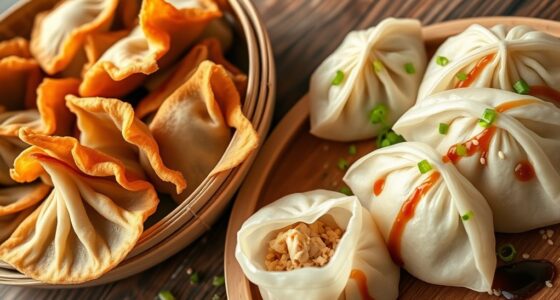
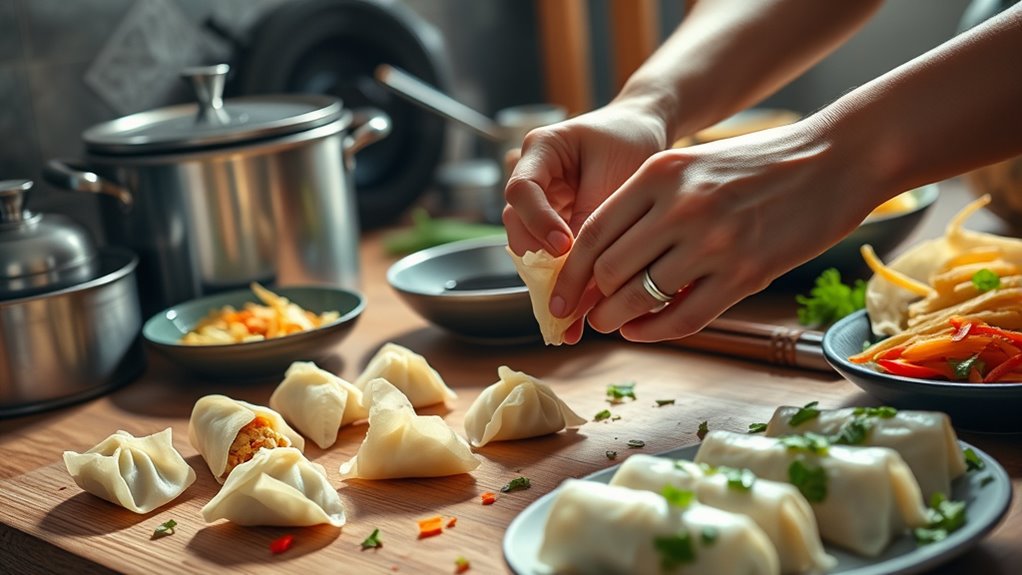
When you start preparing dumplings, you’re engaging in a ritual that embodies family unity and hope for abundance. You’ll need simple ingredients—ground meat, vegetables, and wrappers—yet the process of folding each dumpling with care becomes a meaningful act. As you pinch the edges, you’re participating in a cultural tradition that dates back hundreds of years, a symbol of wealth and good luck. Making spring rolls involves rolling vegetables, meats, and sometimes seafood in thin rice paper, creating a crispy, savory snack that’s a staple during the festivities. The act of wrapping and frying these rolls symbolizes harmony and prosperity, making them an essential part of the celebration.
Throughout your cooking, you’ll notice the emphasis on festive foods during Lunar New Year. These dishes are more than just sustenance—they’re a way of expressing hopes for a prosperous year. As you prepare and share dumplings and spring rolls with family and friends, you’re participating in a collective experience that strengthens bonds and preserves cultural traditions. The aroma of freshly cooked food fills the house with warmth and anticipation, setting the tone for a joyful holiday. Additionally, using vertical storage solutions in your kitchen can help you organize ingredients and utensils efficiently, making the cooking process more enjoyable and less stressful. Whether you’re a seasoned cook or trying your hand at these recipes for the first time, the act of creating and sharing these foods connects you to a rich cultural heritage.

Cooking Gift Set Co. Bamboo Steamer Basket Soup Dumpling Kit – 2 Tier Dumpling Steamer for Cooking with Agar Agar, Roller, Spoon, Liners, Recipes & Step-by-Step Video (6-Piece Set)
MASTER SOUP DUMPLINGS AT HOME – Make authentic soup dumplings with rich broth that bursts in every bite….
As an affiliate, we earn on qualifying purchases.
As an affiliate, we earn on qualifying purchases.
Frequently Asked Questions
What Are the Origins of Traditional Lunar New Year Foods?
You might wonder about the origins of traditional Lunar New Year foods like dumplings and spring rolls. These dishes hold deep cultural significance, symbolizing wealth and prosperity. Their historical evolution reflects centuries of tradition, adapting ingredients and preparations over time. By preparing and sharing these foods, you connect with cultural roots and honor the holiday’s history, celebrating renewal and good fortune for the year ahead.
How Do Regional Variations Affect Dumpling and Spring Roll Recipes?
Imagine biting into a steaming dumpling filled with fiery Sichuan peppercorns or savoring spring rolls packed with tropical mango and fresh herbs. Regional ingredients and cooking techniques shape these recipes, creating vibrant flavors. In northern China, thicker wrappers and pan-frying dominate, while southern regions favor delicate wrapping and steaming. This diversity reflects local tastes, climates, and cultures, making each variation a unique celebration of regional culinary traditions.
What Are Some Common Symbolic Meanings Behind Specific Ingredients?
You should know that specific ingredients in dumplings and spring rolls carry lucky meanings. For example, adding green vegetables symbolizes health and growth, while fish represents abundance. Using lucky colors like red and gold during preparation is believed to attract good fortune. Incorporating auspicious symbols, such as round shapes, signifies unity and completeness. These ingredients and colors are chosen intentionally to bring positive energy and blessings for the new year.
How Can I Adapt Recipes for Dietary Restrictions or Allergies?
You can effortlessly adapt your recipes for dietary restrictions by choosing gluten-free substitutions like rice paper or gluten-free soy sauce, which coincidentally enhance authentic flavors. For nut allergies, swap out typical nuts with seeds such as sunflower or pumpkin seeds. Being mindful of ingredient labels and experimenting with safe substitutions allows you to enjoy traditional dishes without compromising safety, creating inclusive, delicious options for everyone at your celebration.
What Are the Best Tips for Mastering Perfect Dumplings and Spring Rolls?
To master perfect dumplings and spring rolls, focus on your folding and wrapping techniques. For dumpling folding techniques, keep the edges moist and seal tightly to prevent leaks. When wrapping spring rolls, use even, firm pressure, and avoid overstuffing. Practice consistently to improve your dexterity. Watching tutorials or practicing with small batches helps refine your skills, ensuring your dumplings and spring rolls turn out beautifully and deliciously every time.

Three Ladies Brand Spring Roll Rice Paper Wrapper (2 Packs) Round, 22cm
Round, 22cm
As an affiliate, we earn on qualifying purchases.
As an affiliate, we earn on qualifying purchases.
Conclusion
As you fold those dumplings and roll spring rolls, it’s funny how preparing these traditional foods feels like a small miracle—bringing family and history together in your kitchen. Just yesterday, I found myself craving these very dishes, only to realize I’d be making them myself today. It’s no coincidence; these recipes connect us to generations past, making your Lunar New Year celebration not just festive, but truly meaningful.

Stainless Steel Dumpling Ravioli Maker Press,AUAM 2 Pack Pierogi Mold – Wonton Mould, Easy-tool for Dumpling Wrapper Dough Stamp Cutter Pastry Pie Making (Small 3 inch,Large 3.75 inch)
SEAL GOOD: dumplings will not leak when they are boiled. Sometimes the edges are not tight enough, because…
As an affiliate, we earn on qualifying purchases.
As an affiliate, we earn on qualifying purchases.

Soeos Rice Paper, White Rice Paper Wrappers, 1 Pack, 34 Sheets-Fresh Spring Roll Wrappers & Dumplings, Non-GMO, Gluten-Free, Low Carb, Vietnamese Rice Wraps (Round, 22cm)
Thin Edible Sheets: Rice paper is a delicate, translucent, and thin sheet made from rice flour, water, and…
As an affiliate, we earn on qualifying purchases.
As an affiliate, we earn on qualifying purchases.