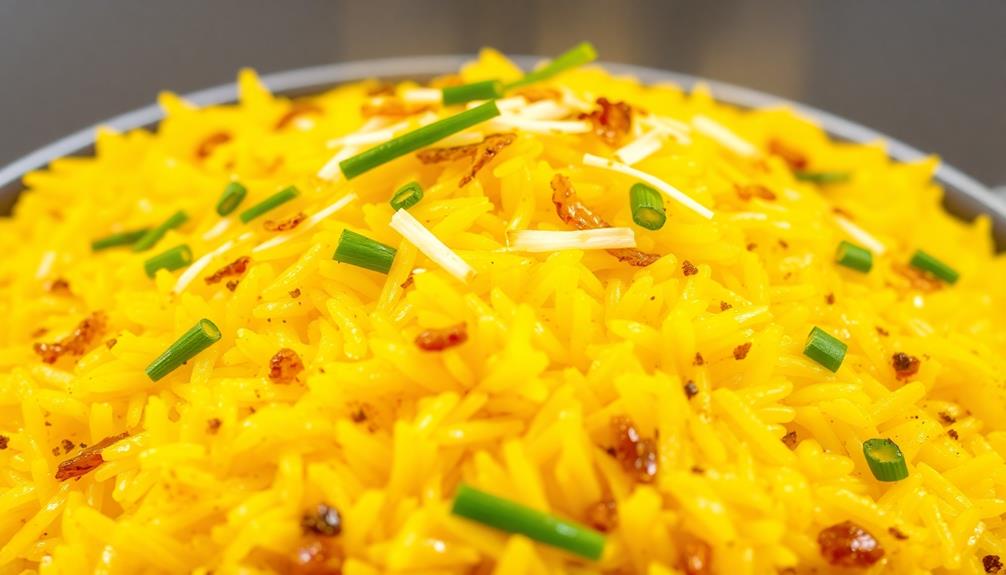
Indonesian Nasi Goreng is a flexible dish enjoyed at any time, whether for breakfast or dinner. It reflects centuries of cultural fusion, blending Chinese fried rice techniques with local spices and ingredients like shrimp, chicken, or chili. Its popularity grew from resourcefulness during colonial times and now symbolizes Indonesia’s culinary heritage. By choosing Nasi Goreng, you participate in a tradition that celebrates adaptation and diversity—discover more about this delicious history as you explore further.

Get kitchen staples and gadgets delivered free — and shop member deals
- Fast, free delivery on millions of items
- Access to Prime Big Deal Days deals on October 6–7
- Prime Video, Amazon Music and more included
Key Takeaways
- Nasi Goreng is versatile, enjoyed both as a hearty breakfast and satisfying dinner in Indonesia.
- Its resourceful nature makes it ideal for using leftovers, suitable for any mealtime.
- Traditionally served with toppings like fried eggs for breakfast or meat and chili for dinner.
- Its cultural significance and rich history enhance the dining experience at any time of day.
- Adaptable to regional ingredients, allowing for personalized breakfast or dinner variations.
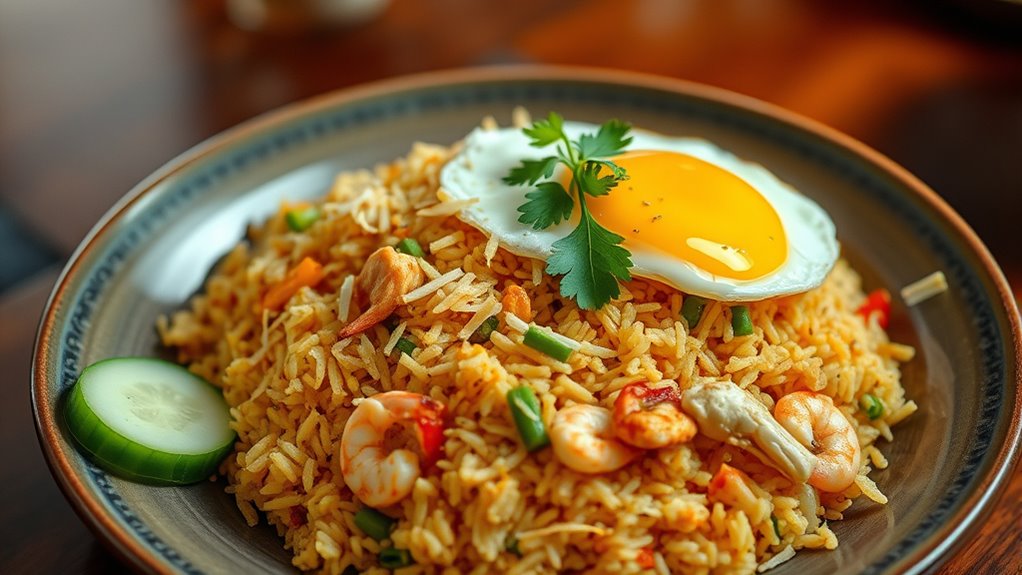
Have you ever wondered what makes Nasi Goreng, Indonesia’s beloved fried rice dish, so irresistibly flavorful? Its rich taste isn’t just about the ingredients; it’s rooted in a history that reflects Indonesia’s diverse culture and influences. The origins of Nasi Goreng date back centuries, with its roots intertwined with the country’s trade history and colonial past. Historically, the dish likely evolved from Chinese fried rice, introduced through trade routes and migration. Over time, Indonesians adapted it to local ingredients, adding their unique spices and flavors, turning it into the iconic dish you enjoy today.
Nasi Goreng’s rich history reflects Indonesia’s diverse cultural influences and adaptation over centuries.
You might find it interesting that the name itself, “Nasi Goreng,” simply means “fried rice” in Indonesian. The dish’s history origins reveal a blend of cultural influences, from Chinese culinary techniques to indigenous Indonesian spices. During the colonial period, fried rice became a popular way to utilize leftover rice and ingredients, making it a practical meal for many households. Its versatility and hearty nature helped it spread across different regions, each adding their local twist, whether through the use of sweet soy sauce, shrimp, chicken, or fiery chili.
As you explore the history origins of Nasi Goreng, you’ll see how it reflects Indonesia’s history of trade, colonization, and cultural exchange. The dish’s development was influenced by Chinese immigrants, who brought their stir-fry techniques, and local spice traders, who supplied abundant flavors. Over generations, Nasi Goreng became more than just a way to prevent waste; it became a symbol of Indonesian identity, served at breakfast tables and dinner gatherings alike. It’s a dish that embodies adaptability—just like Indonesia itself—incorporating a variety of ingredients based on what’s available and preferred in different regions.
Knowing this history adds a layer of appreciation when you enjoy a plate of Nasi Goreng. It’s not just about the taste but also about the story behind each spoonful—the blending of cultures, the resourcefulness of generations, and the rich culinary heritage. Whether you have it for breakfast or dinner, you’re experiencing a dish that has traveled and transformed over centuries, becoming a national staple. So next time you indulge in Nasi Goreng, remember that its history origins tell a story of resilience, adaptation, and cultural fusion that continues to flavor every bite you take.
Indonesian Nasi Goreng frying pan
As an affiliate, we earn on qualifying purchases.
As an affiliate, we earn on qualifying purchases.
Frequently Asked Questions
Can Nasi Goreng Be Made Vegetarian?
Yes, you can make nasi goreng vegetarian. Use vegetarian substitutions like tofu or tempeh for the protein, and choose vegetables you love. To keep it dairy free, skip eggs or add plant-based alternatives like chickpea flour scramble. You can also use vegan soy sauces or seasonings to enhance flavor. This way, you enjoy a tasty, satisfying dish that fits your dietary preferences without sacrificing authentic taste.
What Are Authentic Indonesian Nasi Goreng Toppings?
You’ll find authentic Indonesian nasi goreng topped with traditional spice blends like sweet soy sauce, garlic, shallots, and chili. Common garnishes include fried shallots, sliced cucumber, fresh tomatoes, and a fried egg on top. Sometimes, you might see shredded chicken, prawns, or satay skewers added for extra flavor. These toppings and garnishes perfectly balance the savory, spicy taste, giving you a true taste of Indonesia.
How Long Does Cooked Nasi Goreng Last Refrigerated?
Cooked nasi goreng can last in your refrigerator for up to 3 to 4 days. For food safety, store it in an airtight container promptly after eating. Make sure to cool it to room temperature before refrigerating and reheat thoroughly before consuming. Follow proper storage tips to prevent bacteria growth, and avoid keeping it longer than recommended to ensure it remains safe and tasty for your next meal.
Is Nasi Goreng Suitable for Gluten-Free Diets?
You might think nasi goreng is naturally gluten-free, but it’s not always safe for gluten-free diets. Investigating the theory reveals that traditional recipes often include soy sauce, which contains gluten. Plus, cross-contamination risks during preparation or with gluten-containing ingredients can pose health issues. To guarantee safety, use gluten-free ingredients like tamari or coconut aminos and prepare it in a dedicated, clean space to avoid cross contamination.
What Are Common Regional Variations of Nasi Goreng?
You’ll find that regional variations of nasi goreng include different spice blends and rice varieties. In Java, it’s often made with sweet soy sauce and shallots, while in Sumatra, you might taste more chili and turmeric. Some regions prefer jasmine rice for its aroma, whereas others use shorter grains. These variations reflect local flavors and ingredients, giving each version a unique taste experience that highlights Indonesia’s diverse culinary landscape.
Conclusion
Next time you crave a quick, flavorful meal, try making nasi goreng for breakfast or dinner. Imagine waking up to the aroma of garlic and soy, then savoring each bite of this savory fried rice. Just like Lina, who started her mornings with nasi goreng and found it energized her for the day ahead, you too can enjoy this versatile dish anytime. It’s simple, satisfying, and perfect for any time of day.
Halloween Picks
halloween
As an affiliate, we earn on qualifying purchases.