Incorporating light salads and soups into your meals helps you reset your diet after the holidays by promoting portion control, balancing nutrition, and maintaining energy levels without feeling deprived. Focus on filling salads with leafy greens, colorful vegetables, and lean proteins, while choosing broth-based soups like vegetable or chicken for comfort and satiety. Planning ahead and controlling portions make sustainable habits easy to stick with. Keep going to discover simple strategies that help you stay on track long-term.
Key Takeaways
- Incorporate salads and soups into weekly meal plans to aid in resetting your diet healthily.
- Use fresh vegetables, lean proteins, and whole grains to create satisfying, nutrient-dense light meals.
- Prepare ingredients in advance and store soups in individual portions for quick, convenient meals.
- Practice portion control with smaller bowls and mindful eating to prevent overeating.
- Automate meal planning and shopping to maintain sustainable habits between holidays.
Are you ready to transform your eating habits and boost your health? If so, incorporating light meals like salads and soups between the holidays is a smart move. These meals help you reset your diet without feeling deprived, allowing your body to recover from excess indulgence. To make this transition effective, focus on meal planning and portion control. Planning ahead ensures you have nutritious options ready, reducing the temptation to reach for less healthy snacks or fast food. Portion control helps you manage your calorie intake, so you stay satisfied without overeating.
Start by designing a weekly meal plan that includes a variety of salads and soups. Choose fresh vegetables, lean proteins, and whole grains to create balanced meals that keep you full and energized. Preparing ingredients in advance makes it easier to assemble meals quickly, especially during busy days. When planning, consider the portion sizes for each meal. Using smaller bowls or measuring cups can help you keep portions in check, preventing overeating while still feeling satisfied. Remember, even healthy foods can add up if portion sizes are too large.
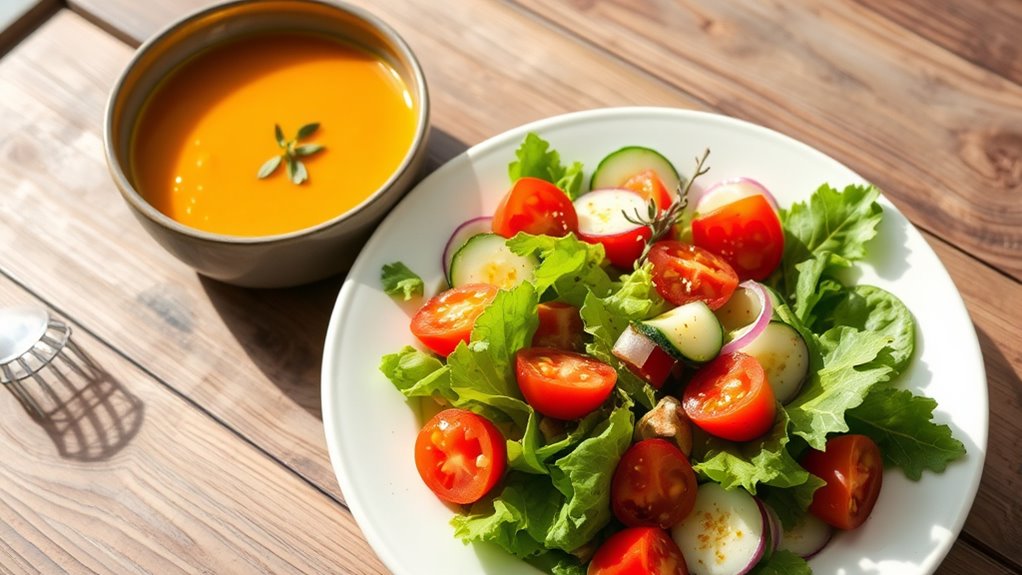
Salads are versatile and easy to customize, making them ideal for light, nutritious meals. Fill a large bowl with leafy greens like spinach or kale, then add colorful vegetables, such as bell peppers, cucumbers, and carrots. Incorporate a source of lean protein—grilled chicken, chickpeas, or tuna— to promote fullness. Use a simple vinaigrette or lemon juice instead of heavy dressings to keep calorie counts low. For soups, opt for broth-based varieties like vegetable, chicken, or lentil soup. These are rich in nutrients and hydrating, which helps curb hunger between meals. You can prepare large batches and store them in individual servings, aligning with your meal planning efforts.
As you implement these meals, pay attention to portion control. It’s tempting to go back for seconds, especially when you’re craving comfort foods, but maintaining appropriate portions is key to a successful diet reset. Use utensils or scales to measure servings, and avoid eating straight from containers, which can lead to consuming more than intended. Focus on eating slowly and mindfully, savoring each bite to improve digestion and recognize when you’re full.
In addition, staying aware of the role of automation in simplifying meal prep and grocery shopping can save you time and effort, making it easier to stick with healthy habits. Incorporating light salads and soups into your routine isn’t just about what you eat; it’s about creating a sustainable habit. With deliberate meal planning and mindful portion control, you’ll find it easier to stick with your health goals. Over time, these small changes will contribute to a healthier body and a more balanced relationship with food, setting the stage for ongoing wellness beyond just the holiday season.
Frequently Asked Questions
Can I Modify Salad Ingredients for Specific Dietary Restrictions?
Yes, you can definitely modify salad ingredients to accommodate dietary restrictions. By customizing salad ingredients, you tailor your meal to fit your needs, whether you’re avoiding nuts, dairy, gluten, or other allergens. Swap out ingredients like croutons for seeds or omit cheese, and choose dressings that suit your dietary preferences. This way, you enjoy healthy, delicious salads without compromising your restrictions.
How Do I Prevent Salads From Becoming Soggy Quickly?
Think of your salad as a vintage vinyl—delicate and needing proper care. To prevent sogginess, keep your salad dressing separate until serving, using salad dressing strategies like pouring just before eating. Store ingredients in airtight containers, layer hearty greens at the bottom, and add delicate toppings last. Follow salad storage tips by keeping everything cool and dry, ensuring your salad stays crisp and delicious longer.
What Are Quick and Healthy Soup Recipes for Busy Days?
On busy days, whip up quick, healthy soups using homemade broth for added flavor. To save time, prepare large batches and store leftovers in airtight containers, following proper soup storage tips to keep them fresh. Reheat on the stove or microwave when needed. Incorporate fresh vegetables, beans, or grains for extra nutrients. This approach guarantees you enjoy nutritious, satisfying meals without the hassle of lengthy cooking.
Are There Any Recommended Portion Sizes for Light Meals?
Imagine feeling energized after a light, perfectly portioned meal. For light meals, aim for about 1 to 1.5 cups of salad or 1 cup of soup, which supports portion control and prevents overeating. Use serving suggestions like dividing your plate into sections or pre-measuring ingredients to guarantee balanced portions. These small adjustments help you stay on track without feeling deprived, making healthy eating sustainable and satisfying.
How Can I Stay Motivated During the Diet Reset?
To stay motivated during your diet reset, focus on mindful eating and meal planning. Remind yourself of your goals and celebrate small wins to keep momentum. Planning your light meals ahead helps you avoid impulsive choices, making it easier to stay on track. Keep a food journal, stay hydrated, and find support from friends or online communities. These strategies help you stay committed and motivated throughout your reset journey.
Conclusion
Remember, gentle adjustments now can set a revitalizing tone for your journey ahead. Embrace these light meals as a subtle nudge toward balance, allowing your body to find its natural rhythm. Sometimes, a soft step forward is all it takes to steer your path in a healthier direction. Trust in small, mindful choices—they whisper encouragement for a brighter, more energized you. After all, every gentle shift paves the way for lasting well-being.