Mango sticky rice is a beloved Thai street food that captures the country’s culinary spirit and regional diversity. You’ll enjoy sweet, fragrant rice paired with ripe mango and rich coconut cream, often prepared with locally sourced ingredients and unique regional twists. This dessert isn’t just tasty; it’s a cultural symbol celebrated during harvest festivals and social gatherings. Keep exploring to discover more about the traditions and variations behind this iconic treat.
Key Takeaways
- Mango sticky rice is a traditional Thai dessert symbolizing harvest abundance and cultural celebration.
- It features glutinous rice topped with ripe mango slices and coconut milk, often infused with regional herbs.
- Regional variations include differences in coconut cream, rice type, and presentation styles across Thailand.
- The dish is a popular street food enjoyed during festivals and communal gatherings, emphasizing fresh, high-quality ingredients.
- It embodies Thailand’s culinary heritage, blending flavors and regional identity into an authentic street food experience.
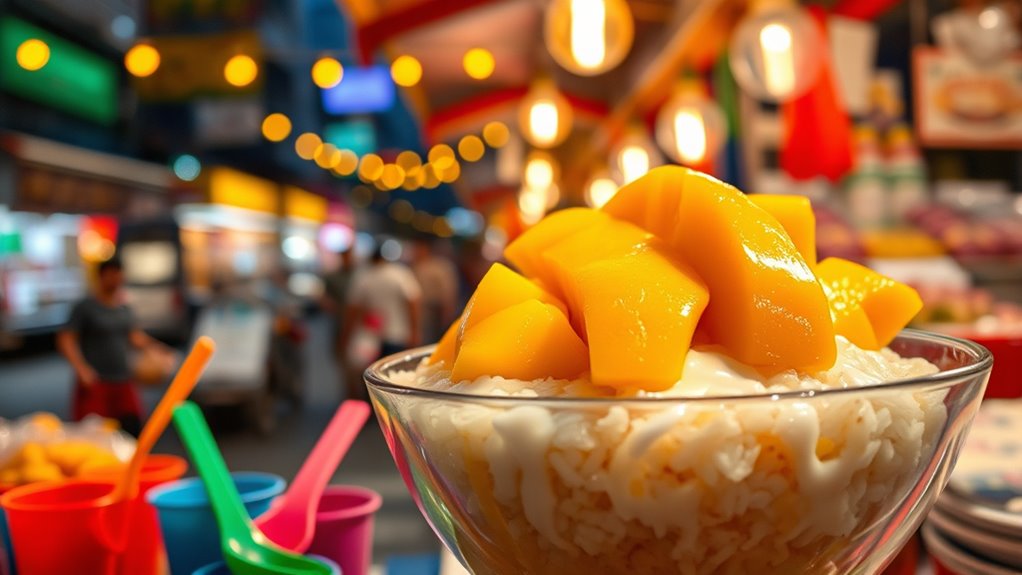
Have you ever wondered why Thai street food is renowned worldwide? It’s not just the flavors or the vibrant stalls; it’s the deep-rooted cultural significance behind each dish. When it comes to the beloved mango sticky rice dessert, you’re tasting more than just sweet rice and ripe mango — you’re experiencing a symbol of Thai tradition and regional identity. This dessert is a staple across Thailand, but its preparation and presentation can vary depending on where you are. These regional variations reflect local ingredients, climate, and cultural preferences, making each version a unique expression of its area. In the north, for instance, you might find it served with coconut cream infused with subtle herbs, while in the south, it’s often accompanied by a drizzle of coconut milk that’s slightly salted, balancing the sweetness.
Regional variations in Thai mango sticky rice showcase local ingredients and cultural preferences.
As you indulge in mango sticky rice, you’re also engaging with a dish that holds significant cultural importance. It’s more than a street snack; it’s a celebration of the harvest season, especially during the mangoes’ peak months from March to June. Families and vendors alike prepare it with care, emphasizing the importance of fresh, high-quality ingredients. The vibrant yellow mango slices symbolize abundance and prosperity, while the creamy rice signifies comfort and tradition. Sharing or enjoying this dish often aligns with festive occasions, making it a communal experience that strengthens social bonds.
The regional variations add depth to your understanding. In central Thailand, where jasmine rice is more common, the sticky rice tends to be fragrant and aromatic, enhancing the sensory experience. Meanwhile, in the northeastern parts, the rice might be a bit firmer, with a slightly tangy twist from local coconut varieties. These nuances aren’t random; they’re rooted in local farming practices and cultural preferences that have evolved over generations. When you eat mango sticky rice in different regions, you’re not just tasting different flavors — you’re immersing yourself in a tapestry of local histories and traditions.
Ultimately, this dessert encapsulates the essence of Thai street food: a harmonious blend of flavors, regional identity, and cultural storytelling. It’s simple yet meaningful, connecting you with Thailand’s rich heritage through every bite. Whether enjoyed from a street vendor in Bangkok or a local market in Chiang Mai, mango sticky rice offers an authentic glimpse into Thailand’s culinary soul, reminding you that food is a powerful vessel for cultural expression.

Thai Lao Sticky Rice Steamer Pot and Basket Cook Kitchen Cookware Tool
- Material: Bamboo
As an affiliate, we earn on qualifying purchases.
As an affiliate, we earn on qualifying purchases.
Frequently Asked Questions
What Are the Origins of Mango Sticky Rice Dessert?
You’re curious about the origins of mango sticky rice dessert. This dish has deep roots in Thai culinary history, dating back centuries as a traditional sweet treat. Its cultural significance lies in celebrating mango harvest festivals and daily life. You’ll find that the combination of glutinous rice, fresh mango, and coconut milk reflects Thailand’s rich agricultural heritage and love for harmony in flavors, making it a beloved national delicacy.
How Do I Select Ripe Mangoes for the Best Flavor?
They say “you are what you eat,” so choosing the best mangoes matters. To select ripe fruit, look for mango ripeness by checking its color—bright yellow or orange signals sweetness. Gently squeeze the mango; it should yield slightly but not feel mushy. Smell near the stem—ripe mangoes emit a sweet aroma. Trust your senses to pick the juiciest, most flavorful mangoes for your dessert.
Can I Prepare Mango Sticky Rice at Home Easily?
Yes, you can easily prepare mango sticky rice at home with a simple DIY recipe. Start by gathering ripe mangoes, coconut milk, sticky rice, sugar, and salt. Use ingredient tips like choosing fragrant, soft mangoes and soaking the rice beforehand. Cook the rice until tender, then mix with sweetened coconut milk. Serve with sliced mango on top for an authentic, delicious dessert made right in your kitchen.
Are There Regional Variations of This Dessert in Thailand?
You notice a vibrant street stall where the flavors seem to dance—this reflects Thailand’s regional flavor profiles, which influence variations of mango sticky rice. In the north, expect coconut cream and sticky rice with a hint of salt, while the south might add pandan or coconut milk for extra richness. Traditional cooking methods stay true across regions, but local ingredients give each variation a unique twist you can enjoy.
What Are Common Accompaniments Served With Mango Sticky Rice?
You’ll often find coconut toppings added to enhance the sweetness and creaminess of mango sticky rice, making each bite richer and more flavorful. Sesame seeds are also common, sprinkled on top for a subtle nutty crunch that complements the soft rice and ripe mango. Sometimes, a drizzle of coconut milk completes the dish, providing extra moisture. These accompaniments elevate the dessert, offering a delightful mix of textures and tastes.
Conclusion
As you savor the sweet, creamy mango sticky rice, it’s like tasting a piece of Thailand’s vibrant street life. Every bite offers a burst of flavor and tradition that’s impossible to forget. So, next time you crave a dessert that’s both comforting and exciting, remember this iconic treat. Just like a lively street corner, it’s a perfect blend of sweetness, culture, and joy, waiting to delight your senses.