
Create vibrant winter salads with citrus, pomegranate, and kale for a nutritious, flavorful meal. Use seasonal ingredients like oranges, grapefruits, and mandarins to add juiciness and brightness. Toss in pomegranate seeds for crunch and a pop of color, while kale provides hearty greens packed with vitamins. The combination offers a perfect balance of sweet, tart, and bitter flavors, transforming your salads into satisfying, colorful dishes. Keep exploring to discover delicious tips and variations to elevate your winter salads.
Key Takeaways
- Combining citrus, pomegranate, and kale creates a colorful, nutrient-rich winter salad with vibrant flavors and textures.
- Citrus adds brightness and vitamin C, while pomegranate seeds introduce crunch and sweetness to kale-based salads.
- Massaging kale softens its hearty texture, making it more palatable and perfect for winter pairing with seasonal fruits.
- The natural tartness of citrus and pomegranate balances the bitterness of kale for a harmonious flavor profile.
- These ingredients support healthy eating habits by maximizing flavor, nutrition, and visual appeal during winter months.
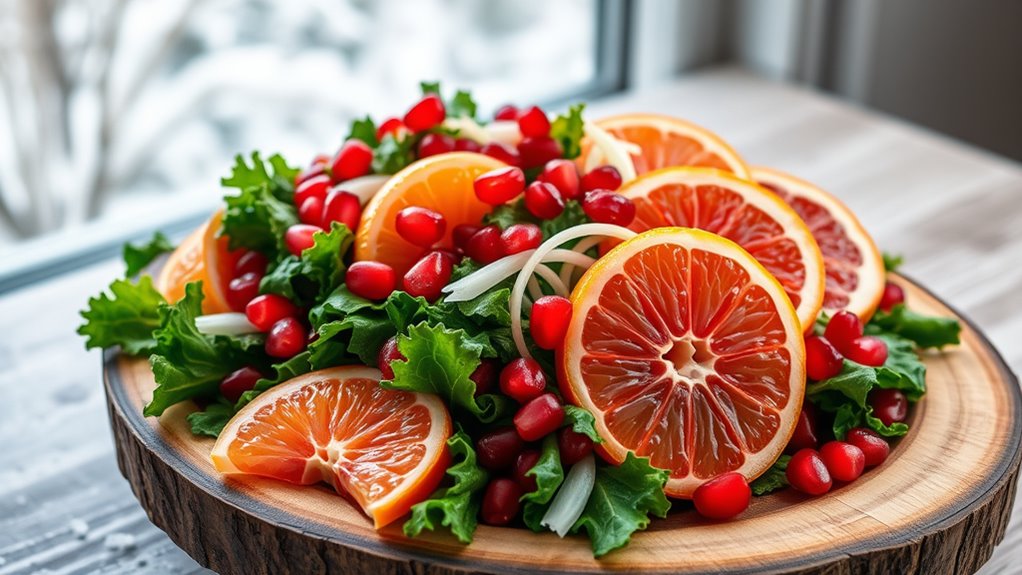
Have you ever wondered how to enjoy fresh, vibrant salads even when it’s cold outside? The secret lies in embracing healthy eating habits that highlight seasonal produce, which makes winter salads both delicious and nourishing. You don’t have to give up bright flavors or crisp textures just because the weather is chilly. Instead, focus on ingredients that are in season, and you’ll discover how these fresh elements can transform your winter meals into colorful, satisfying dishes.
Enjoy vibrant winter salads by embracing seasonal produce and fresh, colorful ingredients.
Citrus fruits are the cornerstone of winter salads, offering a punch of brightness that lifts your spirits and awakens your palate. Oranges, grapefruits, and mandarins are at their peak during this season, bursting with juiciness and tang. Their natural sweetness pairs beautifully with bitter greens and crunchy vegetables, creating a balanced mix of flavors. When you incorporate citrus into your salads, you not only enjoy their invigorating taste but also benefit from a boost of vitamin C, which supports your immune system during the colder months. The vibrant colors of citrus slices or segments also add visual appeal, making your salad as enticing to the eyes as it is to the taste buds.
Pomegranate seeds are another winter treasure that elevates your salads. These jewel-like seeds introduce a delightful crunch and a sweet-tart flavor that complements the other ingredients. Pomegranates are in season during winter, so they’re at their freshest and most flavorful. Tossing pomegranate seeds into your salad not only enhances the texture but also adds antioxidants and vitamins that promote overall health. Their ruby-red color creates a striking contrast against greens and citrus, making your salad visually stunning. Plus, their natural sweetness balances out the bitterness of kale or arugula, creating a harmonious flavor profile.
Kale is an excellent choice of leafy green for winter salads, thanks to its hearty texture and resilience in colder weather. It’s packed with nutrients like vitamins A, C, and K, making it a perfect base for a healthy eating plan. When you massage kale with a little olive oil and lemon juice, it softens and becomes more palatable, even for those who typically find kale tough. Combining kale with citrus and pomegranate results in a salad that’s not only nutrient-dense but also full of contrasting textures and flavors. You get the crunch and freshness from the greens, the zing from citrus, and the sweetness from pomegranate seeds—all working together to create a balanced, satisfying dish.
Incorporating these seasonal ingredients into your winter salads allows you to stay committed to healthy eating without sacrificing flavor or variety. By choosing produce that’s at its peak, you enjoy the best taste and nutritional benefits. So, next time you’re craving a fresh, vibrant salad, reach for citrus, pomegranate, and kale—the perfect trio to brighten up your winter table.

LIMOEASY Iced Salad Bowl, 4.5 Qt Large Chilled Serving Bowl with Lid for Parties, Ice Bowls to Keep Veggie, Fruit, Potato, Pasta Cold, Unique Gift for Women
- Removable 3-Layer Design: Includes acrylic lid, stainless steel bowl, and ice holder
- Complete Entertaining Set: Includes buffet server, salad servers, and ice bags
- Food-Safe and BPA-Free: All components are BPA-free and food-safe
As an affiliate, we earn on qualifying purchases.
As an affiliate, we earn on qualifying purchases.
Frequently Asked Questions
What Are the Best Dressings for Winter Salads?
You should choose dressings with flavor pairings that complement winter ingredients, like citrus or pomegranate. A simple vinaigrette with lemon, honey, and Dijon works well, applying it evenly with a gentle toss. Creamy dressings like tahini or yogurt-based ones also suit kale salads. Focus on dressing application techniques, like drizzling gradually and tossing thoroughly, to guarantee every bite is flavorful without overpowering the fresh, seasonal ingredients.
How Can I Make Citrus Salads Less Bitter?
Imagine a bright sunbeam warming a cool, crisp citrus slice—this is the essence of balancing flavors. To reduce the bitter flavor in citrus salads, add a touch of honey or agave to enhance the citrus balance. Incorporate sweet elements like pomegranate seeds or a drizzle of balsamic glaze, and consider pairing with milder greens like kale or spinach. These steps create harmony, making your salad both vibrant and satisfying.
Are There Vegetarian Protein Options for These Salads?
Yes, you can add vegetarian protein options to your citrus, pomegranate, and kale salads. Consider plant-based protein sources like chickpeas, quinoa, tofu, or tempeh to boost your salad’s protein content. These alternatives are versatile and absorb flavors well, making your salads more satisfying. Simply toss cooked or marinated options into your salad for added texture and nutrition, ensuring a delicious, protein-rich vegetarian dish.
How Long Can Winter Salads Be Stored Safely?
You can typically store winter salads safely for 3 to 5 days. Did you know that proper storage methods can extend freshness by keeping salads crisp and vibrant? To maintain salad freshness, keep your salads in airtight containers or covered bowls in the fridge at or below 40°F. Avoid leaving salads out at room temperature for more than two hours, as bacteria grow rapidly, compromising safety and quality.
What Are Some Common Seasonal Variations?
You can enjoy seasonal variations by swapping out ingredients based on what’s fresh. Try incorporating seasonal fruit swaps like pears or apples, and add root vegetable additions such as roasted carrots or beets for extra flavor and texture. These changes keep your winter salads interesting and nutritious. Feel free to experiment with local produce, and you’ll create delicious, vibrant salads perfect for the cold months.
Conclusion
Now that you’ve explored these vibrant winter salads, you’re ready to transform your meals into a burst of color and flavor. With citrus, pomegranate, and kale, you’ll create a salad that’s as invigorating as a winter breeze and as nourishing as a warm hug. Don’t settle for dull winter meals—these combos will brighten your plate and energize your day like a sunrise after a long night. Immerse yourself and enjoy the delicious magic!