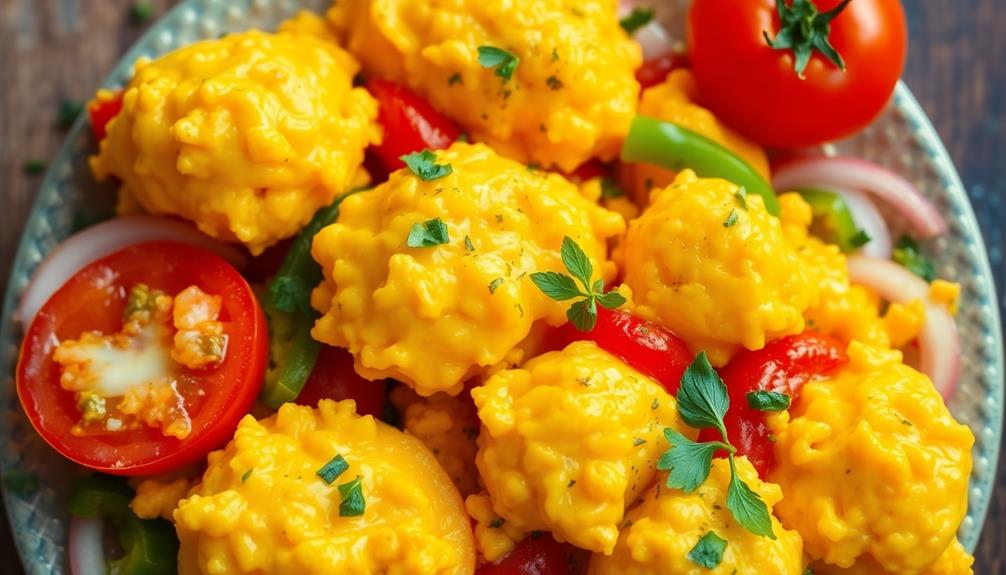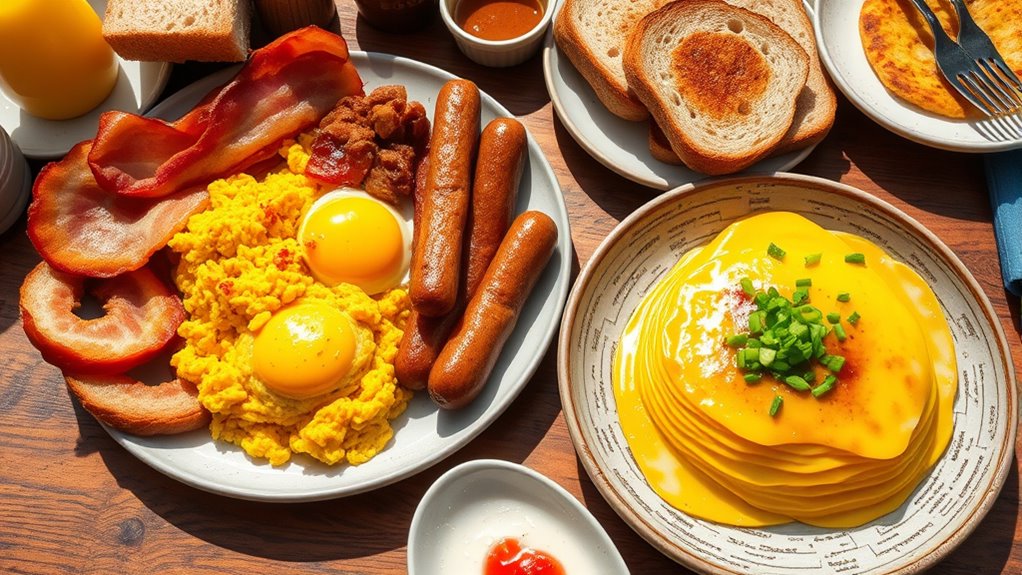

Discover five international breakfast ideas that showcase how different cultures start their days. From the hearty English fry-up, filled with eggs, sausages, and toast, to the delicate Japanese tamagoyaki, a sweet rolled omelette, each meal reflects regional customs and ingredients. Other options include French croissants, Mexican chilaquiles, and Middle Eastern shakshuka. Exploring these breakfasts reveals the world’s rich culinary diversity—if you keep exploring, you’ll uncover even more flavorful traditions.
Key Takeaways
- The English fry-up emphasizes hearty ingredients like eggs, sausages, bacon, and baked beans, symbolizing comfort and tradition.
- Japanese breakfast features rice, miso soup, grilled fish, and pickled vegetables, highlighting balance, harmony, and health.
- Regional variations in the UK include black pudding, haggis, or bubble and squeak, reflecting local ingredients and cultural influences.
- Japanese breakfasts often adapt based on ingredient availability, emphasizing sustainability and connection to nature.
- Comparing these meals reveals how geography and history shape breakfast customs and cultural identity worldwide.

Have you ever wondered how different cultures start their day? Breakfast traditions reveal a lot about a country’s history, values, and climate. They also showcase regional variations that make each cuisine unique. For example, an English fry-up isn’t just a hearty meal; it’s a symbol of comfort and tradition, often enjoyed on weekends or special occasions. The combination of eggs, sausages, bacon, baked beans, and toast reflects the abundance of ingredients available in the UK and the importance placed on a substantial start to the day. The cultural significance of this meal goes beyond nourishment—it embodies a sense of community and comfort that many Brits cherish. When you explore regional variations, you’ll notice that each part of the UK adds its own twist. In Northern England, black pudding and bubble and squeak might feature, while in Scotland, haggis could make an appearance. These differences highlight local ingredients and historical influences, making the breakfast a reflection of regional identity. Additionally, mindfulness practices during breakfast can enhance the enjoyment and appreciation of these traditional meals. Switching gears to Japan, the traditional breakfast might seem very different but carries its own cultural weight. Japanese breakfast often includes rice, miso soup, grilled fish, and pickled vegetables. This meal emphasizes balance, harmony, and health, aligning with the broader principles of Japanese cuisine. The cultural significance of these dishes lies in their connection to centuries-old culinary customs that promote harmony with nature and mindfulness. Regional variations also exist within Japan; coastal areas might feature fresh seafood more prominently, while inland regions rely more on preserved vegetables and rice. These differences aren’t just about taste—they’re about adapting to local resources and climate, ensuring each region’s breakfast is both nutritious and sustainable. Both the English fry-up and Japanese breakfast serve as more than just morning fuel—they’re expressions of cultural identity. Their regional variations underscore how geography, history, and local ingredients shape what people eat to start their day. These breakfasts also reveal how traditions evolve, blending old customs with modern tastes. When you try different international breakfasts, you get a glimpse into the cultural significance behind each dish and the regional variations that make each one special. Whether it’s the hearty, filling English fry-up or the balanced, nutritious Japanese meal, every breakfast tells a story about the people who prepare and enjoy it. Exploring these traditions offers a richer understanding of how breakfast can be both a daily routine and a meaningful cultural experience.

Silicone Egg Rings, Premium Nonstick Multicolored Cooking Ring Molds for Eggs, Pancakes, Mcmuffin Breakfast Sandwiches, English Muffins, Crumpets, and More (4-Pack)
- Premium Nonstick Surface: Ensures easy release of eggs and pancakes
- Food Safe Materials: BPA-free and free of harmful chemicals
- Easy to Use and Clean: Simple instructions and quick cleanup
As an affiliate, we earn on qualifying purchases.
As an affiliate, we earn on qualifying purchases.
Frequently Asked Questions
What Are the Health Benefits of Traditional International Breakfast Dishes?
You benefit from the nutritional value and cultural significance of traditional international breakfast dishes. They often include wholesome ingredients like eggs, vegetables, and grains, providing essential vitamins and minerals. These dishes celebrate cultural heritage, offering a balanced start to your day with diverse flavors and health benefits. Embracing these meals can boost your overall well-being while connecting you to different traditions and culinary histories around the world.
How Can I Prepare Japanese Tamagoyaki at Home Easily?
To prepare a rolled omelette or sweet tamagoyaki at home easily, whisk eggs with a little sugar and soy sauce. Use a non-stick pan and pour a thin layer of egg. Roll it up as it cooks, then push it to one side. Repeat with more egg, rolling each layer into a neat rolled omelette. This simple method creates delicious sweet tamagoyaki recipes perfect for breakfast or snacks.
Are There Vegetarian Options for English Fry-Up Breakfasts?
Yes, you can enjoy vegetarian alternatives for an English fry-up breakfast. Try plant-based options like vegetarian sausages, grilled tomatoes, mushrooms, baked beans, and hash browns. You can also replace traditional eggs with tofu scramble or chickpea flour omelets. These plant-based options provide a hearty, satisfying meal that aligns with vegetarian diets, allowing you to enjoy a classic breakfast without meat.
What Are Common Beverages Served With International Breakfasts?
You’ll often find coffee pairing as a common beverage served with international breakfasts, especially in Western countries. Beverage customs vary worldwide; for example, tea is popular in China and India, while fresh fruit juices are common in tropical regions. In Japan, green tea complements breakfast, and in Mediterranean countries, a glass of water or herbal tea might be served. These drinks enhance your meal and reflect local culinary traditions.
How Do Breakfast Customs Vary Across Different Cultures?
You’ll notice that breakfast customs vary widely across cultures, shaped by regional ingredients and cultural rituals. For example, in some places, you might start your day with a light, sweet pastry, while others prefer hearty, savory dishes. These rituals reflect local traditions and ingredients, making each breakfast a unique experience. Embracing these differences gives you a richer understanding of diverse cultures and their morning routines, creating a more meaningful breakfast experience.
Conclusion
Exploring international breakfasts shows how food reflects culture and history. While some believe breakfast habits shape our identity, studies suggest they’re more influenced by climate and resources. So, next time you enjoy a Japanese tamagoyaki or an English fry-up, remember you’re tasting centuries of tradition. Embrace these flavors, knowing they connect you to a world of diverse stories and shared human experiences—proving that breakfast truly is more than just a meal.