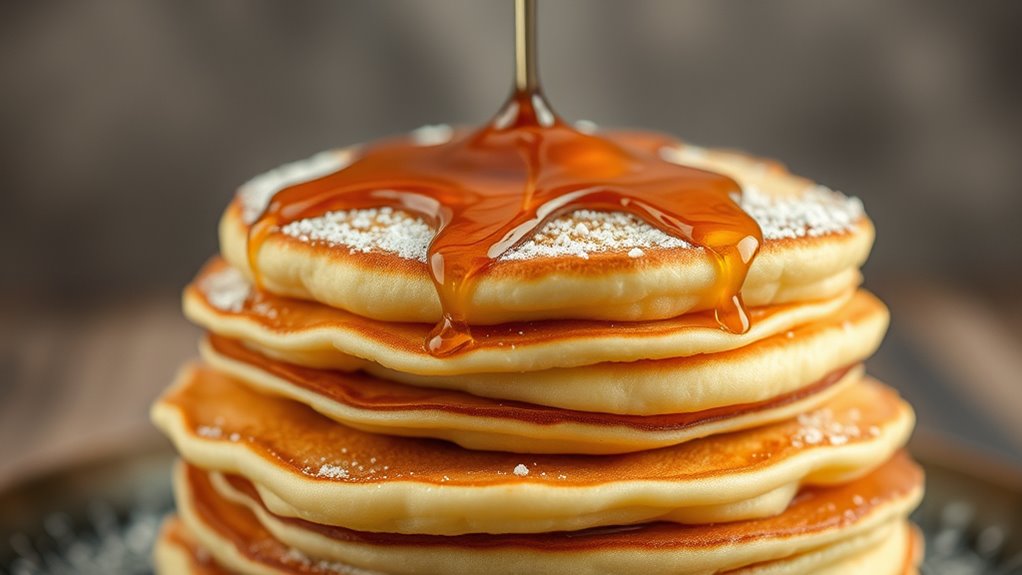

To make fluffy Japanese soufflé pancakes, you rely on creating and stabilizing tiny air bubbles in the batter, which expand when heated. Proteins and starches lock these bubbles in place, giving the pancakes their airy structure. Gentle, steady heat helps gases expand slowly, causing the pancakes to rise without collapsing. Controlling these elements guarantees a light, cloud-like texture. If you’re curious about how physics makes this possible, you’ll discover fascinating details as you explore further.

Get kitchen staples and gadgets delivered free with Prime
- Fast, free delivery on millions of items
- Prime Video, Amazon Music and more included
- Member-only deals all year
Key Takeaways
- Air bubbles are stabilized by whipped proteins, creating a foam that traps gas for a light, airy structure.
- Proteins denature and coagulate during cooking, locking air bubbles in place for added stability.
- Gentle, steady heat causes gas expansion and protein coagulation, enabling the pancake to rise without collapsing.
- Proper heat transfer ensures uniform cooking, allowing trapped air to expand and produce a fluffy texture.
- The combination of foam stabilization and controlled heat results in the characteristic cloud-like fluffiness of Japanese soufflé pancakes.

The remarkable fluffiness of Japanese soufflé pancakes results from delicate physical interactions that trap air and create a light, airy structure. When you make these pancakes, understanding how air bubbles form and how heat transfer affects their rise and texture helps you perfect their signature sponginess. Air bubble formation is fundamental; as you beat the egg whites, tiny air pockets develop, stabilized by proteins that create a foam. This foam’s stability is essential because it allows the pancakes to hold their volume during cooking. When you gently fold the whipped egg whites into the batter, you preserve these air bubbles, ensuring the mixture remains aerated. The distribution of these bubbles throughout the batter determines how fluffy the final pancake becomes, so careful folding is key—not overmixing, which can deflate the foam and reduce lift.
Mastering airy foam and gentle folding is key to achieving perfectly fluffy Japanese soufflé pancakes.
Once your batter is ready, heat transfer dynamics come into play during cooking. As the pancake hits the hot pan, heat begins to transfer from the surface inward. This process is critical because it causes the batter’s proteins and starches to set, locking the trapped air bubbles in place. The heat causes the proteins to denature and coagulate, providing structure, while starch gelatinization further stabilizes the pancake’s form. The heat transfer needs to be controlled; too high, and the outside burns before the interior is fully cooked, risking deflation. Too low, and the pancake won’t rise properly, resulting in a dense texture. The gentle, steady heat allows the air bubbles to expand gradually, giving the pancake its signature height and fluffy appearance. Using a double boiler setup can help ensure even cooking and better control of heat transfer.
You can influence heat transfer by adjusting the temperature of your stove or using a double boiler setup to guarantee even cooking. As the pancake cooks, the expanding gases within the trapped air bubbles push outward, helping the pancake rise. This expansion is a physical response to heat, emphasizing how thermal energy directly influences the pancake’s volume and fluffiness. Once cooked, the structure remains stable because the proteins and starches have set, trapping the air inside. This balance of air bubble formation and heat transfer dynamics is what makes Japanese soufflé pancakes so light and tender. Additionally, understanding the role of protein coagulation and the importance of proper foam stabilization allows you to better control the texture and stability of the final product. Mastering these physical principles enables you to consistently achieve a perfectly fluffy pancake with ideal air retention and structure.
In essence, the physics behind these pancakes revolves around creating a stable foam and carefully managing heat. You’re orchestrating a delicate dance where air gets trapped and expanded, while heat solidifies the structure, resulting in that iconic cloud-like appearance. By understanding these principles, you gain control over the process, allowing you to craft perfectly fluffy Japanese soufflé pancakes every time.
As an affiliate, we earn on qualifying purchases.
Frequently Asked Questions
How Does Altitude Affect the Pancake’s Rise?
Altitude effects play a significant role in your pancake’s rise because of changes in air pressure. At higher altitudes, the lower air pressure makes it harder for the pancakes to expand fully, resulting in less fluffiness. You might need to adjust your recipe, like increasing leavening agents or modifying cooking time, to counteract these effects. Understanding air pressure helps you achieve that perfect, airy pancake no matter your elevation.
Can Different Types of Eggs Change the Fluffiness?
You might notice that different eggs can change your pancake’s fluffiness. Fresh eggs, with their firm whites and yolks, whip better, creating more volume. Also, eggs with a higher yolk to white ratio can make the batter richer, but might reduce fluffiness. For the lightest pancakes, use fresh eggs and focus on whipping the whites until stiff peaks form, ensuring maximum aeration for that perfect rise.
What Role Does Humidity Play in Pancake Consistency?
Imagine a cozy kitchen where humidity dances through the air. When humidity is high, moisture retention in your batter increases, making your pancakes denser and less fluffy. Conversely, low humidity helps regulate moisture, allowing the batter to whip up light and airy. You need to manage humidity levels carefully, so your pancakes achieve that perfect, fluffy consistency you desire. Proper humidity control ensures your pancakes look and feel just right.
How Does the Pancake’s Size Influence Its Internal Pressure?
You’ll notice that larger pancakes experience more pancake expansion, which impacts their internal pressure. As the pancake size increases, the internal pressure also rises because the batter stretches more to fill the larger space. This increased pressure helps create a fluffy texture by encouraging air pockets. However, if the pressure gets too high, it can cause the pancake to burst or become uneven, so size directly influences internal pressure and overall pancake fluffiness.
Are There Optimal Temperatures for Maximizing Fluffiness?
Think of your pancake as a delicate balloon filled with egg foam. To maximize fluffiness, you need precise temperature control, like adjusting a thermostat. Keep the heat moderate—too hot, and the egg foam deflates; too cold, and it won’t rise properly. The ideal temperature allows the egg foam to expand and set perfectly, creating that airy, cloud-like texture you crave. So, monitor your heat carefully for the fluffiest results.
Conclusion
As you master the physics behind these fluffy pancakes, it’s almost funny how a simple whisk and a careful heat balance can create such delight. Sometimes, it feels like the universe conspired to make your batter rise perfectly, turning a basic ingredient into a cloud-like masterpiece. So next time you flip those pancakes, remember—it’s not just skill, but a little cosmic coincidence that makes them so irresistibly fluffy. Enjoy your perfectly risen creation!
NFL season / tailgating Picks
team gear
As an affiliate, we earn on qualifying purchases.