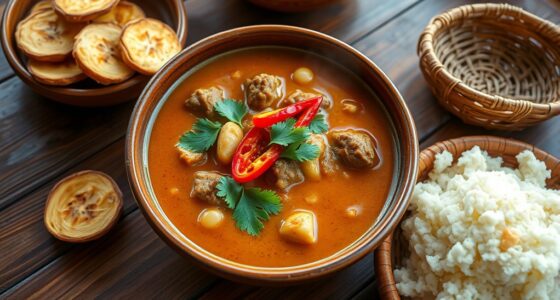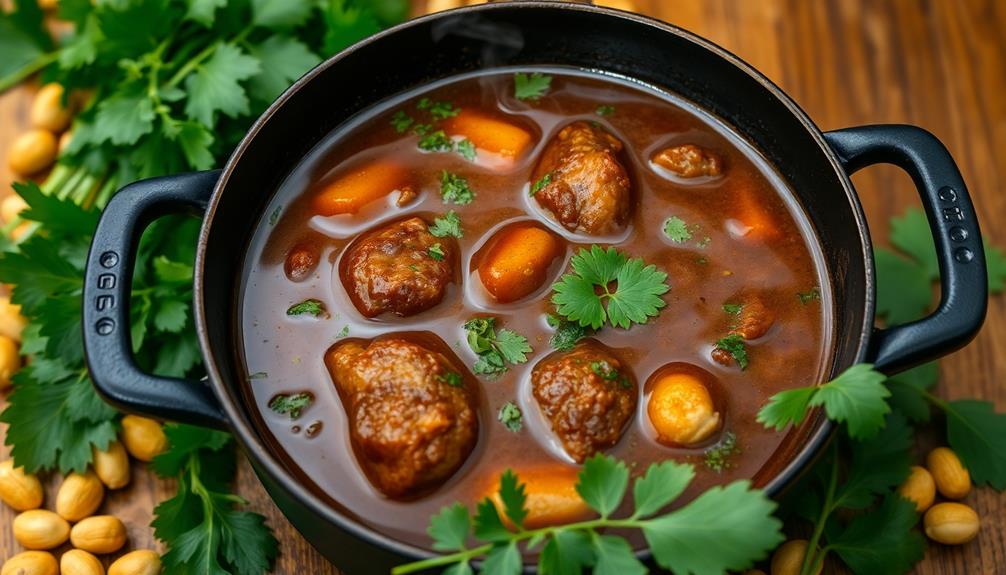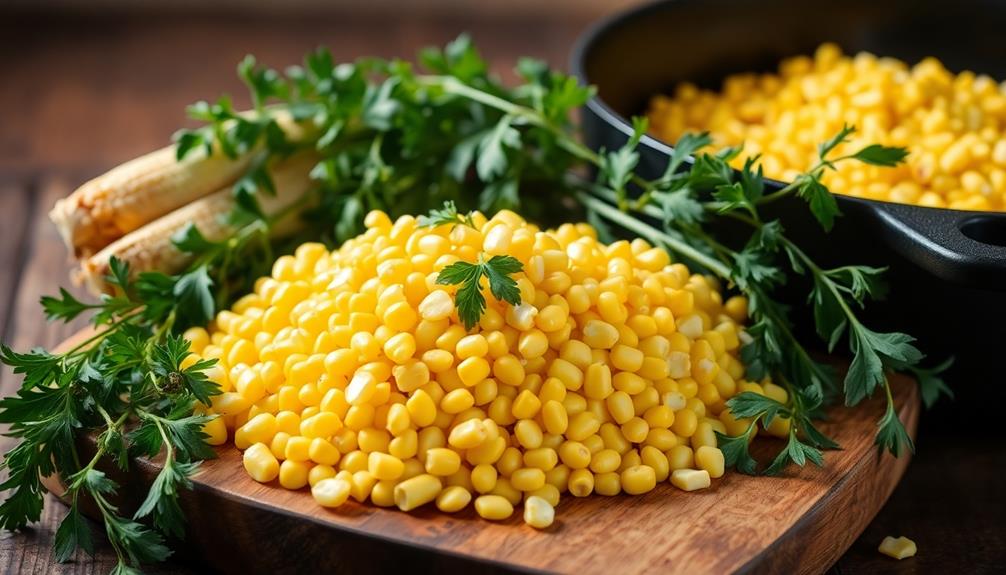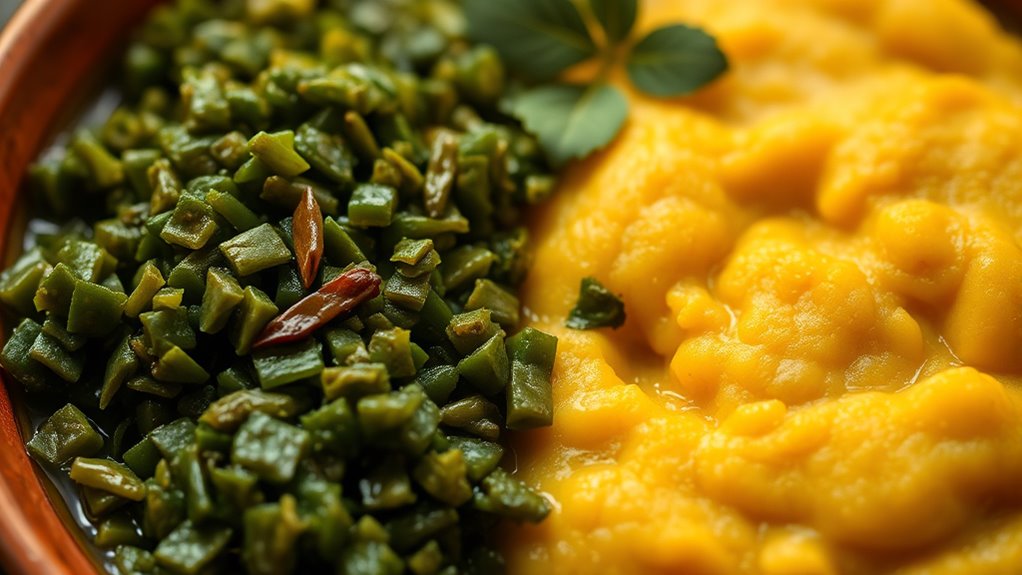

Cameroonian Njama Njama and Corn Fufu showcase West Africa’s rich culinary heritage. You typically prepare Njama Njama from sautéed or boiled wild greens, which symbolize growth and energy, while Corn Fufu is a smooth, starchy porridge from ground corn, representing comfort and sustenance. Sharing this meal celebrates community, tradition, and local ingredients. To discover more about the cultural significance and the traditional cooking methods, keep exploring these vibrant dishes.

Get kitchen staples and gadgets delivered free — and shop member deals
- Fast, free delivery on millions of items
- Access to Prime Big Deal Days deals on October 6–7
- Prime Video, Amazon Music and more included
Key Takeaways
- Njama Njama is a Cameroonian leafy green dish symbolizing community and cultural identity.
- Corn Fufu is a traditional starchy porridge made from ground corn, served as a staple.
- The combination reflects West Africa’s emphasis on sharing local ingredients and culinary heritage.
- Greens signify vitality and sustainability, while Corn Fufu offers comfort and nourishment.
- Serving these dishes celebrates Cameroon’s cultural legacy, promoting social bonds and environmental appreciation.

Njama Njama and Corn Fufu are popular dishes that showcase the rich culinary traditions of West Africa. When you sit down to enjoy these meals, you’re experiencing more than just flavors—you’re engaging with a cultural story that has been passed down through generations. Njama Njama, made from sautéed or boiled wild spinach or other leafy greens, is often paired with Corn Fufu, a smooth, starchy porridge made from ground corn. Together, they create a harmonious blend of flavors and textures that reflect the region’s agricultural heritage. The way you combine these dishes isn’t accidental; it’s a deliberate food pairing rooted in centuries of tradition, designed to balance nutrition, taste, and cultural expression.
Njama Njama with Corn Fufu reflects West Africa’s rich culinary heritage and cultural traditions.
In Cameroonian cuisine, food pairing like Njama Njama with Corn Fufu holds deep cultural significance. It’s not just about satisfying hunger but about celebrating community, history, and identity. Sharing a meal of Njama Njama and Corn Fufu signifies unity and respect among family and friends. When you serve or eat these dishes, you’re participating in a ritual that reinforces social bonds and cultural pride. The greens provide essential nutrients and symbolize growth and life, while Corn Fufu acts as a comforting staple that sustains and energizes. This pairing embodies the resourcefulness of local ingredients and the ingenuity of traditional cooking methods, reflecting how food can serve as a vessel for cultural stories and values.
Understanding the food pairing process offers insight into how Cameroonians honor their environment and history. The greens, often picked fresh from the land, highlight the importance of sustainability and self-sufficiency. Corn Fufu, prepared with care and patience, demonstrates the significance of communal effort and skill. When you enjoy these dishes together, you’re participating in a culinary practice that emphasizes harmony and balance—not only in flavor but also in cultural symbolism. This tradition underscores the idea that food is more than sustenance; it’s a language that communicates respect, history, and social cohesion.
In essence, Njama Njama and Corn Fufu serve as a delicious reminder of West Africa’s rich cultural tapestry. Their food pairing is an expression of history and community, celebrating local ingredients and shared values. As you savor this meal, you connect with a legacy that’s rooted in the land, reinforced by tradition, and brought to life through the simple act of eating together. This is how Cameroonian cuisine keeps its cultural significance alive—through dishes that nourish both body and soul.
Cameroonian Njama Njama greens cooking utensils
As an affiliate, we earn on qualifying purchases.
As an affiliate, we earn on qualifying purchases.
Frequently Asked Questions
How Do You Prepare Njama Njama From Fresh Greens?
To prepare njama njama from fresh greens, start by thoroughly washing the greens using cold water and gentle agitation to remove dirt and debris. Trim off tough stems and chop the leaves into manageable pieces. Then, blanch the greens in boiling water for a few minutes, drain, and rinse with cold water to preserve color and texture. Finally, season and cook with your preferred ingredients for a delicious dish.
What Are the Traditional Accompaniments for Corn Fufu?
Did you know that corn fufu is a staple in many West African diets, often paired with various traditional accompaniments? You typically serve it with dipping sauces like spicy pepper or palm oil, which enhance its flavor. Side salads, such as tomato and onion mixes, also complement the dish beautifully. These accompaniments balance the starchy fufu and add vibrant textures and flavors to your meal.
Can Njama Njama Be Eaten Raw or Only Cooked?
You can eat Njama Njama raw or cooked, depending on your preference. Raw consumption preserves more nutrients, offering higher nutritional benefits like vitamins and antioxidants. However, cooking can make it easier to digest and mellow its flavor. If you choose to eat it raw, wash it thoroughly to remove dirt and potential bacteria. Both methods are healthy options, so try both to see which you prefer!
Which Spices Enhance the Flavor of Corn Fufu?
Think of your corn fufu as a blank canvas ready for vibrant colors. Spice combinations like ginger, garlic, and paprika act as flavor enhancers, transforming simple into extraordinary. A pinch of cayenne for heat or coriander for earthiness elevates the dish. These spices don’t just boost flavor—they create harmony, turning your corn fufu into a delicious symphony that delights with every bite.
Are There Regional Variations of Njama Njama and Corn Fufu?
Yes, there are regional variations of Njama Njama and Corn Fufu. You’ll find that regional flavor influences ingredient differences and preparation methods. In some areas, Njama Njama might include additional vegetables or spices, while Corn Fufu recipes may vary with local grains or seasonings. These differences reflect local tastes and traditions, giving each version a unique character. Exploring these variations allows you to appreciate the diverse culinary heritage across regions.
Conclusion
Now that you’ve mastered making Njama Njama and Corn Fufu, you’ll bring a slice of Cameroon’s rich culinary history to your table. Imagine sitting by a crackling fireplace in a cozy village hut, savoring each bite like the elders did around their vintage radio. These dishes don’t just nourish your body—they connect you to a tradition that’s been passed down through generations. So, keep the spirit alive and enjoy this timeless taste of Cameroon, just like a story from yesteryear.
Fall Picks
fall essentials
As an affiliate, we earn on qualifying purchases.