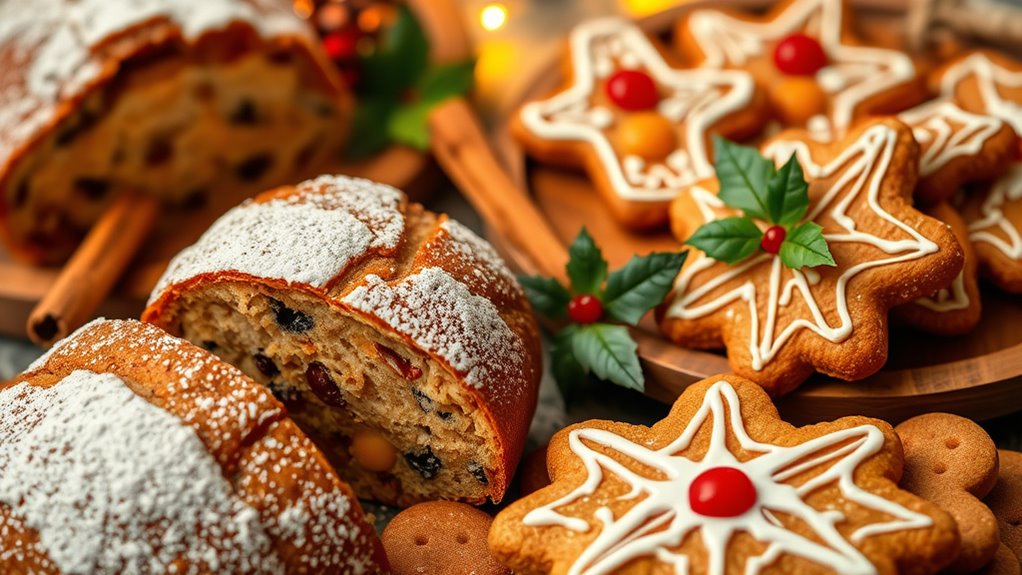

German Christmas treats like Stollen and Lebkuchen are essential parts of holiday celebrations. You’ll enjoy the rich, spicy flavors of Lebkuchen cookies, often decorated and perfect with hot drinks, and the hearty, fruit-filled Stollen bread dusted with powdered sugar, symbolizing prosperity. Both treats strengthen traditions, bring people together, and fill your home with festive aromas. Keep exploring, and you’ll uncover even more about these iconic festive favorites.
Key Takeaways
- Stollen is a traditional German Christmas bread filled with dried fruits, nuts, and marzipan, symbolizing prosperity.
- Lebkuchen are spiced gingerbread cookies flavored with cinnamon, cloves, and ginger, often decorated for festive occasions.
- Both treats are integral to German holiday celebrations, fostering family bonding through baking and sharing.
- Stollen’s powdered sugar coating and Lebkuchen’s icing or candied toppings enhance their festive appeal.
- These treats embody holiday warmth, nostalgia, and cultural heritage, making them popular gifts and festive staples.
German Christmas treats are a delightful part of holiday traditions, offering a mix of sweet flavors and festive aromas that fill the air. When you celebrate the season in Germany or simply want to bring a touch of its magic to your own festivities, Stollen and Lebkuchen are essential staples that capture the spirit of Christmas perfectly. These treats aren’t just delicious; they embody the rich cultural heritage and unity of holiday traditions. As you bake or buy these confections, you’ll notice how their festive flavors evoke warmth, nostalgia, and joy, making them a must-have during the holiday season.
German Christmas treats like Stollen and Lebkuchen evoke warmth, nostalgia, and festive joy during the holiday season.
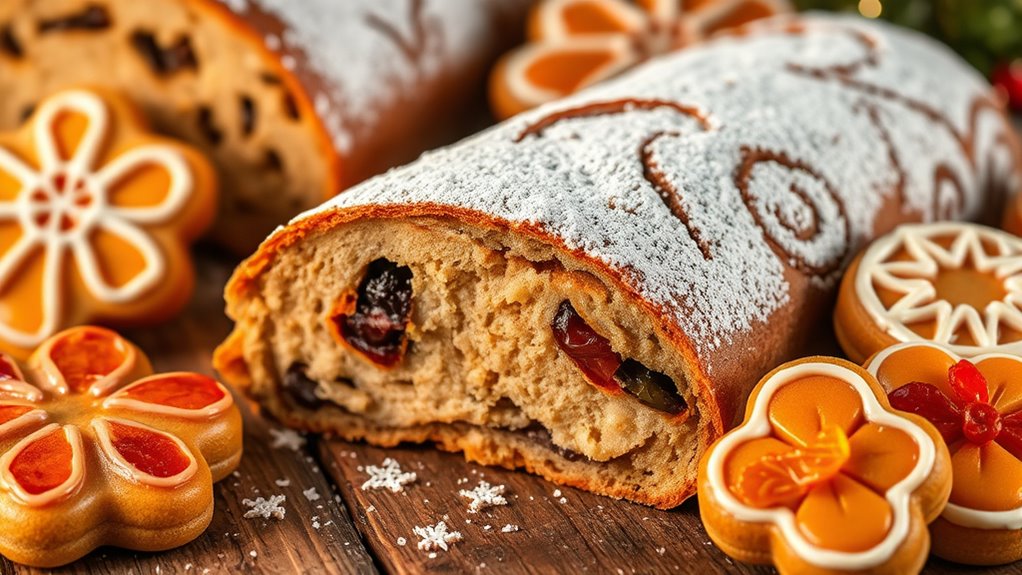
Stollen, often called Christmas bread, is a hearty, fruit-filled loaf that’s dusted with powdered sugar. You might find yourself enchanted by its dense texture, which hides an assortment of dried fruits, nuts, and marzipan. Its history runs deep in German tradition, symbolizing prosperity and good fortune. When you slice into a freshly baked Stollen, the aroma of almonds, citrus, and spices instantly transports you to a cozy holiday gathering. This treat is typically enjoyed sliced and buttered, paired with a cup of mulled wine or coffee to enhance its rich, festive flavors. The process of making Stollen, whether from scratch or store-bought, is often a shared activity that strengthens holiday bonds and keeps traditional recipes alive. traditional recipes play a key role in preserving this beloved craft.
Lebkuchen, another beloved Christmas treat, offers a different but equally festive flavor profile. These spiced gingerbread cookies are fragrant with cinnamon, cloves, and ginger, giving them a warm, aromatic quality that’s perfect for the season. You may notice that Lebkuchen come in various shapes and sizes, often decorated with icing or candied fruit, adding visual cheer to your holiday table. In Germany, Lebkuchen are more than just cookies; they’re part of an age-old tradition of baking and sharing. When you taste a piece, you’ll experience a complex blend of sweet, spicy, and citrus notes that embody the essence of winter festivities. Many enjoy them alongside hot drinks, letting their festive flavors linger and evoke the joy of holiday gatherings.
Together, Stollen and Lebkuchen symbolize the true spirit of German Christmas traditions. They bring people together to celebrate, share stories, and create memories that last. Whether you’re baking these treats yourself or gifting them to loved ones, you’re participating in a centuries-old festivity that emphasizes warmth, community, and the joy of the season. Their festive flavors, combined with the rich history behind each bite, make them more than just holiday snacks—they’re a delicious expression of holiday cheer.
Top picks for "german christma treat"
Open Amazon search results for this keyword.
As an affiliate, we earn on qualifying purchases.
Frequently Asked Questions
What Are the Origins of Stollen and Lebkuchen?
You’ll find that the origins of stollen and lebkuchen are rooted in rich historical influences and cultural significance. Stollen dates back to the 14th century in Dresden, symbolizing the Nativity with its bread-like shape. Lebkuchen, with its medieval roots, reflects Germany’s spice trade and religious festivals. Both treats have evolved over centuries, becoming beloved symbols of Christmas tradition and cultural heritage, bringing warmth and festivity to the season.
How Do Traditional Recipes Vary Across German Regions?
Imagine a Christmas cookie map where every region adds its own spice. You’ll find regional variations in recipes, with each area substituting ingredients based on local produce or traditions. For example, southern Germany might include more dried fruits in Stollen, while Lebkuchen recipes in Nuremberg often feature regional spices like ginger and cinnamon. These ingredient substitutions give each treat a unique regional flavor, making every bite a festive journey.
What Are the Best Storage Methods for These Treats?
You should store Stollen and Lebkuchen in airtight containers to keep them fresh and prevent drying out. For longer storage, consider refrigeration, but wrap treats tightly to avoid moisture loss. Let them come to room temperature before eating for maximum taste. Keep them away from direct sunlight and strong odors, as these can affect flavor. Proper storage ensures your treats stay delicious throughout the holiday season.
Are There Gluten-Free or Vegan Versions Available?
Like finding a hidden gem, you’ll discover gluten-free options and vegan adaptations of these festive treats. Many bakeries now craft delicious Stollen and Lebkuchen using alternative flours and plant-based ingredients, making them accessible to everyone. So, whether you’re avoiding gluten or dairy, you can still enjoy these holiday classics without sacrificing flavor or tradition. Just look for specialty shops or bakeries that embrace these inclusive variations.
How Are Stollen and Lebkuchen Typically Served During Christmas?
During Christmas, you typically serve stollen and lebkuchen with festive presentation, often on decorative platters or wrapped in holiday-themed packaging. Serving traditions include slicing stollen to reveal its fruit-filled interior, then dusting it with powdered sugar. Lebkuchen are usually displayed whole or in gift boxes, making them easy to share. These treats are enjoyed with hot beverages like mulled wine or tea, enhancing the festive spirit.
Conclusion
So, next time you indulge in stollen or lebkuchen, remember—they’re more than just delicious treats. They’re reminders of cold winter nights, warm family gatherings, and centuries of tradition. Ironically, while they bring so much joy, they also make it impossible to resist piling on a few extra pounds. But hey, isn’t that what Christmas is all about? Enjoy every bite—after all, these sweets are worth every calorie.