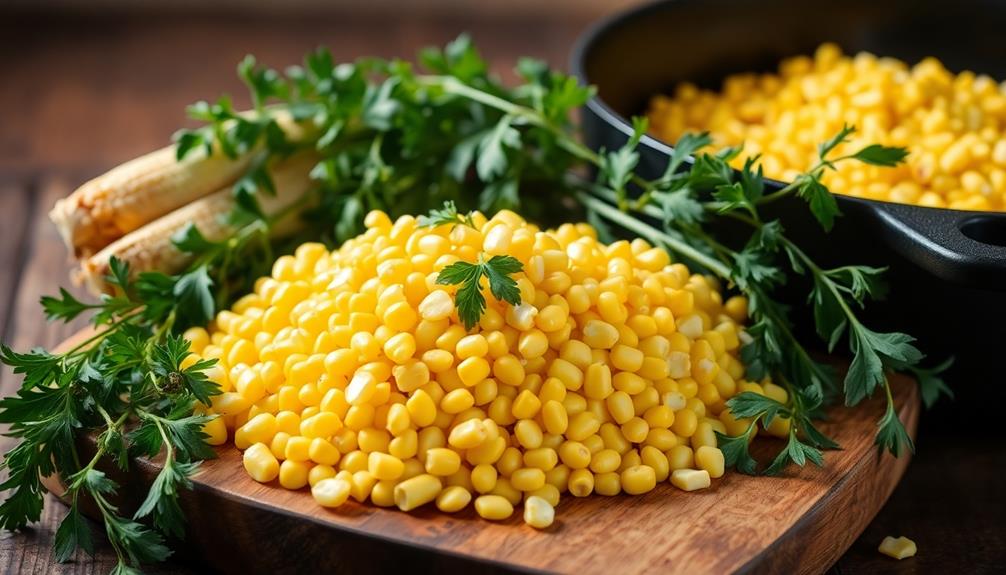
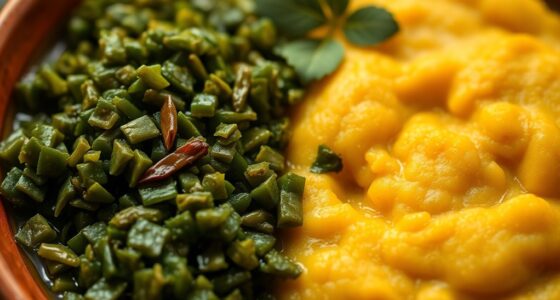
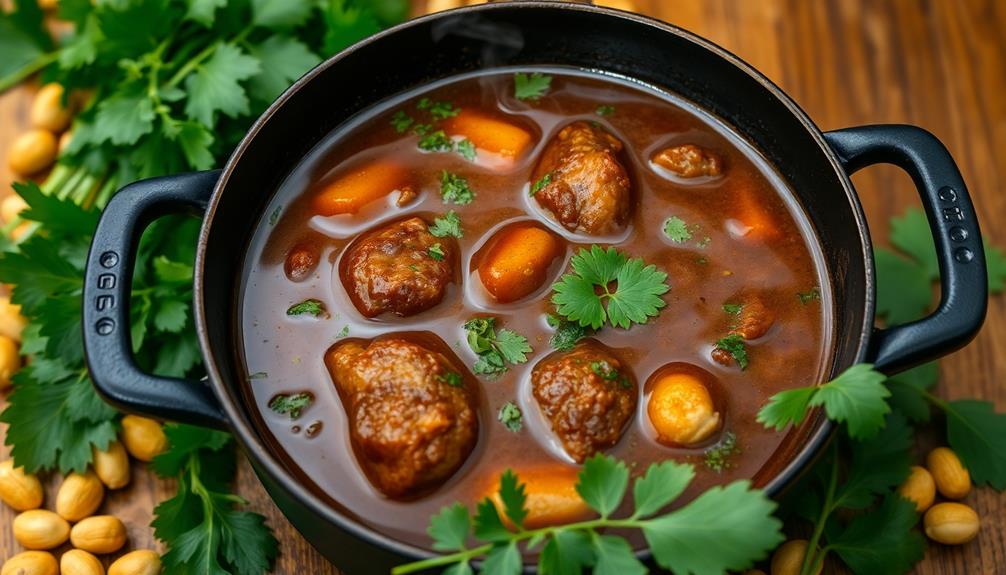
Exploring Cameroonian peanut soup, or groundnut soup, reveals a rich, traditional dish with deep cultural roots. You’ll find it made from roasted peanuts blended into a smooth, hearty base, combined with vegetables, spices, and sometimes protein like chicken or fish. Its flavors are bold, warm, and comforting, reflecting Cameroon’s culinary heritage and agricultural bounty. If you keep going, you’ll discover the fascinating history and regional variations that make this dish truly special.

Get kitchen staples and gadgets delivered free with Prime
- Fast, free delivery on millions of items
- Prime Video, Amazon Music and more included
- Member-only deals all year
Key Takeaways
- Cameroonian peanut soup, also known as groundnut soup, is a traditional dish with deep cultural roots in Cameroon’s history.
- It features roasted peanuts blended into a rich, creamy base, combined with tomatoes, vegetables, and sometimes meats or fish.
- The preparation involves roasting and grinding peanuts to develop a velvety texture and distinctive roasted flavor.
- This hearty dish symbolizes community, celebrating Cameroon’s agricultural bounty and culinary heritage.
- It offers a flavorful, comforting experience reflecting regional variations and traditional cooking methods.
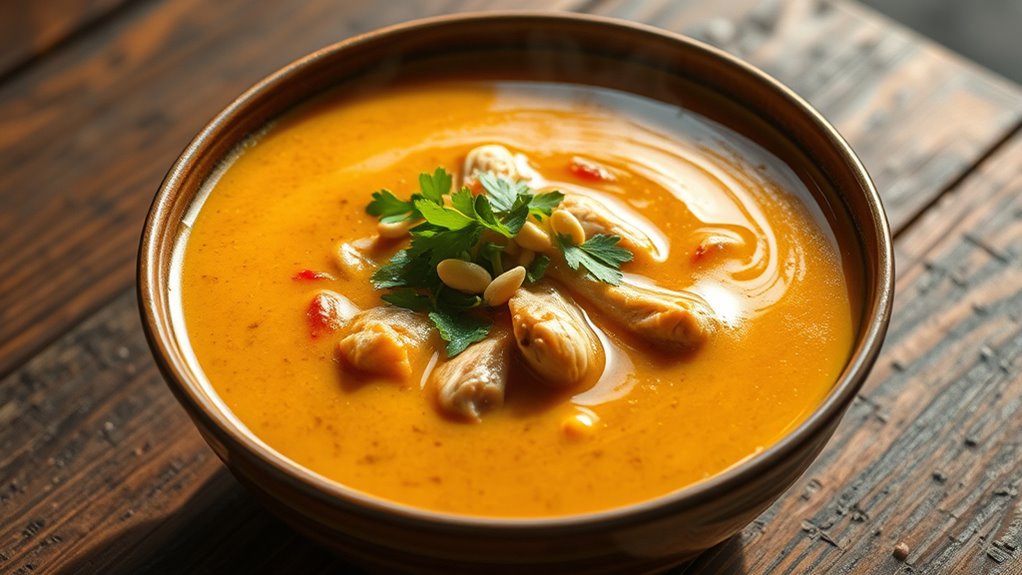
Cameroonian peanut soup, also known as “Nkaten,” is a flavorful and hearty dish that showcases the rich culinary traditions of Cameroon. As you explore this dish, you’ll see that its peanut soup history is deeply rooted in the country’s history, blending indigenous ingredients with influences from neighboring regions. The origins of peanut soup in Cameroon trace back centuries, where it was initially prepared by local communities using readily available ingredients. Over time, it evolved into a staple dish, symbolizing warmth and community gatherings. This history reflects the significance of peanuts in Cameroon’s agricultural landscape and cultural identity. The traditional ingredients used in Nkaten are straightforward yet impactful — roasted peanuts form the heart of the soup, providing a rich, nutty base. Along with peanuts, you’ll typically find tomatoes, onions, garlic, and ginger, which add depth and aroma. These ingredients are often simmered together, allowing their flavors to meld into a thick, satisfying broth. You might also notice the addition of leafy greens like spinach or bitterleaf, which contribute a fresh, slightly bitter contrast to the creamy peanut base. In some regions, hot peppers are incorporated to give the soup a spicy kick, balancing the richness of the peanuts. The traditional preparation involves roasting the peanuts to enhance their flavor, then grinding them into a smooth paste, which serves as the foundation of the soup. This process guarantees the soup develops a velvety texture and a deep, roasted flavor that’s distinctive to Cameroonian cuisine. Many cooks also incorporate local vegetables or meat, such as chicken or fish, to add variety and protein, making the dish even more hearty. The use of traditional ingredients in Nkaten highlights its cultural importance — it’s not just a meal but a celebration of Cameroon’s agricultural bounty. Additionally, understanding the cultural significance of the dish reveals its role in fostering community bonds and preserving culinary heritage. When you make or taste this soup, you’re experiencing a culinary tradition that has been passed down through generations, rooted in simplicity yet bursting with flavor. As you explore its peanut soup history and traditional ingredients, you’ll appreciate how these elements come together to create a dish that’s both comforting and representative of Cameroon’s vibrant food culture. Whether enjoyed during special occasions or as a daily meal, Cameroonian peanut soup invites you to savor the authentic flavors and the history behind this beloved dish.
Frequently Asked Questions
What Are Traditional Side Dishes Served With Cameroonian Peanut Soup?
You’ll find that traditional accompaniments like boiled plantains, rice, or fufu beautifully complement Cameroonian peanut soup. These dishes mirror regional flavors, adding variety and depth to your meal. Often, you might also enjoy a side of vegetables or spicy chili peppers to enhance the rich, nutty taste. Serving these alongside the soup creates a balanced, satisfying experience that highlights Cameroon’s diverse culinary traditions.
Can Cameroonian Peanut Soup Be Made Vegetarian or Vegan?
Like a painter choosing vibrant hues, you can easily make Cameroonian peanut soup vegetarian or vegan by using plant-based alternatives and ingredient substitutions. Swap out any meat or fish with hearty vegetables, tofu, or tempeh. Use vegetable broth instead of meat-based, and verify your peanut butter is free from animal additives. With these tweaks, you’ll craft a rich, satisfying dish that honors tradition while embracing plant-based goodness.
How Long Does It Typically Take to Prepare the Soup From Scratch?
You’ll spend about 1.5 to 2 hours on preparation time and cooking duration to make Cameroonian peanut soup from scratch. First, you’ll prepare ingredients and cook vegetables, then simmer the groundnut mixture to develop flavors. The process involves blending peanuts, cooking the base, and simmering to reach the desired consistency. Overall, it’s a rewarding process that results in a rich, flavorful soup.
Are There Regional Variations of Peanut Soup Within Cameroon?
Yes, there are regional variations of peanut soup within Cameroon. You’ll notice different flavor profiles and ingredient variations depending on the area. For example, in the Francophone regions, they often add spicy peppers and tomatoes for a richer taste. In the Anglophone areas, the soup might include more vegetables or local herbs. These regional differences help you experience a diverse range of flavors, making each bowl uniquely Cameroonian.
What Are the Health Benefits of Eating Cameroonian Peanut Soup?
Eating Cameroonian peanut soup boosts your nutritional value and supports immune health. The soup is rich in healthy fats, protein, vitamins, and minerals, which help strengthen your immune system and provide sustained energy. Its nutrient-dense ingredients can improve overall wellness, making it a tasty way to nourish your body. By enjoying this traditional dish, you benefit from its wholesome ingredients that promote better health and immune support.
Conclusion
As you savor the rich, velvety broth of Cameroonian peanut soup, imagine the warm aroma wrapping around you like a comforting embrace. Each spoonful is a reminder of tradition and community, blending earthy peanuts with vibrant spices that dance on your palate. This soup isn’t just a meal; it’s a story told through flavors, connecting you to a land where every ingredient carries history and soul. Let its warmth linger long after the bowl is empty.
Fall Picks
fall essentials
As an affiliate, we earn on qualifying purchases.