
To flavor kombucha safely with seasonal fruit, start by choosing fresh, high-quality produce and wash it thoroughly. Prepare the fruit by peeling or chopping into small pieces with sanitized utensils, then add about 1-2 ounces per bottle. Maintain strict sanitation during preparation and bottling, and monitor the brew for off-odors, mold, or cloudiness. Properly sealing and refrigerating after fermentation keeps your kombucha safe. If you keep these tips in mind, you’ll ensure a flavorful, contamination-free brew every time.

Get kitchen staples and gadgets delivered free with Prime
- Fast, free delivery on millions of items
- Prime Video, Amazon Music and more included
- Member-only deals all year
Key Takeaways
- Select fresh, organic, and well-washed seasonal fruit, avoiding moldy or bruised pieces to ensure safe fermentation.
- Thoroughly wash and peel fruit as needed, then cut into small, even pieces for optimal flavor release.
- Use sanitized utensils and containers to add fruit, maintaining proper hygiene during preparation and bottling.
- Incorporate about 1-2 ounces of fruit per 16-ounce bottle, balancing quantity to prevent over-carbonation.
- Monitor for off-odors, mold, or cloudiness during fermentation; refrigerate after secondary fermentation to ensure safety.
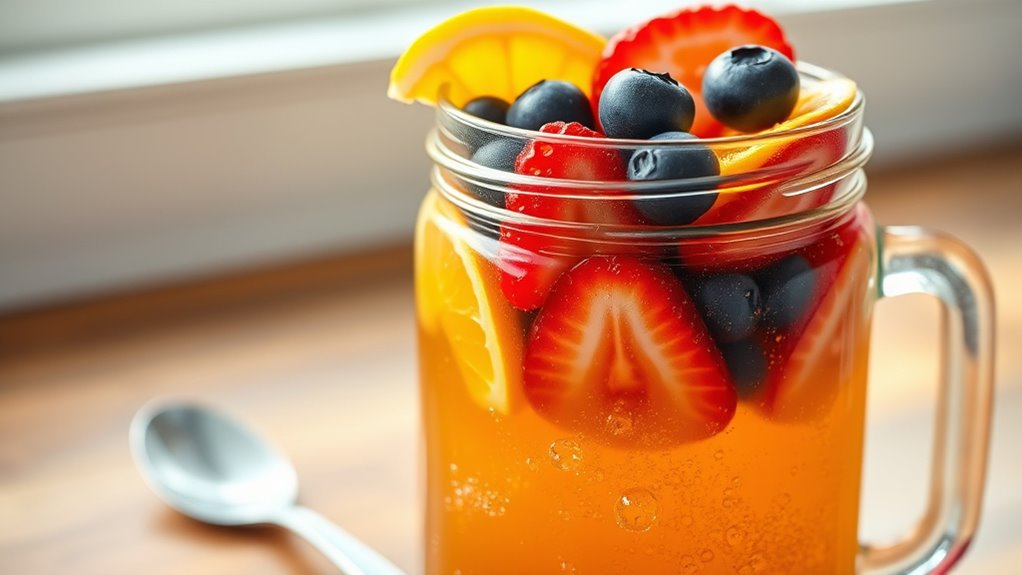
Flavoring your kombucha with seasonal fruit is a delicious way to enhance its natural tang and add fresh, vibrant flavors. However, guaranteeing fermentation safety during this process is essential to prevent contamination and spoilage. When selecting fruit for flavoring, you should prioritize freshness and quality. Choose ripe, organic, or thoroughly washed fruit to minimize the risk of introducing unwanted bacteria or mold into your brew. Avoid fruits with moldy spots, bruises, or overly soft textures, as these can harbor harmful microorganisms that might compromise your kombucha’s safety.
Proper fruit selection plays a vital role in maintaining fermentation safety. Fresh seasonal fruits not only taste better but are less likely to carry pathogens than older, processed, or heavily treated varieties. When preparing your chosen fruit, wash it thoroughly under running water, scrubbing gently if needed, to remove dirt, pesticides, or residual chemicals. For added safety, consider peeling or removing any skin that might carry contaminants, especially if the fruit is non-organic. Cutting the fruit into small, even pieces helps release more flavor and ensures an even distribution of beneficial yeasts and bacteria during secondary fermentation. Additionally, using appropriate filtration can help remove unwanted solids and reduce contamination risks. Incorporating modern automation practices can further enhance sanitation during your brewing process.
As you add fruit to your kombucha, be mindful of the quantity. Too much fruit can introduce excess sugar, encouraging undesirable microbial activity, while too little might not produce the vibrant flavor you desire. A good rule of thumb is to use about 1-2 ounces of chopped fruit per 16-ounce bottle or jar. This balance helps keep fermentation under control and prevents over-carbonation or bottle explosions. Always use clean utensils and containers during this process to avoid introducing contaminants. Implementing proper sanitation procedures is crucial for preventing spoilage and ensuring a safe fermentation environment.
During secondary fermentation, monitor your kombucha closely. If you notice any off-odors, mold growth, or unusual cloudiness, it’s safest to discard the batch. Properly sealing your bottles and leaving them at room temperature for a few days allows the fruit’s flavors to develop, but don’t forget to refrigerate afterward to slow fermentation. Remember, patience and vigilance are key to safe, delicious flavored kombucha. By selecting fresh, high-quality fruit and maintaining good sanitation practices, you can enjoy vibrant, flavorful kombucha while keeping fermentation safe and your brew healthy. Additionally, understanding the legacy of “What Is Love?” can inspire you to approach your brewing process with passion and care, ensuring a truly heartfelt creation.
Frequently Asked Questions
Can I Use Dried Fruit Instead of Fresh Seasonal Fruit?
You can use dried fruit instead of fresh seasonal fruit for flavoring kombucha, but be aware that dried fruit may affect flavor stability. Dried fruit often contains added sugars and preservatives, which can alter fermentation and flavor consistency. To guarantee safety and the best flavor, opt for unsweetened dried fruit and add it during the second fermentation. Keep a close eye on the taste and carbonation levels regularly.
How Long Should I Wait Before Bottling After Adding Fruit?
You should wait about 2 to 4 days before bottling after adding fruit, depending on your desired flavor infusion duration. Keep an eye on the fermentation timeline; if you notice continued bubbling or sourness, wait longer. Tasting daily helps you determine the perfect moment. Once you reach your preferred flavor level, proceed with bottling to prevent over-fermentation and guarantee your kombucha remains flavorful and safe to enjoy.
Is It Safe to Add Multiple Fruits at Once?
You can add multiple fruits at once, but be mindful of fruit pairing and flavor balance. Combining complementary fruits enhances taste without overwhelming the kombucha. However, adding too many or overly strong fruits may cause fermentation issues or undesirable flavors. To keep it safe and tasty, start with a small amount, taste as you go, and make sure your fruit choices harmonize well. This approach helps you enjoy a balanced, flavorful brew.
What Are Signs of Contamination During Flavoring?
Think of your kombucha as a delicate garden—any signs of contamination are like weeds taking over. You’ll notice fruit mold forming as fuzzy spots, and off odors that smell sour or rotten. These are clear signs to toss the batch, as contamination can compromise safety. Keep an eye out during flavoring, and trust your senses—if something seems off, it’s better to discard and start fresh.
Can I Reuse Fruit From Previous Batches for Flavoring?
You can reuse fruit from previous batches for flavoring, but it’s important to consider fruit preservation and flavor consistency. Over time, the fruit may lose its fresh qualities, affecting taste and safety. Before reusing, check for mold or fermentation signs. To maintain flavor consistency and reduce contamination risks, use fresh fruit when possible or ensure the reused fruit is thoroughly preserved and free from spoilage.
Conclusion
Now that you know how to safely flavor your kombucha with seasonal fruit, you’re all set to enjoy a invigorating, personalized brew. Think of it like crafting a beautiful, unique garden—each fruit adds its own splash of color and flavor. Just remember to follow the steps carefully, keep everything clean, and trust your instincts. With a little practice, you’ll turn your kombucha into a delightful, ever-changing masterpiece that’s as satisfying as a sunny day in spring.
Columbus Day / Indigenous Peoples' Day Picks
long weekend sales
As an affiliate, we earn on qualifying purchases.