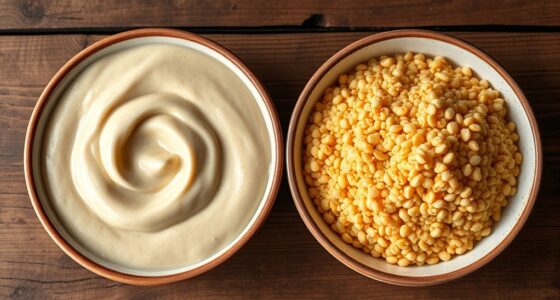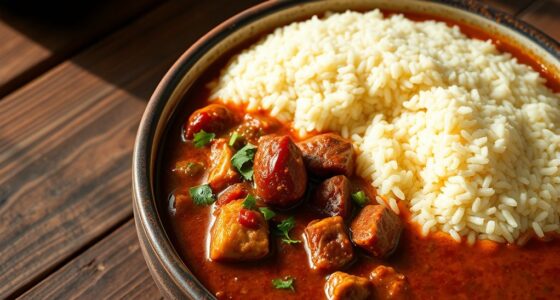
Zimbabwean sadza and sukuma wiki are traditional staples that showcase the country’s culinary heritage. You prepare sadza by gradually adding finely ground maize meal to boiling water, stirring continuously for a smooth, firm texture. Sukuma wiki involves washing, chopping greens, then quick-cooking them with sautéed onions and tomatoes, preserving their vibrant color and nutrients. These dishes symbolize community, resourcefulness, and cultural pride—explore more about their preparation and significance to truly appreciate their importance.
Key Takeaways
- Sadza is made by slowly adding maize meal to boiling water and stirring until a firm, dough-like consistency forms.
- It symbolizes unity, tradition, and community sharing in Zimbabwean culture.
- Sukuma Wiki involves washing, chopping, and quick sautéing of leafy greens with onions and tomatoes.
- Both dishes reflect Zimbabwe’s resourcefulness, emphasizing simple, nutritious, and culturally significant food preparation.
- Serving Sadza with Sukuma Wiki represents a balanced, culturally rooted meal embodying Zimbabwe’s culinary identity.
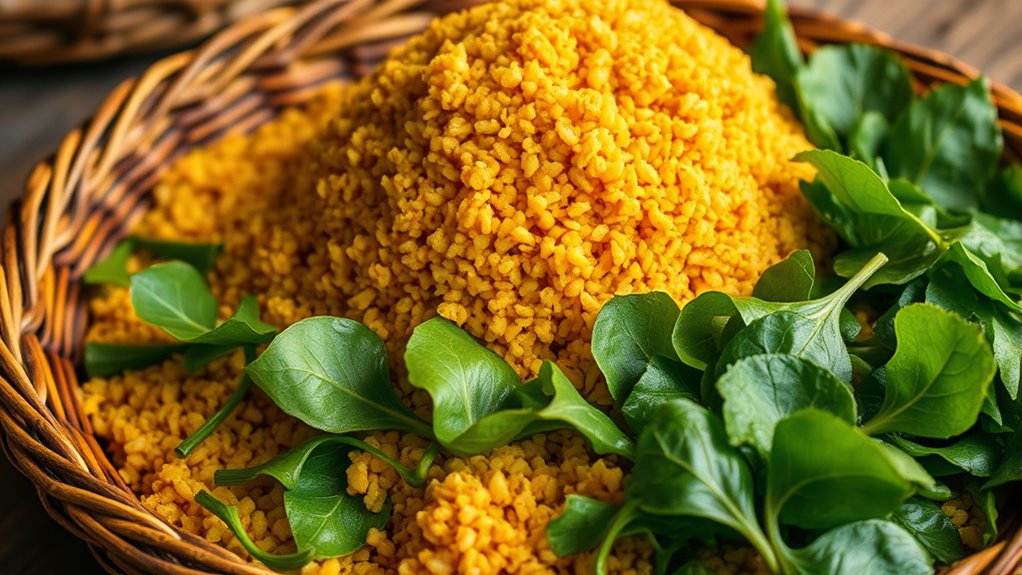
Zimbabwean Sadza and Sukuma Wiki form a staple meal that reflects the country’s rich culinary traditions. When you prepare sadza, you’re engaging in a cooking technique that has been passed down through generations. It involves slowly adding finely ground maize meal to boiling water, stirring constantly to prevent lumps. As the mixture thickens, you continue stirring until it reaches a smooth, dough-like consistency. This method guarantees the sadza becomes firm yet pliable, capable of being shaped into balls or served as a thick porridge. Cooking techniques like this are deeply embedded in Zimbabwean culture, symbolizing unity and sustenance. Sadza isn’t just food; it’s a symbol of togetherness, often shared during family meals and community gatherings. The process of making sadza isn’t just about technique; it’s about preserving a tradition that connects people to their roots. It’s also a reflection of resourcefulness, as maize is a readily available crop that sustains many households. Incorporating traditional cooking methods into daily life helps maintain cultural identity and fosters community bonds.
Sukuma Wiki, on the other hand, involves different cooking techniques that highlight the importance of greens in Zimbabwean cuisine. You start by washing the leafy greens thoroughly to remove dirt and grit. Then, you chop the sukuma leaves into manageable pieces. To prepare them, you typically sauté onions and tomatoes in a little oil, adding spices if desired, before tossing in the greens. You cook them quickly over medium heat until they wilt and become tender, usually for just a few minutes. This fast cooking technique preserves the vibrant green color and nutrients of the vegetables. The cultural significance of sukuma wiki extends beyond its flavor; it represents health, vitality, and the importance of vegetables in daily life. In Zimbabwean households, sukuma wiki is more than a side dish—it’s a symbol of affordable nutrition that supports families across socio-economic lines. The way you cook sukuma wiki emphasizes efficiency and respect for fresh ingredients, which are highly valued in Zimbabwean culinary practices.
Together, sadza and sukuma wiki embody Zimbabwe’s culinary identity, blending traditional cooking techniques with cultural values. When you sit down to enjoy this meal, you’re partaking in a centuries-old tradition that emphasizes community, resourcefulness, and cultural pride. The preparation methods are simple but meaningful, reflecting a way of life that values simplicity, sustenance, and connection to the land. This meal isn’t just nourishment; it’s a reflection of Zimbabwean history and identity, woven into every bite through techniques and cultural significance that have endured for generations.

IWISA No.1 Super White Maize Meal, 1kg, Traditional African Staple, Fine Texture, Versatile for Pap, Sadza, Nshima, Ugali
PREMIUM WHITE MAIZE: IWISA No.1 Super Maize Meal is milled from high-quality white maize, delivering a consistently refined…
As an affiliate, we earn on qualifying purchases.
As an affiliate, we earn on qualifying purchases.
Frequently Asked Questions
What Are the Traditional Accompaniments Served With Sadza and Sukuma Wiki?
You typically serve sadza and sukuma wiki with hearty proteins like grilled or stewed meats, fish, or sometimes beans. For traditional beverages, many enjoy mahewu or millet beer alongside. Serving suggestions include adding a spicy tomato relish or chutney for extra flavor. You can also include roasted peanuts or fresh vegetables to make the meal more balanced. These accompaniments enhance your meal’s richness and authenticity.
How Do Regional Variations Affect the Preparation of Sadza?
Regional variations influence how you prepare sadza by introducing different ingredients and cooking techniques. For example, in some areas, you might add millet or sorghum instead of maize, giving the sadza a unique flavor and texture. Cooking techniques also vary; some regions prefer slow-cooking over open flames, while others use modern stoves. These differences create diverse tastes and traditions, reflecting local tastes and available ingredients.
Can Sadza and Sukuma Wiki Be Prepared Gluten-Free?
Yes, you can make sadza and sukuma wiki gluten-free by using gluten-free substitutes like maize meal or gluten-free cornmeal. For the sadza, guarantee you stir continuously to avoid lumps and achieve a smooth consistency. When preparing sukuma wiki, wash the greens thoroughly and cook without any gluten-containing additives. Follow these preparation tips to enjoy authentic, gluten-free Zimbabwean dishes safely and deliciously.
What Are the Nutritional Benefits of Zimbabwean Sadza and Sukuma Wiki?
You’ll find that Zimbabwean sadza and sukuma wiki offer great nutritional value and health benefits. Sadza provides essential carbohydrates for energy, while sukuma wiki is rich in vitamins A, C, and iron, supporting your immune system and overall health. Together, they create a balanced meal that boosts your intake of fiber, minerals, and antioxidants, helping you stay energized and maintain good digestion.
How Long Does It Take to Prepare Authentic Sadza From Scratch?
You’ll find that preparing authentic sadza from scratch takes about 30 to 45 minutes, depending on your method. The process begins with boiling water, then gradually adding maize meal while stirring to avoid lumps. The fermentation process enhances flavor, but it’s optional. The key is patience—cooking duration guarantees the sadza thickens and develops its characteristic texture. Once ready, you’ll enjoy the comforting aroma and a meal rich in tradition and warmth.

GreenPan Lima 5.2QT Nonstick Stock Pot with Glass Lid, Nontoxic PFAS-Free Ceramic Casserole, Hard Anodized Cookware, Oven & Broiler Safe, Stainless Steel Handles, Gray
HEALTHY CERAMIC NONSTICK: GreenPan's Thermolon coating ensures toxin-free cooking, free of PFAS, PFOA, lead, and cadmium.
As an affiliate, we earn on qualifying purchases.
As an affiliate, we earn on qualifying purchases.
Conclusion
So, next time you savor that humble sadza and sukuma wiki, remember it’s more than just a meal—it’s a taste of resilience and tradition. Ironically, while you might think it’s simple fare, it’s actually a rich symbol of Zimbabwean culture, nourishing both body and soul. Enjoy every bite, knowing you’re partaking in a centuries-old story that’s as hearty and enduring as the dish itself. Sometimes, the simplest meals carry the deepest history.
Zimbabwean traditional cooking utensils
As an affiliate, we earn on qualifying purchases.
As an affiliate, we earn on qualifying purchases.

Iwisa Super Maize Meal – 2.5kg
Iwisa Maize Meal – 2.5kg / 5.5lb (1-pack)
As an affiliate, we earn on qualifying purchases.
As an affiliate, we earn on qualifying purchases.