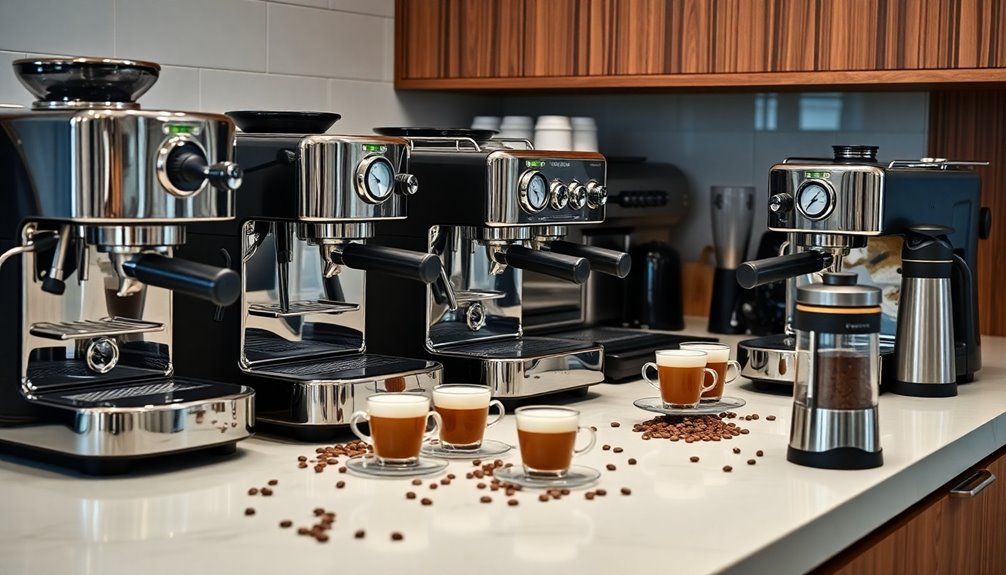
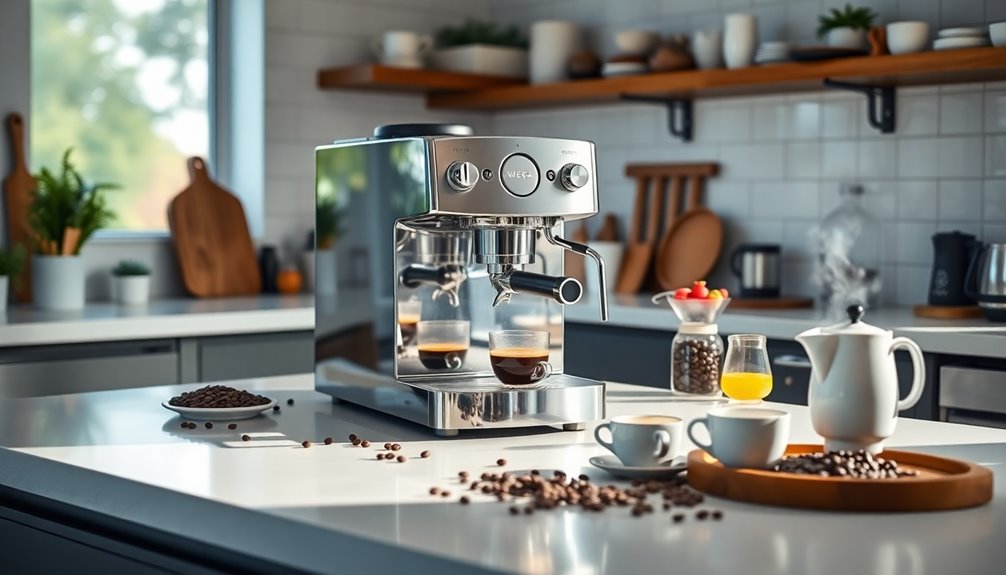
Searching for a prosumer espresso machine means aiming for a balance between professional features and user-friendly design. The Meraki Dual Boiler stands out as the best overall for its dual boilers and integrated grinder, offering top-tier quality for serious enthusiasts. The Breville Barista Touch is ideal for those wanting an intuitive experience with advanced automation, while the Rancilio Silvia Pro X provides durability and performance at a more accessible price. Each choice reflects different priorities, like automation, build quality, or price. Continue reading for a detailed breakdown to find the perfect fit for your espresso ambitions.

Get kitchen staples and gadgets delivered free — and shop member deals
- Fast, free delivery on millions of items
- Access to Prime Big Deal Days deals on October 6–7
- Prime Video, Amazon Music and more included
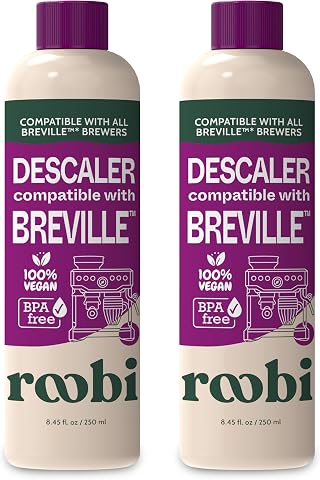
Complete the kit


Key Takeaways
- Dual boiler systems significantly improve temperature stability and shot consistency, making them a hallmark of high-end prosumer machines.
- Integrated grinders or direct portafilter options streamline workflow but can increase complexity and cost, so consider your comfort level.
- Automation features like PID temperature control and programmable pre-infusion are game-changers for precision brewing, especially for enthusiasts.
- Build quality and material choice (stainless steel vs. plastic) heavily influence durability and longevity, justifying higher price tags.
- Entry-level prosumer models often sacrifice some features for simplicity, making them better suited for beginners or casual enthusiasts.




More Details on Our Top Picks
Meraki Dual Boiler Espresso Machine with Grinder and Built-In Dual Scales
The Meraki Dual Boiler stands out for its comprehensive professional features, making it the top choice for dedicated home enthusiasts. Its dual boilers enable simultaneous brewing and steaming, which is a clear advantage over single-boiler options like the Breville Bambino, especially for those who want efficiency and quality in every shot. The built-in grinder with micro-adjustments and integrated scales support precise dosing, but this complexity can overwhelm beginners. Compared to the simpler Neretva, the Meraki offers more control but at a higher price and larger footprint. This machine balances advanced capabilities with user control, making it perfect for those willing to invest time and space for consistent results.Pros:- Dual boilers for simultaneous brewing and steaming
- Built-in grinder with micro-adjustments for precise dosing
- Integrated scales for accurate measurement
- Professional pressure and temperature controls
Cons:- Complex operation might be daunting for beginners
- Large size requires ample counter space
- Higher price reflects its advanced features
Best for: Serious home baristas who want professional-level control and are ready to handle a more complex setup.
Not ideal for: Casual users or small kitchens, as its size and feature set may be more than they need and require a steeper learning curve.
- Dual Boilers:Yes
- Built-in Grinder:Yes
- Integrated Weighing Scales:Yes
- Milk Frother:Yes
- PID Temperature Control:Yes
- Operation Mode:Semi-Automatic
- Wattage:1600 watts
- Capacity:2 liters
Our verdict“This machine makes the most sense for passionate home baristas who value precision and efficiency and are comfortable with a learning curve.”
Rancilio Silvia Pro X Espresso Machine, 1 Liter, Stainless Steel
The Rancilio Silvia Pro X offers precise temperature management with PID control, setting it apart from entry-level machines like the Breville Bambino. Its dual boiler system allows for simultaneous brewing and steaming, which is a step up from single-boiler models, providing more flexibility for espresso and milk-based drinks. The stainless steel construction adds durability and a sleek look, but its larger footprint and complex features might be intimidating for beginners. Compared to the Meraki, it offers less automation but more straightforward, manual control—ideal for those who want to learn espresso craft without overly complex electronics. This model is ideal for enthusiasts seeking professional control in a reliable build.Pros:- Dual boiler design for simultaneous brewing and steaming
- PID temperature control for consistent shots
- Soft preinfusion improves shot quality
- Premium stainless steel build
Cons:- Steeper learning curve for beginners
- Larger size requires dedicated space
- More manual operation than plug-and-play models
Best for: Home espresso lovers who want a semi-automatic machine with precise control and are comfortable with manual adjustments.
Not ideal for: Casual users or those with limited space, as its size and learning curve may be barriers.
- Capacity:1 liter
- Boiler Type:Dual boiler
- Steam Boiler:1 liter
- Brew Boiler:300 ml
- Material:Stainless steel
Our verdict“This machine suits espresso enthusiasts who want detailed control without sacrificing build quality and durability.”
Gaggia RI9380/51 Classic Evo Pro Espresso Machine, Industrial Grey
The Gaggia Classic Evo Pro emphasizes durability and professional-grade brewing in a compact form, making it ideal for those who prioritize robustness and authentic Italian espresso. Its solid steel housing and 58mm commercial portafilter deliver a consistent extraction, comparable to larger commercial setups but in a smaller footprint. The inclusion of a commercial steam wand allows for quality milk frothing, but its compact size limits high-volume use, unlike the larger Meraki or Neretva. Compared to more automated models, this machine offers a tactile, hands-on experience. It’s perfect for users who want a reliable, traditional espresso machine with a premium feel, but not for those seeking high-tech automation.Pros:- Solid steel construction for durability
- Professional 58mm portafilter for quality extraction
- Commercial steam wand for milk frothing
- Made in Italy with authentic craftsmanship
Cons:- Limited color options
- Small size restricts high-volume use
- Manual operation may require experience
Best for: Enthusiasts who value build quality and traditional espresso techniques in a smaller, durable package.
Not ideal for: High-volume or tech-savvy users who prefer automation and more modern features.
- Housing Material:Solid Steel
- Made in:Italy
- Pressure:9 Bar
- Portafilter Size:58mm
- Features:Commercial Three Way Solenoid Valve, Commercial Steam Wand
Our verdict“This pick suits those wanting a tough, traditional espresso machine with professional features in a smaller size.”
Neretva Espresso Machine, 15 Bar Espresso Coffee Maker with Pressure Gauge, Milk Frother & Stainless Steel for Home Use
The Neretva Espresso Machine excels with its clear pressure gauge and high-pressure pump, making it a favorite for those who want to see and control every step of the extraction process. Its powerful steam wand supports milk frothing for lattes and cappuccinos, similar to the Gaggia but with more visual feedback. While the semi-automatic operation offers flexibility, it demands some familiarity with espresso brewing—unlike the more automated Breville Bambino. Compared to the Meraki, it lacks integrated scales but compensates with manual control over pressure and temperature. It’s a good choice for enthusiasts who want to learn and refine their technique, though it’s less forgiving for absolute beginners.Pros:- Professional-grade pressure gauge for monitoring extraction
- Powerful steam wand for rich milk froth
- Pre-infusion and automatic pressure relief for consistent results
- Stainless steel durability
Cons:- Requires some brewing knowledge
- No integrated scales for dosing precision
- Semi-automatic operation can be complex for beginners
Best for: Home baristas eager to master espresso craft with visual tools and manual control.
Not ideal for: Casual users or those looking for a set-and-forget machine, since it requires technique and attention.
- Pressure:15 bar
- Temperature Control:198°F
- Water Tank Capacity:1.8L
- Wattage:1350 watts
- Material:Stainless Steel
Our verdict“This machine is perfect for those who want hands-on control and visual feedback in their espresso process.”
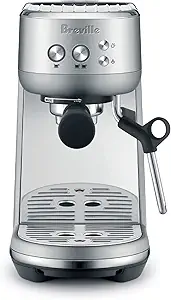
Breville Bambino Espresso Machine, Brushed Stainless Steel
The Breville Bambino offers rapid heat-up with ThermoJet technology, making it ideal for busy mornings or small kitchens. Its manual steam wand allows for microfoam, especially when paired with proper technique—though achieving professional-quality latte art may require practice. Compared to the Meraki or Neretva, it’s less feature-rich but excels in speed and simplicity. Its compact size is perfect for limited counter space, but this also means it’s less suited for high-volume or advanced control users. The price point is higher than basic models but reflects its quick startup and quality components, making it suitable for casual enthusiasts who want decent results without fuss.Pros:- Quick heat-up with ThermoJet technology
- Manual steam wand for microfoam
- Compact size fits small kitchens
- Precise temperature regulation
Cons:- Limited to home use, not commercial-grade
- Requires manual skill for perfect shots
- Price may be high relative to basic machines
Best for: Small kitchen dwellers and casual espresso fans who value speed and ease of use over advanced features.
Not ideal for: Serious home baristas seeking detailed control or high-volume capacity, as it’s limited in automation and size.
- Power:1560 Watts
- Voltage:110-120 Volts
- Included Accessories:Filter baskets, milk jug, portafilter, tamper
- Brew Settings:1 or 2 cups, hot water, steam
- Warranty:1 Year Limited
Our verdict“This pick is best for those who want fast, decent espresso in a small space without complex features.”
Rocket Espresso Appartamento TCA Espresso Machine, Stainless Steel (White)
The Rocket Espresso Appartamento TCA stands out for delivering professional-grade features in a surprisingly small footprint, making it ideal for those with limited kitchen space. Its heat exchanger boiler allows for simultaneous brewing and steaming, similar to higher-end models like the Gaggia Evo, but at a more accessible price point. The inclusion of a hybrid PID offers custom brew temperatures, giving experienced users more control, though its lack of a digital display means adjustments are manual and less intuitive. Compared to the Breville Barista Touch, it sacrifices automation for a more hands-on experience, appealing to enthusiasts who prefer manual control. The tradeoff is that this machine may require some knowledge of espresso brewing to operate effectively. If space and customization matter, this machine makes a compelling choice—just be prepared for a more manual operation.
Pros:- Compact size fits well in small kitchens
- Customizable brew temperature for different beans
- Brews and steams simultaneously for efficiency
- Professional-grade heat exchanger boiler
Cons:- No digital display or automated menus, requires manual adjustments
- Higher price may be a barrier for budget-conscious buyers
- Requires some knowledge of espresso techniques
Best for: Home baristas seeking a small, customizable espresso machine with professional features
Not ideal for: Beginners who prefer automatic controls or those with minimal espresso experience
- Capacity:2.5L reservoir
- Width:10.7 inches
- Material:Stainless steel
- Brew Temperature Settings:Four selectable options
- Boiler Type:Heat exchanger
- Includes:Two portafilters, three baskets, tamper, group brush
- Warranty:3 years
Our verdict“This machine suits experienced home baristas wanting a compact, customizable espresso setup without sacrificing professional features.”
Diletta Bello+ Espresso Machine | E61 | PID Temperature Control | Shot Timer | Programmable Preinfusion | Handmade in Italy
The Diletta Bello+ makes an excellent impression for those who value precise temperature control and Italian craftsmanship. Its PID system and shot timer allow for consistent extraction, similar to the AMZCHEF but with a more refined, semi-automatic operation that appeals to serious enthusiasts. Unlike the straightforward AMZCHEF, the Bello+ offers manual controls that demand some skill but reward with more nuanced brewing. Its heat exchanger setup allows for simultaneous brewing and steaming, comparable to the Rocket Appartamento, yet it emphasizes a handcrafted, high-end aesthetic. The size is larger than the Rocket, which could be a drawback for tight spaces, but it compensates with a more traditional, professional feel. This pick makes the most sense for those wanting a semi-automatic machine with a focus on control and Italian style, accepting a learning curve.
Pros:- Precise temperature control with PID system
- High-quality stainless steel build, handcrafted in Italy
- Manual controls for detailed barista customization
- Simultaneous brewing and steaming with heat exchanger
Cons:- Requires some skill to operate effectively
- Larger footprint than more compact options
- No automatic cleaning or maintenance features
Best for: Experienced home baristas seeking manual control and Italian craftsmanship
Not ideal for: Beginners or small kitchens where space is limited
- Heat Exchanger:Yes
- Wattage:1500 watt-hours
- Voltage:120 volts
- Capacity:3 liters
- Material:Stainless Steel
- Dimensions:17.75″D x 11″W x 14.5″H
Our verdict“Ideal for enthusiasts who want a semi-automatic, handcrafted espresso machine with precise control and Italian style.”
AMZCHEF Ultra Espresso Machine, 58mm Professional with PID Temperature Control, Pressure Gauge & Steam Wand
The AMZCHEF Ultra sits comfortably between entry-level and prosumer, offering preset controls, PID temperature regulation, and a pressure gauge that help users optimize extraction, making it a solid choice for those new to espresso but eager to learn. Its 58mm portafilter provides versatility, comparable to more advanced machines like the Atatix, yet its preset shots and brew-time memory reduce the complexity for beginners. Unlike the Breville Barista Touch, it lacks a touchscreen and automatic features but compensates with manual options for more control. The machine’s straightforward design minimizes the learning curve, but mastering perfect extraction still takes practice. Its combination of ease and precision makes it suitable for dedicated newcomers or hobbyists who want a step up from simple machines.
Pros:- Preset controls with brew-time memory for ease of use
- PID temperature control for consistent extraction
- Pressure gauge aids in dialing in shots
- Versatile steam wand for milk frothing
Cons:- Limited to solo drinks due to single portafilter size
- Requires some learning to perfect extraction and steaming
- No built-in grinder, so additional equipment needed
Best for: Beginner to intermediate home baristas wanting control without complexity
Not ideal for: Pro users seeking fully automatic, high-tech features or those with limited space
- Portafilter Size:58mm
- Power:1465W
- Steam Wand Diameter:10mm
- Temperature Settings:190°F, 194°F, 198°F, 204°F
- Control Features:Preset shots, manual extraction
- Brew Temperatures:Four
Our verdict“This machine appeals to those who want a balanced mix of automation and control in an accessible, versatile package.”
Atatix Espresso Machine, 20 Bar Espresso Coffee Machine with Milk Frother
The Atatix stands out for its powerful 20 Bar pump, enabling rich, full-bodied espresso extraction that rivals commercial machines. Its manual long extraction mode offers an extra degree of control, similar to the more manual operation of the Rocket Appartamento, but with the added benefit of adjusting extraction time on the fly. The robust steam wand allows for professional milk frothing, making it suitable for latte art enthusiasts. However, the machine’s need to cool down after frothing before brewing can slow down workflow, and its protection mode for overheating might interrupt sessions, which can be frustrating. Its stylish, compact design makes it a great fit for smaller kitchens, but the manual operation means a learning curve remains. This machine is best for dedicated espresso lovers who want high pressure and manual finesse.
Pros:- High 20 Bar pressure for intense espresso
- Powerful steam wand suitable for latte art
- Manual long extraction mode for customization
- Compact, stylish design
Cons:- Cooling down period after frothing can delay brewing
- Protection mode may activate if overheated, disrupting workflow
- Manual operation requires skill and practice
Best for: Home baristas focused on manual control and rich espresso extraction
Not ideal for: Casual users seeking quick, hands-off operation or multiple drinks at once
- Pressure:20 Bar
- Power:1350W
- Water Tank Capacity:44 oz
- Frothing System:Milk Frother with Steam Wand
- Extraction Mode:Manual Long up to 102 seconds
Our verdict“This machine suits those who value high pressure, manual control, and milk frothing finesse for serious espresso crafting.”
Breville BES880BSS Barista Touch Espresso Machine, Brushed Stainless Steel
The Breville Barista Touch elevates home espresso with its touchscreen interface and automated microfoam milk texturing, making it appealing for those who want cafe-quality drinks with minimal fuss. Its rapid heat-up system and programmable settings mirror the convenience of the Gaggia Evo but with a more advanced user interface. Unlike the manual Atatix or Rocket, it offers automatic dosing and a guided experience, which reduces the learning curve significantly. However, the high price and limited water capacity might deter more budget-conscious or frequent users. Its streamlined operation is perfect for busy households or those new to espresso, seeking consistency over hands-on control. For those who prioritize simplicity and quick results, this machine makes a compelling case.
Pros:- Touchscreen interface with customizable settings
- Automatic microfoam milk texturing for perfect lattes
- Fast heat-up time with ThermoJet technology
- Includes comprehensive accessories for convenience
Cons:- High cost may be a barrier for some buyers
- Complex features can require time to master
- Limited water capacity for frequent use
Best for: Home users wanting quick, consistent, and café-style drinks with minimal effort
Not ideal for: Enthusiasts seeking full manual control or who prefer traditional espresso craftsmanship
- Water Tank Capacity:67 oz
- Power:1680 Watts
- Voltage:110 to 120 V
- Bean Hopper Capacity:1/2 lb
- Features:Touchscreen display, programmable settings
Our verdict“This machine is ideal for those prioritizing convenience and consistency over manual control and customization.”

How We Picked
To select these prosumer espresso machines, I evaluated key factors that matter most to dedicated home baristas and serious hobbyists. Performance was prioritized through shot quality, temperature stability, and build consistency. Usability considerations included ease of operation, automation features, and maintenance needs. Build quality and materials were assessed to ensure longevity, while value was considered in relation to features offered at each price point. The ranking reflects a balance of these criteria, favoring models that deliver professional-grade results with reasonable complexity and cost.Factors to Consider When Choosing Prosumer Espresso Machine
Choosing the right prosumer espresso machine involves understanding several critical factors that influence your brewing experience and long-term satisfaction. Beyond raw features, it’s important to consider how the machine fits into your skill level, kitchen setup, and goals. Making an informed decision can prevent costly mistakes and ensure you get the best value for your investment.Performance and Temperature Stability
Consistent temperature control is essential for high-quality espresso. Machines with dual boilers or advanced PID controllers offer superior stability, allowing you to pull multiple shots with uniform results. Cheaper models may lack this consistency, leading to flavor variations and wasted beans. Investing in a machine with proven thermal performance can elevate your brewing to professional standards, especially if you plan to roast your own beans or experiment with different grinds and roast levels.
Ease of Use and Automation
While manual control provides flexibility, automation features like pre-programmed shots, PID temperature regulation, and integrated grinders simplify operation, especially for those who want excellent results without extensive barista skills. Beginners should prioritize user-friendly interfaces, while experienced users might prefer manual controls for more customization. Beware of overly complex machines that require extensive setup or maintenance, as these can diminish the enjoyment of home espresso making.
Build Quality and Materials
Durability hinges on the construction materials—stainless steel components tend to last longer and resist corrosion, whereas plastic parts may wear or break over time. A well-built machine also reduces vibrations and maintains temperature stability better. While premium models cost more, their robust construction can justify the investment through years of reliable performance. Conversely, cheap plastics and flimsy components often lead to frustrations and early replacements.
Size, Footprint, and Design
Prosumer machines vary significantly in size, so consider your kitchen space before purchase. Compact models are suitable for smaller countertops but might lack some features, while larger machines often include more advanced controls and dual boilers. Design aesthetics matter too, especially if the machine will be a focal point on your counter. Balance your space constraints with your desire for functionality and visual appeal to avoid mismatched setups.
Price and Long-term Value
Higher-priced models typically offer better build quality, more consistent performance, and advanced features. However, they also require a larger upfront investment. Cheaper options can be appealing but may lack durability or precision, leading to extra costs over time. Consider your brewing frequency, skill level, and future ambitions—spending more upfront can be justified if it means fewer frustrations and better results down the line.
Frequently Asked Questions
Is a prosumer espresso machine worth the extra cost over a standard home machine?
Yes, a prosumer machine provides greater control over brewing parameters, improved build quality, and more consistent results. While they are more expensive, the enhanced features and durability often justify the investment, especially if you’re passionate about espresso and want to replicate café-quality drinks at home. For casual users, a simpler machine might suffice, but for serious enthusiasts, the benefits become clear over time.
Should I prioritize automation or manual control in my prosumer espresso machine?
This depends on your experience level and how much hands-on control you want. Automation features like pre-infusion, PID temperature control, and programmable shots make brewing more consistent and less labor-intensive, ideal for those new to the craft or who prefer convenience. Manual controls offer more customization for seasoned baristas, but they require a learning curve. Balance your skill and patience with your desire for precision.
How important is build material when choosing a prosumer machine?
Build materials directly impact the machine’s durability and performance. Stainless steel components tend to resist corrosion, conduct heat better, and last longer, making them a smart choice for long-term investment. Plastic parts may reduce initial costs but often wear faster and are prone to damage. Prioritizing quality materials helps ensure your machine remains reliable and efficient for years to come.
Can a prosumer espresso machine handle multiple users or high-volume brewing?
Many prosumer models are designed for frequent use and can handle multiple shots in a day without performance issues. Features like dual boilers or large water reservoirs support higher volume and simultaneous brewing or steaming. However, some compact or budget options may struggle under heavy use, so consider your expected volume and choose a machine with enough capacity and durability for your needs.
What maintenance routines are necessary to keep a prosumer espresso machine in top condition?
Regular cleaning of the brew group, descaling, and changing water filters are essential to maintain performance and flavor. Many models include automatic cleaning cycles or reminder functions, which simplify upkeep. Neglecting maintenance can lead to clogs, scale buildup, and inconsistent shots, so establishing a routine based on your usage frequency helps prolong your machine’s lifespan and ensures optimal brewing results.
Conclusion
For those seeking an all-around excellent choice, the Meraki Dual Boiler stands out as the best overall, combining professional features with usability. Beginners or casual enthusiasts will find the Breville Bambino or Atatix more accessible, offering simplicity and good performance without overwhelming complexity. Serious hobbyists looking for premium craftsmanship and maximum control should consider the Diletta Bello+ or Rocket Appartamento. Budget-conscious buyers can opt for the AMZCHEF Ultra, which balances features and affordability. Prioritizing your skill level, space, and specific brewing goals will help you find the ideal machine for your espresso journey.
Halloween Picks
halloween
As an affiliate, we earn on qualifying purchases.