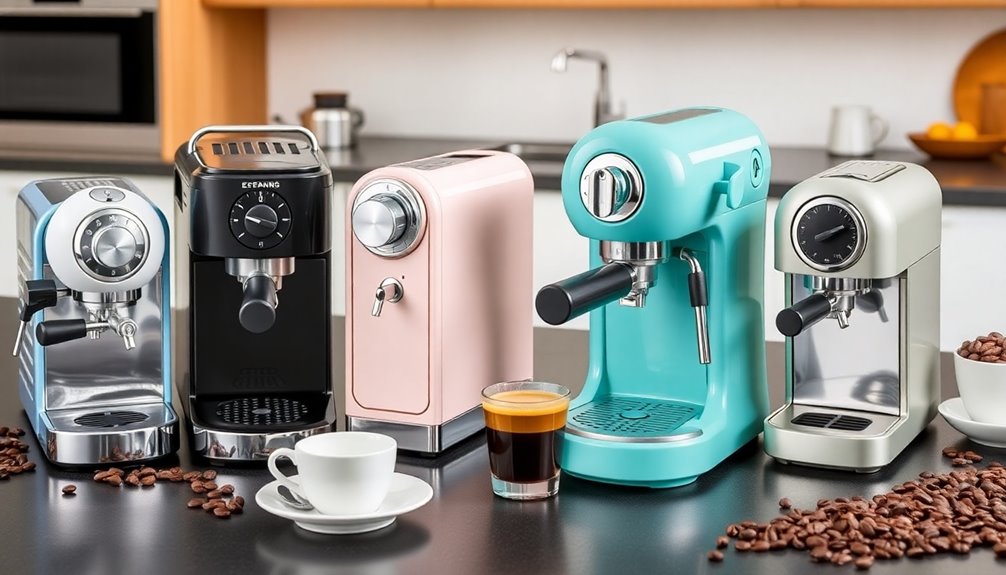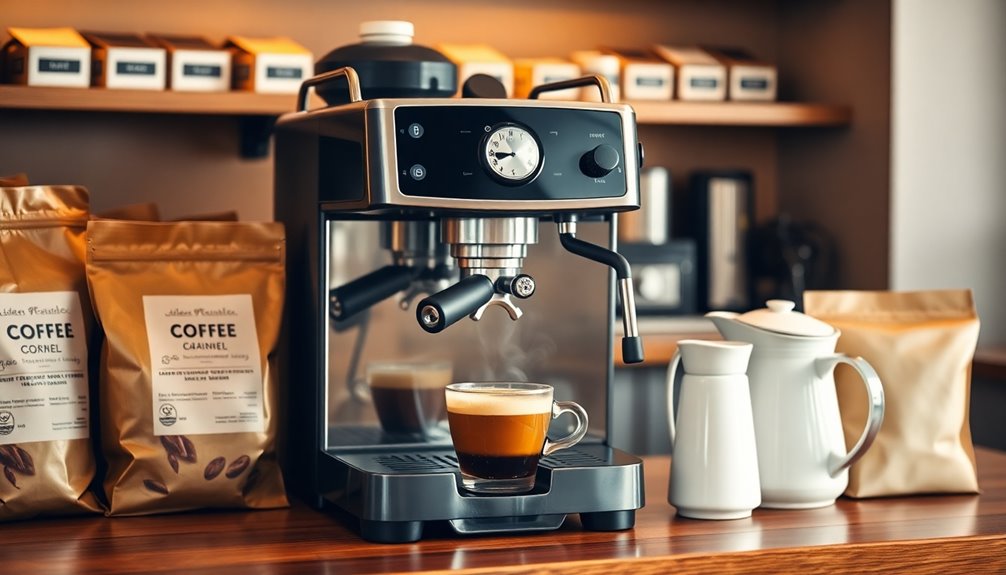
A PID espresso machine uses a proportional-integral-derivative controller to hold brew water within a degree or two of your target temperature, which is the single biggest lever for pulling consistent, repeatable shots. After comparing 11 machines on temperature control, steam performance, grinder integration, and day-to-day usability, the Tuni E2 Gen3 Dual Boiler stands out as the best overall pick because its dual boilers let you brew and steam simultaneously with precise PID regulation on both. The Breville Barista Express makes the most sense if you want an all-in-one workflow with a built-in grinder, while the Gevi 58mm commercial-style machine appeals to buyers who want café-grade portafilter sizing without a prosumer price. The core tradeoff in this category is between convenience (integrated grinders and auto-frothers) and control (dual boilers and full PID adjustability). Read on for the full breakdown.

Get kitchen staples and gadgets delivered free with Prime
- Fast, free delivery on millions of items
- Prime Video, Amazon Music and more included
- Member-only deals all year
Complete the kit



Key Takeaways
- Dual boilers (Tuni E2 Gen3) separated the top tier from single-boiler machines because they eliminate the brew-then-steam wait and stabilize temperature faster between shots.
- Three Gemilai models landed in the middle of the pack: they offer genuine PID control at accessible prices, but plastic-heavy builds and auto-frothers trade skill development for convenience.
- Machines with built-in grinders (Barista Express, XIXUBX, EUHOMY, AMZCHEF) win on workflow simplicity but lock you into a grinder you can’t upgrade separately — a real ceiling for espresso quality.
- 58mm portafilter sizing (Gevi) matters more than most buyers expect: it improves puck extraction uniformity and opens the door to commercial-grade accessories.
- The Bambino proves PID-like thermal speed can come in a compact footprint, but its lack of grind integration and smaller water tank make it better as a second machine or a grinder-owner’s pick.
| Tuni E2 Gen3 Dual Boiler Espresso Machine, Ivory |  | Best for Milk Drinks and Temperature Stability | Operation: Semi-automatic | Brew head: 58 mm | Boiler type: Dual boiler | VIEW ON AMAZON | See Our Full Breakdown |
| XIXUBX Espresso Machine with Built-In Grinder, PID & Programmable Settings, Black |  | Best All-in-One Grinder and PID Pick | Grinder: Integrated conical burr grinder | Portafilter: 51 mm | Brew temperature: 194–203°F | VIEW ON AMAZON | See Our Full Breakdown |
| Gemilai G3028A Semi-Automatic Espresso Machine with Automatic Milk Frother |  | Best for One-Touch Milk Frothing | Boiler capacity: 550 ml | Water tank: 57 oz | Temperature control: Dual PID | VIEW ON AMAZON | See Our Full Breakdown |
| Breville Barista Express Espresso Machine, Brushed Stainless Steel |  | Best for Hands-On Espresso Craft | Model: BES870XL | Grinder: Integrated precision conical burr grinder | Water tank: 67 oz | VIEW ON AMAZON | See Our Full Breakdown |
| Gemilai G3006A Semi-Automatic Espresso Machine with Hot and Cold Brewing |  | Best for Adjustable Hot and Cold Brewing | Operation: Semi-automatic | Brewing modes: Hot and cold extraction | Temperature control: Dual PID; 176–215°F | VIEW ON AMAZON | See Our Full Breakdown |
| Breville Bambino Espresso Machine, BES450BSS, Brushed Stainless Steel |  | Best Compact PID Pick | Brand: Breville | Model: BES450BSS | Portafilter Size: 54 mm | VIEW ON AMAZON | See Our Full Breakdown |
| Gemilai G3028A Semi-Automatic Espresso Machine with Automatic Milk Frother |  | Best for Tinkerers | Brew Boiler Capacity: 550 ml | Portafilter: 58 mm | Adjustable Extraction Pressure: 6–11 bar | VIEW ON AMAZON | See Our Full Breakdown |
| Gemilai Owl G3006 Semi-Automatic Espresso Machine |  | Best for the Aspiring Barista | Operation Mode: Semi-automatic | Group Head: 58 mm commercial style | Pump Pressure: 15 bar | VIEW ON AMAZON | See Our Full Breakdown |
| Gevi 58mm Commercial Espresso Machine with PID & NTC Temperature Control and Steam Wand |  | Best Value Starter Kit | Product Type: Semi-Automatic Espresso Machine | Portafilter Size: 58 mm | Temperature Control: PID and NTC dual control | VIEW ON AMAZON | See Our Full Breakdown |
| EUHOMY Espresso Machine with Grinder and Milk Frother, 20 Bar Pressure |  | Best All-in-One Convenience | Product Type: Espresso Machine with Grinder and Milk Frother | Pressure: 20 bar | Grinder Settings: 30 | VIEW ON AMAZON | See Our Full Breakdown |
| AMZCHEF Espresso Machine with Grinder and Temperature Control |  | Best Touchscreen Temperature-Control Pick | Brand: AMZCHEF | Grind Settings: 44 adjustable | Temperature Range: 190°F–201°F | VIEW ON AMAZON | See Our Full Breakdown |
| pid espresso machine | Temperature control | Steam wand | Water tank |
|---|---|---|---|
| Tuni E2 Gen3 Dual Boiler Espre | PID + NTC | — | — |
| XIXUBX Espresso Machine with B | — | 360° rotating; steam temperature 266–302°F | 60 oz, removable |
| Gemilai G3028A Semi-Automatic | Dual PID | — | 57 oz |
| Breville Barista Express Espre | PID | — | 67 oz |
| Gemilai G3006A Semi-Automatic | Dual PID; 176–215°F | — | 57 oz |
| Breville Bambino Espresso Mach | — | Automatic milk texturing | — |
| Gemilai G3028A Semi-Automatic | — | — | 57 oz removable |
| Gemilai Owl G3006 Semi-Automat | — | Swivel manual wand | 57 fl oz (1.7 L) removable |
| Gevi 58mm Commercial Espresso | PID and NTC dual control | Yes, manual | — |
| EUHOMY Espresso Machine with G | PID, ±1°C | High-pressure manual wand | — |
| AMZCHEF Espresso Machine with | — | 8mm stainless steel | — |
More Details on Our Top Picks
Tuni E2 Gen3 Dual Boiler Espresso Machine, Ivory
The Tuni E2 Gen3 pairs a 58 mm brew head with dual boilers and PID plus NTC control, giving milk drink makers more room to brew and steam without waiting for one heating system to switch tasks. Its pressure gauge and adjustable steam modes add useful feedback and flexibility, while hot and cold brewing broaden the menu beyond espresso. Compared with the Breville Barista Express, the Tuni prioritizes separate brew and steam capacity over an integrated grinder: it takes ground coffee, so you will need a separate grinder for whole beans. That makes its included portafilter tools a helpful starting kit, but the semi-automatic workflow still asks for hands-on dosing, tamping, and cleanup. This is a stronger fit for buyers who value milk drink pacing and temperature control than for anyone seeking a quick, low-effort setup.
Pros:- Dual boilers let brewing and steaming happen without waiting for a mode change.
- PID and NTC temperature control support steadier brewing temperatures.
- 58 mm brew head and pressure gauge offer familiar tools for hands-on espresso making.
- Hot and cold brewing modes and adjustable steam expand drink options.
Cons:- No grinder is included, so whole-bean users need separate equipment.
- Semi-automatic preparation and cleaning take more time and skill than one-touch brewing.
Best for: Home baristas who make several milk-based drinks and want separate brew and steam boilers with visible pressure feedback.
Not ideal for: Buyers who want an all-in-one grinder or a simple, low-maintenance machine; this model uses ground coffee and requires manual preparation.
- Operation:Semi-automatic
- Brew head:58 mm
- Boiler type:Dual boiler
- Pump pressure:20 bar
- Temperature control:PID + NTC
- Beverage modes:Espresso, Americano, cappuccino, latte, and cold brew
- Power:1500 W
- Color and finish:Ivory, matte exterior
Our verdict“Choose the Tuni E2 Gen3 if dual-boiler milk drink workflow matters more to you than having a grinder built in.”
XIXUBX Espresso Machine with Built-In Grinder, PID & Programmable Settings, Black
The XIXUBX combines an integrated conical burr grinder with PID temperature control and programmable shot volumes, cutting down on separate equipment while giving the owner ways to repeat a preferred recipe. Its thermoblock is listed to heat in under 30 seconds, and adjustable pre-infusion and cold mode add range once the basics are set. Compared with the Breville Barista Express, this model also grinds into the portafilter but specifies a brew temperature range and programmable volumes; the Breville instead lists low-pressure pre-infusion and a larger water tank. XIXUBX’s 51 mm portafilter is smaller than the Tuni E2 Gen3’s 58 mm format, and its many settings may slow down beginners who want a straightforward routine. It suits buyers seeking an integrated grinder and configurable controls in one machine, provided they are willing to learn manual espresso preparation.
Pros:- Integrated conical burr grinder feeds whole beans directly into the portafilter.
- PID temperature control and programmable shot volumes support repeatable brewing.
- Under-30-second listed heat-up time suits quick coffee routines.
- Rotating steam wand and cold mode support a range of drinks.
Cons:- The number of programmable options can make setup less approachable for beginners.
- Manual dosing and tamping still require technique despite the built-in grinder.
Best for: Home espresso drinkers who want a built-in grinder, programmable shots, and adjustable pre-infusion without buying separate equipment.
Not ideal for: Beginners who prefer minimal controls or buyers committed to a 58 mm portafilter workflow; this model uses a 51 mm portafilter and has many settings.
- Grinder:Integrated conical burr grinder
- Portafilter:51 mm
- Brew temperature:194–203°F
- Pre-infusion:Adjustable from 1–5 seconds
- Cold mode temperature:77°F
- Steam wand:360° rotating; steam temperature 266–302°F
- Heat-up time:Under 30 seconds (thermoblock)
- Water tank:60 oz, removable
Our verdict“Pick the XIXUBX if you want grinder, PID control, and programmable shots together and are comfortable learning a hands-on workflow.”
Gemilai G3028A Semi-Automatic Espresso Machine with Automatic Milk Frother
The Gemilai G3028A puts its emphasis on milk drink convenience: its one-touch automatic frother can reduce the manual work that comes with texturing milk on machines such as the Breville Barista Express. Dual PID controls and adjustable extraction pressure give the owner more brewing control than the frother-first design might suggest, while touchscreen controls and a removable 57 oz tank support routine use at home or in an office. The tradeoff is that the description specifies ground coffee and no built-in grinder, so whole-bean buyers need another appliance. Its adjustable pressure is a useful point of distinction from the Tuni E2 Gen3’s listed 20-bar pump, though these machines differ in how their pressure features are presented. The G3028A is best for people who value easier milk preparation; espresso purists who want manual wand control may prefer another pick.
Pros:- One-touch automatic frother simplifies milk drink preparation.
- Dual PID temperature controls manage brew and steam temperatures independently.
- Adjustable extraction pressure provides control over brewing.
- Removable 57 oz water tank supports multiple drinks between refills.
Cons:- No built-in grinder is specified, and the machine uses ground coffee.
- Automatic frothing offers less hands-on control than the Breville Barista Express’s manual steam wand.
Best for: Households or small offices that make milk drinks and want one-touch frothing alongside adjustable espresso controls.
Not ideal for: Whole-bean users seeking an integrated grinder or buyers who want to texture milk manually with a steam wand.
- Boiler capacity:550 ml
- Water tank:57 oz
- Temperature control:Dual PID
- Adjustable extraction pressure:6–11 bar
- Output pressure:15 bar
- Frothing:One-touch automatic; 104–194°F range
- Display:Touchscreen
- Dimensions:10.43 × 14.8 × 13.18 in (D × W × H)
Our verdict“Choose the G3028A if convenient automatic milk frothing matters more than built-in grinding or manual steam control.”
Breville Barista Express Espresso Machine, Brushed Stainless Steel
The Breville Barista Express is a well-rounded choice for buyers who want to control the steps between whole bean and finished shot. Its integrated conical burr grinder, PID temperature control, and low-pressure pre-infusion bring grinding and extraction tools into one machine, while the manual steam wand leaves milk texture in the owner’s hands. Compared with the XIXUBX, the Breville lists a larger 67 oz water tank and a 1/2 lb bean hopper; the XIXUBX instead calls out programmable shot volumes and cold mode. Neither removes the need to learn dosing and tamping, and the Barista Express asks users to manage milk texturing separately from brewing. It is a more hands-on proposition than Gemilai’s one-touch frother, but that manual control can suit buyers who want to practice espresso and milk technique in one setup.
Pros:- Integrated conical burr grinder grinds directly into the portafilter.
- PID temperature control and low-pressure pre-infusion support controlled extraction.
- Manual steam wand allows users to shape milk texture.
- 67 oz water tank and 1/2 lb bean hopper accommodate a home coffee routine.
Cons:- Manual preparation has a learning curve and takes more active effort.
- Milk texturing and espresso extraction require separate user steps.
Best for: Aspiring home baristas who want an integrated grinder and manual control over shot preparation and milk texturing.
Not ideal for: People seeking one-touch milk drinks or minimal preparation; grinding, tamping, extraction, and steaming are separate hands-on steps.
- Model:BES870XL
- Grinder:Integrated precision conical burr grinder
- Water tank:67 oz
- Bean hopper:1/2 lb
- Temperature control:PID
- Shot settings:Single or double
- Power:1600 W
- Finish:Brushed stainless steel
Our verdict“Choose the Barista Express if you want to learn hands-on espresso and milk technique with a grinder built into the machine.”
Gemilai G3006A Semi-Automatic Espresso Machine with Hot and Cold Brewing
The Gemilai G3006A stands out for buyers who want to tune extraction across both hot espresso and cold coffee. Its dual PID controls, adjustable 176–215°F brewing range, and programmable pre-infusion and brewing times give more room to shape a shot than the simpler control set described for the Breville Barista Express. Displays for pressure, temperature, and extraction time make those adjustments easier to track, and the swivel steam wand keeps milk drinks in the mix. The tradeoff is a more manual routine: the G3006A takes ground coffee, so there is no integrated grinder to simplify the path from bean to shot. Compared with the Tuni E2 Gen3, it offers explicit brew-time adjustment and hot/cold extraction, while the Tuni uses dual boilers. This model suits curious tinkerers more than buyers who want convenience first.
Pros:- Supports both hot espresso and cold coffee extraction.
- Dual PID controls and adjustable brew temperature offer recipe flexibility.
- Pressure, temperature, and extraction time displays help monitor brewing.
- Swivel stainless steel steam wand supports milk frothing.
Cons:- Uses ground coffee and does not include a built-in grinder.
- Adjustable pre-infusion and brewing ranges require users to choose and manage settings.
Best for: Home brewers who use ground coffee and want to adjust temperature, pre-infusion, and extraction time for hot or cold drinks.
Not ideal for: Whole-bean users who want a built-in grinder or buyers who prefer automatic recipes over manual setting changes.
- Operation:Semi-automatic
- Brewing modes:Hot and cold extraction
- Temperature control:Dual PID; 176–215°F
- Pre-infusion:Adjustable from 0–30 seconds
- Brewing time:Adjustable from 10–120 seconds
- Pump pressure:15 bar
- Water tank:57 oz
- Dimensions:9.72 × 14.06 × 15.47 in (D × W × H)
Our verdict“Choose the G3006A if you want hands-on control over hot and cold extraction and already have a grinder.”
Breville Bambino Espresso Machine, BES450BSS, Brushed Stainless Steel
Of all the machines in this roundup, the Breville Bambino is the one I would point space-constrained buyers toward first. Its ThermoJet heater reaches brewing temperature in roughly three seconds, which is faster than anything Gemilai or Gevi offers here, and the PID control keeps shots steady without fuss. Compared with the Gemilai Owl G3006, it trades the 58 mm commercial group head for a 54 mm portafilter and a much smaller footprint — a fair swap if counter space is the deciding factor. The automatic steam wand textures milk with minimal skill required, something the Gevi’s manual wand cannot match.
The tradeoff is completeness: like most entries here, there is no built-in grinder, and the one- or two-cup shot presets leave little room to experiment with ratios. Expect a learning curve on dose and tamp.
Pros:- Reaches extraction temperature in about 3 seconds
- Compact footprint fits tight counters
- Automatic steam wand produces microfoam with little practice
- PID control supports balanced, repeatable extraction
Cons:- No built-in grinder, so fresh grinding requires a separate purchase
- Shot presets limit experimentation with custom ratios
- Manual preparation still demands a learning curve
Best for: Apartment dwellers or small-kitchen owners who want fast heat-up and hands-off milk frothing
Not ideal for: Buyers who want an all-in-one setup — you will need to budget separately for a grinder
- Brand:Breville
- Model:BES450BSS
- Portafilter Size:54 mm
- Heating System:ThermoJet with PID control
- Heat-Up Time:About 3 seconds
- Power:1560 Watts
- Steam Wand:Automatic milk texturing
- Warranty:1 Year Limited
Our verdict“The right choice if counter space and fast heat-up matter more than having every pro feature.”
Gemilai G3028A Semi-Automatic Espresso Machine with Automatic Milk Frother
Where the Bambino asks you to trust its presets, the Gemilai G3028A hands you the controls. Its dual PID system manages brew and steam temperatures separately, and the adjustable OPV pressure range of 6–11 bar lets you dial extraction pressure to suit a light Ethiopian roast one morning and a dark blend the next — a level of tunability none of the other picks in this batch offer. The touchscreen and one-touch milk frother make daily operation simpler than the fully manual Gemilai Owl G3006, while the 58 mm portafilter gives you genuine commercial-style accessories.
The catch is that all this adjustability demands skill. Preheating, grinding, and tamping all affect the result, and a careless workflow will produce sour or bitter shots despite the fancy electronics.
Pros:- Dual PID controls brew and steam temperatures independently
- Adjustable 6–11 bar extraction pressure suits varied roast styles
- One-touch automatic milk frothing
- Descaling reminders and removable tank ease maintenance
Cons:- Requires careful preheating, grinding, and tamping for good results
- Ground-coffee-only design still needs a separate grinder
Best for: Hobbyists who enjoy tweaking pressure and temperature to match different roasts
Not ideal for: Casual drinkers who just want a button-press latte — the tuning options add complexity they will never use
- Brew Boiler Capacity:550 ml
- Portafilter:58 mm
- Adjustable Extraction Pressure:6–11 bar
- Pump Output Pressure:15 bar
- Water Tank:57 oz removable
- Controls:Touchscreen
- Milk Frothing Temperature:104–194°F
- Auto Shut-Off:28-minute ECO mode
- Power:1450 W
Our verdict“A strong pick for buyers who see espresso-making as a hobby rather than a chore.”
Gemilai Owl G3006 Semi-Automatic Espresso Machine
The Gemilai Owl G3006 earns its spot by giving you feedback most machines at this level withhold. The dual display shows real-time brew temperature and shot time, which turns every pull into a learning opportunity — you can actually see why a shot ran fast or slow instead of guessing. Compared with the Gevi 58mm, which fixes its temperature range and offers preset shot sizes, the Owl’s 176°F–215°F adjustable band and configurable pre-infusion give you more room to develop technique. The swivel steam wand is fully manual, so latte art is achievable in a way the G3028A’s automatic frother doesn’t allow.
Everything here is hands-on. There are no shortcuts for beginners, no grinder, and no automated milk texturing — this is a machine for people who want to build skill, not skip steps.
Pros:- Real-time temperature and extraction-time displays aid learning
- 58 mm commercial group head with 15-bar pump
- Swivel steam wand supports manual latte art
- Large 1.7 L removable water tank reduces refills
Cons:- Fully manual operation demands time and attention every shot
- Ground coffee only — grinder sold separately
Best for: Espresso learners who want live shot data and manual control to build real barista technique
Not ideal for: Morning-rush households — every drink requires full hands-on brewing with no automation
- Operation Mode:Semi-automatic
- Group Head:58 mm commercial style
- Pump Pressure:15 bar
- Temperature Range:176°F–215°F
- Water Tank:57 fl oz (1.7 L) removable
- Display:Dual display with temperature and shot time
- Steam Wand:Swivel manual wand
- Power:1500 W
Our verdict“The choice for buyers who want visible shot feedback while learning to pull espresso by hand.”
Gevi 58mm Commercial Espresso Machine with PID & NTC Temperature Control and Steam Wand
What separates the Gevi from the crowd is what’s in the box. Alongside the machine, you get a 58 mm portafilter, tamper, and milk frothing pitcher — the accessories other picks here make you buy separately, which quietly narrows the real cost gap with machines like the Gemilai Owl G3006. Its PID plus NTC dual temperature control holds water between 194°F and 204°F, a tighter band than most entry machines manage, and the four shot sizes with four temperature settings make it genuinely approachable through a single dial. Compared with the Bambino, you give up automatic milk texturing, but you gain the larger commercial-style portafilter and included kit.
The narrower temperature range limits experimentation compared with the Owl’s wider band, and there’s still no grinder.
Pros:- Includes portafilter, tamper, and frothing pitcher so setup is complete
- PID and NTC dual control keeps extraction temperature consistent
- Four shot sizes and four temperatures offer easy customization
- One-dial operation suits beginners
Cons:- Narrow temperature range limits experimentation with unusual roasts
- Grinder and cleaning supplies still required separately
- Compact build is not suited to high-volume use
Best for: First-time espresso buyers who want a complete accessory kit and simple controls out of the box
Not ideal for: Tinkerers wanting wide temperature ranges — the 194°F–204°F band and preset shots restrict tuning
- Product Type:Semi-Automatic Espresso Machine
- Portafilter Size:58 mm
- Temperature Control:PID and NTC dual control
- Temperature Range:194°F–204°F (90°C–96°C)
- Shot Sizes:4 settings
- Temperature Settings:4
- Steam Wand:Yes, manual
- Warranty:12 months with lifetime technical support
Our verdict“A smart entry point for buyers who want everything included and simplicity over deep adjustability.”
EUHOMY Espresso Machine with Grinder and Milk Frother, 20 Bar Pressure
The EUHOMY solves the problem every other machine in this batch ignores: it has a built-in grinder with 30 settings, so beans go in and espresso comes out without a second appliance. That makes it the true one-box alternative to pairing, say, the Gevi or the Bambino with a standalone grinder — fewer purchases, one footprint to manage. The anti-clog polished grounds path addresses the most common failure point of combo machines, and PID control within ±1°C keeps the 20-bar pump working with stable water temperature. The commercial-grade 58 mm portafilter and high-pressure steam wand round out a genuinely complete package.
Tradeoffs are real: combo machines occupy serious counter space, and the all-in-one design means the grinder and brewer share a single failure surface. Technique still matters for milk texturing.
Pros:- Built-in conical grinder with 30 settings eliminates a separate purchase
- Anti-clog polished grounds path reduces jams
- PID control within ±1°C supports consistent shots
- 58 mm portafilter and high-pressure steam wand enable latte art
Cons:- Combined unit takes up substantial counter space
- Milk texturing and espresso technique still require practice
- All-in-one design means a grinder fault can sideline brewing too
Best for: Buyers who want a single purchase covering grinding and brewing without adding a separate grinder
Not ideal for: Minimalist counters — the combined grinder-and-brewer footprint is one of the largest in this lineup
- Product Type:Espresso Machine with Grinder and Milk Frother
- Pressure:20 bar
- Grinder Settings:30
- Portafilter Size:58 mm
- Temperature Control:PID, ±1°C
- Steam Wand:High-pressure manual wand
- Anti-Clog Feature:Polished grounds path
Our verdict“The pick for one-and-done buyers who want beans-in, latte-out from a single machine.”
AMZCHEF Espresso Machine with Grinder and Temperature Control
I’d place the AMZCHEF Espresso Machine as a touchscreen-first all-in-one for buyers who want temperature control without a cluttered button layout. Its 44 grind settings and 190°F–201°F range give more room to tune light and dark roasts than a basic single-boiler starter machine, while the one-touch cold brew mode widens what it can do beyond espresso. Compared with the Breville Barista Express, it feels more digital and convenience-led, but that also means more electronics and grinder maintenance to think about. The 60oz tank and steam wand suit milk-drink routines, yet the built-in burr setup may frustrate someone who already owns a capable grinder. For a buyer comparing temperature-controlled espresso machines, I’d treat this as the easier-entry option, not the most traditional barista path.
Pros:- 44 grind settings give flexibility for espresso and coarser brew styles
- Adjustable 190°F–201°F temperature helps match extraction to different roasts
- Touchscreen and one-touch brewing reduce the learning curve
- 60oz water tank and steam wand support frequent milk-based drinks
Cons:- Built-in grinder adds cleaning and maintenance complexity compared with separate units
- Touchscreen-focused controls may feel less tactile than physical switches
- Cold brew mode adds versatility but may not satisfy dedicated cold-brew purists
Best for: Beginners who want one countertop machine with a built-in grinder, adjustable temperature, and simple touchscreen operation for espresso and milk drinks.
Not ideal for: Espresso hobbyists who already own a standalone grinder and prefer physical dials, a more traditional layout, or fewer integrated components to maintain.
- Brand:AMZCHEF
- Grind Settings:44 adjustable
- Temperature Range:190°F–201°F
- Water Tank Capacity:60 oz
- Heating Power:1350W
- Steam Wand:8mm stainless steel
- Display:IMD HD touch screen
- Special Features:Cold brew mode, descaling function, one-touch brewing
Our verdict“This AMZCHEF makes the most sense for beginners who want a single countertop machine with grinder, temperature adjustment, and easy touchscreen operation.”

How We Picked
I ranked these machines on four criteria, weighted in this order: temperature stability and control, workflow and usability, build quality and serviceability, and value relative to what you give up. For a roundup centered on PID control, the first criterion dominates — a machine with adjustable PID setpoints that displays or lets you tune brew temperature scores higher than one that merely claims “PID-controlled” on the box. Dual boilers and heat exchangers earned credit for letting you pull a shot and texture milk without temperature surfing.
The second and third criteria separated the mid-pack. Machines with integrated grinders scored well on usability but were marked down where the grinder quality limits the machine’s ceiling, since the grinder is the component you cannot fix later. Finally, I penalized duplicated listings and near-identical variants (the two Gemilai G3028A entries and the G3006 family) rather than letting them pad the rankings, and I rewarded machines with standard parts, metal construction, and accessible maintenance. The ordering reflects who each machine genuinely serves, not a raw feature count.
| pid espresso machine | Temperature control |
|---|---|
| Tuni E2 Gen3 Dual Boiler Espre | PID + NTC |
| XIXUBX Espresso Machine with B | — |
| Gemilai G3028A Semi-Automatic | Dual PID |
| Breville Barista Express Espre | PID |
| Gemilai G3006A Semi-Automatic | Dual PID; 176–215°F |
| Breville Bambino Espresso Mach | — |
| Gemilai G3028A Semi-Automatic | — |
| Gemilai Owl G3006 Semi-Automat | — |
| Gevi 58mm Commercial Espresso | PID and NTC dual control |
| EUHOMY Espresso Machine with G | PID, ±1°C |
| AMZCHEF Espresso Machine with | — |
Factors to Consider When Choosing Pid Espresso Machine
A PID controller is only one part of the espresso equation. Before you pick a machine from this list, think through these factors — they explain most of the price differences here and most of the buyer’s remorse I see in this category.True PID Adjustability vs. PID Marketing
The phrase “PID-controlled” appears on nearly every machine in this roundup, but there’s a wide gap between a hidden PID that runs at a factory-fixed temperature and a user-adjustable PID with a visible setpoint. The former gives you stability but no control; the latter lets you experiment with lighter roasts (hotter, 93–95°C) versus darker roasts (cooler, 88–91°C). If you buy single-origin beans and enjoy dialing in, insist on adjustability — machines like the Tuni E2 and Gevi expose it directly. If you drink the same medium roast daily and just want repeatability, a fixed-temperature PID like the Bambino’s Thermojet system delivers most of the benefit. The common mistake is paying extra for adjustability you’ll never touch, or worse, assuming “PID” on the listing means tunable when it doesn’t.
Single Boiler, Dual Boiler, or Thermoblock
Boiler architecture determines your daily rhythm more than any other spec. A single-boiler machine (most Gemilai models here) must switch between brew and steam temperatures, adding a 30–60 second pause mid-drink — fine for one or two cappuccinos, tedious for a household of four. A dual boiler like the Tuni E2 brews and steams at once, which matters if you make milk drinks regularly or host. Thermoblock and Thermojet designs (Breville Bambino) reach temperature in seconds and recover fast, ideal for sporadic one-shot sessions. Don’t overbuy: dual boilers cost more, descale harder, and consume more counter power for a benefit you may never use if you drink straight espresso.
Integrated Grinder: Convenience or Ceiling?
Four machines here bundle a grinder, and that’s the category’s biggest fork in the road. An all-in-one machine saves counter space, money, and setup friction — genuinely the right call for a first machine. But espresso quality is arguably more grinder-dependent than machine-dependent, and a bundled grinder is a permanent ceiling you can’t lift without replacing the whole unit. My rule of thumb: if you already own a capable burr grinder, buy a grinder-free machine with better internals at the same price. If you own nothing and want one box, the Barista Express’s grinder is the most proven of the bundled options here. Also check whether the integrated hopper holds enough beans for your household — small hoppers mean daily refills and stale-bean risk if you overfill.
Portafilter Size and Build Materials
Milk Frothing: Steam Wand vs. Automatic Frother
Several machines in this list (the Gemilai G3028A variants, EUHOMY) substitute an automatic milk frother for a traditional steam wand. Auto-frothers produce acceptable milk for lattes with zero skill required — a real advantage for beginners and busy mornings. The tradeoff is texture and control: a proper steam wand creates the fine microfoam needed for latte art and lets you control sweetness and temperature, while auto systems deliver one fixed texture. Wands also matter for longevity, since frother carafes and tubes are common failure points and harder to deep-clean. If milk drinks are your main event and you’re willing to practice, choose a wand. If milk is an afterthought, the automatic route saves genuine frustration.
Maintenance, Descaling, and Longevity
PID machines reward consistent care, and maintenance burden varies more than spec sheets suggest. Dual boilers mean two descaling jobs; integrated grinders add purge routines and chute cleaning; auto-frothers need post-every-use rinsing. Before buying, check whether the machine has a removable, refillable water tank (versus plumbed-only), accessible descaling modes, and replaceable parts like gaskets and shower screens. Machines built on industry-standard components — 58mm portafilters, E61-style or common group parts — stay serviceable for years, while proprietary designs can become unrepairable when a single plastic part fails. Factor in a scale for weighing doses and a knock box; the machines here perform dramatically better when you adopt a weighed-dose routine, regardless of price tier.
Frequently Asked Questions
Does a PID controller actually make better espresso, or is it just a marketing term?
A PID genuinely improves shot-to-shot consistency by holding brew water within roughly ±1°C instead of the ±5–10°C swings of a basic thermostat-controlled machine. That stability means the shot you dialed in yesterday tastes the same today, which is the whole game for repeatable espresso. Where marketing takes over is implied adjustability: many machines hide the PID behind a fixed factory setpoint, so you get stability but no tuning. If you experiment with roast levels, look for a machine that displays or lets you change the target temperature. If you don’t, fixed-PID machines like the Bambino still deliver a meaningful consistency upgrade over non-PID machines.
Should I buy a machine with a built-in grinder or buy the grinder separately?
Buy integrated only if you own no grinder and value a single-box setup over maximum quality. The grinder is the component that most limits espresso quality, and a bundled grinder — even a decent one like the Barista Express’s — caps how fine you can tune your grind and can’t be upgraded without replacing the machine. A separate burr grinder costs more upfront and takes counter space, but it lets you pair a modest machine with excellent grind quality, which beats an expensive machine with mediocre grind every time. Households making one or two milk drinks a day will be happy integrated; hobbyists pulling multiple shots and tweaking variables will outgrow the integrated route within months.
Why does the same Gemilai model appear twice in this roundup, and which should I choose?
Duplicate listings are common on marketplaces, and the two G3028A entries reflect sellers listing the same machine separately — treat them as one product and buy whichever listing offers better warranty and return terms. The real question is G3028A versus the G3006/Owl models, which are distinct machines. The G3028A’s automatic milk frother suits drinkers who want hands-off lattes, while the G3006 family leans on hot/cold brewing modes and a more traditional workflow. Neither matches the temperature control of the dual-boiler or 58mm machines higher up this list, but all three deliver functional espresso at an accessible price point for casual daily use.
Is a dual boiler worth it if I mostly make one milk drink a day?
Probably not, and that’s a common overpurchase in this category. A dual boiler’s core benefit — brewing and steaming simultaneously with independent temperature control — pays off when you make multiple drinks back to back or host guests. For a single daily cappuccino, a single-boiler PID machine costs half as much and adds only a brief temperature-switch pause mid-routine. Where dual boilers earn their price is for two-coffee households or anyone frustrated by temperature surfing on cheaper machines. If your routine is one drink, put the savings toward a better grinder or fresh beans instead; that combination will improve your cup more than a second boiler will.
How important is 58mm portafilter size compared to smaller sizes?
More important than most buyers expect, which is why the Gevi earns its spot. A 58mm basket is the commercial standard, so its puck is shallower and wider for the same dose, which extracts more evenly and reduces channeling compared to narrower 51–54mm baskets. Just as practically, 58mm opens access to a huge aftermarket of precision baskets, tampers, and distribution tools, while smaller proprietary sizes lock you into limited accessories. The catch: 58mm machines tend to be physically larger and need a more capable grinder to feed their dose capacity. If you see espresso as a hobby, the 58mm ecosystem is worth it; if you want compact convenience, smaller sizes pull perfectly drinkable shots.
Conclusion
Mapping this lineup to buyer types closes the decision cleanly. For best overall, the Tuni E2 Gen3 Dual Boiler justifies its premium with simultaneous brew-and-steam capability and true PID control on both boilers — the machine for anyone who takes espresso at least semi-seriously. The Gevi 58mm takes best premium-alternative honors for hobbyists who want commercial-standard tooling at a lower commitment than the Tuni. For best value, the Breville Barista Express remains the smartest complete package: grinder, PID-style temperature stability, and proven reliability in one box. The Bambino is my best for beginners with a separate grinder — and the best compact pick for small counters and offices. Buyers prioritizing hands-off milk drinks should look at the Gemilai G3028A with its automatic frother, while XIXUBX, EUHOMY, and AMZCHEF serve budget-conscious buyers who want grinder-plus-PID convenience in a single purchase. Whichever route you take, remember that fresh beans and a consistent routine will improve your shots more than any single feature on this list.
Halloween Picks
halloween
As an affiliate, we earn on qualifying purchases.