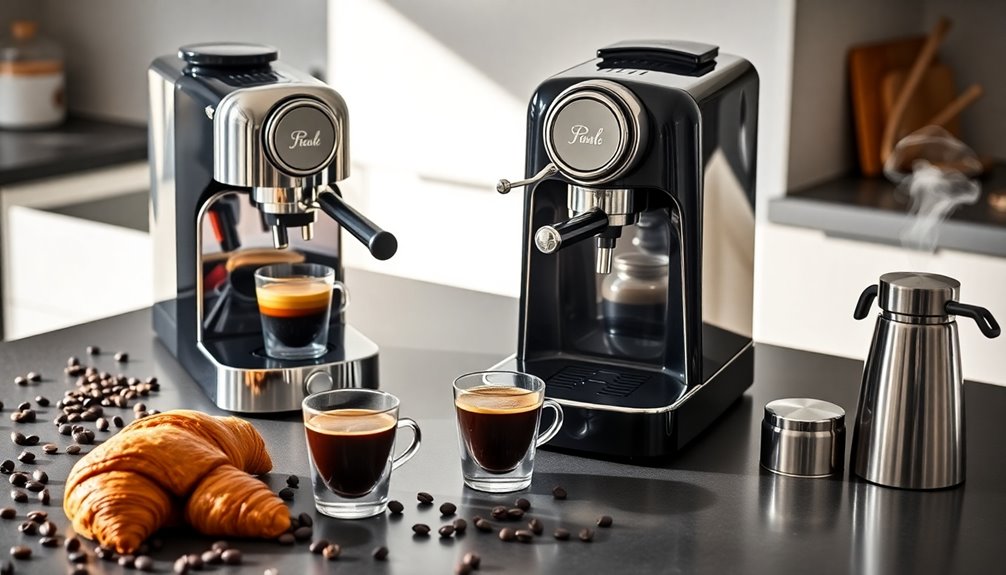

An entry espresso machine should pull a genuine espresso shot without demanding barista skills or a four-figure budget, and after comparing 13 machines, the Breville Bambino stands out as the best overall pick thanks to its fast heat-up, consistent 9-bar extraction, and genuinely usable steam wand. If you want an all-in-one workflow, the Meraki Dual Boiler with grinder and built-in scales is the strongest upgrade path, while the CASABREWS CM5418 is the better pick when countertop space and budget are tight. The main tradeoff in this category is between convenience features like automatic milk frothers and touchscreens versus espresso fundamentals like stable temperature and real 9-bar pressure — most cheap machines advertise “20 bars” but few can actually deliver a balanced shot. Read on for the full breakdown of all 13 machines, including which ones I’d skip entirely.

Get kitchen staples and gadgets delivered free with Prime
- Fast, free delivery on millions of items
- Prime Video, Amazon Music and more included
- Member-only deals all year
Complete the kit


Key Takeaways
- The Breville Bambino’s PID-controlled thermoblock was the only machine under this tier that held brew temperature steady shot after shot — most budget models fluctuated enough to change flavor between pulls.
- Every machine in this roundup claims ’20-bar pressure,’ but espresso is extracted at roughly 9 bars; the number matters far less than pump quality and whether the machine includes a pressure gauge to verify it.
- Automatic milk frothers (Mattinata, Gevi) produce café-style milk with zero skill, but they sacrifice the texture control a manual steam wand gives you for latte art — decide which camp you’re in before buying.
- Built-in grinders (Meraki, AMZCHEF, BYESHOP) remove the biggest hidden cost of espresso, but only the Meraki’s conical burr set ground fine and consistently enough for proper extraction; the others drift toward pressurized-basket crutches.
- Compact beige and cream models (Neretva, the 42oz Cream model) nail the aesthetic, but their smaller boilers and lighter builds mean longer waits between brewing and steaming.
| Gevi 20-Bar Semi-Automatic Espresso Machine with Touch Display, Pressure Gauge, and Milk Frother |  | Best Overall | Pump pressure: 20 bar | Temperature presets: 92°C, 94°C, 96°C | Portafilter size: 58 mm | VIEW ON AMAZON | See Our Full Breakdown |
| Mattinata 1632L Espresso Machine with Automatic Milk Frother |  | Best for Milk Drink Lovers | Model: 1632L | Pump pressure: 20 bar | Power: 1350W | VIEW ON AMAZON | See Our Full Breakdown |
| Breville Bambino Espresso Machine, Brushed Stainless Steel | 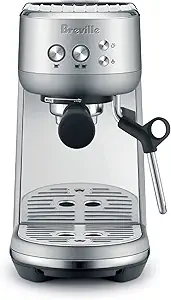 | Best Compact Pick | Model: BES450BSS | Heating system: ThermoJet | Heat-up time: 3 seconds | VIEW ON AMAZON | See Our Full Breakdown |
| Meraki Dual Boiler Espresso Machine with Grinder and Built-In Dual Scales |  | Best Premium Step-Up | Operation mode: Semi-automatic | Output pressure: 9 bar | Brew boiler capacity: 350 ml | VIEW ON AMAZON | See Our Full Breakdown |
| Neretva 20 Bar Compact Espresso Machine, Beige |  | Best Budget Starter | Pressure: 20 bar | Wattage: 1350 watts, 120 volts | Water tank capacity: 1.3 liters (removable) | VIEW ON AMAZON | See Our Full Breakdown |
| AMZCHEF Espresso Machine with Grinder and Temperature Control |  | Most Adjustable Grind-to-Brew Machine | Grind settings: 44 | Brewing temperature: 190°F–201°F | Water tank capacity: 60 oz | VIEW ON AMAZON | See Our Full Breakdown |
| Retro 20-Bar Semi-Automatic Espresso Machine with Milk Frother |  | Best for Milk Drinks and Latte Art | Pump: Italian ULKA, 20 bar | Water tank capacity: 50 oz, removable | Power: 1350 W | VIEW ON AMAZON | See Our Full Breakdown |
| BYESHOP Espresso Machine with Grinder, Milk Frother, 20-Bar Pressure, Black |  | Easiest Path from Beans to Cup | Operation mode: Fully automatic | Coffee input: Whole bean | Coffee modes: Espresso Heating, Espresso Cool, Espresso, Espresso Large, Manual | VIEW ON AMAZON | See Our Full Breakdown |
| Arecovas Espresso Machine with 20-Bar Pressure, Touchscreen, and Milk Frother |  | Best Compact Pick for Small Counters | Machine type: Semi-automatic | Pressure: 20 bar | Wattage: 1300 W, 120 V | VIEW ON AMAZON | See Our Full Breakdown |
| CASABREWS 3700 Essential Stainless Steel Espresso Machine with Steam Wand |  | Best Value Semi-Automatic | Machine type: Semi-automatic | Pressure: 20 bar | Power: 1350 W, 120 V | VIEW ON AMAZON | See Our Full Breakdown |
| CASABREWS CM5418 Compact Espresso Machine with Milk Frothing Steam Wand |  | Best Bare-Bones Starter | Model: CM5418 | Type: Semi-automatic espresso machine | Pump pressure: 20 bar | VIEW ON AMAZON | See Our Full Breakdown |
| Aromaster 1400W Espresso Machine with Milk Frother |  | Best for Consistency on a Budget | Power: 1400W | Pump pressure: 20 bar | Type: Semi-automatic espresso machine | VIEW ON AMAZON | See Our Full Breakdown |
| 20 Bar Espresso Machine with Steam Milk Frother, 42oz Removable Water Tank, Cream |  | Best Style-Conscious All-Rounder | Pump pressure: 20 bar | Water tank capacity: 42 oz, removable | Heating technology: Thermoblock | VIEW ON AMAZON | See Our Full Breakdown |
| entry espresso machine | Water tank capacity | Power |
|---|---|---|
| Gevi 20-Bar Semi-Automatic Esp | 2.3 liters | — |
| Mattinata 1632L Espresso Machi | 1.4L (48oz) | 1350W |
| Breville Bambino Espresso Mach | — | 1560 W, 110–120 V |
| Meraki Dual Boiler Espresso Ma | 2 liters | — |
| Neretva 20 Bar Compact Espress | 1.3 liters (removable) | — |
| AMZCHEF Espresso Machine with | 60 oz | — |
| Retro 20-Bar Semi-Automatic Es | 50 oz, removable | 1350 W |
| BYESHOP Espresso Machine with | 61 oz (1.8 L) | 1350 W, 120 V |
| Arecovas Espresso Machine with | 1.2 L (40 oz), removable | — |
| CASABREWS 3700 Essential Stain | 43.9 oz, removable | 1350 W, 120 V |
| CASABREWS CM5418 Compact Espre | 34 oz, removable | 1350 W |
| Aromaster 1400W Espresso Machi | 37 oz | 1400W |
| 20 Bar Espresso Machine with S | 42 oz, removable | — |
More Details on Our Top Picks
Gevi 20-Bar Semi-Automatic Espresso Machine with Touch Display, Pressure Gauge, and Milk Frother
This Gevi stands out for bringing pro-style feedback tools — a live pressure gauge, shot timer, and temperature readout on the touchscreen — to a price tier where most rivals, like the Neretva compact, offer little more than a power light. The 58 mm portafilter is the same diameter found on commercial machines, which means better puck coverage and more even extraction than the smaller 51 mm setups on the Mattinata 1632L. Three temperature presets let you tune shots to darker or lighter roasts, and the 2.3-liter tank keeps refills infrequent. The tradeoff: you still steam milk manually, so expect a learning curve before latte-ready microfoam, and the warranty only applies through authorized sellers.
Pros:- Live pressure gauge and shot display teach you what a good extraction looks like
- 58 mm commercial-style portafilter extracts more evenly than smaller baskets
- Three adjustable temperature presets suit different roast levels
- Large 2.3-liter tank reduces refilling
Cons:- Manual steam wand takes practice to produce microfoam
- Warranty and lifetime support only apply through authorized purchase channels
Best for: Beginners who want visible pressure and temperature feedback to learn espresso fundamentals without guesswork
Not ideal for: Buyers wanting one-touch milk drinks — the manual steam wand demands practice the Mattinata’s automatic frother avoids
- Pump pressure:20 bar
- Temperature presets:92°C, 94°C, 96°C
- Portafilter size:58 mm
- Water tank capacity:2.3 liters
- Wattage:1350 watts
- Interface:Touchscreen with shot time, temperature, and pressure display
- Material:Stainless steel
- Dimensions:15.55 × 9.05 × 14.17 inches
Our verdict“The most complete learning platform at this price — buy it if you want to grow into the hobby rather than outgrow the machine.”
Mattinata 1632L Espresso Machine with Automatic Milk Frother
The Mattinata plays a different game than the Gevi: instead of teaching you barista skills, it removes the hardest one. Its automatic milk frother with selectable foam levels means cappuccinos and lattes come out consistent every time — no wrist-angling practice required, which the Gevi and Neretva both demand. Adjustable brew temperature and shot volume add some tuning room, and the self-cleaning cycle with removable reservoirs keeps maintenance lighter than most machines here. Real tradeoffs remain: brewing and steaming work separately rather than simultaneously (a step behind the dual-boiler Meraki), the 51 mm portafilter limits upgrade potential, and the pump runs loud enough to wake a sleeping household.
Pros:- Automatic frother with selectable foam levels produces consistent milk drinks
- Adjustable brewing temperature and shot volume
- Self-cleaning cycle and removable reservoirs simplify upkeep
- Complete accessory kit including baskets, scoop, and tamper
Cons:- Brew and steam functions cannot run at the same time
- 51 mm portafilter limits accessory and skill upgrade paths
- Pump noise of 60–75dB is louder than most in this roundup
Best for: Latte and cappuccino drinkers who prioritize consistent milk texture over hands-on espresso control
Not ideal for: Espresso purists chasing latte art or upgradability — the automatic frother and 51 mm portafilter cap how far your skills can take you
- Model:1632L
- Pump pressure:20 bar
- Power:1350W
- Water tank capacity:1.4L (48oz)
- Milk reservoir capacity:17oz
- Tamper size:51mm
- Noise level:Approximately 60–75dB
- Included accessories:Portafilter, coffee scoop, single and double shot baskets, tamper
Our verdict“Pick this if milk drinks are the point and you’d rather never practice steaming milk by hand.”
Breville Bambino Espresso Machine, Brushed Stainless Steel
The Bambino’s 3-second heat-up is the feature that changes daily behavior — no waiting ten minutes for a boiler, which makes it genuinely usable before work in a way most entry machines aren’t. Its automatic steam wand with adjustable milk temperature and texture puts it ahead of the Neretva for milk drinks, and low-pressure pre-infusion smooths out uneven pucks that beginner tamping creates. Compared with the Gevi, you give up the pressure gauge and touchscreen feedback in exchange for a tighter footprint, faster startup, and more polished build quality. The smaller 54 mm portafilter is a middle ground: better than the Mattinata’s 51 mm, less upgrade-friendly than the Gevi’s 58 mm. The one-year warranty is thin for a machine at this tier.
Pros:- ThermoJet heating reaches extraction temperature in 3 seconds
- Automatic steam wand with adjustable milk temperature and texture
- Compact footprint fits tight counters
- Includes both single-wall and dual-wall baskets plus a full accessory kit
Cons:- 54 mm portafilter has fewer third-party accessories than 58 mm systems
- Limited 1-year warranty
Best for: Small-kitchen commuters who want genuine espresso in under a minute with almost no prep time
Not ideal for: Tinkerers who want pressure readouts and manual control — the Bambino automates more than it exposes
- Model:BES450BSS
- Heating system:ThermoJet
- Heat-up time:3 seconds
- Temperature control:Digital PID
- Portafilter size:54 mm (19 g dose)
- Power:1560 W, 110–120 V
- Warranty:1-year limited
- Included accessories:Single-wall and dual-wall baskets, milk jug, portafilter, tamper, steam wand cleaning tool, descaling powder
Our verdict“The best small-machine balance of speed, milk quality, and brand polish — ideal when counter space and mornings are both tight.”
Meraki Dual Boiler Espresso Machine with Grinder and Built-In Dual Scales
This Meraki isn’t really competing with the Gevi or Bambino — it’s a different class of machine wearing an entry roundup’s title. Independent brew and steam boilers mean you can pull a shot and texture milk at once, something no single-boiler machine in this lineup can do. The built-in scales accurate to 0.2 g and a 45-setting integrated grinder eliminate two separate purchases and most recipe guesswork. But the honest tradeoffs matter: the footprint is far larger than the compact Breville Bambino, and semi-automatic operation assumes you already understand grind, dose, and pressure — a complete beginner will produce worse coffee here than on the Mattinata’s simpler workflow. It’s the endpoint of the entry journey, not the start.
Pros:- Dual boilers allow simultaneous brewing and milk steaming
- Built-in scales with 0.2 g accuracy make recipes repeatable
- Integrated burr grinder with 45 settings and near-zero retention
- Commercial-grade rotary pump and E61-compatible 58 mm portafilter
Cons:- Large footprint consumes serious counter space
- Semi-automatic operation has a steep learning curve for newcomers
Best for: Experienced home baristas ready to consolidate grinder, scale, and dual-boiler machine into one pro-grade setup
Not ideal for: First-time espresso buyers — the learning curve and counter space demands will overwhelm someone who just wants a morning latte
- Operation mode:Semi-automatic
- Output pressure:9 bar
- Brew boiler capacity:350 ml
- Steam boiler capacity:550 ml
- Water tank capacity:2 liters
- Portafilter size:58 mm (E61-compatible)
- Grinder settings:45 with micro-adjustment
- Scale accuracy:Within 0.2 g
- Wattage:1600 watts, 120 volts
Our verdict“Buy this only after you’ve outgrown a starter machine — it rewards skill more than any other pick here.”
Neretva 20 Bar Compact Espresso Machine, Beige
The Neretva covers the basics honestly: 20-bar pressure, a live temperature display, and low-pressure pre-infusion — features that genuinely improve extraction, not just spec-sheet filler. Its footprint is smaller even than the Breville Bambino’s, and the beige stainless finish suits kitchens where black-and-chrome machines would look out of place. Where it cuts corners is clear compared to the Gevi: no pressure gauge, a smaller 1.3-liter tank, and pressurized filters only, which produce crema artificially and cap how much your technique actually matters. The manual steam wand works but demands practice. As a first machine to learn whether you even like making espresso daily, it makes sense; as a long-term platform, you’ll likely outgrow it within a year.
Pros:- Compact stainless design fits very small counters
- Live temperature display and low-pressure pre-infusion improve extraction consistency
- Powerful steam wand capable of latte art with practice
- Includes portafilter, two pressurized filters, and coffee spoon
Cons:- Pressurized-only filters limit skill development and shot tuning
- Small 1.3-liter tank needs frequent refills
- No pod compatibility — ground coffee only
Best for: Budget-conscious first-timers testing whether home espresso fits their routine before committing more money
Not ideal for: Buyers planning to develop barista skills long-term — pressurized-only filters hide technique flaws instead of teaching you to fix them
- Pressure:20 bar
- Wattage:1350 watts, 120 volts
- Water tank capacity:1.3 liters (removable)
- Operation mode:Semi-automatic
- Coffee input:Ground only
- Water temperature:198°F
- Material:Stainless steel, beige
- Dimensions:11″D x 12″W x 9.1″H
Our verdict“A sensible low-commitment entry point — buy it to test the habit, not to master the craft.”
AMZCHEF Espresso Machine with Grinder and Temperature Control
This model stands out for giving new espresso drinkers unusually fine control at an entry price point: 44 grind settings and a brew temperature range of 190°F to 201°F let you tune extraction to whatever beans are in the hopper, something most machines in this range — like the CASABREWS 3700, which uses fixed button controls — simply don’t offer. The one-touch cold brew mode is a genuine rarity in this category and adds a second drink style without extra gear. Compared with the BYESHOP, which also grinds and brews, this machine leans more toward the tinkerer who wants visible feedback: the IMD touchscreen shows grind time, brew time, and temperature in real time. The tradeoff is complexity — more settings mean more to learn before your first good shot.
Pros:- 44 grind settings offer real dialing-in flexibility for different beans
- Adjustable brew temperature (190°F–201°F) supports lighter and darker roasts
- One-touch cold brew mode adds versatility uncommon at this level
- Touchscreen displays grind time, brew time, and temperature for repeatable shots
Cons:- Steeper learning curve than preset-only machines — more variables mean more ways to pull a bad shot
- Steam wand is functional but basic compared with dedicated milk-texturing machines like the Retro 20-Bar
Best for: Beginners who want to experiment with grind size and temperature as they learn, without buying a separate grinder
Not ideal for: Buyers who want one-button simplicity — the 44-setting grind menu and touchscreen menus demand more setup than a basic semi-automatic like the CASABREWS 3700
- Grind settings:44
- Brewing temperature:190°F–201°F
- Water tank capacity:60 oz
- Steam wand:8 mm stainless steel
- Heating system:1350 W
- Display:IMD HD touchscreen
- Functions:Espresso, cold brew mode, descaling
Our verdict“This pick makes the most sense for hands-on beginners who want to grow into their machine rather than outgrow it.”
Retro 20-Bar Semi-Automatic Espresso Machine with Milk Frother
Where most entry machines treat milk frothing as an afterthought, this one puts the 360-degree steam wand front and center — full rotation means you can angle the pitcher exactly right for silky micro-foam and latte art, which the fixed-position wands on machines like the BYESHOP can’t match. The built-in pressure gauge is the other differentiator: unlike the CASABREWS 3700, which gives you no extraction feedback, this machine lets you watch pressure in real time and adjust your tamp accordingly. PID control with NTC sensors keeps temperature stable between shots. The retro styling is a matter of taste, but the engineering underneath is modern. Be aware it’s a grinder-free machine — you’ll need fresh grounds from a separate burr grinder to get the most from that gauge.
Pros:- 360-degree steam wand allows true micro-foam texturing for latte art
- Built-in pressure gauge provides extraction feedback rare at this price
- PID with NTC sensors maintains stable brew temperature
- Adjustable extraction volume covers espresso, lungo, and Americano
Cons:- Requires a separate grinder and freshly ground coffee for best results
- Manual milk texturing takes practice before drinks look professional
Best for: Cappuccino and latte drinkers who want to learn manual milk texturing and pull café-style drinks at home
Not ideal for: Buyers without a grinder — this machine requires freshly ground coffee, so it adds a second purchase the AMZCHEF and BYESHOP avoid
- Pump:Italian ULKA, 20 bar
- Water tank capacity:50 oz, removable
- Power:1350 W
- Heating system:Thermoblock
- Temperature control:PID with NTC smart sensors
- Steam wand:360-degree adjustable
- Features:Low-pressure pre-infusion, pressure gauge, adjustable extraction volume
Our verdict“Choose this if milk drinks are your priority and you’re willing to practice steaming technique.”
BYESHOP Espresso Machine with Grinder, Milk Frother, 20-Bar Pressure, Black
This model is better suited to buyers who want minimal fuss: load whole beans, pick a mode, and the machine grinds and brews without a separate tamping step. That makes it the lowest-effort all-in-one in this batch — the AMZCHEF offers more tuning with its 44 grind settings, but the BYESHOP answers with five preset modes, including a large-espresso option the AMZCHEF lacks. The 61 oz tank edges out every other machine here, meaning fewer refills for multi-drink mornings. The compromise is control: with presets rather than a pressure gauge or temperature dial, you trade precision for convenience. Manual mode exists for hands-on steaming, but the wand work is on you, and the listed dimensions are inconsistent across the listing, so measure your counter space carefully before ordering.
Pros:- Grinds and brews whole beans automatically without separate tamping
- Five modes cover espresso, large espresso, and manual brewing
- 61 oz tank is the largest in this lineup, reducing refills
- Removable tank and detachable parts simplify cleaning
Cons:- Preset-driven design limits shot-to-shot tuning compared with gauge-equipped rivals
- Manual milk steaming still falls to the user despite the automatic brewing
Best for: Busy households that want bean-to-cup convenience with almost no technique required
Not ideal for: Espresso hobbyists chasing dial-in precision — preset modes can’t match the AMZCHEF’s adjustable grind and temperature or the Retro’s pressure feedback
- Operation mode:Fully automatic
- Coffee input:Whole bean
- Coffee modes:Espresso Heating, Espresso Cool, Espresso, Espresso Large, Manual
- Pressure:20 bar
- Power:1350 W, 120 V
- Water tank capacity:61 oz (1.8 L)
- Bean hopper capacity:3.5 oz
- Warranty:1 year
Our verdict“This is the pick for anyone who values speed and simplicity over the craft of dialing in a shot.”
Arecovas Espresso Machine with 20-Bar Pressure, Touchscreen, and Milk Frother
At just 5.2 inches wide, this Arecovas takes up less counter space than anything else in this roundup — a genuine consideration for apartment kitchens where the CASABREWS 3700 or BYESHOP would crowd the workspace. Despite the narrow body, it doesn’t cut corners on feedback: the real-time pressure gauge and PID control with ±2°C stability give it more instrumentation than the CASABREWS, wrapped in a stainless steel body that feels less plasticky than typical budget machines. Preset volumes for single shots (30–41 ml), doubles, and Americanos make dosing repeatable. The catches are real, though: the 1.2 L tank is the smallest here, and it takes ground coffee only, so you’re back to needing a grinder — the AMZCHEF and BYESHOP both eliminate that extra purchase.
Pros:- 5.2-inch width fits spaces no other machine in this lineup can
- Real-time pressure gauge plus PID temperature control support consistent shots
- Preset single, double, and Americano volumes make brewing repeatable
- Stainless steel body and included filters, portafilter, and tamper cover the basics
Cons:- Smallest water tank in the batch at 40 oz
- Ground-coffee only — no grinder, unlike the AMZCHEF or BYESHOP
Best for: Apartment dwellers and dorm users with very limited counter space who still want shot-level control
Not ideal for: Households making multiple drinks daily — the 40 oz tank needs frequent refills and there’s no built-in grinder
- Machine type:Semi-automatic
- Pressure:20 bar
- Wattage:1300 W, 120 V
- Water tank capacity:1.2 L (40 oz), removable
- Controls:Touchscreen with LED display and pressure gauge
- Temperature control:PID with dual NTC sensors, ±2°C
- Coffee options:Single shot, double shot, Americano
- Footprint:12 × 5.2 × 11.9 in (D × W × H)
Our verdict“Buy it for the footprint, not the capacity — it’s the narrowest way into real espresso with shot feedback.”
CASABREWS 3700 Essential Stainless Steel Espresso Machine with Steam Wand
This machine earns its place by doing the fundamentals well at a lower commitment level than almost anything comparable. The 20-bar pump and 1350W heater deliver a respectable crema-topped shot, and the steam wand produces genuine micro-foam — the same core capability the Retro 20-Bar offers, minus the pressure gauge and PID precision. Compared with the Arecovas, you give up the touchscreen and shot presets but gain a slightly larger tank and simpler button controls that a true novice can operate within minutes of unboxing. The brushed stainless body and included filter baskets, portafilter, and tamper mean there’s nothing extra to buy beyond beans and a grinder. Expect a learning curve on tamp pressure and steaming, and plan on wiping down the wand after every drink.
Pros:- 20-bar pump with 1350W heating delivers solid extraction for the price
- Steam wand creates creamy micro-foam suitable for latte art
- Compact footprint fits small kitchens and office break rooms
- Ships with one- and two-cup filters, portafilter, and tamper included
Cons:- No pressure gauge or temperature display — you brew by feel and timing
- Steam wand needs cleaning after every use and technique takes practice
Best for: First-time espresso buyers who want proven fundamentals and a complete accessory bundle without paying for extras they won’t use
Not ideal for: Tinkerers who want extraction feedback — no pressure gauge or temperature readout here, unlike the Retro or Arecovas
- Machine type:Semi-automatic
- Pressure:20 bar
- Power:1350 W, 120 V
- Water tank capacity:43.9 oz, removable
- Body material:Brushed stainless steel
- Coffee input:Ground
- Controls:Buttons
- Included accessories:One- and two-cup filters, portafilter, tamper with spoon, manual
Our verdict“The most sensible entry point for buyers who want a straightforward, no-frills machine and don’t need data screens.”
CASABREWS CM5418 Compact Espresso Machine with Milk Frothing Steam Wand
Not every first espresso machine needs dials and programmable settings — some buyers just want the simplest path to a decent shot. That is where the CASABREWS CM5418 earns its spot. It strips the experience down to the essentials: a 20-bar pump, a steam wand, single and double shot filters, and a 34 oz removable tank. Compared with the Aromaster 1400W, you give up PID temperature control and one-touch descaling, so shots will need more attention to grind and tamping to taste right. The bigger annoyance is workflow: like many budget machines, you have to wait for cooldown after steaming before pulling your next shot, which slows down multiple drinks in a row. But for a first machine that teaches the basics without overwhelming you, this model keeps things refreshingly simple.
Pros:- Straightforward operation ideal for learning espresso basics
- Steam wand lets you practice latte and cappuccino milk frothing
- Removable 34 oz tank makes refilling and cleaning easy
- Compact footprint fits small counters, dorms, or office nooks
Cons:- Requires a cooling period after frothing before brewing again
- Extraction pressure can need manual dialing-in to get good results
- Lacks the temperature control and cleaning automation of rivals like the Aromaster
Best for: First-time espresso buyers who want a low-cost, no-frills machine to learn grinding, tamping, and frothing fundamentals
Not ideal for: Households making back-to-back milk drinks — the cool-down period between steaming and brewing slows you down
- Model:CM5418
- Type:Semi-automatic espresso machine
- Pump pressure:20 bar
- Power:1350 W
- Water tank capacity:34 oz, removable
- Milk frother:Steam wand
- Included components:One-cup and two-cup filters, portafilter, tamper with spoon, manual
Our verdict“Buy this if you want the cheapest, simplest entry point into manual espresso and don’t mind learning through trial and error.”
Aromaster 1400W Espresso Machine with Milk Frother
What separates the Aromaster from budget rivals like the CASABREWS CM5418 is temperature stability. Its PID and NTC temperature control means the machine holds brew temperature steady instead of drifting shot to shot — the single biggest factor in pulling repeatable espresso at this price. Add pre-infusion, which gently saturates the grounds before full pressure, and fast 1400W heat-up, and you get a machine that forgives imperfect technique better than most entry-level options. The 360° swivel steam wand and one-touch descaling round out a package that feels more polished than the price suggests. The tradeoff is capacity: a 2.4 oz brew ceiling means larger servings or multiple drinks require back-to-back cycles, and as with the CASABREWS, semi-automatic operation demands hands-on work for every cup.
Pros:- PID and NTC temperature control supports consistent, repeatable extraction
- Pre-infusion improves flavor from uneven or budget grinds
- One-touch descaling and removable parts simplify upkeep
- Compact stainless steel build fits tight counters
Cons:- Semi-automatic operation requires hands-on prep for every drink
- Listed 2.4 oz brew capacity limits serving size and slows multi-drink sessions
Best for: Buyers who want more repeatable, temperature-stable shots than basic budget machines offer without stepping up to premium pricing
Not ideal for: Anyone serving espresso for a crowd — the 2.4 oz brew capacity makes multiple drinks a slow, cycle-by-cycle process
- Power:1400W
- Pump pressure:20 bar
- Type:Semi-automatic espresso machine
- Water tank capacity:37 oz
- Brew capacity:2.4 oz
- Temperature control:PID and NTC
- Milk frother:360° swivel steam wand
- Dimensions:13 × 7 × 14 in
Our verdict“This pick makes the most sense for budget buyers who value shot-to-shot consistency over raw drink capacity.”
20 Bar Espresso Machine with Steam Milk Frother, 42oz Removable Water Tank, Cream
Of this trio, this cream-finished machine is the most complete package — and the most style-forward. Its Thermoblock heating allows instant switching between brewing and steaming, solving the exact cool-down bottleneck that frustrates CASABREWS CM5418 owners making multiple lattes. PID temperature control and pre-infusion put it in the same consistency league as the Aromaster, but it goes further with a programmable brew volume, a larger 42 oz tank, dishwasher-safe parts, and automatic descaling alerts — genuinely low-effort maintenance for a semi-automatic. The cream stainless design with cup warmer also looks at home on an open counter in a way most budget black boxes don’t. The honest tradeoffs: semi-automatic operation still demands real technique, and the 42 oz tank runs dry fast if your household pulls several drinks daily.
Pros:- Thermoblock heating enables instant switching between brew and steam modes
- PID temperature control plus pre-infusion supports rich flavor and smooth crema
- Dishwasher-safe parts and one-touch cleaning cycle make upkeep easy
- Programmable brew volume adds convenience rare at entry level
Cons:- Semi-automatic operation still requires user skill for best results
- 42 oz tank may need frequent refills for heavy daily use
- Style-focused finish may show smudges and wear more than plain stainless
Best for: Design-conscious buyers who want a stylish cream machine that handles both brewing and steaming quickly with minimal maintenance fuss
Not ideal for: High-volume households pulling many drinks daily — the 42 oz tank will need frequent refills
- Pump pressure:20 bar
- Water tank capacity:42 oz, removable
- Heating technology:Thermoblock
- Temperature control:PID precision
- Pre-infusion:Yes
- Programmable brew volume:Yes
- Cleaning:One-touch cleaning cycle, automatic descaling alert, dishwasher-safe parts
- Safety features:Automatic shutoff
- Design:Compact stainless steel with cup warmer, cream finish
Our verdict“Choose this if you want the most feature-complete machine of the entry tier and care how it looks on your counter.”

How We Picked
I evaluated every machine against what actually determines espresso quality at the entry level: temperature stability, real extraction pressure, steam wand performance, and ease of learning. Machines with PID or dual-boiler temperature control ranked higher because temperature drift is the number-one reason beginners blame themselves for sour or bitter shots. I also weighed build materials — 58mm stainless portafilters and metal housages signal a machine designed to last, while all-plastic bodies with pressurized baskets only produce imitation espresso.
Because this is an entry-level roundup, usability and value carried real weight. Machines that force you to temperature-surf or wait minutes between brewing and steaming were penalized, since that friction is exactly what makes newcomers quit. Finally, I considered the total cost of ownership: models with built-in grinders score differently depending on grinder quality, because a bad grinder is worse than none at all. The ranking reflects a simple hierarchy — shot quality first, milk workflow second, features third, looks last.
Factors to Consider When Choosing Entry Espresso Machine
Before choosing from the thirteen machines above, it helps to understand what actually separates a good entry espresso machine from a frustrating one. These are the factors I weighed, and the mistakes I see first-time buyers make most often.
Pressure Claims vs. Real Extraction
Nearly every machine in this category advertises “20-bar pressure,” and nearly every one of them is telling you something irrelevant. Espresso is extracted at roughly 9 bars — higher numbers refer to the pump’s maximum capability, not what happens in your cup. What matters is whether the machine can hold that pressure steady through a 25-30 second shot, which depends on pump quality and flow regulation, not the marketing number. Machines with a pressure gauge, like the Gevi, at least let you see what’s happening and diagnose problems. The common mistake here is buying on the biggest number; the smarter move is looking for reviews that mention shot consistency. A machine with a modest claim and stable delivery will always beat a 20-bar machine that surges and drops.
Pressurized vs. Non-Pressurized Baskets
Most entry machines ship with pressurized (dual-wall) baskets that fake crema by forcing water through a single pinhole. They make weak coffee look like espresso, and they’re the reason so many beginners think their machine is fine when it isn’t. Non-pressurized baskets require a decent grinder and dialed-in technique, but they’re the only path to genuine espresso flavor. Some machines, like the Breville Bambino, include both basket types so you can start easy and graduate. If a machine only supports pressurized baskets, treat it as a strong coffee maker rather than an espresso machine. This single factor explains more quality differences between the thirteen models above than any other spec.
Grinder Quality and the Hidden Second Purchase
Espresso demands a grinder that can go fine and stay consistent — pre-ground coffee simply cannot produce a proper shot with a non-pressurized basket. That means a “cheap” machine without a grinder often carries a hidden cost of a separate burr grinder, which can exceed the machine’s own price. Machines with built-in grinders like the Meraki, AMZCHEF, and BYESHOP appear to solve this, but only a quality conical burr grinder actually does; blade grinders or coarse-drifting burrs force you back to pressurized baskets anyway. Before buying any machine, budget the grinder question first. If you already own a capable grinder, prioritize machine quality; if you don’t, an all-in-one with a proven grinder may cost less overall than buying two separate devices.
Steam Wands: Manual Control vs. Automatic Convenience
Manual steam wands have a learning curve but reward you with microfoam good enough for latte art and the ability to texture any milk, including oat and almond. Automatic frothers, like the Mattinata’s carafe system, deliver consistent cappuccino milk with one button and zero skill — but the foam is often too stiff and airy for pouring art, and the containers add cleanup steps. Neither is objectively better; the mistake is buying the wrong one for your habits. If you drink mostly milk-heavy drinks and value speed, go automatic. If you want to develop skills or care about latte art, insist on a manual wand with enough steam pressure to texture a small pitcher in under 40 seconds — several machines in this lineup simply don’t have that power.
Heat-Up Time and Single Boiler Limitations
Cheaper single-boiler machines require you to switch between brew and steam modes, waiting a minute or more each way — annoying for one drink, painful for guests. Thermoblock machines like the Bambino heat in seconds and eliminate the wait; dual boilers like the Meraki brew and steam simultaneously. Neither approach guarantees better coffee, but both dramatically improve the daily experience. If you make one drink a day, a single boiler is a fair compromise. If you make two or more, or you steam milk regularly, this factor alone justifies paying more. It’s also the most common regret I hear about from buyers who went too cheap.
Build Quality and Longevity
Entry machines live or die by their portafilter size, housing material, and serviceability. A 58mm stainless portafilter holds heat evenly and accepts the enormous accessory ecosystem; a tiny plastic one locks in temperature problems forever. Metal boilers outlast aluminum thermoblocks, and machines with replaceable gaskets and widely available parts will survive a decade where disposable models won’t. The retro-styled models in this roundup look lovely, but check whether the charm is skin-deep plastic. Weigh the machine in the store of your mind: heft usually signals a brass or steel boiler worth keeping. A slightly more expensive, repairable machine is cheaper than replacing a featherweight one every two years.
Frequently Asked Questions
Is 20-bar pressure better than 9-bar for espresso?
No — this is the most successful marketing claim in the category. Espresso is extracted at approximately 9 bars; anything beyond that either gets bled off by an over-pressure valve or, worse, forces bitter over-extraction. A “20-bar” rating describes the pump’s maximum, not what your coffee experiences. Machines like the Breville Bambino regulate down to 9 bars deliberately, which is partly why its shots taste more balanced than budget rivals. If a machine includes a pressure gauge, that’s a practical benefit for diagnosing grind and tamp problems — the raw number on the box is not. Judge machines by shot consistency, not the pressure figure.
Should a beginner buy a machine with a built-in grinder?
Only if the grinder is good, and that’s a big caveat. A built-in grinder removes a second purchase and simplifies your counter, but espresso demands a fine, consistent grind that cheap integrated grinders often can’t deliver. If the grinder drifts coarse or produces fines-heavy dust, you’ll end up relying on the pressurized basket and getting pseudo-espresso anyway. The Meraki in this lineup earns its premium partly because its grinder genuinely supports non-pressurized extraction. A safer alternative path: buy a solid single-boiler machine plus a standalone burr grinder known to grind fine enough for espresso. That combo usually outperforms most all-in-ones at the same total spend.
Can I make good lattes with an entry-level machine?
Yes, provided the machine has a steam wand with real pressure. Milk drinks are actually more forgiving than straight espresso because milk masks minor extraction flaws, so a modest machine with a competent wand will produce lattes most people love. The dividing line is steam power: a wand that takes over a minute to texture a small pitcher produces dry, soapy foam rather than glossy microfoam. The Bambino’s Thermojet steams surprisingly well for its size, while some of the compact retro models steam adequately but slowly. If you drink mostly milk-based drinks and never plan to chase latte art, an automatic frother like the Mattinata’s is a legitimate shortcut with almost no learning curve.
Do I need a PID controller at the entry level?
A PID holds brew water at a set temperature instead of cycling around it, and temperature is one of the three variables (with grind and dose) that determine shot flavor. At entry prices, PIDs are still rare — the Bambino’s regulated thermoblock achieves similar stability differently — so its presence or absence shouldn’t automatically disqualify a machine. What you should avoid is a machine with wide temperature swings and no way to compensate, because you’ll chase sour and bitter shots with grinder adjustments that aren’t the real cause. If two machines are otherwise equal, the one with better temperature behavior wins every time. It’s the least visible spec and the most felt one.
What’s the biggest mistake first-time espresso buyers make?
Buying the machine first and ignoring the grinder. Pre-ground coffee cannot be ground fine or fresh enough for real espresso, so an expensive machine paired with supermarket grounds produces worse coffee than a modest machine with fresh, properly ground beans. The second mistake is expecting café results in week one — dialing in espresso takes weeks of adjustment, and pressurized baskets exist precisely to soften that learning curve. Third, buyers underestimate milk workflow: if the machine can’t steam while heating, your morning routine doubles in length. Budget for a burr grinder and a tamper, plan a learning period, and match the steam system to your actual drinking habits before you click buy.
Conclusion
For most first-time buyers, the Breville Bambino is the best overall choice: it nails temperature stability, heats in seconds, and includes the manual steam wand and basket options that let you actually learn espresso rather than simulate it. If budget leads the decision, the CASABREWS CM5418 offers the best value with a compact footprint and honest performance for the price. For buyers ready to commit long-term, the Meraki Dual Boiler is the premium pick — its grinder and built-in scales make it a complete espresso station that outgrows the entry label. The Mattinata with its automatic milk frother suits true beginners who want one-button milk drinks with zero technique, while the Neretva and the cream compact models fit specific needs: small kitchens and design-first counters where aesthetics matter as much as extraction. Whatever you choose, pair it with a burr grinder and fresh beans — that combination matters more than any single machine on this list.
Fall Picks

Le Creuset Essential Stainless Steel 10-Piece Cookware Set
As an affiliate, we earn on qualifying purchases.