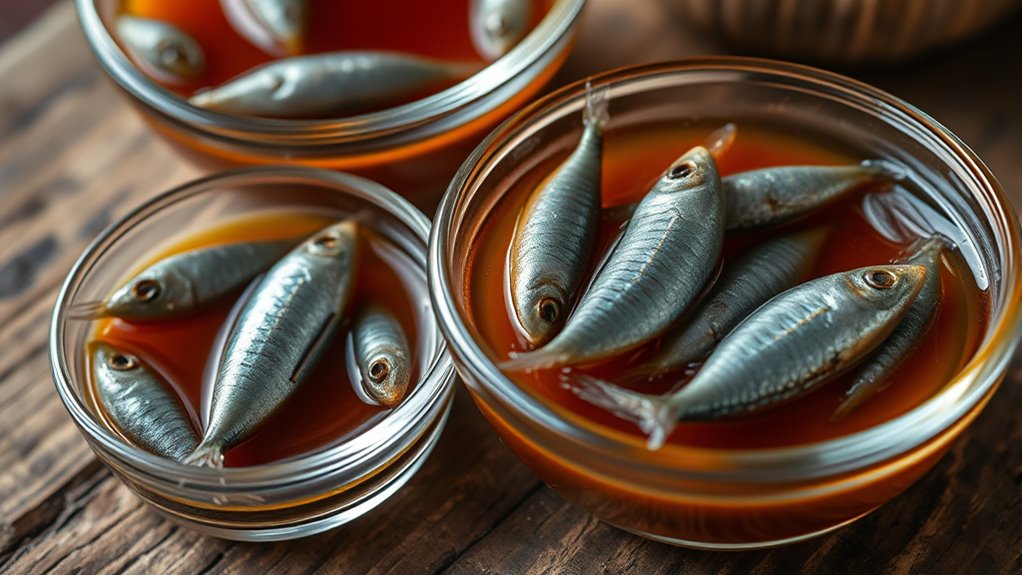

Discover how anchovies and fish sauce are powerful ingredients that unlock deep umami flavors in your dishes. Anchovies add a savory, salty richness that enhances sauces, salads, and spreads, while fish sauce offers a concentrated burst of umami in many cuisines. Using these ingredients amplifies flavor complexity and balances acidity. If you continue exploring, you’ll uncover ways to elevate your cooking with these versatile, flavor-boosting essentials.
Key Takeaways
- Anchovies and fish sauce are potent sources of umami, enriching dishes with savory depth and complexity.
- Both ingredients act as natural flavor enhancers, reducing the need for added salt in recipes.
- Anchovies dissolve quickly, providing a subtle umami boost, while fish sauce offers a concentrated, aromatic flavor.
- Using these ingredients encourages flavor layering, transforming simple dishes into sophisticated culinary creations.
- Exploring their unique properties broadens understanding of umami and elevates diverse cuisines.

Have you ever wondered what makes certain ingredients stand out in the world of culinary and skincare? It’s often because of their unique ability to elevate flavors and textures, and one such ingredient is anchovies. Known for their distinctive umami flavor, anchovies add depth to dishes and are a staple in many anchovy recipes. Their savory, salty profile can transform a simple sauce or salad into something memorable, revealing how a small amount can make a big impact.
When you incorporate anchovies into your cooking, you’re tapping into the power of umami—often called the fifth taste—alongside sweet, sour, salty, and bitter. This flavor is rich, complex, and satisfying, making dishes more compelling and balanced. Anchovies are especially prized in Mediterranean cuisine, where they blend seamlessly into pasta sauces, dressings, and spreads. Their umami flavor enhances the overall taste, creating a savory backbone that’s hard to replicate with other ingredients. Whether you’re making a Caesar salad or a puttanesca, anchovies work as a flavor enhancer that’s both subtle and profound.
Using anchovies in recipes is surprisingly versatile. You can melt them into olive oil to create a flavor base for sautés or blend them into sauces to deepen their complexity. They dissolve quickly, leaving behind a savory richness without overpowering other ingredients. In anchovy recipes, they often serve as the secret ingredient that boosts the umami flavor, making everything taste more vibrant and well-rounded. Many chefs rely on anchovies not just for their taste but for their ability to bring harmony to a dish, balancing acidity and saltiness with their inherent savoriness.
Aside from culinary uses, anchovies and fish sauce are valued in skincare for their rich mineral content, which can benefit your skin’s health. But in the kitchen, their role is undeniable. They’re small but mighty, offering a depth of flavor that elevates simple dishes into culinary delights. If you’re looking to explore umami flavor beyond traditional ingredients, experimenting with anchovy recipes is a great start. They encourage you to think about flavor layering and how a single ingredient can shift the entire profile of a dish. Understanding flavor profiles can help you appreciate how anchovies contribute to the overall harmony of a meal. Once you get accustomed to their taste, you’ll find that anchovies become an essential part of your cooking toolkit, helping you create dishes that are both flavorful and complex.
In short, anchovies are an unbeatable way to access umami flavor in your recipes. Their unique taste adds a savory dimension that’s hard to match, making every meal more satisfying. Whether you’re making a quick pasta sauce or a sophisticated appetizer, anchovies bring a depth that turns ordinary into extraordinary. So next time you’re looking to deepen the flavor of your dish, consider anchovies—you might discover your new favorite ingredient.
Top picks for "unique ingredient explor"
Open Amazon search results for this keyword.
As an affiliate, we earn on qualifying purchases.
Frequently Asked Questions
How Do Anchovies and Fish Sauce Impact Vegetarian Dishes?
Anchovies and fish sauce add a rich umami flavor to vegetarian dishes, enhancing depth without using meat. If you’re seeking vegetarian alternatives, try ingredients like miso, soy sauce, or seaweed to mimic the savory profile. Using anchovies or fish sauce in small amounts can elevate your dish’s flavor, but always consider your dietary preferences and find suitable substitutes that provide similar flavor enhancement without compromising your vegetarian goals.
Can I Substitute Anchovies With Other Umami-Rich Ingredients?
Did you know that mushrooms contain about 38% of the umami compounds found in anchovies? You can definitely substitute anchovies with vegetarian alternatives like sun-dried tomatoes, miso, or nutritional yeast. These options help enhance flavor without fish, making your dishes savory and satisfying. Use flavor enhancement techniques like caramelizing vegetables or adding soy sauce to boost umami, ensuring your meal stays rich and delicious even without anchovies.
Are There Health Concerns Associated With Consuming Anchovies or Fish Sauce?
You should be aware of allergy risks and sodium content when consuming anchovies or fish sauce. Some people may experience allergic reactions, especially if they have shellfish allergies. Additionally, these ingredients are high in sodium, which can impact blood pressure and overall health if eaten in excess. It’s best to enjoy them in moderation and check labels if you’re sensitive or concerned about sodium intake.
How Long Do Anchovies and Fish Sauce Last in the Pantry?
If you want to keep your anchovies and fish sauce at their best, pay attention to shelf life and storage tips. Generally, unopened jars or cans last up to two years in the pantry, while opened ones stay good for about 1-2 months if sealed tightly and stored in a cool, dark place. Proper storage prevents spoilage, ensuring your umami boosters remain flavorful and safe to enjoy.
What Are the Best Storage Practices for Anchovies and Fish Sauce?
To guarantee proper storage and maximize shelf life, keep anchovies and fish sauce in a cool, dark place. Once opened, refrigerate them to prevent spoilage and maintain flavor. Use airtight containers to prevent contamination and preserve umami. Proper storage extends their shelf life, often several months for anchovies and up to a year for fish sauce. Regularly check for signs of spoilage, like off smells or discoloration.
Conclusion
Think of umami as a secret symphony that brings your dishes to life, with anchovies and fish sauce playing the charismatic conductors. When you embrace these ingredients, you’re revealing a hidden melody that transforms simple ingredients into a harmonious masterpiece. So, next time you cook, remember you’re tuning into this ancient orchestra, adding depth and resonance that captivate the senses. Let umami be your culinary maestro, guiding you to flavor-filled adventures.