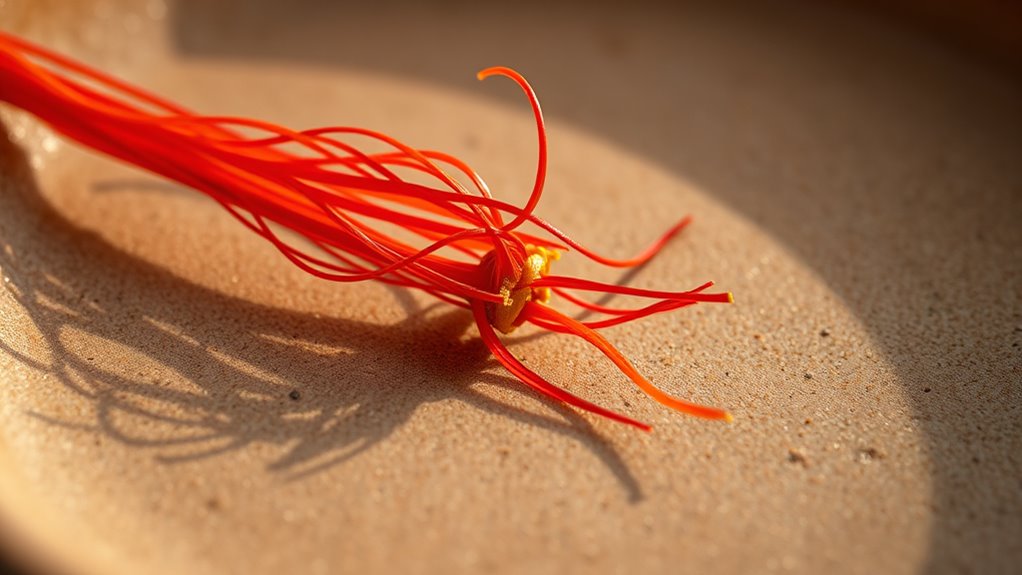

Using saffron, the world’s most expensive spice, elevates your dishes with vibrant color, rich aroma, and layered flavor. Just a small amount steeped in warm liquid unleashes its full potential, adding sophistication to risottos, stews, or desserts. Besides its culinary magic, saffron offers health benefits like antioxidants and mood support. Its rarity makes it a luxurious choice, and exploring its uses reveals more about this precious ingredient’s true power.
Key Takeaways
- Saffron’s vibrant color and unique aroma elevate dishes like risottos, paellas, and desserts, making it a luxurious culinary ingredient.
- Proper preparation involves steeping threads in warm liquid to fully release its flavor, aroma, and color.
- Contains bioactive compounds such as crocin and safranal, offering antioxidant and health benefits like mood enhancement and inflammation reduction.
- Its high cost reflects rarity and cultural significance, adding both prestige and health advantages to gourmet recipes.
- Use sparingly due to potency and expense, enhancing simple meals or decadent desserts with a touch of luxury.
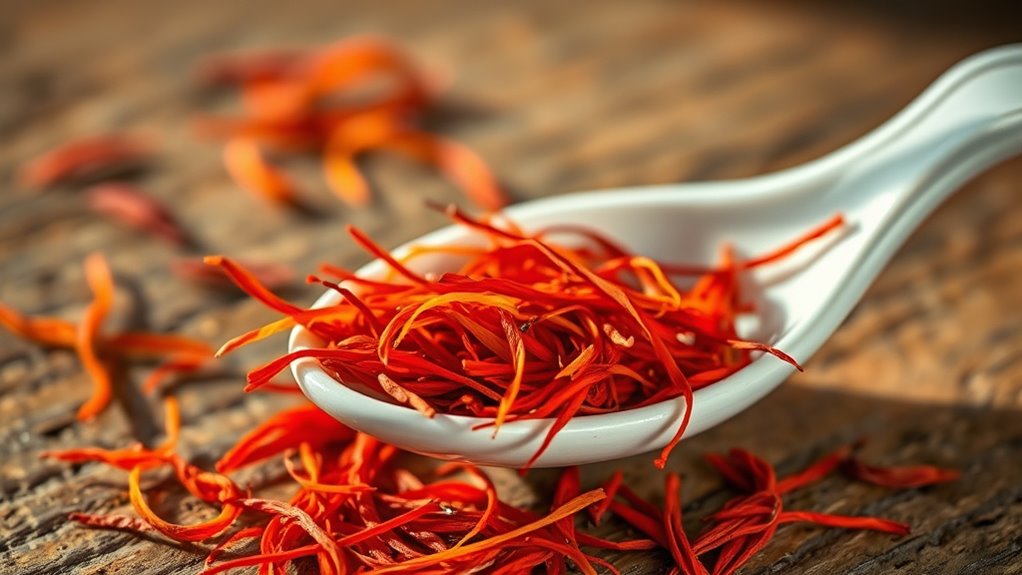
Saffron is widely regarded as the world’s most expensive spice, and for good reason. Its vibrant color, unique aroma, and complex flavor make it a prized ingredient in many kitchens worldwide. When you use saffron in your dishes, you’re not just adding a splash of color or a hint of flavor; you’re incorporating a substance that has been treasured for centuries. Its culinary uses are incredibly diverse, ranging from classic risottos and paellas to luxurious desserts and even beverages. To access saffron’s full potential, you typically steep the threads in warm liquid to release their rich hue and aroma before mixing them into your dish. This process guarantees that every bite delivers a burst of flavor and vibrant color, elevating simple recipes to gourmet status. You’ll find saffron works especially well in rice dishes, stews, and sauces, where its distinctive qualities can truly shine.
Beyond its culinary uses, saffron offers a range of health benefits that have been valued for ages. When you incorporate it into your diet, you’re not just enhancing flavor but also supporting your overall well-being. Saffron contains bioactive compounds like crocin, safranal, and picrocrocin, which are believed to have antioxidant properties. These antioxidants help combat free radicals in your body, potentially reducing inflammation and lowering the risk of chronic illnesses. Some studies suggest saffron can improve mood and alleviate symptoms of depression, making it a natural choice if you’re seeking mental clarity or emotional balance. Additionally, saffron has been linked to improved memory and cognitive function, which could be especially helpful if you’re looking for a natural boost to mental performance. It’s also used traditionally to support digestion and enhance immune health. While you should enjoy saffron in moderation—given its potency and cost—its inclusion in your diet can offer a flavorful and healthful boost.
Using saffron might seem like a luxury, but a little goes a long way. When you buy high-quality saffron, you’re investing in a spice that delivers both culinary excellence and potential health perks. Its rich history and revered status aren’t just about rarity; they’re rooted in its ability to transform dishes and contribute positively to your health. So, whether you’re preparing a simple breakfast, a hearty stew, or a decadent dessert, consider adding saffron. Not only will you elevate your culinary creations, but you’ll also enjoy the many benefits that this extraordinary spice has to offer. Its unique flavor profile and health properties make saffron a truly worthwhile ingredient, despite its high price tag.
high quality saffron threads
As an affiliate, we earn on qualifying purchases.
As an affiliate, we earn on qualifying purchases.
Frequently Asked Questions
How Is Saffron Cultivated and Harvested Globally?
You understand that saffron cultivation involves delicate harvesting techniques, where workers carefully pick the crimson stigmas from crocus flowers by hand. Globally, these harvests are transported along established saffron trade routes, mainly through Iran, Spain, and India. You might notice that the harvesting process is labor-intensive, requiring precision to guarantee high-quality threads. This careful method and global trade make saffron the world’s most expensive spice.
What Are the Health Benefits of Consuming Saffron?
Saffron’s health benefits are truly remarkable, offering medicinal properties that can boost your mood and improve digestion. Its antioxidant effects help fight free radicals, protecting your cells and potentially reducing the risk of chronic diseases. Consuming saffron may enhance your memory and relieve symptoms of depression. Incorporate this golden spice into your diet to harness its powerful health benefits, making you feel more vibrant and energized every day.
How Do Different Regions Influence Saffron’s Flavor Profile?
You’ll notice that regional flavor variations greatly influence saffron’s taste. In Spain, it’s often earthy and slightly bitter, perfect for paella, while in Iran, it has a more floral, sweet aroma used in various traditional dishes. Cultural saffron uses shape its flavor profile too; in India, it’s incorporated into desserts for a rich, aromatic touch. These regional differences give saffron its diverse and unique flavor spectrum.
What Are Common Adulterants in Saffron and How to Identify Them?
Adulterants in saffron can be sneaky, but you can catch them with sharp adulteration detection methods. Common false ingredients include dyed threads, corn silk, or synthetic fibers. To verify purity testing, look for vibrant color or uneven threads—these often signal tampering. Smell for a strong, genuine aroma, and if it’s weak or chemical-like, it’s likely adulterated. Trust your senses to spot the real from the fake!
Can Saffron Be Grown Indoors or in Small Quantities?
You can definitely grow saffron indoors or in small-scale saffron farming setups. Indoor saffron cultivation requires a sunny spot, well-draining soil, and patience, as it takes about 6-10 weeks to harvest. Using corms or bulbs, you can easily manage small-scale saffron farming at home. Just make certain proper watering and sunlight, and you’ll enjoy fresh saffron without needing a large garden or outdoor space.

Zaran Saffron, Superior Saffron Threads (Super Negin) Premium grade Saffron Spice for Paella, Risotto, Tea's, and all Culinary Uses (2 Grams)
Highest Quality Saffron Threads, Super Negin Grade Saffron. Zaran Saffron is a Family-Owned and Operated business with over…
As an affiliate, we earn on qualifying purchases.
As an affiliate, we earn on qualifying purchases.
Conclusion
Now that you know the incredible value of saffron, you can appreciate its rarity, its richness, and its beauty. You can savor its vibrant color, its delicate aroma, and its luxurious flavor. You can cherish its history, its tradition, and its artistry. So, next time you enjoy a dish with saffron, remember the effort, the passion, and the dedication behind every precious thread. Because in saffron, you find more than spice—you find a masterpiece.

Golden Saffron, Finest Pure Premium All Red Saffron Threads, Grade A+ Super Negin, Non-GMO Verified. For Tea, Paella, Rice, Desserts, Golden Milk and Risotto (2.0 Grams)
GRADE 1 SUPER NEGIN SAFFRON THREADS – Our SUPER NEGIN Grade Saffron. 100% Pure, and Fresh Threads in…
As an affiliate, we earn on qualifying purchases.
As an affiliate, we earn on qualifying purchases.
Golden Saffron, Finest Pure Premium All Red Saffron Threads, Grade A+ Super Negin, Non-GMO Verified. For Tea, Paella, Rice, Desserts, Golden Milk and Risotto (2.0 Grams)
GRADE 1 SUPER NEGIN SAFFRON THREADS – Our SUPER NEGIN Grade Saffron. 100% Pure, and Fresh Threads in…
As an affiliate, we earn on qualifying purchases.
As an affiliate, we earn on qualifying purchases.