On Christmas around the world, you’ll find a variety of customs. In the UK, families enjoy hearty roast turkey or goose with stuffing, roast potatoes, and festive desserts like mince pies. Polish celebrations focus on a meatless, fish-based meal, including carp and pierogi, starting with the symbolic opłatek. In Japan, Christmas is a fun, commercial event, with fried chicken and fluffy sponge cakes. Exploring these traditions reveals how cultures make holiday meals special—keep going to learn more.
Key Takeaways
- UK Christmas dinner features roast turkey or goose with stuffing, roast potatoes, Brussels sprouts, and traditional desserts like mince pies.
- Polish Wigilia emphasizes a meatless, fish-based meal with dishes like carp, mushroom soup, and pierogi, beginning with breaking the opłatek.
- In Japan, Christmas is celebrated with fried chicken, especially KFC, and a decorated sponge cake, highlighting a fun, commercial approach.
- Cultural traditions reflect values such as family gathering, spiritual reflection, or festive fun, shaping the specific holiday foods.
- Festive meals worldwide serve as symbols of togetherness, cultural identity, and shared holiday spirit through diverse culinary practices.
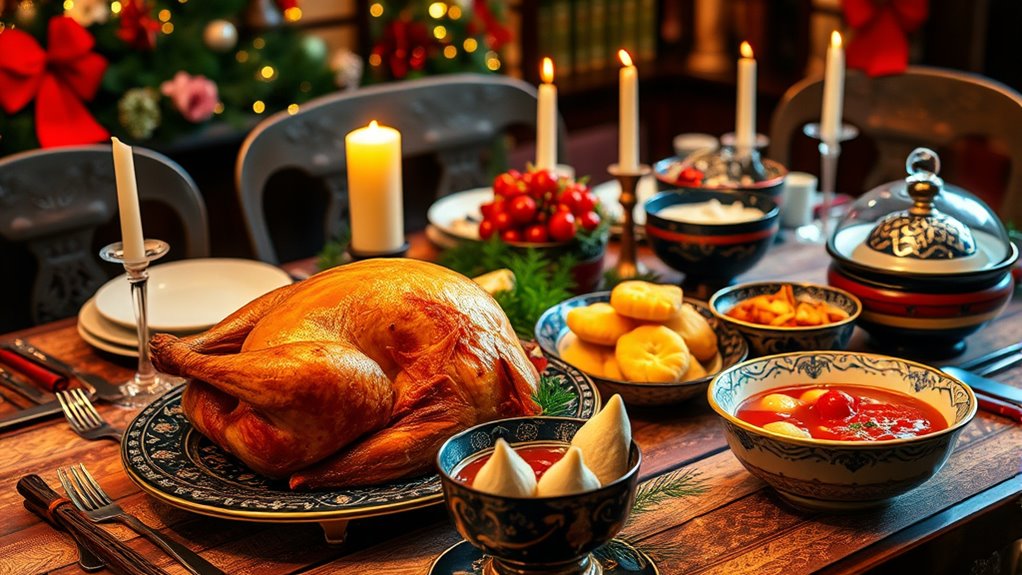
Christmas dinners vary greatly across the globe, reflecting each culture’s unique traditions and tastes. As you explore these festive celebrations, you’ll notice how Christmas culinary traditions shape the way people gather around the table, often turning meals into cherished moments. In the UK, for example, the traditional Christmas dinner features a hearty roast turkey or sometimes goose, accompanied by stuffing, roast potatoes, Brussels sprouts, and gravy. Mince pies and Christmas pudding with brandy sauce often close the meal, offering a sweet finish to the feast. These festive meal variations emphasize comfort and abundance, bringing family and friends together to celebrate the season’s joy. Incorporating portion sizes into meal planning can also help manage caloric intake during these indulgent celebrations.
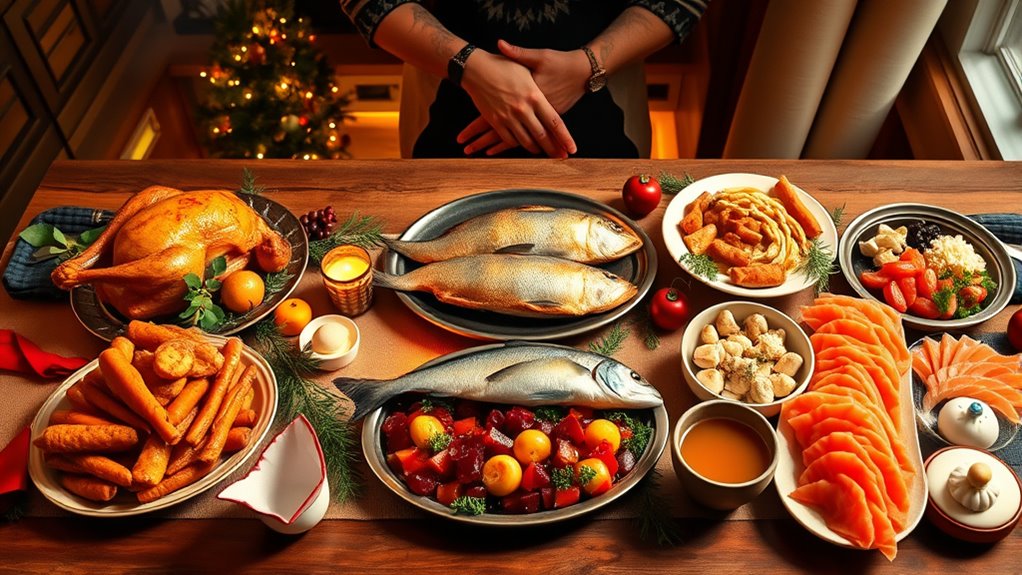
In Poland, the Christmas Eve dinner, known as Wigilia, centers around a meatless, fish-based meal that reflects deep-rooted religious customs. You might find dishes like carp, mushroom soup, and pierogi filled with cabbage or mushrooms. The meal begins with breaking the opłatek, a thin wafer symbolizing reconciliation and unity. The Polish approach to Christmas culinary traditions highlights simplicity and symbolism, with the meal often consisting of twelve dishes representing the twelve apostles. This tradition fosters a sense of togetherness and spiritual reflection, making the meal as meaningful as it is delicious.
Meanwhile, in Japan, Christmas is celebrated quite differently. Rather than a religious holiday, it’s more of a festive occasion centered around commercial festivities and romantic dinners. Many Japanese families enjoy a special, fast-food-style Christmas meal, with Kentucky Fried Chicken being a popular choice thanks to a successful marketing campaign in the 1970s. The tradition of eating fried chicken on Christmas has become a cultural staple, alongside a Christmas cake—a light sponge cake decorated with strawberries and whipped cream. These festive meal variations highlight the influence of Western customs blended with local tastes, creating a unique culinary experience. It’s common to see couples sharing a romantic meal or friends gathering for a joyful celebration, emphasizing the fun and festive spirit rather than religious observance.
Across these diverse traditions, what stands out is how each culture adapts its culinary practices to reflect its values, history, and social customs. Whether it’s the rich, hearty fare of the UK, the symbolic and communal dishes of Poland, or the modern, fun-oriented meals of Japan, each tradition offers a window into the heart of the holiday season. No matter where you are, these festive meal variations remind you that Christmas is about coming together, sharing good food, and creating lasting memories.

Nonstick Turkey Roasting Pan with Rack – 17×13 Inch Extra Large Roaster Pan, Deep Turkey Tray for Oven, U-Shaped Rack, Wider Handles, Ideal for Ovens, Thanksgiving, and Christmas
SUPERIOR CONSTRUCTION: Crafted from aluminized steel, this nonstick roasting pan offers unmatched durability, exceptional heat distribution, and strong…
As an affiliate, we earn on qualifying purchases.
As an affiliate, we earn on qualifying purchases.
Frequently Asked Questions
How Do Christmas Dinner Customs Differ Between Urban and Rural Areas?
You’ll notice urban and rural areas have different Christmas dinner customs due to regional variations. In urban areas, you often find a more diverse menu, influenced by global flavors, and a focus on convenience. Rural communities may stick to traditional, locally sourced dishes, emphasizing regional variations. These differences reflect cultural heritage and access to ingredients, making each area’s celebration unique and personalized.
Are There Any Specific Christmas Dishes Unique to Each Country?
You’ll notice each country’s Christmas dishes burst with unique festive ingredients and traditional cooking methods. In the UK, you savor a golden roast with stuffing and Christmas pudding, while Poland offers a hearty fish dish like carp, cooked with dill and onions. In Japan, sweet red bean paste-filled Christmas cake takes center stage, crafted with delicate traditional techniques. These dishes reflect rich cultural flavors that make each celebration truly special.
How Have Globalization and Modern Influences Changed Traditional Menus?
Globalization and modern influences have markedly transformed traditional menus by introducing fusion cuisine and dietary adaptations. You might find classic dishes combined with international flavors or modified for specific dietary needs, like gluten-free or vegan options. These changes allow you to enjoy familiar holiday traditions while embracing new tastes and healthier choices, making Christmas dinners more diverse and inclusive worldwide.
What Are Common Christmas Breakfast or Snack Traditions Worldwide?
On Christmas morning, you might enjoy sweet pastries or holiday snack traditions like cookies, fruitcake, or gingerbread men, blending comfort with celebration. Juxtaposed against grand dinners, these simpler treats symbolize warmth and togetherness. Across cultures, such snacks evoke childhood memories and shared joy, reminding you that Christmas’s true spirit lies in small, meaningful moments—like savoring festive bites with loved ones.
Are There Any Religious or Cultural Symbols Incorporated Into the Meals?
You’ll notice that many Christmas meals incorporate religious symbolism and cultural icons, such as the Christmas star, representing the Star of Bethlehem, or nativity scenes that depict the birth of Jesus. In some cultures, specific foods like the king cake in France or the yule log in Scandinavia serve as cultural icons. These elements deepen the festive spirit, reminding you of the holiday’s religious significance and cultural heritage.

LULLEA Carp Beer Bottle Opener, Fishing Gifts for Fisherman, Carp Fish Decoration, Birthday Fathers Day Christmas Gifts for Men Women Dad Fisherman, Silver Beer Accessories with Gift Bag
Thoughtful Gift for Fishing & Beer Lovers – Packaged in an elegant gift bag, this unique carp-shaped bottle…
As an affiliate, we earn on qualifying purchases.
As an affiliate, we earn on qualifying purchases.
Conclusion
No matter where you celebrate, Christmas dinners bring people together—whether it’s a hearty UK roast, a festive Polish pierogi feast, or a delicate Japanese seafood platter. Each tradition reflects its culture’s unique flavors and history, yet all share one thing: the joy of sharing a meal with loved ones. It’s fascinating how different dishes can unite us in holiday spirit, reminding you that, across the world, the warmth of Christmas is truly universal.

Imuraya Japanese Style Pre-Sliced Baked Sponge Pound Cake 9.8oz, 7 Pieces (Original)
As an affiliate, we earn on qualifying purchases.
As an affiliate, we earn on qualifying purchases.
Yellow Glass Pierogi Shaped Christmas Ornament Dumpling Perogy Varenyky Empanada
Glass
As an affiliate, we earn on qualifying purchases.
As an affiliate, we earn on qualifying purchases.