During New Year’s celebrations, you might enjoy eating lucky foods that symbolize prosperity and longevity. For instance, eating twelve grapes at midnight in Spain or Latin America is believed to bring good luck for the upcoming year. Green vegetables like cabbage or collards attract wealth, while long noodles represent a smooth, unbroken future. These traditions carry deep cultural meanings, and exploring them further reveals how these foods help usher in a positive new year.
Key Takeaways
- Eating twelve grapes at midnight in Spain and Latin America symbolizes luck for each month of the year.
- Consuming greens like cabbage or kale invites wealth and financial prosperity during New Year’s celebrations.
- Long noodles, especially Chinese longevity noodles, represent a wish for a long, healthy life.
- These foods carry symbolic meanings and are prepared with rituals to attract positive energy and good fortune.
- Participating in these traditions connects individuals to cultural practices emphasizing luck, renewal, and abundance.
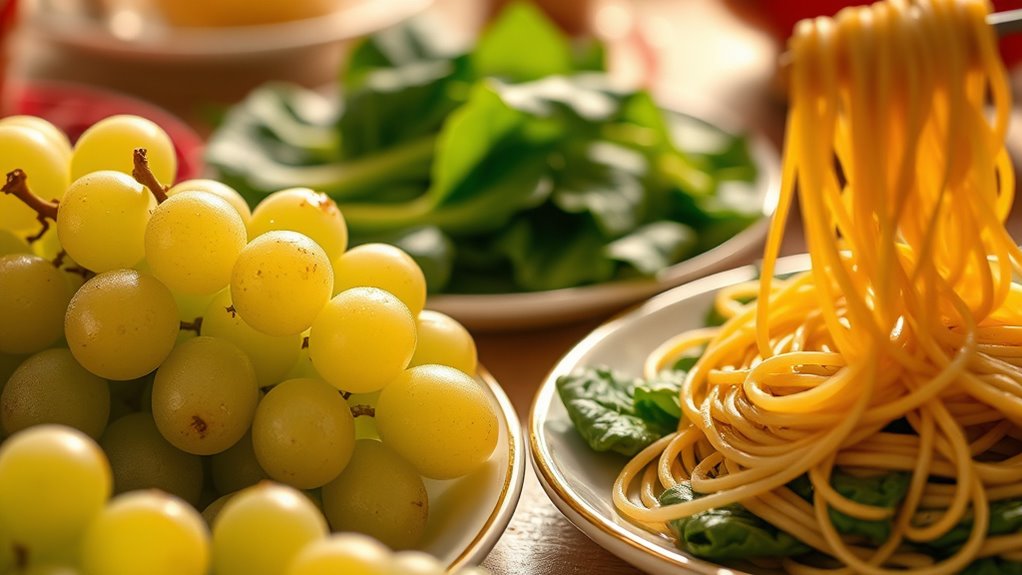
Have you ever wondered how people around the world celebrate the arrival of a new year? One of the most fascinating aspects of these celebrations is the tradition of eating lucky foods. These dishes are more than just nourishment—they carry symbolic symbolism that reflects hopes for prosperity, health, and happiness in the year ahead. When you partake in these foods, you’re participating in centuries-old cultural customs meant to attract positive energy and good fortune. Each country has its own special dishes, but their meanings often overlap, emphasizing common themes of luck and renewal.
Celebrating the new year with lucky foods is a centuries-old tradition symbolizing prosperity, health, and happiness worldwide.
In Spain and many Latin American countries, eating twelve grapes at midnight is a beloved tradition. As the clock strikes twelve, you’re encouraged to eat one grape for each chime. This act is believed to bring twelve months of good luck. The symbolic symbolism behind the grapes is tied to abundance and prosperity, with the belief that consuming them will ensure a fruitful year. The cultural customs surrounding this tradition are lively and social, often performed with friends and family gathered together. It’s not just about the grapes, but about sharing a moment of hope and unity as you welcome the new year.
In the United States and parts of Europe, eating greens, such as collard greens, kale, or cabbage, is a popular way to invite wealth into your life. These leafy vegetables are associated with money and financial growth because their color resembles the hue of dollar bills. The cultural customs surrounding greens often involve preparing hearty dishes that are passed around during New Year’s Eve or New Year’s Day. By doing so, you’re symbolically filling yourself with the promise of abundance. Many families have their own recipes that have been handed down through generations, embedding these foods with personal and cultural significance.
Noodles, especially long noodles like Chinese longevity noodles, are also a prominent lucky food in many cultures. When you slurp these noodles during New Year celebrations, it’s believed to promote a long life and good health. The act of eating long noodles without breaking them symbolizes the wish for a smooth and unbroken year ahead. These dishes are often prepared with care, reflecting respect for tradition and the hope for a prosperous future. The cultural customs surrounding noodles often involve specific rituals, like not cutting or breaking the noodles, emphasizing the importance of length and continuity.
Top picks for "year tradition lucky"
Open Amazon search results for this keyword.
As an affiliate, we earn on qualifying purchases.
Frequently Asked Questions
How Did These Foods Become Symbols of Luck?
You might wonder how these foods became symbols of luck. Their symbolic food origins often trace back to centuries-old traditions, where each food’s shape, color, or ingredients represented prosperity or health. Their cultural significance grew as communities embraced them during celebrations, believing they’d bring good fortune for the year ahead. By eating grapes, greens, or noodles, you connect with these rich traditions, inviting luck and abundance into your life.
Are There Regional Variations in These New Year’s Foods?
You’ll find that regional cuisine and cultural influences make these lucky foods vary across the globe. For example, in Spain, eating twelve grapes at midnight symbolizes good luck, while in Italy, lentils are popular for prosperity. In Asia, noodle dishes represent longevity. These variations show that different areas put their own spin on tradition, proving that everything is fair in love and food when it comes to celebrating the New Year.
Can These Traditions Be Adapted for Different Dietary Needs?
Yes, you can adapt these traditions for different dietary needs. For gluten-free options, choose gluten-free grapes or greens and use gluten-free noodles. For vegan adaptations, skip animal products and incorporate plant-based alternatives, like vegan noodles or seasoned greens. You can enjoy these lucky foods while honoring your dietary preferences by being creative and mindful, ensuring everyone can partake in the tradition and start the new year with good luck.
Do Other Cultures Have Similar Lucky Foods for New Year’s?
Yes, many cultures have lucky foods for New Year’s that reflect their cultural symbolism and culinary history. You might find black-eyed peas in the Southern U.S., symbolizing prosperity, or lentils in Italy, representing abundance. In Japan, soba noodles are eaten for longevity. These foods carry deep meanings, and by exploring their origins, you can appreciate how different traditions celebrate new beginnings with meaningful, symbolic dishes.
How Long Have These Food Traditions Been Practiced Globally?
These food traditions have been practiced for centuries, with historical origins dating back hundreds of years in various cultures. You can see their cultural significance in celebrations worldwide, symbolizing prosperity, health, and luck for the coming year. As you partake in these traditions, you’re connecting with a rich, shared history that spans continents and generations, making your New Year’s celebrations meaningful and rooted in long-standing cultural practices.
Conclusion
As you welcome the new year, these lucky foods transform your celebration into a whirlwind of fortune and joy. Eating grapes, greens, or noodles isn’t just about tradition—it’s like planting seeds for a year filled with endless happiness, prosperity, and good luck. So, go ahead, indulge in these powerful foods and watch your year become an unstoppable wave of success and happiness. Your future self will thank you for starting it with such delicious, luck-filled bites!