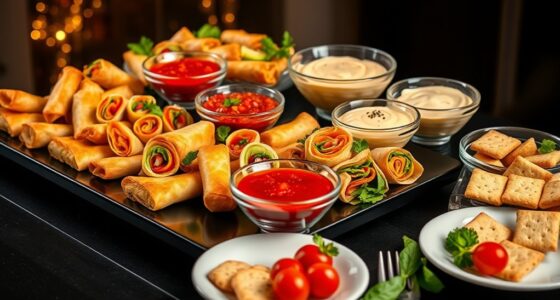

Setting food goals like meal planning and cooking more at home can make your routines easier and healthier. By planning your weekly meals, creating grocery lists, and organizing your kitchen, you reduce stress and food waste while boosting nutrition. Incorporating meal prep into your routine helps you stay consistent and control what you eat. Keep building on these habits, and you’ll discover simple ways to enjoy cooking and maintain a balanced diet every day.
Key Takeaways
- Establish clear food goals to guide healthier eating habits and reduce reliance on takeout.
- Plan weekly meals and create shopping lists to streamline grocery shopping and minimize food waste.
- Organize your kitchen with designated zones and labeled containers to improve efficiency and ease of cooking.
- Incorporate regular meal prep sessions to make cooking at home more manageable and less stressful.
- Consistently setting and achieving food goals leads to better nutrition, routine, and enjoyment of home-cooked meals.
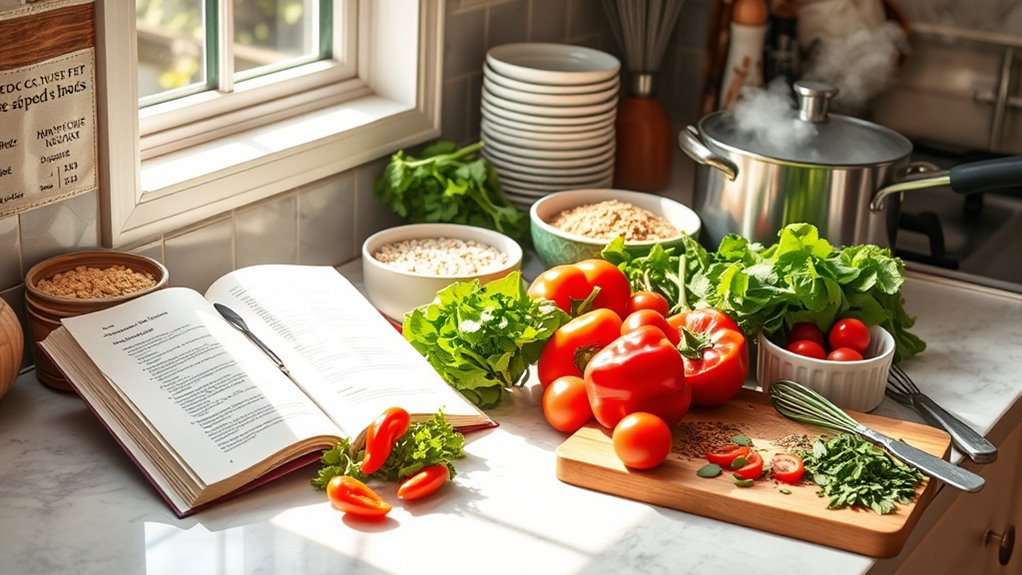
Setting food goals like meal planning and cooking more can transform your approach to eating and improve your overall health. When you commit to meal prep and better kitchen organization, you take control of your diet, reduce reliance on takeout, and make healthier choices easier. By dedicating time to meal prep, you make certain that nutritious options are readily available, saving you from impulsive, less healthy decisions. Plus, a well-organized kitchen simplifies cooking, making the process more enjoyable and less stressful.
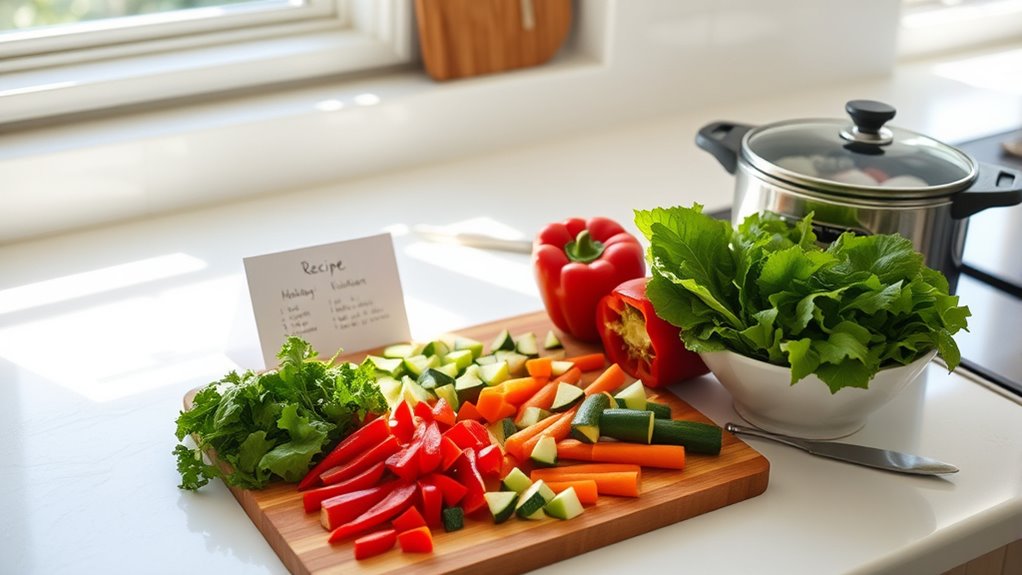
Start by evaluating your current habits and identifying areas for improvement. Meal planning involves choosing meals for the week ahead, creating a shopping list, and setting aside specific times to cook or prep. This approach helps you avoid last-minute decisions that often lead to unhealthy food choices. When you plan ahead, you can incorporate more fruits, vegetables, lean proteins, and whole grains into your diet, aligning with your health goals. It also minimizes food waste by buying only what you need and using ingredients efficiently.
Kitchen organization plays an essential role in maintaining your food goals. When your kitchen is tidy and everything has a designated spot, you spend less time searching for ingredients and more time actually cooking. Invest in clear containers for storing staples like grains, nuts, and dried fruits, making them easy to find and access. Keep your countertops clutter-free by storing small appliances and utensils out of sight, so your workspace is inviting and functional. Label jars and containers to streamline your routine, and consider creating zones for prepping, cooking, and storing food to keep everything efficient.
Incorporating meal prep into your routine means setting aside specific times—like Sundays or evenings—to cook in bulk. Prepare ingredients or entire meals that can be easily reheated or assembled during busy weekdays. This consistency helps build a sustainable habit, reducing the temptation to order takeout. As you develop your meal prep skills, you’ll notice how much smoother your mornings and evenings become. You’ll feel more in control of what you eat and be less likely to fall into unhealthy eating patterns.
Top picks for "sett food goal"
Open Amazon search results for this keyword.
As an affiliate, we earn on qualifying purchases.
Frequently Asked Questions
How Can I Stay Motivated to Cook at Home Regularly?
To stay motivated to cook at home regularly, establish simple cooking routines that fit your schedule. Meal prep on weekends can make weeknights easier and more enjoyable. Keep your ingredients organized and try new recipes to keep things interesting. Remember your health goals and the satisfaction of a homemade meal. Consistency builds habits, so celebrate small wins and stay flexible when plans change. This keeps your motivation high and cooking fun.
What Are Quick Meal Ideas for Busy Weekdays?
They say “time is money,” so for busy weekdays, keep quick snack ideas like fruit, nuts, or yogurt handy. Make ahead meals such as salads, pasta, or casseroles save you time and effort. You can prep these on weekends or evenings, ensuring you have nutritious options ready to go. This way, you stay fueled without sacrificing precious time, making healthy eating both simple and manageable.
How Do I Involve Family in Meal Planning?
You can involve your family in meal planning by encouraging family participation through collaborative planning. Ask everyone for their favorite dishes and ideas, then create a menu together. Make it fun by assigning roles like shopping or prep. This way, everyone feels valued and excited about meals, and it helps share the workload. Regular family meetings to discuss upcoming meals also foster teamwork and make sure everyone’s preferences are taken into account.
What Tools or Gadgets Make Home Cooking Easier?
You can make home cooking easier with smart kitchen gadgets like programmable slow cookers, induction cooktops, or smart ovens that connect to your phone. Meal prep tools such as quality knives, food choppers, and storage containers help streamline your process. These gadgets save time, improve precision, and keep ingredients fresh, making cooking more efficient and enjoyable. Investing in these tools transforms your kitchen into a smarter, more functional space.
How Can I Reduce Food Waste When Meal Planning?
To reduce food waste, you should plan meals carefully, buy only what you need, and use leftovers creatively. Practice food composting for scraps, which helps recycle organic waste. Experiment with ingredient substitution to prevent spoilage and stretch your groceries further. You can also freeze excess food and store ingredients properly, ensuring nothing goes to waste. These steps keep your kitchen eco-friendly and save you money.
Conclusion
By setting clear food goals and embracing meal planning, you’re planting seeds for healthier habits to bloom. Cooking more at home transforms your kitchen into a nurturing garden, where each meal is a harvest of love and effort. As you nurture this routine, you’ll watch your confidence grow like a tall, sturdy tree. Keep tending to your culinary garden, and soon, nourishing yourself will feel as natural as sunlight pouring through your window.