
TL;DR
A Halloween-themed cake decorating kit bundles seasonal decorations and sometimes reusable tools, but it usually does not include the cake or frosting. Check the item list, edible status, allergens, cake and icing compatibility, and age guidance before buying; a few coordinated decorations can make even a plain cake look festive.
A black-and-orange sprinkle mix and one grinning ghost can turn a plain cake into the centerpiece of a Halloween table. You don’t need steady hands or a bakery’s worth of equipment—but the right kit makes a big difference.
This guide explains what Halloween-themed cake decorating kits usually contain, what to check before buying, and how to use the pieces without surprises at serving time. You’ll also find simple decorating steps, food-safety reminders, and ideas for getting more than one spooky look from a single kit.
A Halloween decorating kit usually supplies accessories, not the cake, frosting, or every tool you need.
Check the item list to identify edible decorations, reusable tools, and non-edible picks or figurines.
Choose sprinkles and ready-made toppers for a quick beginner design; piping and fondant work take more practice.
Verify ingredient and allergen information on edible items, and follow package directions for storage.
Add delicate decorations close to serving and remove non-food pieces before cutting the cake.
What You Actually Get in a Halloween Cake Decorating Kit
A Halloween cake decorating kit is a set of seasonal accessories for decorating baked goods, and it usually does not include the cake or frosting. Depending on the kit, you may find sprinkles, icing colors, piping tips, stencils, fondant cutters, toppers, or candles. For instance, one box might offer only edible eyes and orange sprinkles, while another includes reusable cutters and plastic figurines.
Read the contents list item by item, because names and photos don’t tell you whether a piece is edible or reusable. A smiling ghost on a plastic pick can look just like an edible fondant decoration in a product photo. That distinction affects both the decorating plan and serving: edible pieces can be cut with the cake, while picks and figures must be removed, and reusable tools need cleaning and storage. Check the packaging for an edible label, ingredient list, and instructions for removing non-food parts.
Most kits are accessory sets, not all-in-one baking packages. If you plan to bake from scratch, you may still need cake ingredients, frosting, food coloring, and basic kitchen tools. A quick shopping list prevents the familiar Halloween-afternoon scramble: cake cooled, decorations ready, and no frosting in sight. It also helps you compare prices fairly; a larger box may look like better value, but only if you’ll use its extra colors or tools.
Match the Kit to Your Skills, Cake, and Party
The right kit matches your decorating experience, cake size, frosting, and party style. Ready-made toppers and sprinkles suit beginners; piping, fondant shaping, and detailed stenciling take more practice. The skill difference matters because techniques that look simple in package photos can take time and steady hands, while ready-made pieces offer a more predictable result. If you’re making cakes that kids can help decorate, simple jobs such as placing eyes or adding sprinkles let them join in without needing a piping lesson.
Think about your cake before you buy. A cupcake decorating kit may have enough toppers for a dozen small treats but too few for a full-size layer cake, and a fine stencil may work best on smooth buttercream rather than fluffy whipped frosting. A mismatch can mean a design that disappears, slips, or leaves you short of decorations. Depending on the frosting, moisture and temperature can soften decorations or make some colors run, so check whether the kit’s techniques suit the surface and the time you have before serving.
Choose a theme that suits the people at your table. Cute pumpkins and friendly ghosts work well at a children’s party, while black frosting, sharp shapes, and a haunted-house silhouette give an adult gathering a moodier look. The mood also affects how much decoration the cake needs: a bold topper can carry a simple design, while tiny details may need a closer look to register. A kit with letter toppers or flexible colors can also work for an autumn birthday, which may make reusable pieces more worthwhile.
- Beginner: Look for ready-made toppers, sprinkles, and simple stencils.
- Practicing decorator: Consider piping tips, cutters, or fondant decorations.
- Family activity: Check age guidance, small-piece warnings, and which tasks need adult help.
Compare Kits by Contents, Safety, and Reuse
Compare Halloween cake decorating kits by their item lists, food information, and useful life, rather than by packaging alone. A low-cost box of sprinkles may be perfect for one quick cake, while a set with sturdy cutters or piping tips can serve you again next season. The tradeoff is that reusable tools cost more upfront and are only good value if you have room to store them and expect to use them. For instance, if you already own a piping bag, buying a kit that charges extra for another one may add little value.
| Kit feature | Good fit when | Check before buying |
|---|---|---|
| Sprinkles and ready-made toppers | You want a fast, beginner-friendly design | Which decorations are edible and how many are included |
| Piping tips and icing colors | You want to add borders, webs, or colored details | Whether bags or icing are included and colors suit your frosting |
| Fondant cutters or stencils | You want shapes or repeated patterns | Whether your cake surface and decorating time suit the technique |
| Plastic figures, picks, or candles | You want height or a dramatic centerpiece | Which pieces are non-edible and need removal before serving |
| Reusable tools | You expect to decorate again | Cleaning instructions, durability, and storage needs |
Check the ingredient and allergen details for anything edible, and verify claims such as vegan or gluten-free on the actual label. If a guest has an allergy, don’t rely on a theme or product name to tell you what’s safe. Different decorations in one kit can have different ingredients, so review each edible item rather than assuming one label covers the whole box. Keep packaging available so you can answer questions at the party.
Decorate a Simple Cake in Four Manageable Steps
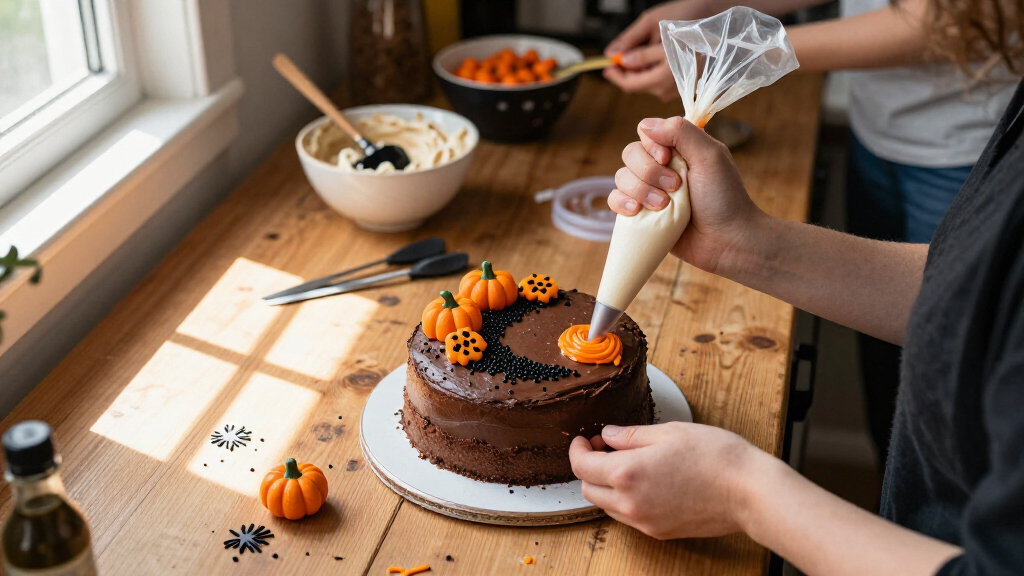
To decorate a Halloween cake without advanced piping, start with a cooled, frosted cake and build the design from a few coordinated pieces. A dark frosting base, orange sprinkles, and one ghost topper create a clear theme with very little fuss. Limiting the palette and choosing one focal point gives the cake a deliberate look while reducing the number of steps where technique or timing can go wrong. This step-by-step approach also helps you avoid covering the cake in decorations before you know where the main feature will be.
- Check the kit. Sort edible pieces from reusable tools and non-edible picks; read the ingredient and allergy information. This tells you what belongs on the cake and what needs to stay out of the food.
- Prepare the cake. Let it cool fully, apply an even layer of frosting, and smooth the top with a spatula or the back of a spoon. A cool, stable surface helps decorations stay put; warm cake can soften frosting and make toppers slide.
- Add the big shapes. Place the main topper or stencil design first, then add sprinkles and smaller details around it. For instance, leave a clear ring around a ghost so its outline stands out. Starting with the focal point also makes it easier to judge how much decoration the cake needs, instead of using everything just because it came in the box.
- Finish near serving time. Add delicate pieces close to the party, then remove plastic picks, wires, or other non-edible decorations before cutting and serving. This keeps fragile decorations from softening or shifting and makes the final safety check straightforward.
Don’t worry if the frosting isn’t perfectly smooth; a deliberately rough texture can look like a stormy night sky. If sprinkles begin to bleed into damp frosting, pause and add the remaining decorations closer to serving. Store the finished cake according to the needs of its ingredients, especially if it contains perishable filling or frosting.
Keep Decorations Tasty, Safe, and Party-Ready
Keep a decorated cake safe by following the food-storage directions for its ingredients and the kit, and by removing every non-edible pick or figurine before guests eat. Small parts can also pose a choking hazard, so supervise young children around tiny decorations, knives, and piping tools. This is especially relevant when a kit mixes edible sprinkles with plastic pieces that look similar in size or color. At a busy party, set aside a few minutes before serving to scan the cake for plastic pieces.
Heat and moisture affect both frosting and decorations, so timing matters. Delicate toppers can soften or slide if you add them too early, and refrigeration can change the look or texture of some frostings. These conditions can turn a neat design into a smudged one, even if the cake remains safe to eat. For example, if you’re traveling with a buttercream cake, keep it level and cool, then add lightweight decorations after it reaches the table.
Store leftover edible decorations according to the package, usually sealed in a dry place unless the label says otherwise. Keep reusable tools clean and dry before putting them away. Separating edible leftovers from tools and non-food pieces also makes it easier to check labels and avoid mix-ups next time. That small habit means your piping tips won’t come out sticky next October.
Serving check: Confirm allergens with the label, keep edible decorations separate from non-food pieces, and remove picks, wires, and plastic figures before slicing.
Stretch One Kit Across a Whole Halloween Table
You can stretch one kit across a party by repeating a few decorations across a cake and smaller treats. Use the same orange sprinkles on cupcakes, place a few ghost toppers on the main cake, and save the cutters for cookies. Repeating colors and shapes makes separate desserts feel like one planned display, while saving the most prominent pieces for the cake keeps the centerpiece from looking bare.
Reusable cutters and piping tips can be a smart buy if you’ll use them for other holidays or birthdays; single-use toppers may suit a one-night party better. A cupcake kit can also decorate a small cake, but check how many toppers it includes and whether the pieces are large enough to show up on a wider surface. Using one kit across several treats spreads its cost, though it also means dividing limited decorations in advance. A few well-placed decorations often read more clearly than a crowded cake.
When you shop, compare the actual pieces, not the dramatic product name. The most useful kit gives you a design you can finish comfortably, ingredients your guests can eat, and tools you’ll want to store—or use again.
Frequently Asked Questions
Do Halloween cake decorating kits include the cake or frosting?
Usually, no. Most kits contain decorations or tools, so check whether the listing specifically includes frosting, icing colors, or a cake mix. Plan to buy the cake and frosting separately unless the package says otherwise.
How can I tell whether a cake topper is edible?
Check the label and packaging for a clear statement that the decoration is edible, along with ingredients. Plastic figurines, picks, wires, and many candles are not food; remove them before slicing and serving.
Can a beginner decorate a cake with one of these kits?
Yes. Sprinkles, ready-made toppers, and simple stencils are accessible starting points. A dark frosting base with orange sprinkles and one ghost topper can look festive without any piping skills.
How far ahead can I decorate a Halloween cake?
It depends on the frosting, filling, and decorations, so follow storage directions for the cake and kit. Add delicate toppers close to serving because heat and moisture can soften or move them, and refrigerate cakes with perishable ingredients as directed.
What should I check if a guest has a food allergy?
Read the ingredient and allergen information for each edible item, including sprinkles, icing colors, and ready-made decorations. Verify any vegan, gluten-free, or allergen-free claim on the product label, and keep the packaging available for guests.
Conclusion
Choose your kit by what’s inside, who will eat the cake, and how much decorating you want to do. A few coordinated pieces can turn frosting into a moonlit Halloween scene—no fancy piping required.