Traditional holiday fruitcake is a rich, flavorful treat enjoyed during festive seasons for centuries. It combines dried fruits, nuts, and spices, often soaked in spirits for added flavor and preservation. Many enjoy its dense texture, though modern recipes sometimes lighten it with fresh ingredients or reduced sugar. Its history reflects a way to preserve seasonal bounty and celebrate special occasions. Keep exploring to discover tips on making a delicious, personalized fruitcake you’ll love.
Key Takeaways
- Traditional holiday fruitcakes feature candied fruits, nuts, and rich batter, rooted in centuries-old preservation and celebration practices.
- Modern recipes focus on lighter textures, fresh fruits, and less sugar, making fruitcake more appealing to contemporary tastes.
- Customizable options allow for personal preferences, including healthier ingredients, gluten-free options, and flavor-enhancing spices.
- Proper soaking in spirits like brandy or wine enhances flavor and authenticity, a hallmark of traditional fruitcakes.
- Preserving seasonal abundance, fruitcake remains a festive staple, blending rich history with innovative recipes for better taste.
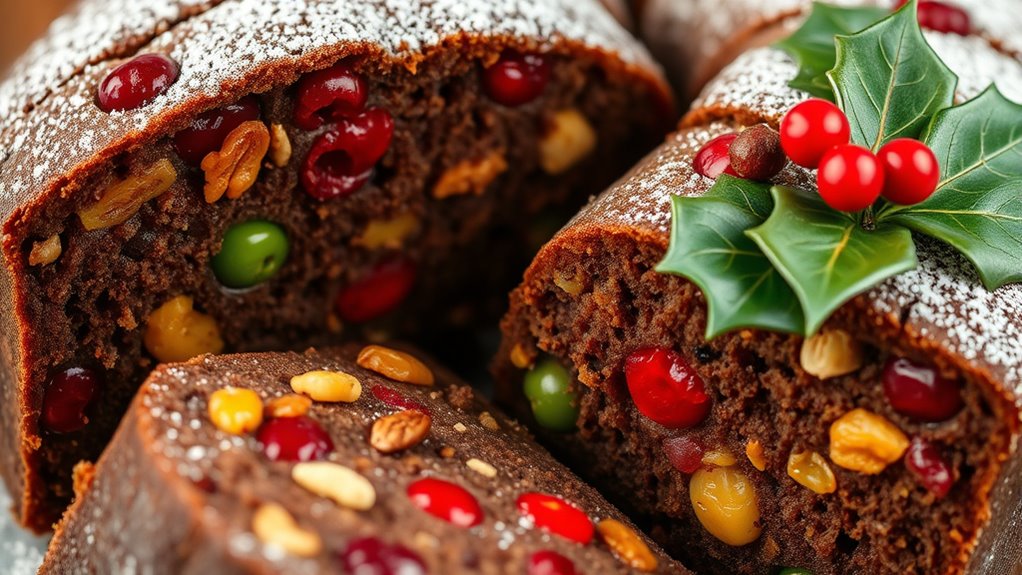
Ever wondered what makes fruitcake both loved and misunderstood? The history of fruitcake stretches back centuries, tracing its roots to ancient times when dried fruits and nuts were treasured for their long shelf life and nutritional value. Originally, fruitcake was a luxurious treat reserved for special occasions, often soaked in spirits like brandy or wine to preserve it and enhance flavor. Over time, it evolved across cultures, gaining popularity in medieval Europe and eventually becoming a festive staple during holiday seasons. Despite its storied past, many people today shy away from traditional fruitcake because of its dense texture and sometimes overpowering sweetness. But that doesn’t mean you can’t enjoy a version that suits your taste. Alternative fruitcake recipes have emerged, offering lighter, more approachable options that still celebrate the essence of this classic dessert. These recipes might incorporate fresh or dried fruits, nuts, and spices, but with less sugar or alcohol, making them more appealing to a wider audience. Some use fruit compotes or purées to add moisture and flavor, while others replace traditional candied fruits with fresh options for a more vibrant, less processed taste. You might also find recipes that eliminate the heavy, dense batter in favor of lighter, cake-like textures, or include ingredients like oats or whole wheat flour to boost healthfulness. Incorporating healthier ingredients can make fruitcake a more nutritious choice without sacrificing flavor. These alternatives allow you to customize fruitcake to your preferences, whether you’re aiming for a more natural, less sweet version or a gluten-free option. The key is balancing the sweetness and richness without losing the character that makes fruitcake special. You can experiment by adding your favorite dried fruits or nuts, or even incorporating unexpected ingredients like citrus zest or spices to elevate the flavor profile. No matter which version you choose, the goal is to create a fruitcake that you enjoy sharing during the holidays or special occasions. With so many variations available, you don’t have to settle for the traditional stereotype of fruitcake as a dense, overly sweet treat. Instead, you can embrace a more modern approach that highlights quality ingredients and your personal taste. Remember, the history of fruitcake is rooted in preserving seasonal abundance, and now you can carry that tradition forward with recipes that taste good and suit your lifestyle. Whether you stick to a classic recipe or try an alternative version, the joy of fruitcake lies in its rich history and the creativity you bring to it.
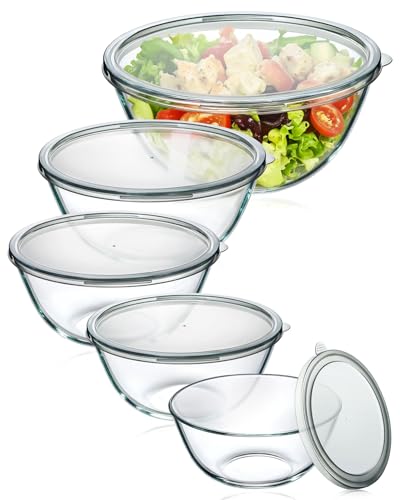
Glass Mixing Bowls with Lids Set of 5(4.78QT,2.2QT,1.7QT,1.1QT,0.85QT),Thick Glass Nesting Bowls for Kitchen Baking,Cooking Prep,Storage,Serving,Large Salad Bowls,Dishwasher Microwave Freezer Safe
Premium Food-Grade Material: The glass mixing bowls are made of high borosilicate glass, featuring a thickened design for…
As an affiliate, we earn on qualifying purchases.
As an affiliate, we earn on qualifying purchases.
Frequently Asked Questions
How Long Does Homemade Fruitcake Last Without Refrigeration?
You can store homemade fruitcake without refrigeration for about 2 to 4 weeks if you keep it in an airtight container. To prevent spoilage, wrap it tightly and store it in a cool, dark place. Make sure to check for any signs of mold or off smells before eating. Proper storage duration and spoilage prevention help keep your fruitcake delicious and safe for longer.
Can Fruitcake Be Made Gluten-Free?
Yes, you can make fruitcake gluten-free. Think of it as swapping out the usual flour for gluten-free alternatives like almond flour or gluten-free baking mixes. To prevent cross-contamination, use dedicated utensils, bowls, and storage. This way, your gluten-free fruitcake stays safe and delicious, ensuring everyone can enjoy a slice without worry. With careful ingredient choices and cleanliness, your fruitcake remains a festive treat for all guests.
What Are Some Unique Fruitcake Flavor Variations?
You can explore unique fruitcake flavor variations by trying alternative ingredients like dried tropical fruits or candied ginger for a spicy kick. Incorporate modern flavor twists such as orange liqueur, cardamom, or even dark chocolate chips to elevate the classic. Experimenting with these options allows you to create a personalized fruitcake that surprises and delights, making your holiday baking truly memorable.
How Do I Prevent My Fruitcake From Drying Out?
Imagine wrapping your fruitcake snugly in plastic wrap, like tucking it in for a cozy nap. To prevent it from drying out, focus on moisture retention by storing it in an airtight container and adding a slice of bread or apple to the wrap. Keep it in a cool, dark place, and regularly check for dryness. Proper storage tips guarantee your fruitcake stays moist, flavorful, and delicious for days.
Is There a Traditional Origin of Fruitcake Worldwide?
You might find that fruitcake’s historical origins trace back to ancient Rome, where early versions used preserved fruits and nuts. Across cultures, it gained significance during holidays, symbolizing abundance and togetherness. In medieval Europe, recipes evolved, blending local ingredients and traditions. So, when you enjoy a fruitcake, you’re tasting a centuries-old tradition that holds cultural significance worldwide, connecting past celebrations with your holiday festivities today.

4 PCS Cherry Silicone Mold, 3D Cherries Shaped Fondant Mold, Cherries Chocolate Molds, Fruit Cake Decorating Molds for Cupcake Chocolate Decorating
[Cherry Silicone Mold Set] Includes a set of four cherry silicone molds, perfect for creating 3D cherry-shaped fondant…
As an affiliate, we earn on qualifying purchases.
As an affiliate, we earn on qualifying purchases.
Conclusion
Now, picture slicing into that dense, rich fruitcake, the aroma of spiced fruits filling the air. As you take a bite, the chewy dried fruits and crunchy nuts melt softly on your tongue, leaving a warm, festive glow. Each slice tells a story of tradition and celebration, making every holiday moment special. So, next time you enjoy a slice, remember it’s more than dessert—it’s a delicious piece of holiday history, waiting to delight your senses.

Dried Fruit and Nut Gift Basket, Healthy Assorted Natural Snack Gift Tray, Extra Large Variety Food Tray Party Platter- Easter, Holiday, Birthday, Sympathy, Office, Men, Woman, Him, Her Husband, Wife, Families, Bonnie and Pop
ULTIMATE SHAREABILITY! Vegan, Dairy Free, All Natural, Gluten Free, high in vitamins, minerals and fiber and Certified Kosher…
As an affiliate, we earn on qualifying purchases.
As an affiliate, we earn on qualifying purchases.

Freedom Farms Baking Loaf Pan – 10" x 5" x 2.5" Baking Pan (Interior 8.5" x 4.5") for Fall Breads, Holiday Cakes & Christmas Baking (4)
Includes (4) baking loaf pans
As an affiliate, we earn on qualifying purchases.
As an affiliate, we earn on qualifying purchases.