
When Kwanzaa begins, families come together to celebrate African heritage by sharing traditional foods like Jollof rice and black-eyed peas. These dishes symbolize resilience, prosperity, and community pride. The vibrant flavors and shared meals help reinforce cultural connections and bring people closer. As the celebration unfolds with candle lighting and storytelling, you’ll discover how these traditions honor the past and inspire unity today. If you keep exploring, you’ll learn even more about the rich significance behind these foods.
Key Takeaways
- Jollof rice, with its vibrant red color, is a traditional dish symbolizing African vitality during Kwanzaa celebrations.
- Black-eyed peas represent prosperity and good luck, often served as part of Kwanzaa meals.
- The dishes reinforce cultural pride, resilience, and community bonds celebrated during Kwanzaa.
- Sharing these foods fosters togetherness and highlights African culinary traditions.
- Food rituals during Kwanzaa connect families to their heritage through storytelling and cultural symbols.
Have you ever wondered how communities come together to celebrate heritage and unity? It’s during these moments that African traditions and cultural celebrations shine brightest, bringing people closer through shared history and customs. When Kwanzaa begins, it offers a perfect example of this, blending meaningful rituals with joyful gatherings. The holiday isn’t just about remembering the past; it’s about affirming a collective identity and inspiring hope for the future.
During Kwanzaa, families and communities gather to observe the principles rooted in African traditions. These principles—such as Umoja (Unity), Kujichagulia (Self-Determination), and Ujima (Collective Work and Responsibility)—are more than words; they’re guiding values that shape each celebration. You might see community members lighting the kinara, a candleholder representing the seven principles, as a symbol of light and hope. Each night, a different candle is lit, emphasizing the importance of reflection and connection. This act isn’t just ceremonial; it’s a reminder to uphold these values throughout the year.
During Kwanzaa, communities honor African principles like Umoja and Kujichagulia through candle lighting and shared reflection.
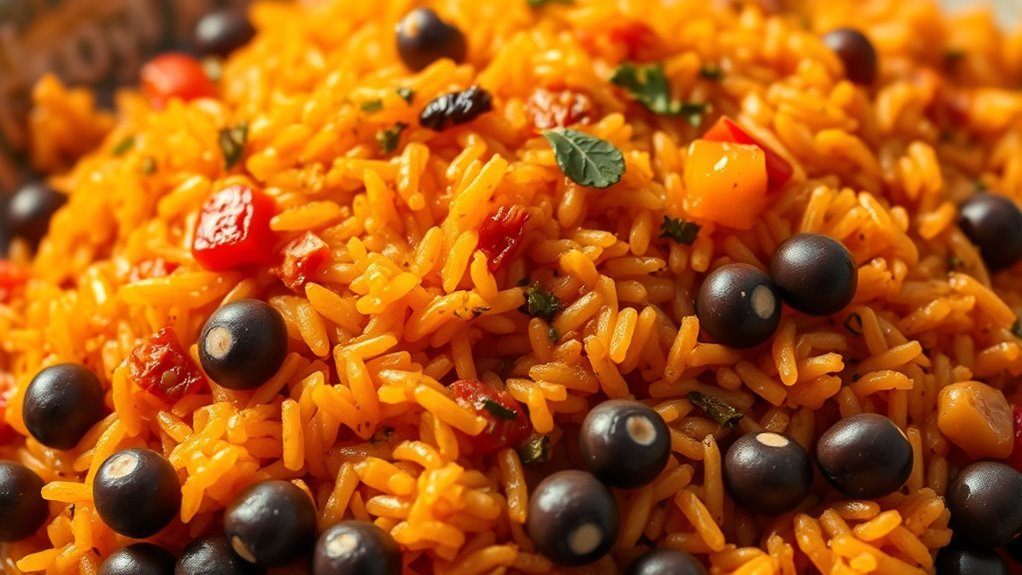
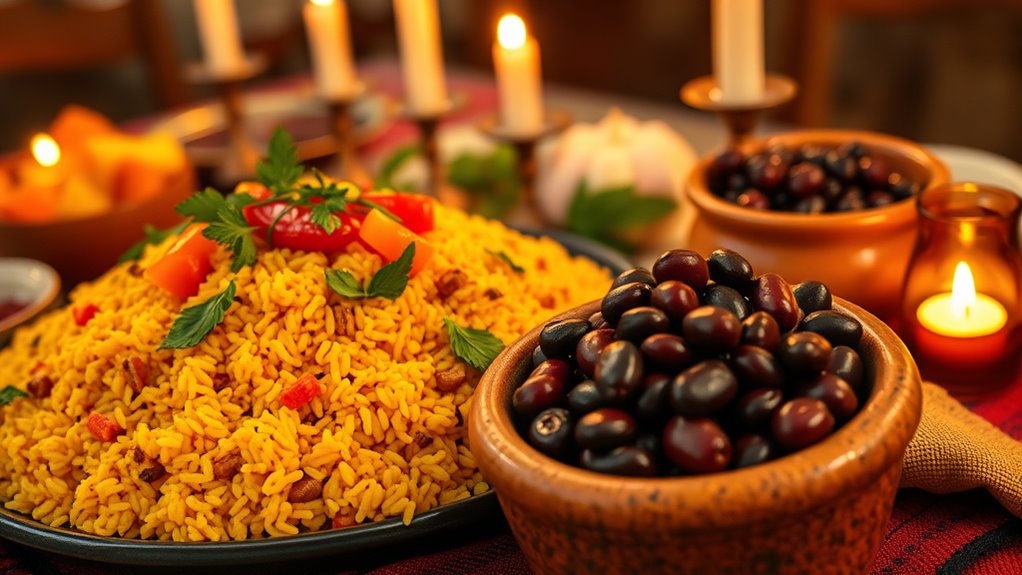
Food plays a central role in Kwanzaa celebrations, especially traditional dishes that honor African roots. Classic Jollof rice, with its vibrant red hue and rich flavors, often graces the table. You’ll notice it’s cooked with a mix of tomatoes, peppers, and spices, representing the warmth and vitality of African culture. Alongside it, black-eyed peas serve as a symbol of prosperity and good luck. These dishes aren’t just sustenance—they’re powerful symbols of heritage, resilience, and community. Sharing them fosters a sense of togetherness and cultural pride.
Cultural celebrations like Kwanzaa also involve storytelling, music, and dance, all of which reinforce African traditions. You might find elders recounting stories of ancestors, passing down lessons that have endured for generations. Music with drums and rhythms echoes the spirit of African heritage, inspiring joy and unity. These activities aren’t merely entertainment; they’re essential threads woven into the fabric of the celebration, reminding everyone of their collective history and identity.
As you participate in Kwanzaa, you’ll realize it’s more than a holiday—it’s a reaffirmation of cultural pride and community strength. The festivities serve as a bridge connecting past, present, and future, honoring African traditions while fostering unity among diverse groups. Whether you’re lighting candles, sharing a meal, or listening to stories, you’re part of a powerful celebration that celebrates heritage and builds bonds that last well beyond the holiday itself. Incorporating IRA investment principles into financial planning can help ensure long-term prosperity for future generations.
Top picks for "kwanzaa begin classic"
Open Amazon search results for this keyword.
As an affiliate, we earn on qualifying purchases.
Frequently Asked Questions
What Is the Historical Origin of Jollof Rice?
Jollof rice originated in West Africa, blending local ingredients with colonial influences, particularly from Portuguese and Spanish traders. You’ll find ingredient variations across regions, like tomatoes, peppers, and spices, reflecting local tastes and histories. The dish’s roots trace back centuries, evolving through trade and cultural exchanges, making it a vibrant symbol of West African heritage. Its rich history shows how colonial influences shaped traditional recipes into the beloved dish you enjoy today.
How Are Black-Eyed Peas Culturally Significant During Kwanzaa?
Black-eyed peas hold a symbolic meaning during Kwanzaa, representing prosperity and community. You incorporate them into your culinary tradition to honor these values, especially during the holiday. Their presence signifies abundance and unity, reflecting the importance of sharing and cultural heritage. By including black-eyed peas, you connect to a rich history that celebrates African roots and reinforces the principles of Kwanzaa through meaningful food traditions.
Are There Variations of Jollof Rice Across West Africa?
Yes, there are many variations of jollof rice across West Africa. You’ll find regional flavors and ingredient variations that reflect local tastes, such as different types of peppers, vegetables, and proteins. For example, Nigerian jollof is spicier with more tomato, while Ghanaian versions add unique seasonings. These differences make each dish special, celebrating diverse culinary traditions across West Africa.
What Are Traditional Side Dishes Served With Jollof Rice?
You might think jollof rice is a meal on its own, but traditional side dish pairings truly enhance its flavor. Think of crispy fried plantains, spicy grilled kebabs, or fresh salads that add a invigorating crunch. These sides not only complement the smoky, savory notes of the rice but also create a balanced, flavorful meal. Incorporate these sides to elevate your dining experience and enjoy a harmonious blend of tastes.
How Can I Make Vegetarian Jollof Rice for Kwanzaa?
To make vegetarian jollof rice, you can swap out meat with vegetables like carrots, peas, and bell peppers, and use vegetable broth instead of meat-based stock. Add flavor enhancements like tomato paste, smoked paprika, and hot sauce to boost taste. For protein, include beans or tofu. These vegetarian substitutions keep your dish vibrant and satisfying, perfect for celebrating Kwanzaa with delicious, plant-based flavors.
Conclusion
As you celebrate Kwanzaa with traditional dishes like jollof rice and black-eyed peas, remember that over 80% of African Americans observe the holiday in some way. This vibrant tradition unites communities and honors heritage. By embracing these foods and rituals, you connect with a rich history that spans generations. So, enjoy the festivities, share your culture, and keep the spirit alive—because your participation helps preserve a powerful cultural legacy for years to come.