During Kwanzaa, 7 spiced black-eyed peas and greens symbolize prosperity, abundance, and growth, connecting you to African cultural traditions. These dishes are more than just food—they honor ancestors and reinforce community bonds through shared storytelling and rituals. The spices and ingredients evoke resilience and hope, celebrating cultural legacy. If you’re curious about how this vibrant celebration keeps traditions alive, you’ll discover more about the meaningful symbols and practices that make Kwanzaa special.
Key Takeaways
- Spiced black-eyed peas symbolize prosperity and good luck during Kwanzaa celebrations.
- Greens represent growth, abundance, and the renewal of cultural heritage.
- Traditional recipes often include aromatic spices to honor African culinary customs.
- Sharing these dishes reinforces community bonds and preserves culinary traditions.
- Incorporating these foods reflects cultural pride and the legacy of African heritage.
Have you ever wondered what makes Kwanzaa a meaningful celebration for many African Americans? It’s more than just a holiday; it’s a powerful reflection of African heritage and cultural traditions that have been passed down through generations. When you participate in Kwanzaa, you’re connecting with a rich history rooted in values like unity, self-determination, and community. These principles are woven into the very fabric of the celebration, helping you honor your ancestors and embrace your identity. The symbols, rituals, and foods associated with Kwanzaa serve as tangible reminders of your cultural roots and serve to strengthen your sense of pride and belonging.
One of the most important aspects of Kwanzaa is understanding its foundation in African heritage. The holiday was created in 1966 by Dr. Maulana Karenga as a way to reclaim and celebrate African cultural traditions in the diaspora. Many of the customs you observe during Kwanzaa—such as lighting the kinara (candle holder), reciting Nguzo Saba (seven principles), and sharing symbolic foods—are inspired by African cultural practices. These traditions allow you to honor your ancestors’ legacies and keep their stories alive. By embracing these customs, you affirm your connection to a broader cultural history that extends beyond geographic borders and centuries.
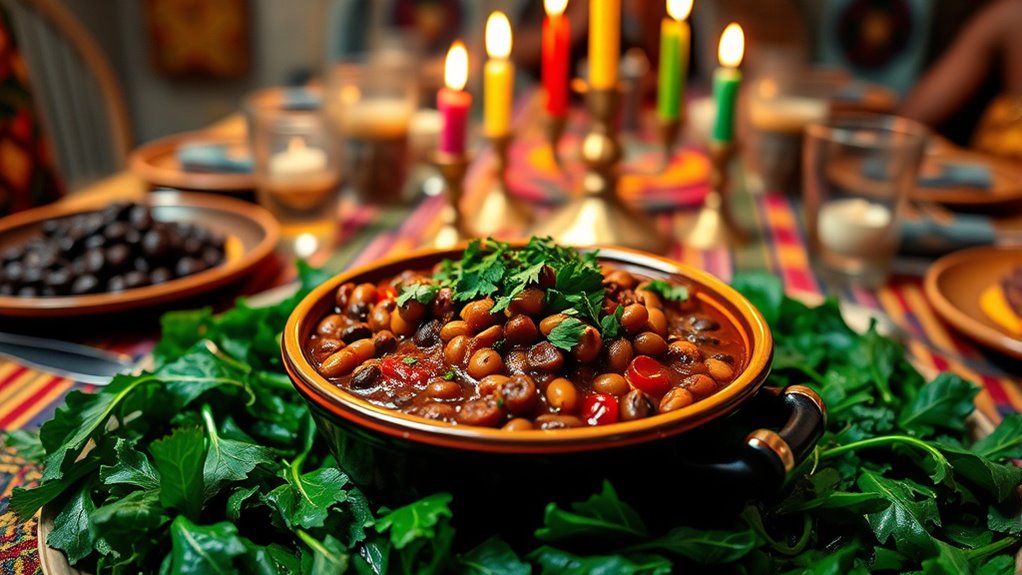
During Kwanzaa, you’ll notice that food plays an essential role in the celebration. Traditional dishes like spiced black-eyed peas and greens aren’t just about nourishment—they’re symbolic, anchoring you in your cultural roots. Black-eyed peas, often seasoned with spices, represent prosperity and good luck, while greens symbolize growth and abundance. Preparing and sharing these foods helps you reinforce community bonds and pass down culinary traditions from elders to younger generations. It’s a way to celebrate resilience, abundance, and hope for the future, all while honoring the culinary legacy of African heritage. Incorporating traditional foods into the celebration also helps promote awareness of traditional healing practices that are part of Indigenous cultures.
Participating in Kwanzaa offers an opportunity to reflect on the importance of cultural traditions in shaping your identity. It encourages you to embrace your history, celebrate your community, and uphold the values that have sustained your ancestors through adversity. Whether through storytelling, rituals, or enjoying traditional foods, you actively keep your heritage alive. In doing so, you not only honor the past but also inspire future generations to carry forward the cultural legacy that makes Kwanzaa a meaningful and vibrant celebration of African American culture.
Top picks for "kwanzaa celebration spic"
Open Amazon search results for this keyword.
As an affiliate, we earn on qualifying purchases.
Frequently Asked Questions
What Are the Origins of the Traditional Kwanzaa Foods?
You might be surprised to learn that the traditional Kwanzaa foods, like black-eyed peas and greens, have roots in African and African-American culture, symbolizing prosperity and abundance. These dishes hold cultural significance, representing unity and heritage. Ingredient variations reflect regional influences and personal traditions, but they all emphasize community and resilience. By sharing these foods, you honor history and connect with the celebration’s core values of cultural pride and togetherness.
How Do the Dishes Symbolize Kwanzaa Principles?
Ever wonder how traditional dishes reflect Kwanzaa principles? These dishes symbolize cultural symbolism and communal sharing, reminding you of unity and collective progress. Black-eyed peas and greens represent abundance and prosperity, echoing the principle of Kujichagulia (self-determination). By sharing these foods, you honor your heritage and strengthen community bonds, embodying the spirit of Kwanzaa through every flavorful bite and shared moment.
Are There Regional Variations in Kwanzaa Recipes?
Yes, there are regional variations in Kwanzaa recipes due to cultural influences and recipe adaptations. Depending on where you’re celebrating, you might find different spices, ingredients, or cooking methods reflecting local traditions. You can customize dishes like black-eyed peas and greens to honor your heritage, blending familiar flavors with new ones. These adaptations celebrate diversity and show how cultural influences enrich Kwanzaa’s culinary traditions.
How Can I Make the Dishes Vegetarian or Vegan?
You can easily make these dishes vegetarian or vegan by using plant-based substitutions. Swap traditional ham hocks or bacon with smoked tempeh or liquid smoke for that smoky flavor. For seasoning, rely on vegan seasoning tips like nutritional yeast, herbs, and spices to enhance taste without animal products. Embracing plant-based options often reveals new layers of flavor, proving that compassionate cooking can be just as rich and satisfying.
What Is the Best Way to Serve These Dishes During Celebrations?
You should serve these dishes on colorful serving platters to highlight their vibrant flavors during celebrations. Pair them with festive beverages like fruit punches or herbal teas to enhance the experience. Arrange the black-eyed peas and greens neatly, allowing guests to help themselves. Incorporate traditional decorations and guarantee there’s enough variety to cater to everyone’s preferences, creating a warm, inviting atmosphere that celebrates community and heritage.
Conclusion
As you gather around the table, each dish becomes a vibrant brushstroke in the canvas of Kwanzaa. These spiced black-eyed peas and greens aren’t just food—they’re symbols of resilience and unity, weaving tradition into your life like threads in a rich tapestry. Celebrate with intention, knowing that every flavor and gesture strengthens the fabric of your community. Embrace this time as a garden where roots grow deep, and new growth blossoms with hope and purpose.