When shopping for an electric pressure cooker, the main decision is whether to buy a machine focused on pressure cooking or a multicooker that combines pressure cooking with functions such as slow cooking, sautéing, steaming, or rice cooking. Both can make hands-off meals and reduce the time needed for many pressure-cooked dishes. The difference is what else you want the appliance to do once dinner is underway.

Get kitchen staples and gadgets delivered free with Prime
- Fast, free delivery on millions of items
- Prime Video, Amazon Music and more included
- Member-only deals all year
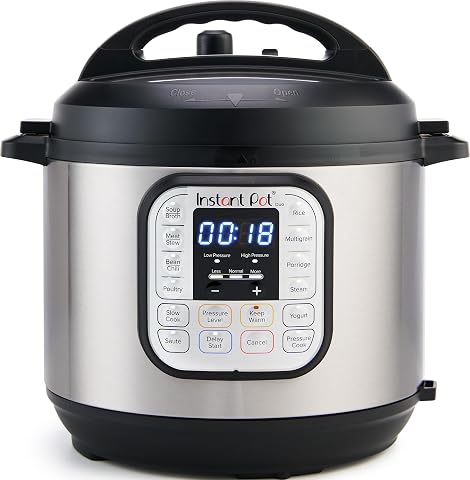
Instant Pot Duo 6-Quart 7-in-1 Electric Pressure Cooker
- ✔ Capacity: 6 qt (5.68 L)
- ✔ Cooking functions: 7
- ✔ Smart programs: 13

DUMOS 16-in-1 Electric Pressure Cooker, 6-Quart Programmable Multicooker
- ✔ Capacity: 6 quarts
- ✔ One-touch programs: 12
- ✔ Functions: Pressure cooker, rice cooker, steamer, yogurt maker, keep warm
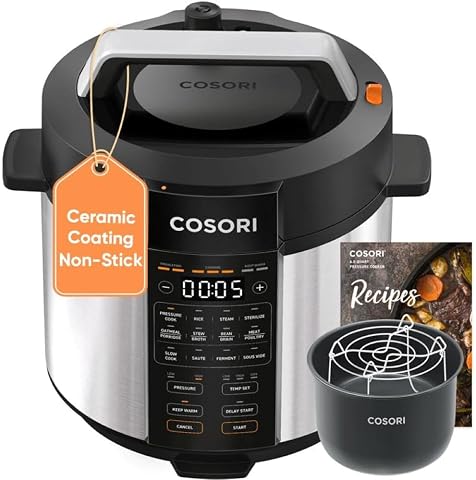
COSORI 6-Quart 9-in-1 Pressure Cooker with Ceramic Inner Pot
- ✔ Capacity: 6 quarts
- ✔ Cooking functions: Pressure cook, rice, steam, sterilize, oatmeal/porridge, stew/broth, bean/grain, meat/poultry, slow cook, sauté, ferment, sous vide, keep warm
- ✔ Power: 1100 watts
A dedicated pressure cooker suits cooks who mostly want reliable pressure-cooked beans, grains, soups, and braises without paying for functions they may not use. A multifunction multicooker is the better fit when one countertop appliance needs to cover several cooking methods. The tradeoff is simple: broader functionality can save space and appliance changes, but it also adds controls, potential modes to learn, and cost. The right choice depends less on the longest feature list than on whether those extra modes will replace tools or habits you already have.
At a Glance
| Criteria | Dedicated electric pressure cooker | Multifunction multicooker | Winner |
|---|---|---|---|
| Primary cooking job | Pressure cooking is the central function | Pressure cooking plus several other cooking methods | Depends |
| Cooking modes | Usually focused on pressure cooking, with a smaller set of supporting functions | Often includes functions such as slow cooking, sautéing, steaming, or rice cooking; features vary by model | B |
| Ease of use | Fewer mode choices can make everyday operation more direct | More options and settings to understand | A |
| Meal flexibility | Strong for recipes designed around pressure cooking | Can handle a wider range of recipes in one appliance | B |
| Counter and storage footprint | One appliance, but other cooking tools may still be needed | May replace several appliances, though the unit itself can be bulky | Depends |
| Price and value | Often better value when pressure cooking is the main need | Worth the premium when its extra modes get regular use | A |
| Best fit | Cooks who want a straightforward pressure cooker | Cooks seeking one appliance for varied tasks | Depends |
Instant Pot Duo 6-Quart 7-in-1 Electric Pressure Cooker
The Instant Pot Duo is our best overall choice because its description makes the core tradeoffs unusually easy to assess. Its seven functions cover pressure cooking, slow cooking, sautéing, steaming, rice and yogurt making, and warming, while 13 one-touch programs offer a defined starting point for common tasks. The stainless steel cooking pot has a tri-ply bottom, a useful distinction for buyers who want to brown ingredients in the cooker before pressure cooking. The COSORI also includes sautéing, but its ceramic-coated pot gives the Duo the more straightforward fit for those prioritizing a stainless steel surface.At 6 quarts, the Duo shares the same stated capacity as the DUMOS and COSORI, so it does not win on batch size. It is also the heaviest of the three at 14.6 pounds, compared with 11.9 pounds for each rival; that can matter if we need to move it between cupboards and counters. The safe-release steam switch is another practical feature, although the COSORI listing describes a more extensive set of safety features. The Duo’s clear program count and pot construction make it the most balanced pick, while its weight and 120-volt requirement are worth checking against our kitchen setup.
Pros:
- Seven listed cooking functions cover pressure cooking and several common multicooker tasks.
- Thirteen one-touch programs make the control offering more specific than DUMOS’s description.
- Stainless steel pot with a tri-ply bottom supports sautéing in the cooker.
- Safe-release steam switch is included.
Cons:
- At 14.6 pounds, it is heavier than the other two listed cookers.
- Requires a 120-volt power supply.
Best for: Home cooks who want a versatile 6-quart cooker with a stainless steel pot, sautéing capability, and clearly specified one-touch programs.
Not ideal for: Shoppers who need a lighter appliance to move often or prefer a ceramic-coated inner pot for easier food release.
Bottom line: For a balanced electric pressure cooker with a stainless steel pot and clearly described programs, the Duo is the easiest recommendation in this group.
“For a balanced electric pressure cooker with a stainless steel pot and clearly described programs, the Duo is the easiest recommendation in this group.”
DUMOS 16-in-1 Electric Pressure Cooker, 6-Quart Programmable Multicooker
The DUMOS makes the most sense when planning ahead is part of our routine. Its standout feature is a delay start of up to 24 hours, alongside keep-warm and adjustable settings. That scheduling capability gives it a distinct role against the Duo, whose supplied details list one-touch programs but no delay start, and the COSORI, whose listed modes are more numerous but do not include a scheduling window. The DUMOS also has a ceramic inner pot and dishwasher-safe removable parts, which will appeal to cooks who want a cleanup-friendly setup.Its description lists 12 one-touch programs and functions such as pressure cooking, rice, steaming, and yogurt making. But the listing does not identify the full preset lineup or provide cooking times, leaving more guesswork than with the Duo’s explicitly named functions or the COSORI’s detailed mode list. That makes the “16-in-1” label less useful for comparison on its own. The 6-quart capacity matches both alternatives, and its 11.9-pound listed weight is lower than the Duo’s. Choose it for scheduling and ceramic-pot convenience; look to COSORI if specific specialty modes matter, or the Duo if a stainless steel pot and a clearer program description take priority.
Pros:
- Delay start can be set for up to 24 hours.
- Ceramic inner pot and dishwasher-safe removable parts support easier cleanup.
- Overheat and dry-boil protection are included.
- Listed weight is 11.9 pounds, less than the Duo’s.
Cons:
- The description does not specify the detailed preset options.
- Cooking times are not provided in the supplied product information.
- Its 6-quart capacity may not suit larger households or batch cooking.
Best for: Cooks who want to schedule a meal ahead and value a ceramic inner pot with dishwasher-safe removable parts.
Not ideal for: Buyers who need detailed preset descriptions or cooking-time information before choosing a pressure cooker.
Bottom line: The DUMOS is the scheduling pick, provided we are comfortable with less detail about its presets than the Duo and COSORI provide.
“The DUMOS is the scheduling pick, provided we are comfortable with less detail about its presets than the Duo and COSORI provide.”
COSORI 6-Quart 9-in-1 Pressure Cooker with Ceramic Inner Pot
The COSORI is the most compelling option for cooks who want a pressure cooker to cover more than everyday stews, grains, and steamed vegetables. Its listed modes include sous vide and ferment alongside pressure cooking, slow cooking, sautéing, rice, and steam functions. That level of specificity gives us more to evaluate than the DUMOS description, whose individual presets are not fully identified. The COSORI also lists 12 safety features, including a double-layer anti-scalding lid, and dishwasher-safe components. For buyers comparing safety and mode details, it is the most thoroughly described alternative in this lineup.The ceramic-coated inner pot may suit cooks who prefer a non-stick surface, while the Duo’s stainless steel pot and tri-ply base are a better match for those who favor that material and want to sauté. There are tradeoffs: the COSORI’s quick steam release may splatter with recipes containing a lot of liquid, so release technique and recipe choice matter. Its slow-cook mode operates at a low temperature, which may not fit every slow-cooking preference. At 11.9 pounds it is lighter than the Duo and has the same 6-quart capacity as both rivals, but its many modes are most valuable when we will actually use specialty functions.
Pros:
- Broad listed range includes sous vide, ferment, slow cook, sauté, and pressure cooking.
- Ceramic-coated inner pot and dishwasher-safe components simplify cleanup.
- Twelve safety features include a double-layer anti-scalding lid.
- At 11.9 pounds, it weighs less than the Instant Pot Duo.
Cons:
- Quick steam release may splatter with recipes containing a lot of liquid.
- Slow-cook mode operates at a low temperature.
- Ceramic coating differs from the Duo’s stainless steel pot and may not suit every preference.
Best for: Cooks who want a 6-quart electric pressure cooker with specified specialty modes, a ceramic-coated pot, and a detailed set of safety features.
Not ideal for: People who frequently quick-release liquid-heavy recipes or want a slow-cook mode described as operating beyond a low temperature.
Bottom line: Choose the COSORI when its specified specialty modes and safety features matter more to us than stainless steel or a simpler everyday setup.
“Choose the COSORI when its specified specialty modes and safety features matter more to us than stainless steel or a simpler everyday setup.”
As an Amazon Associate we earn from qualifying purchases.
Key Differences
The most meaningful distinction is breadth. Both types are built to pressure cook, so the comparison is not simply about whether one can make a stew or cook beans. It is about whether the appliance can also take on jobs you would otherwise do in a separate pot, pan, rice cooker, or slow cooker. If those tasks are part of your routine, a multicooker can streamline cooking and cut down on appliance changes. If they are occasional or irrelevant, a dedicated pressure cooker keeps the choice simpler.
That breadth brings a learning and value tradeoff. A focused appliance generally asks less of the cook: choose a pressure setting and time, then follow the recipe. A multicooker offers more ways to cook, but users need to understand which mode suits a particular dish, and the extra functions matter only if they are used. Look at the specific model’s controls, capacity, included accessories, and care instructions; the label “multicooker” does not guarantee the same features across brands.
Neither category guarantees that every recipe cooks faster or tastes better. Pressure cooking can reduce cooking time for suitable foods, while slow cooking and other modes serve different purposes. Choose based on the meals you make and the tools you want to keep. For a household that mainly wants pressure-cooked meals, the dedicated unit is usually the better value. For someone replacing several appliances or switching between cooking methods, the multicooker’s higher cost can pay off.
Detailed Comparison
Primary cooking job (moderate difference)
Winner: Depends; the deciding factor is your routine. A dedicated pressure cooker puts pressure cooking first and keeps the appliance focused on that job. A multicooker still pressure cooks, but shares its role with other functions. The gap is moderate: if pressure cooking is the reason for buying, broader functionality may not improve the result enough to matter; if you routinely use multiple methods, the broader machine can do more of the work.
Cooking modes (Multifunction multicooker wins — major)
Winner: B, by a major margin. Multifunction multicookers commonly combine pressure cooking with modes such as sautéing, slow cooking, or steaming, though the lineup varies by model. Dedicated pressure cookers usually offer a narrower set of functions. In practice, B can reduce the need to transfer food between appliances or keep a separate cooker for some tasks. Check the model’s actual settings before assuming a mode is included.
Ease of use (Dedicated electric pressure cooker wins — moderate)
Winner: A, by a moderate margin. A focused control panel can make it easier to find the setting you need and repeat familiar recipes. The multicooker’s extra programs may help with convenience, but they can also add choices and require a little time to learn. This difference matters most to cooks who want a simple appliance for a small set of dishes. If you enjoy exploring settings, the added controls are less of a drawback.
Meal flexibility (Multifunction multicooker wins — moderate)
Winner: B, by a moderate margin. Both options can support a range of pressure-cooked meals, but a multicooker offers more ways to prepare food. Switching from pressure cooking to a separate slow-cook or sauté step can be easier when those functions are built in. That flexibility is useful for varied meal plans. It does not mean every dish is better in one pot: some recipes still call for an oven, stovetop pan, or other equipment.
Counter and storage footprint (minor difference)
Winner: Depends. A dedicated pressure cooker is still a sizable appliance, and it may leave other tools in your cupboard or on your counter. A multicooker can combine several jobs, but the unit may be bulky as well. The difference is minor without knowing the kitchen and appliances it might replace. Compare the model’s dimensions with your storage space and count only tools you would actually stop using.
Price and value (moderate difference)
Winner: A for a pressure-cooking-only buyer; B for a frequent user of extra modes. Dedicated models often offer better value when the primary need is pressure cooking. A multicooker typically asks buyers to pay for a wider feature set, and that premium makes sense only if those settings replace other purchases or see regular use. This is a moderate difference: an unused function does not add practical value, while a frequently used one may justify the higher initial cost.
Best fit (major difference)
Winner: Depends on the cook. A dedicated model is the clearer match for someone who wants a pressure cooker and prefers fewer controls. A multicooker is the stronger fit for someone who wants a single appliance to cover several cooking methods. The gap is major for buyers with a clear preference, but neither is the universal choice. Start with the meals and appliances in your own kitchen, then choose the option that fills a real need.
Dedicated electric pressure cooker: Pros and Cons
Pros:
- Focused controls can make everyday pressure cooking easier to learn
- Often a better value when pressure cooking is the main job
- May appeal to cooks who prefer a simpler appliance
Cons:
- Usually offers fewer cooking methods
- May not replace a separate slow cooker, rice cooker, or sauté pan
- Less suited to households that want one appliance for varied tasks
Multifunction multicooker: Pros and Cons
Pros:
- Combines pressure cooking with other modes, depending on the model
- Can simplify recipes that use more than one cooking method
- May replace appliances that otherwise take up storage space
Cons:
- Extra functions can mean more settings to learn
- Often costs more than a focused pressure cooker
- A bulky appliance may still require dedicated counter or cupboard space
Who Should Choose What
Choose Dedicated electric pressure cooker if:
- You mainly want to pressure cook soups, beans, grains, or braises
- You value a direct control layout and do not need several cooking modes
- You want to keep the purchase cost focused on the function you will use
Choose Multifunction multicooker if:
- You regularly slow cook, sauté, steam, or use other functions offered by the model
- You want one appliance to handle multiple cooking methods
- The extra modes could replace tools you currently use and store
Skip both if: You rarely cook the foods or recipes these appliances suit, have no room to store a large cooker, or prefer using your existing stovetop and oven.
Value for Money
Paying more for a multicooker is worthwhile when you will use its additional modes often or when they let you retire other appliances. That can make the higher purchase price reasonable for a cook who wants pressure cooking and slow cooking, for example. The value is weak if the extra programs will sit unused: in that case, a dedicated pressure cooker usually delivers more for the money. Compare total usefulness rather than counting listed features, and check what the particular model includes before paying a premium.
Final Verdict
Choose a dedicated electric pressure cooker if pressure cooking is the clear priority and you want a simpler, lower-cost purchase. Choose a multifunction multicooker if several of its cooking modes will become part of your regular routine or replace appliances you already own. For most buyers with no specific need for those extras, the dedicated cooker is the more sensible value. The biggest deciding factor is whether the added functions solve everyday kitchen problems; if they do, pay more for B. If not, choose A.
Frequently Asked Questions
Is a multicooker the same as an electric pressure cooker?
Not exactly. A multicooker is a broader category of appliance with several cooking functions; some models include pressure cooking, while their other modes and capabilities vary. Check the product specifications to confirm that a model has the pressure cooking function you want.
Which is easier for a beginner to use?
A dedicated pressure cooker may be easier to learn because it is focused on pressure cooking and can present fewer choices. A multicooker can still be beginner-friendly, but it may take time to understand its different modes. Clear instructions and a control panel that makes sense to you matter more than the label.
Is a more expensive multicooker worth the extra cost?
It can be, if you regularly use its extra functions or if it replaces appliances you would otherwise buy or keep. If you mainly want to pressure cook, paying for settings that will go unused is unlikely to offer good value.
Can either appliance replace all my other cooking equipment?
No. A multicooker may cover several tasks, and a dedicated cooker may handle many pressure-cooking recipes, but neither replaces every stovetop, oven, or specialty appliance use. Decide which tools it could realistically replace in your kitchen.