TL;DR

Get kitchen staples and gadgets delivered free — and shop member deals
- Fast, free delivery on millions of items
- Access to Prime Big Deal Days deals on October 6–7
- Prime Video, Amazon Music and more included
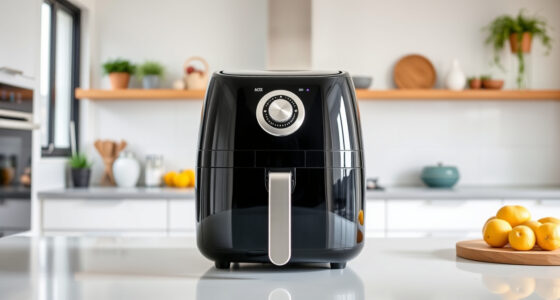
For a small kitchen, measure the counter and storage space before choosing an air fryer, then match its capacity to the portions you usually cook. A compact basket model saves space, while a dual-purpose oven-style model can replace other appliances; either needs room for airflow and a safe place to cool.
At 6 p.m., your counter has room for a cutting board, a kettle, and almost nothing else. Then an air fryer arrives—and suddenly the question isn’t whether it can crisp potatoes, but where it will live.
This guide helps you choose a useful size, find a safe spot, and decide whether the convenience is worth the counter space. You’ll also get simple ways to cook and store it without turning a compact kitchen into an appliance obstacle course.
Measure the appliance, handle, basket movement, and vent clearance before you buy.
Match capacity to your regular portions, and leave room for food to cook in an uncrowded layer.
Choose an oven-style model only if its extra functions can replace appliances you already own.
Use a stable heat-resistant surface, follow the manual’s setup advice, and give hot parts a safe place to land.
Cool, clean, and dry the appliance before storing it; use a food thermometer for meat.
Measure first so your new air fryer actually fits
Air fryers for small kitchens fit best when you measure the appliance’s full footprint, including its handle and any space needed for the basket to slide out. Check the height under cabinets, too, and follow the manufacturer’s instructions for clearance around vents. A unit that fits on paper can still be awkward if you can’t open it safely.
Try the spot with a tape measure before buying. If the only free patch is beside the sink, look for a dry, stable surface away from splashes and the edge of the counter. Your air fryer needs breathing room; its vents release hot air, much like a little space heater with a dinner plan.
For example, a renter with a narrow counter might park a compact model on a sturdy cart, then roll it out when cooking. Check that the cart stays stable and that the appliance cord can reach an outlet without stretching across a walkway.
Choose capacity around the meals you really cook
Air fryers for small kitchens usually come as compact basket models or larger oven-style units, and the right capacity depends on your usual meal. A small basket can handle a snack or side dish, while a larger basket may suit a couple’s dinner. The listed capacity is a guide, though: food crisps best when it has space, so a crowded basket may call for batches.
If you often cook for one, think about whether you’ll use the appliance for vegetables, reheating leftovers, or a quick piece of fish. If you usually feed four, compare the manufacturer’s portion guidance and dimensions before choosing the smallest model. Smaller appliances save space, but repeated batches can stretch a simple dinner into a longer kitchen shift.
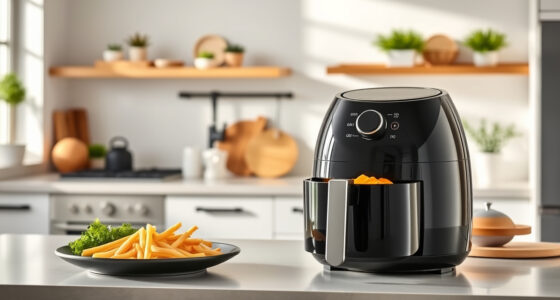
Imagine making fries for two: a basket that holds one uncrowded layer may work better than a nominally larger basket packed to the top. A little empty space lets hot air move around the food and helps the edges turn golden.
| Style | Often suits | Space tradeoff |
|---|---|---|
| Compact basket | Snacks, sides, or smaller meals | Smaller footprint; may need batches |
| Larger basket | More generous portions | More counter and storage space |
| Oven-style | Cooking across racks or replacing a toaster oven | Taller or wider body; check door swing |
Use this as a starting point, not a promise about servings: models vary. Measure each candidate and compare its usable cooking area, not just the number on the box.
Decide whether an oven-style model can replace another appliance
An oven-style air fryer makes sense when you’ll use its racks or functions often enough to retire something else from your kitchen. It may toast bread, roast vegetables, or cook food on more than one rack, depending on the model. That extra flexibility comes with a larger body and a door that needs room to open.
The reason this decision matters more in a small kitchen than a large one is that counter and cupboard space is a fixed budget. Every appliance you keep spends some of it, so the real question isn’t “is this model good?” but “does it earn back the space it costs?” An oven-style unit that replaces a toaster oven is effectively space-neutral or better: one footprint disappears, and one appears. But an oven-style unit that merely adds to your existing lineup doesn’t give you versatility—you already had it—it gives you a second, bulkier version of things you can already do, plus a deeper chunk of counter gone.
Be honest about how the swap changes your habits, too. A drop-down door means you need clear space in front of the unit every time you cook, not just when you slide it out of the way; that’s a daily tax on prep space that a pull-out basket never charges. Rack cooking saves time when you actually fill both levels, but if you usually cook one tray of vegetables, the extra racks are dead weight you store, clean, and work around.
Picture your toaster oven sitting unused after you start reheating leftovers in an air fryer. That unused box is the tell: when one appliance stops getting used because another covers its job, replacing it frees real space. If both still get used weekly, the oven-style model is likely to add clutter rather than reduce it—and clutter in a small kitchen compounds fast, because every displaced item needs somewhere new to go.
Before buying, compare the functions you’ll use with the gadgets you could realistically store or pass along. A digital panel packed with modes doesn’t help if you only want crisp broccoli twice a week; you’re paying for the counter space those modes occupy, not just the money.
Set up your air fryer safely, even on a crowded counter
A safe air fryer setup uses a stable, heat-resistant surface, keeps vents clear, and follows the clearance and outlet guidance in the manual. Avoid placing it beneath low cabinets if the instructions call for more headroom, and don’t let the hot exhaust blow toward curtains, paper towels, or other heat-sensitive items.
In a galley kitchen, you might move the kettle before cooking so both appliances aren’t crowding the same narrow strip. Keep the cord away from the hot body and from places where someone could snag it. Make space to pull out the basket and set it down without balancing it on a cutting board.
Air fryers cook with hot air, but their baskets and food can still burn you. Use the handle, set hot parts on a heat-safe surface, and supervise cooking as the manufacturer directs. Unplug the appliance when you’re finished if the manual recommends it.
Give the air fryer room to breathe. Clear vents and a stable landing spot for the hot basket matter as much as finding an empty corner.
Make weeknight cooking easier without adding kitchen clutter
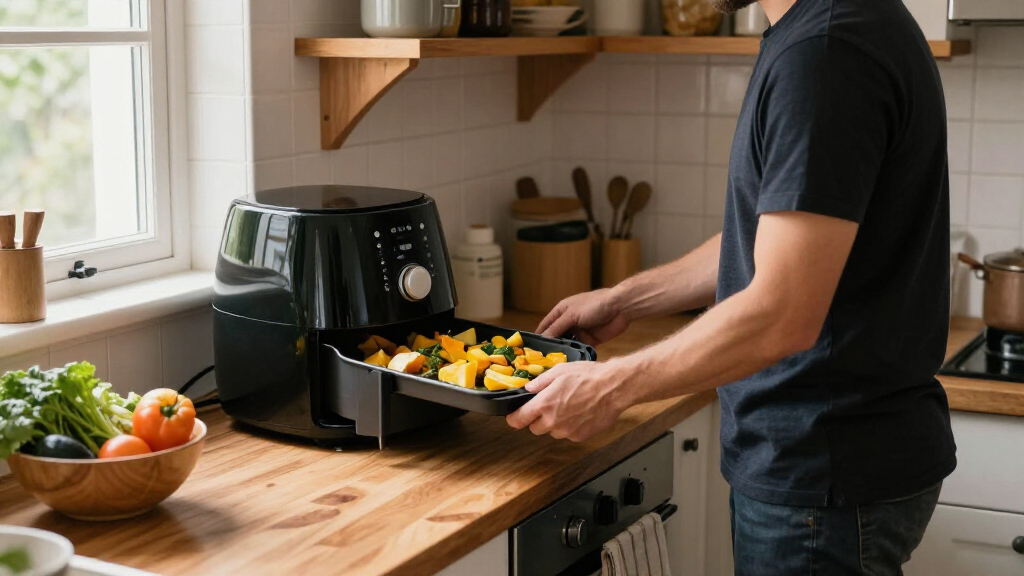
A small air fryer earns its space when it handles meals you actually make and cleans up quickly afterward. Start with one familiar food, such as roasted vegetables or leftover pizza, and follow the model’s instructions for temperature and timing. Shake or turn food if the recipe or appliance guide recommends it.
For example, toss broccoli florets with a little oil, spread them in a loose layer, and check them before the end of the suggested cook time. Smaller pieces can brown quickly, so stay nearby the first time you try a recipe. A little char on the tips, a tender center, and a faint toasted smell are good cues to check the basket.
Food safety still applies. Cook meat to a safe internal temperature measured with a food thermometer, using guidance from a trusted food-safety authority; don’t judge doneness by crispness alone. Refrigerate perishable leftovers promptly, keep raw meat separate from ready-to-eat foods, and wash the basket after use as the manufacturer instructs.
Cooking for someone with allergies? Check ingredient labels and avoid cross-contact by cleaning the basket and utensils before preparing their food. Common allergens include milk, eggs, fish, shellfish, tree nuts, peanuts, wheat, soy, and sesame.
Store it without wrestling your cupboards
Easy storage starts with a cool, clean appliance and a shelf you can reach without lifting it over your head. Let the air fryer cool fully, clean and dry the removable parts, and check the manual for the right storage method. A greasy basket tucked away warm can leave odors behind and make the next meal less inviting.
If you plan to keep it in a cupboard, measure the shelf opening as well as its depth. Basket models may be easier to lift than wide oven-style units, but a heavy appliance still needs a safe, comfortable route in and out. Store accessories together in a labeled bin so trays don’t disappear behind mixing bowls.
Some people keep a compact fryer on the counter because they use it daily; others put it away after weekend cooking. The best arrangement is the one that makes regular use easy without blocking the sink, stove, or main prep space.
Use this five-step check before you buy
- Measure the spot. Check width, depth, height, handle clearance, and the space the basket or door needs.
- Count your usual portions. Choose for the meals you actually cook, and allow room for food to spread out.
- Compare the whole footprint. Look at dimensions and weight alongside capacity and functions.
- Plan safe placement. Confirm the manual’s vent clearances, surface guidance, and outlet requirements.
- Pick a home for storage. Make sure you can lift and store the cooled appliance comfortably—or leave it on the counter without blocking your work area.
Say your shelf is only 30 centimeters deep and your counter is narrow. That check might rule out a wide oven-style model before you fall for its extra racks, saving you a return trip and a very awkward kitchen shuffle.
Frequently Asked Questions
What size air fryer works best in a small kitchen?
Pick a size based on your usual portions and the space you can safely give it. Measure the full appliance, check how the basket or door opens, and allow the vent clearance listed in the manual.
Can I keep an air fryer under a kitchen cabinet?
That depends on the model and the clearance its manual specifies. Check the required space above and around the vents, and move the appliance if hot exhaust could reach cabinets or nearby items.
Is an oven-style air fryer better for a small kitchen?
It can be a good choice if its racks or other functions let you replace a toaster oven or another appliance. Compare its full footprint and door swing first; its versatility doesn’t help if it adds clutter.
Can I store my air fryer in a cupboard?
Usually, once it has cooled and the removable parts are clean and dry, but follow the manufacturer’s storage instructions. Check the shelf opening and make sure you can lift the appliance in and out safely.
Conclusion
Choose the air fryer that fits your counter, your cupboard, and the meals you make on an ordinary Tuesday. Measure first, leave room for safe airflow, and let the appliance earn its place one crisp, easy dinner at a time.
NFL season / tailgating Picks
team gear
As an affiliate, we earn on qualifying purchases.