
TL;DR

Get kitchen staples and gadgets delivered free with Prime
- Fast, free delivery on millions of items
- Prime Video, Amazon Music and more included
- Member-only deals all year
The Kitchn’s Nina Derwin tested a circulating kitchen tip by running orange peels through a dishwasher cycle. She reported a noticeable citrus scent afterward but only a possible, slight change in visible cleanliness; the test does not establish that peels replace dishwasher cleaner.
The Kitchn writer Nina Derwin tested a popular household tip by placing orange peels in her dishwasher and running a cycle, reporting a noticeably fresher citrus smell afterward but no clear improvement in visible cleanliness. Her account offers a firsthand result, not evidence that the peels can replace a dishwasher cleaner or degreaser.
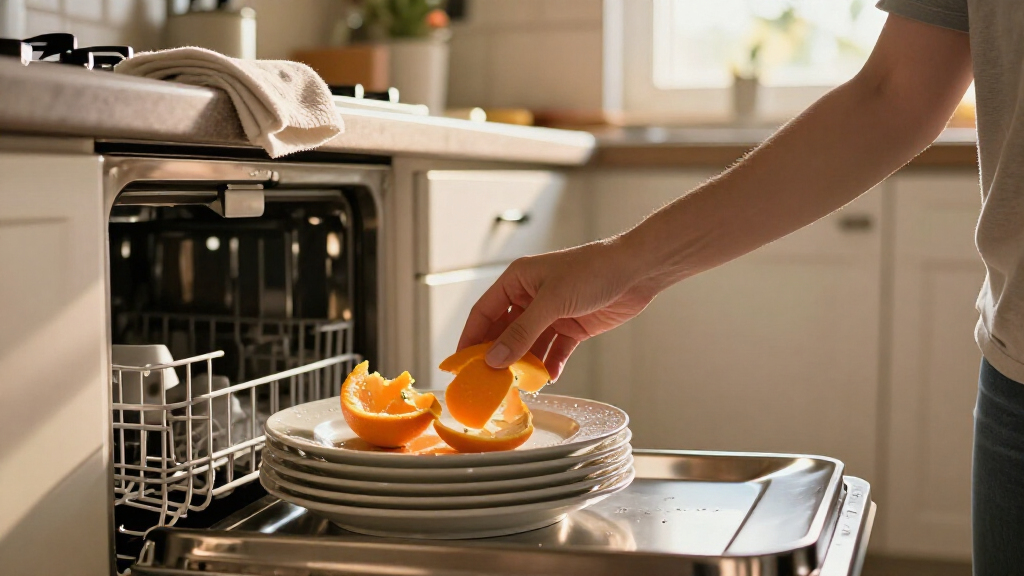
Derwin said she used the peels from two Cara Cara oranges, placing them in the dishwasher’s utensil compartments before starting a cycle. After the cycle, she let the appliance cool briefly, then removed the peels and inspected the interior. She said the peels remained intact and left no pulp or residue in the dishwasher.
Her most definite observation was the smell: opening the appliance brought a bright citrus scent, which she said also made the kitchen smell fresher. On visible cleaning, Derwin was less certain. She wrote that the dishwasher might have looked “a little bit” cleaner, but said it was not visibly dirty before the test, making any change difficult to judge.
The article describes the proposed rationale as the oils in citrus peels acting as a deodorizer and degreaser, potentially helping with odors, soap scum and limescale. That is the hack’s claimed mechanism, not a result established by Derwin’s one-person test. She said she would not use it instead of a proper degreaser or dishwasher-cleaning tablet.
A Fragrance Boost, Not a Cleaning Test
For people considering the tip, the account points to a limited, practical takeaway: orange peels may leave a pleasant scent, but the report does not show that they reliably clean a dishwasher. Derwin’s appliance was not visibly dirty at the outset, and she did not compare the peels with a cleaning product or measure changes in grease, mineral deposits or odor over time.
That distinction matters because a fresher-smelling machine is not necessarily a cleaner or better-maintained one. The test also does not establish whether citrus peels affect drain lines or remove limescale. Readers can treat the method as a possible short-term scent refresh, while relying on their appliance instructions and appropriate cleaning products for routine maintenance.
As an affiliate, we earn on qualifying purchases.
Derwin said she tried the method after seeing it circulating online and noticing that her dishwasher’s interior and smell could use attention. She had lived in her New York City apartment for four years but did not know how previous tenants had maintained the appliance. That background explains why she tried the hack; it does not establish the dishwasher’s condition or prove that the peels addressed a particular buildup.
The test was a single cycle using thick Cara Cara orange peels. Derwin wondered whether thinner peels, including those from clementines or navel oranges, might produce a different result, but did not test them. The source provides no controlled comparison, repeated trials or assessment of other dishwasher models.
What One Cycle Cannot Establish
The report does not establish whether orange peels remove grease, soap scum or limescale, or whether any effect would last beyond the cycle. Derwin did not test a visibly dirty dishwasher, compare results against a cleaning tablet, or repeat the experiment with different fruit peels. The claim that citrus oils clean drain lines is presented as the idea behind the hack, not a finding from this test.
It is also unclear whether results vary with peel thickness, dishwasher design, cycle settings or the appliance’s existing condition. The source does not provide manufacturer guidance on putting fruit peels in a dishwasher, so readers should check their own appliance instructions rather than assume every model handles the method in the same way.
Routine Cleaning Still Matters
Derwin said she might try the tip again when her dishwasher smells particularly unpleasant, before guests arrive or when she wants a quick refresh. She did not announce a follow-up test, and the source gives no new testing or manufacturer response. For now, the reported outcome remains one writer’s experience with one load of orange peels.
Anyone trying the idea can watch for residue and remove the peels after the cycle, as Derwin did. For deeper cleaning or maintenance, the more relevant next step is to follow the dishwasher manufacturer’s care instructions and use a suitable cleaning product when needed; a citrus scent alone does not confirm that the appliance has been cleaned.
Key Questions
Why are people putting orange peels in the dishwasher?
The tip is based on the claim that citrus oils may deodorize and degrease, helping with dishwasher odors and buildup. Derwin’s test clearly reported a fresher smell, but did not confirm those broader cleaning effects.
Did the orange peels clean the dishwasher?
Derwin said it might have looked a little cleaner, but the appliance was not visibly dirty before the test. Her account does not establish that the peels remove grease, soap scum or limescale.
How did the writer use the peels?
She put peels from two Cara Cara oranges in the utensil compartments, ran a cycle, then removed the peels after letting the dishwasher cool briefly. She reported that they remained intact and left no pulp or residue.
Can orange peels replace dishwasher cleaner?
The report does not support that conclusion. Derwin said she would not use the hack instead of a proper degreaser or dishwasher-cleaning tablet; follow your appliance’s care instructions for maintenance.
Source: rss
Fall Picks
fall essentials
As an affiliate, we earn on qualifying purchases.