

If your KitchenAid Artisan Series 5 Quart Tilt Head Stand Mixer is making a grinding noise, it can be concerning and disrupt your baking routine. This noise often indicates an issue with the gears, motor, or internal components. Fortunately, many common problems are fixable with some basic tools and careful inspection. In this guide, you’ll find clear, step-by-step instructions on diagnosing and resolving the grinding noise safely, ensuring your mixer performs smoothly again.

Get kitchen staples and gadgets delivered free with Prime
- Fast, free delivery on millions of items
- Prime Video, Amazon Music and more included
- Member-only deals all year
Before attempting any repairs, ensure your mixer is unplugged to prevent injury. Wear gloves if necessary to protect your hands from sharp edges or moving parts. Let’s get your KitchenAid mixer back to optimal performance!
Key Takeaways
| Identify the cause | Grinding noise often results from gear or motor issues. |
| Safety first | Always unplug the mixer before opening or repairing. |
| Check internal gears | Worn or jammed gears are a common culprit. |
| Inspect the drive assembly | Loose or damaged drive parts can cause noise. |
| Regular maintenance helps | Cleaning and lubricating can prevent future problems. |
Gather Necessary Tools and Prepare Your Workspace
Before starting the repair, gather essential tools such as a Phillips and flat-head screwdriver, a small wrench, and a clean cloth. Make sure your work area is well-lit, flat, and free of clutter. Having a soft towel or mat to place the mixer on will help prevent scratches and keep parts organized. Remember to unplug your mixer and wait a few minutes for any internal components to cool down if recently used.
Disassemble the Mixer Carefully
- Remove the pouring shield and detach the stainless steel bowl.
- Using a screwdriver, loosen and remove the screws holding the top cover or housing of the mixer.
- Gently lift the top cover, exposing the internal gears and drive assembly.
- Take note of how parts are assembled or take photos for reference during reassembly.
Inspect and Identify Worn or Damaged Parts
- Check the gears for signs of wear, cracking, or chipping. Worn gears often produce grinding sounds.
- Look for debris, food particles, or dried ingredients that may jam the gears or drive mechanism.
- Inspect the drive belt or coupling for looseness, cracks, or damage.
- Ensure that the motor shaft spins freely without obstruction or unusual resistance.
Replace or Lubricate Faulty Components
If you find worn gears, replace them with genuine replacement parts designed for your model. For minor friction issues, applying a small amount of food-grade lubricant or silicone spray to gears and moving parts can reduce noise. Avoid over-lubricating, as excess lubricant can attract dirt or cause further problems. Reassemble the mixer in the reverse order, ensuring all screws and parts are secured tightly.
Test the Mixer and Perform Preventive Maintenance
Plug in the mixer and run it at various speeds to check for any grinding sounds. If noise persists, re-inspect the drive assembly and gears. Regular cleaning of internal parts, lubrication, and avoiding overloading the mixer can prevent future issues. Keep the gears and drive shaft free of debris and ensure they are properly aligned during reassembly.
The Products in This Guide
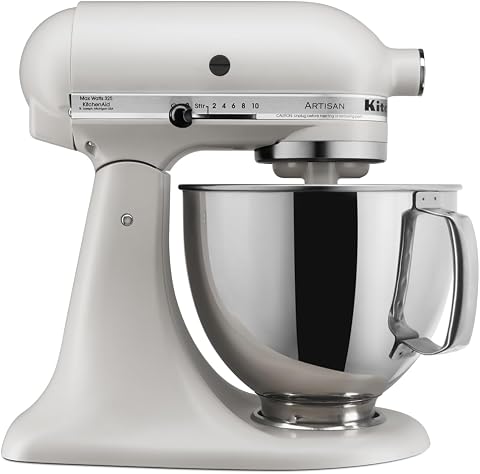
KitchenAid Artisan Series 5 Quart Tilt Head Stand Mixer
- ✔ Weight: 26 lbs
- ✔ Dimensions: 14 x 8 x 14 inches
- ✔ Power: 325 Watts

KitchenAid Stand Mixer Attachment
- ✔ Size: 12 x 8 x 6 inches
- ✔ Weight: 4.5 lbs
- ✔ Color: Metal finish
KitchenAid Artisan Series 5 Quart Tilt Head Stand Mixer
The KitchenAid Artisan Series 5 Quart Tilt Head Stand Mixer is built with durable metal construction and features 59 touchpoints for thorough mixing. Its tilt-head design provides easy access to the bowl, making it convenient for cleaning and ingredient addition. Suitable for small or large batches, it handles everything from cookies to bread dough.
Pros:
- Robust metal build
- Easy tilt-head access
- Multiple speed options
- Large 5-quart capacity
Cons:
- Can be heavy to move
- Pricey compared to basic mixers
- Requires occasional gear maintenance
Best for: Home bakers who need a reliable, versatile mixer for frequent use
Not ideal for: Users looking for a lightweight or budget-friendly option
Bottom line: A durable, versatile mixer that’s built to last and perform well in any kitchen.
KitchenAid Stand Mixer Attachment
The KitchenAid Metal Food Grinder attachment connects easily to your stand mixer, offering a variety of grinding options for fresh, homemade foods. It’s ideal for processing meats, vegetables, and even making sausage, adding versatility to your appliance setup.
Pros:
- Multiple grinding plates
- Large food tray
- Sturdy metal construction
- Includes sausage stuffer tubes
Cons:
- Requires a separate purchase
- Needs pre-chilling for best results
- Cleaning can be time-consuming
Best for: Home cooks wanting to make fresh ground foods and sausages
Not ideal for: Users seeking an all-in-one grinder without attachments
Bottom line: A durable attachment that turns your stand mixer into a powerful food grinder.
Frequently Asked Questions
Why is my KitchenAid mixer making a grinding noise?
A grinding noise often indicates worn gears, debris inside the gear mechanism, or a loose drive component. Inspecting and replacing worn parts can resolve the issue.
Can I fix the grinding noise myself?
Yes, with proper tools and careful disassembly, you can identify and replace faulty gears or lubricate moving parts. Always unplug the mixer before starting repairs.
Do I need special tools to repair my KitchenAid mixer?
Basic tools like screwdrivers and a small wrench are usually sufficient. For gear replacements, consult your model’s repair guide or parts list.
How often should I maintain my stand mixer to prevent issues?
Regular cleaning after use, occasional lubrication of moving parts, and avoiding overloading can extend your mixer’s lifespan and prevent grinding noises.
Are replacement gears available for my KitchenAid mixer?
Yes, genuine replacement gears are available for many models. Check with authorized parts suppliers or KitchenAid customer service for the correct parts.
Restore Your KitchenAid Mixer’s Quiet Performance
Dealing with a grinding noise in your KitchenAid Artisan Series mixer can seem daunting, but many issues are straightforward to diagnose and fix. By carefully inspecting internal gears, drive components, and ensuring proper maintenance, you can restore your mixer to smooth, quiet operation. Regular upkeep and prompt repairs will keep your trusted kitchen companion running efficiently for years to come.
Affiliate disclosure: As an Amazon Associate we earn from qualifying purchases. Prices and availability are accurate as of the time of publishing.
Fall Picks
fall essentials
As an affiliate, we earn on qualifying purchases.