
TL;DR
Family Handyman has published 18 reader-submitted kitchen tips covering food storage, cleaning, organization, repairs and small household tasks. The suggestions are personal recommendations, not reported tests; some, including a penny-in-freezer check and heated-knife bag cutting, need caution or further verification.
Family Handyman has published 18 kitchen tips submitted by readers, offering practical ideas for protecting floors, arranging pantry items, spotting possible leaks and handling everyday kitchen chores. The collection is a roundup of personal recommendations, not a set of independently tested or verified instructions.

Get kitchen staples and gadgets delivered free with Prime
- Fast, free delivery on millions of items
- Prime Video, Amazon Music and more included
- Member-only deals all year
The tips address a range of tasks, from moving large appliances to keeping small supplies organized. Anthony Lombardi recommends placing 1/8-inch hardboard beneath an appliance to help it slide while protecting the floor. Gregory Pritchard suggests running water around a newly installed sink or faucet, waiting a few minutes and checking beneath the sink for leaks.
Several submissions focus on keeping food and cooking supplies manageable. Martin Sutherland recommends alphabetizing spices to make jars easier to find and pantry gaps easier to spot before shopping. Glenn White suggests clipping a recipe to a pants hanger and suspending it from a cabinet handle, while David Kowalczyk describes stretching a rubber band around a jar and writing its contents on the band.
Other readers describe household fixes and cleaning routines. Tom Sheridan says a water-soaked sponge frozen inside a resealable bag can serve as a reusable lunch cooler. Gregory Holt recommends running lemon or lime peels through a garbage disposal with cold water, then continuing to run the water for 30 seconds after grinding stops. The source also includes advice for using a ceramic mug’s unglazed base to touch up a blade and for using a cordless drill to stir thick food in a jar.
From Prep to Cleanup 18 reader-recommended hacks
Family Handyman’s collection covers everyday kitchen tasks, from organizing spices to checking for leaks. These are personal recommendations, not independently tested instructions.
Small fixes for daily tasks
The suggestions target familiar kitchen chores and household problems.
Make supplies easier to find
Alphabetize spices, label jars with a marked rubber band, or hang a recipe from a cabinet handle.
Freshen the disposal
One reader recommends grinding lemon or lime peels with cold water, then running water for 30 seconds more.
Look for sink leaks
After installing a sink or faucet, run water, wait a few minutes, and check beneath the sink.
Tips for moving appliances
A reader suggests using hardboard to help protect the floor while sliding an appliance.
Set 1/8-inch hardboard beneath the appliance, as Anthony Lombardi recommends.
The suggestion is intended to help the appliance move while protecting the floor.
Recommendations need context
The supplied excerpt does not report editorial testing, expert review, or evidence that every method works across kitchens.
- Some tips repurpose common household items.
- Organization and cleaning suggestions may simplify routine tasks.
- The penny-in-freezer trick is not a validated food-safety test.
- Heated-knife and drill techniques lack safety details in the excerpt.
Small Fixes for Daily Kitchen Tasks
The collection matters as a practical reference because its suggestions target familiar household problems: scratched floors, hard-to-find spices, crowded counters and minor sink leaks. Some ideas use items already at home, potentially saving a trip to the store or making a routine job easier. The leak-check tip also draws attention to a problem that can go unnoticed under a sink and cause damage if left unaddressed.
Readers should distinguish convenience tips from food-safety guidance or tested repair instructions. A reader’s account can suggest an approach, but the roundup does not report controlled testing, expert review or evidence that every method works across all materials and appliances. That distinction is especially relevant for the freezer check: the penny method may signal that a thaw occurred, but the source does not establish it as a reliable way to determine whether food is safe to eat.
Products Worth Considering

Ninja Woodfire 8-in-1 Outdoor Oven and Smoker, Terracotta Red (OO101)
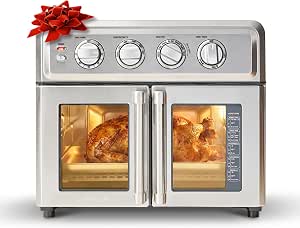
Cuisinart Artisan French-Door Air Fryer Toaster Oven, 7 Functions

Le Creuset Toughened Nonstick PRO 10-Inch Fry Pan
As an affiliate, we earn on qualifying purchases.
Reader Tips, Not Tested Instructions
The source presents the material as a 18-item reader-submission roundup from Family Handyman. Individual tips are credited to contributors, including Anthony Lombardi, John Nakamura, David Kowalczyk, Gregory Pritchard, Tom Sheridan and Martin Sutherland. The supplied excerpt contains only part of the full list; it cuts off during a description of a pegboard-and-dowel drawer organizer.
Among the other visible suggestions are repurposing a picture frame as a dry-erase message board, using a rubber band as a temporary jar label, and hanging a recipe at eye level. One contributor proposes warming an old butter knife with a lighter to divide a resealable bag. The source does not provide independent safety testing for that technique, so it should not be treated as an endorsed food-storage method. Nor does the excerpt supply publication date, editorial methodology or details about how submissions were selected.
“For the best protection, use a sheet of 1/8-in. hardboard.”
— Anthony Lombardi, reader contributor
Testing and Safety Details Are Missing
The source does not say whether the tips were tested by editors or reviewed by specialists, and it provides no results comparing them with standard products or methods. The penny-in-freezer suggestion is presented as an indicator of a power interruption, but the article excerpt does not establish how long the outage lasted or whether the food became unsafe. Food safety cannot be determined from the penny’s position alone.
Some techniques also raise practical safety questions that the excerpt does not address. It gives no handling instructions for heating a knife with a lighter or using a drill to stir food, and it does not specify which bag materials are suitable for heat or freezer use. The supplied source is incomplete, ending partway through one tip, so the remaining entries in the 18-item collection cannot be summarized from the material provided.
Use Tips With Appropriate Caution
Readers can refer to the original Family Handyman collection for the complete list and any additional instructions, though its publication date is not supplied here. Before trying a tip, check that the method suits the appliance, surface and materials involved. For suspected freezer thawing, follow food-safety guidance rather than relying solely on the penny’s position; discard food if its safety is uncertain. For home repairs or tool use, consult the appliance or product instructions when appropriate.
Key Questions
What is the Family Handyman article about?
It is a roundup of 18 kitchen tips submitted by readers, covering organization, cleaning, food storage, appliance moving and minor household tasks.
Are the reader tips independently tested?
The supplied source does not say that the tips were independently tested or reviewed. They are presented as reader recommendations, so the article does not establish that every method will work in every kitchen.
Does the penny-in-the-freezer trick prove food is safe or spoiled?
No. The tip is offered as a sign that a thaw may have occurred, but the source does not validate it as a food-safety test. Do not rely on the penny alone to decide whether food is safe to eat.
Which tips focus on kitchen organization?
Readers suggest alphabetizing spices, labeling jars with a marked rubber band, hanging recipes from a cabinet handle and turning a framed sheet of decorative paper into a dry-erase board.
Source: familyhandyman.com