TL;DR

Get kitchen staples and gadgets delivered free with Prime
- Fast, free delivery on millions of items
- Prime Video, Amazon Music and more included
- Member-only deals all year
A Good Housekeeping report recommends clearing five categories from the freezer: messy open packages, old ice, expired or unused food, nearly empty containers and unidentified items. The advice comes from two cleaning professionals; it is a practical decluttering guide, not a food-safety inspection or a new official shelf-life standard.
Good Housekeeping has published a freezer-cleanout guide based on advice from two cleaning professionals, identifying five categories to review: messy open packages, old ice, expired or unwanted food, nearly empty containers and mystery items. The report offers household decluttering advice, while food quality and safety depend on the specific item and its storage history.
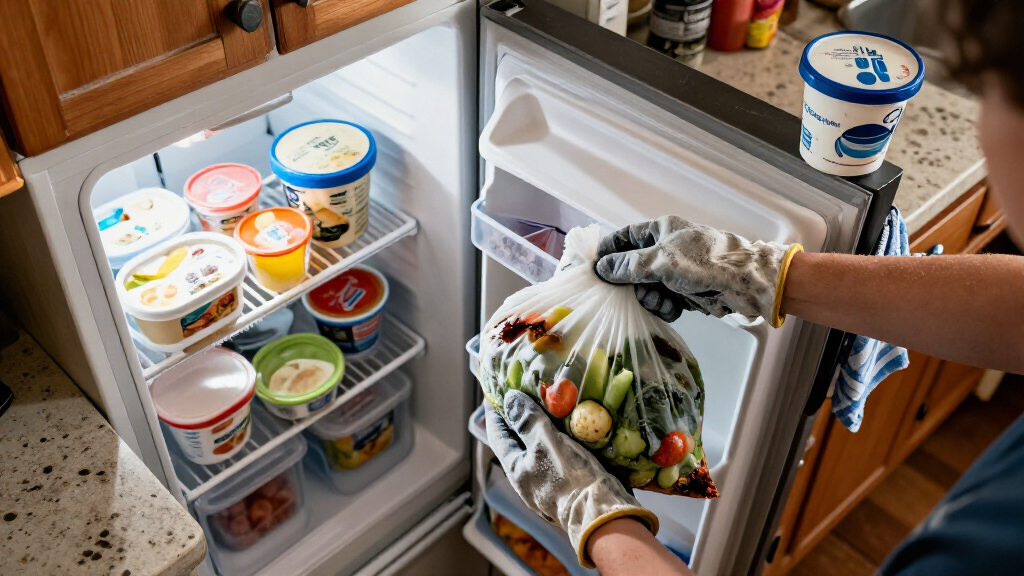
Rochelle Wilkinson, owner of Dirt Detective Cleaning, says open packages that spill food or leak juices should be dealt with: discard them if the contents are no longer usable, or move still-good food into a freezer-safe, spill-proof container after cleaning up. The report also says non-expired food that someone no longer wants may be donated or composted where appropriate. Food showing mold or freezer burn, or that is past its stated date, is among the suggested discard items.
Old ice is another item the professionals recommend replacing. Logan Taylor, founder of The Dazzle Cleaning Company, says ice can absorb odors from other freezer contents. Taylor suggests throwing it out and washing ice bins, trays and other containers before making a fresh batch.
The remaining categories are expired or unused foods, nearly empty packages and unidentified items. Wilkinson says visible freezer burn, food frozen into a single block or substantial ice buildup inside packaging can signal that an item has been stored for a long time, though these signs do not establish a precise storage duration. Taylor advises discarding items when people cannot identify what they are or how long they have been there. For partly used packages, the report suggests consolidating contents when practical to free space.
A Clearer View of Freezer Contents
A freezer can hide forgotten food and make it harder to find items people intend to use. Reviewing packages, labels and containers can help households identify what is still usable, reduce clutter and make space for foods they plan to eat. The report’s advice is especially practical for people who have accumulated leftovers or partly used bags that are difficult to track.
The recommendations should not be treated as a substitute for food-safety guidance. Freezer burn is generally a quality issue, not by itself proof that food is unsafe, and a package’s appearance cannot establish when it was frozen or whether it remained at a safe temperature. Readers should use reliable food-safety guidance and discard food when its handling history or condition raises concern. The article does not provide a universal time limit for every frozen food.
spill-proof freezer storage containers
As an affiliate, we earn on qualifying purchases.
As an affiliate, we earn on qualifying purchases.
Why Freezer Clutter Builds Up
The Good Housekeeping report frames freezer cleanouts as an often-overlooked part of routine household cleaning. Frozen foods can remain out of sight for extended periods, while packaging may lose labels, split open or become buried behind newer purchases. That makes it harder to distinguish planned ingredients from items that have been forgotten.
The advice is attributed to Wilkinson and Taylor, both cleaning professionals. It combines practical organization suggestions—such as using spill-proof containers and consolidating partial packages—with recommendations to discard food that is expired, unwanted or no longer identifiable. The source does not cite a food-safety agency or present laboratory findings; it is a cleaning and decluttering report.
“Ice takes on the smells of other items kept in the freezer.”
— Logan Taylor, founder of The Dazzle Cleaning Company
What the Advice Cannot Establish
The report does not give a publication date in the supplied material, a standardized shelf-life chart or a specific temperature-and-time rule for each food. It also does not establish that every item with freezer burn, ice buildup or a solid frozen mass is unsafe; those are presented as signs of age or declining quality. Whether a particular food is safe can depend on its type, packaging, handling and whether it stayed properly frozen, details the report does not assess.
The source offers no detailed criteria for donating frozen food, and donation policies vary. It also does not specify what local composting services accept. Readers should check local rules and avoid donating food that is expired, damaged or otherwise unsuitable.
A Practical Cleanout, Item by Item
The report’s advice points to a simple next step: inspect the freezer contents, remove items that are clearly unwanted or unidentifiable, and clean up leaking packages and ice containers. For food that appears usable, check labels and storage information, then place it in a suitable sealed container and organize it so it is easier to find. The article does not announce a formal follow-up or new policy; it provides household guidance readers can apply during their next cleanout.
Key Questions
Which five freezer items does the report recommend reviewing?
It lists messy open packages, old ice, expired or unused foods, nearly empty containers and mystery items. Depending on the item, the suggested action is to discard it, clean and repackage it, or consolidate it.
Does freezer burn automatically mean food is unsafe?
The report identifies freezer burn as a sign that food may have been stored for a long time or lost quality. It does not establish that freezer burn alone means food is unsafe. Check food-safety guidance and consider the item’s storage and handling history.
What should I do with an open package that is still usable?
Wilkinson recommends cleaning up the spill and transferring usable contents to a freezer-safe, spill-proof container. Discard the food if it is no longer suitable to keep.
Why does the report suggest replacing old ice?
Taylor says ice can absorb odors from other freezer items. The report recommends discarding it and washing ice trays, bins and other containers before making fresh ice.
Can unwanted frozen food be donated or composted?
The report says non-expired food someone no longer wants may be donated or composted where appropriate. Donation and composting rules vary, so check local requirements and do not pass along food that is expired or unsuitable.
Source: rss
Halloween Picks
halloween
As an affiliate, we earn on qualifying purchases.