
TL;DR

Get kitchen staples and gadgets delivered free with Prime
- Fast, free delivery on millions of items
- Prime Video, Amazon Music and more included
- Member-only deals all year
A Good Housekeeping report describes four ways to reuse spare wire clothes hangers: as a cookbook holder, a drying rack for small items, an accessory organizer and a reach extender for dusting. The ideas are practical household suggestions, not evidence that the methods have been independently tested or that they replace purpose-made equipment.
Good Housekeeping has outlined four ways to repurpose spare wire hangers, suggesting they can serve as a cookbook holder, a small-item drying rack, an accessory organizer or a makeshift duster. The ideas offer households a way to reuse hangers that might otherwise clutter a closet, although the report does not provide independent testing or quantify any environmental or cost savings.
For a counter-top cookbook stand, the report says to hold a wire hanger by its hook and widen the lower triangle into a broad V. Bend the two lower corners inward to make small supports for the pages, then bend the top hook down toward the center of the V so the hanger can stand upright. Pliers may help shape the small supports, according to the instructions.
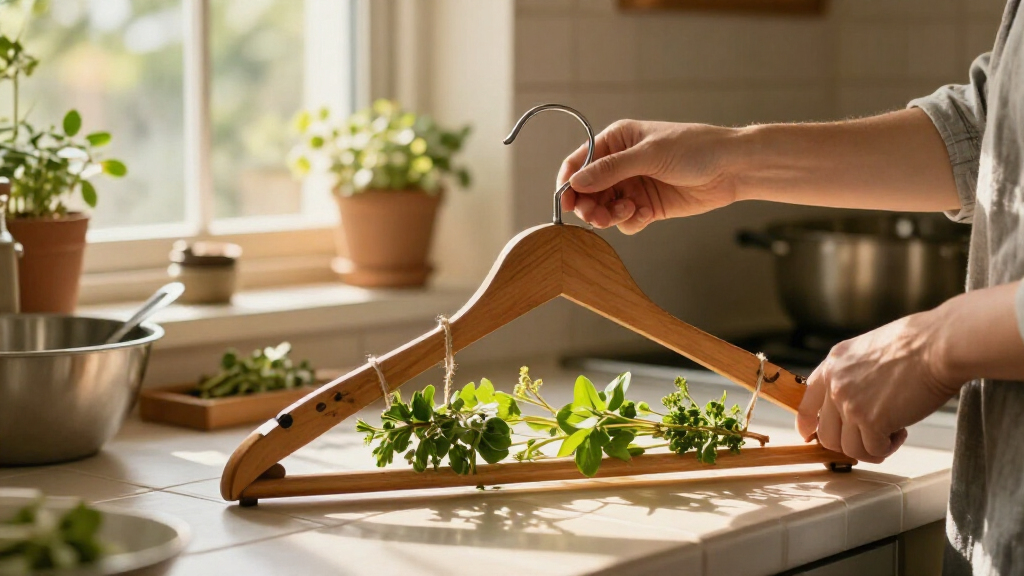
A second idea uses a hanger as a mini drying rack without reshaping it. Peg socks, baby clothes, hats, gloves or cleaning cloths to the hanger and hang it over a shower rail or clothesline. The report says this can save space and help items dry faster, but gives no measurements or test results to establish how much time it saves.
For storage, scarves, belts, necklaces and caps can be hung from the hanger’s bottom bar inside a wardrobe. Shower rings or clips can add places for smaller items. The fourth suggestion is to unwind a wire hanger, attach a microfiber cloth to one end and use it to dust high or hard-to-reach spots. The report suggests leaving it full length for reach or doubling it for a sturdier handle; it does not specify a fastening method or load limit.
Making Spare Hangers More Useful
The suggestions address a familiar household problem described in the report: surplus wire hangers can become tangled and take up closet space. Reusing one as an organizer or simple household aid may help readers make use of an item already on hand rather than buying a dedicated product. The potential savings are modest and depend on what a household already owns; the source does not compare costs or measure waste reduction.
The ideas also vary in effort. The drying rack and accessory holder require little or no reshaping, while the cookbook stand and duster involve bending or unwinding metal. That distinction matters for readers deciding whether a project is appropriate for their hanger, tools and intended use. These are practical suggestions, not product-safety certifications or guarantees of performance.
Products Worth Considering

KitchenAid Classic Series 4.5-Quart Tilt-Head Stand Mixer, Onyx Black

Breville Smart Grinder Pro Conical Burr Coffee Grinder, Brushed Stainless Steel

Traeger Woodridge Wood Pellet Grill and Smoker, 860 sq. in., WiFIRE
As an affiliate, we earn on qualifying purchases.
From Closet Clutter to Household Tools
The source is a Good Housekeeping home-advice report titled “4 Creative Ways to Repurpose Your Old Hangers.” It frames the ideas around a common imbalance: some people lack hangers, while others accumulate extras, including wire hangers from dry cleaners or shopping. The article’s author, Ella, is identified as a household advice writer who has also worked in product reviews and lifestyle journalism.
The report focuses specifically on wire hangers and gives four uses, rather than presenting a general guide to recycling every type of hanger. It does not discuss local recycling rules, disposal options or ways to repurpose plastic or wooden hangers. Readers should not assume the suggested uses apply to hangers made from other materials.
““You can turn a hanger into a simple cookbook holder.””
— Good Housekeeping report
Limits of the Hanger Ideas
The supplied report does not say whether the four uses were tested, how well each performs over time, or which hanger designs are suitable. It provides no data for the claim that the drying approach makes items dry faster, and no comparison with commercial cookbook stands, organizers or dusters. It also does not assess whether reshaping a hanger could leave sharp ends or weaken the frame.
Readers should use care when bending or unwinding wire, keep sharp ends away from skin and avoid putting a hanger under loads it cannot safely support. The report does not give detailed safety instructions, weight limits or guidance for using the stand near heat or water. The publication date is also absent from the material provided.
Choosing a Safe Reuse
The report presents ideas rather than announcing a product launch, formal study or scheduled follow-up. Readers can select a use based on the hanger’s condition: an intact hanger can hold clipped laundry or accessories, while a stand or duster requires reshaping. Before using a modified hanger, inspect it for sharp edges and instability, and stop if the wire bends unpredictably or feels weak.
No further testing, publication or official guidance is specified in the source material. Anyone seeking to dispose of hangers they cannot reuse should check local waste and recycling rules, since the report does not identify which programs accept wire hangers.
Key Questions
What are the four proposed uses for old wire hangers?
The report suggests making a cookbook holder, a drying rack for small items, an accessory organizer and a makeshift duster.
Do I need tools to make the cookbook holder?
The instructions say pliers can help shape the small inward bends that support pages, but the report says the stand should also work without them. Use care when bending wire and check that the finished stand is stable.
Which items can go on the hanger drying rack?
The report lists socks, baby clothes, hats, gloves and cleaning cloths. It suggests securing them with pegs and hanging the hanger over a shower rail or clothesline.
Can these ideas be used with plastic or wooden hangers?
The supplied report describes wire hangers and does not assess plastic or wooden versions. Some uses, such as hanging accessories, may work differently depending on a hanger’s shape and strength.
Does the report prove these methods save money or reduce waste?
No. The suggestions reuse an item already available at home, but the report provides no cost comparison, waste figures or environmental assessment.
Source: goodhousekeeping.com