Japanese Osechi Ryori is a colorful, tradition-rich New Year’s meal that’s full of regional ingredients and cultural significance. As you enjoy these beautifully arranged dishes, you’ll notice how each symbolizes good luck, health, and prosperity. The variety reflects Japan’s diverse culinary practices and seasonal customs, making every platter unique. If you want to discover more about the fascinating customs and regional flavors behind Osechi, keep exploring to uncover its rich cultural stories.

Get kitchen staples and gadgets delivered free — and shop member deals
- Fast, free delivery on millions of items
- Access to Prime Big Deal Days deals on October 6–7
- Prime Video, Amazon Music and more included
Key Takeaways
- Osechi Ryori offers a comforting blend of traditional Japanese New Year dishes rich in symbolism and seasonal flavors.
- The colorful and beautifully arranged bento-style presentation makes osechi visually appealing and accessible worldwide.
- Regional variations and ingredient choices reflect Japan’s diverse culinary heritage, providing a sense of cultural authenticity and comfort.
- Incorporating natural materials and traditional serving ware enhances the aesthetic appeal and cultural significance.
- Osechi’s emphasis on symbolism, seasonal ingredients, and shared customs fosters a universal feeling of celebration and togetherness.
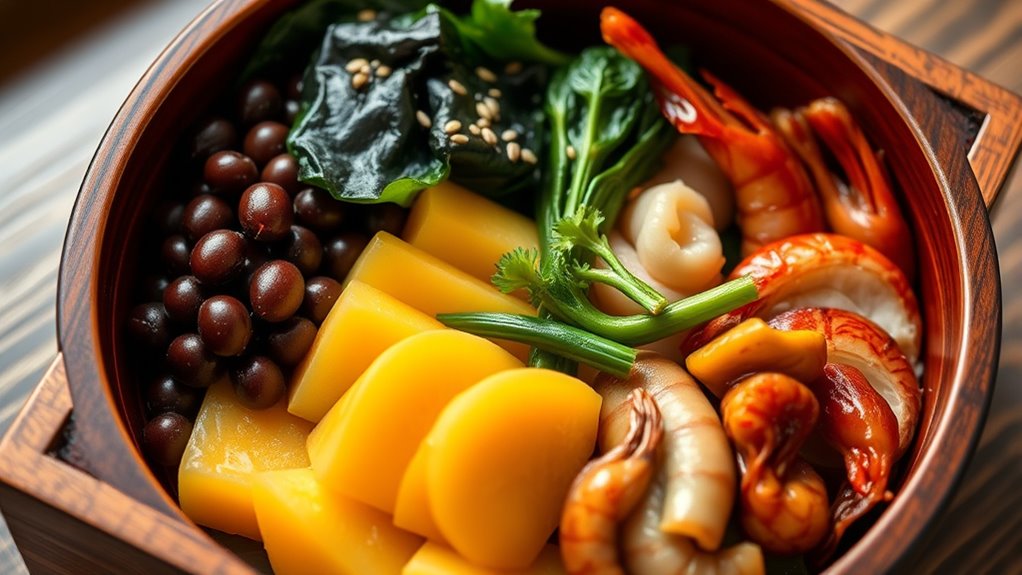
Have you ever wondered how Japanese families celebrate the New Year with a rich array of traditional foods? One of the most significant culinary customs is preparing and sharing osechi ryori, a beautifully arranged collection of dishes that symbolize good luck, health, and prosperity. As you explore osechi, you’ll notice that regional customs play a vital role in shaping what’s included on the New Year’s table. Each region in Japan has its unique variations, reflecting local ingredients, climate, and cultural influences. For example, in the Kansai region, you’ll find a preference for lighter flavors and a focus on ingredients like yuzu or bamboo shoots, whereas in Kanto, richer tastes and different pickles might be more prevalent. This regional diversity guarantees that no two osechi platters are exactly the same, allowing families to celebrate their local heritage with pride.
Ingredient variations also add to the richness of osechi ryori. While some dishes are staples nationwide, like kuromame (sweet black beans) or kazunoko (herring roe), the way these ingredients are prepared can differ markedly. In some regions, kuromame might be cooked with a touch of soy and sugar, emphasizing sweetness, while others might include a dash of sake or honey to create subtle flavor differences. Similarly, kazunoko can be marinated in a soy-based sauce in one area, but in another, it might be flavored with yuzu or other citrus to add a refreshing twist. These variations are more than just culinary preferences—they reflect local tastes and seasonal ingredients that are fresh and abundant in each area. Sometimes, families incorporate special regional ingredients into traditional dishes to add a local flair or to honor specific customs passed down through generations. Additionally, the use of natural materials like bamboo or lacquerware in serving dishes enhances the presentation and cultural significance of osechi, emphasizing the connection to nature and tradition.
As you observe these regional customs and ingredient variations, you’ll realize that osechi ryori is not just about tradition but also about celebrating regional identity and seasonal bounty. Each dish is carefully prepared to symbolize hopes for the new year, and the variations highlight the diversity that exists within Japan’s culinary landscape. Whether you’re a home cook recreating these dishes or simply an observer, understanding these regional differences enriches your appreciation for osechi. This array of colorful, meaningful foods offers more than just sustenance; it’s a vibrant expression of Japan’s local cultures and seasonal rhythms. So, when you next see osechi on a family table, remember that it’s a delicious testament to regional customs, ingredient variations, and the enduring spirit of Japanese New Year celebrations.
As an affiliate, we earn on qualifying purchases.
Frequently Asked Questions
How Has Osechi Ryori Evolved Over Japan’s History?
You see, osechi ryori has evolved through historical influences like Buddhist dietary laws and regional flavors, shaping its traditional ingredients. Culinary innovations, such as modern presentation and new ingredients, have also transformed it over time. Today, you can enjoy a mix of classic and contemporary dishes, reflecting Japan’s rich history and creative spirit, making osechi ryori a delightful and meaningful celebration of New Year’s anew.
Are There Regional Variations in Osechi Ingredients?
Think of osechi ingredients as a colorful tapestry—you’ll notice regional flavors and ingredient diversity shining through. In some areas, you’ll find sweet black soybeans, while others favor grilled fish or root vegetables. These variations reflect local tastes and ingredients, making each region’s osechi unique. So, as you explore, embrace the delicious diversity, knowing that your New Year bento is a tasty mirror of Japan’s rich regional culinary heritage.
Can Non-Japanese People Recreate Authentic Osechi at Home?
Yes, you can recreate authentic osechi at home by embracing cultural adaptation and ingredient substitution. Focus on understanding the traditional elements and find suitable alternatives if certain ingredients are hard to source. You might swap canned black beans for fresh ones or use local root vegetables. With a bit of creativity and respect for the tradition, you’ll craft a meaningful and delicious osechi that honors its origins while fitting your available ingredients.
What Are the Modern Trends Influencing Osechi Presentations?
Modern trends in osechi presentation challenge traditional norms, emphasizing creative food plating and decorative themes. You might notice vibrant colors, minimalist designs, or themed decorations that reflect personal or cultural stories. These trends show how osechi evolves, blending artistry with tradition. By experimenting with decorative themes, you can make your osechi uniquely yours, transforming a centuries-old tradition into a contemporary expression of celebration and cultural identity.
How Do Families Typically Share or Serve Osechi During New Year?
During New Year, you usually share osechi by serving it on multi-tiered boxes, called jubako, following family traditions and serving customs. You and your family gather around, passing dishes to each other, emphasizing togetherness. It’s common to enjoy osechi slowly, savoring each dish and reflecting on the year’s hopes. This communal act strengthens bonds, making the celebration meaningful and rooted in longstanding family practices.
Conclusion
As you savor the vibrant flavors of osechi ryori, remember you’re tasting more than just food—you’re biting into centuries of tradition and hope. Like a tapestry woven with history and culture, each dish whispers stories of renewal and prosperity. By embracing this culinary art, you connect with Japan’s heart and soul, turning your New Year into a timeless celebration. So, let each bite remind you that in food, as in life, renewal begins with a single, meaningful choice.
Fall Picks
fall essentials
As an affiliate, we earn on qualifying purchases.