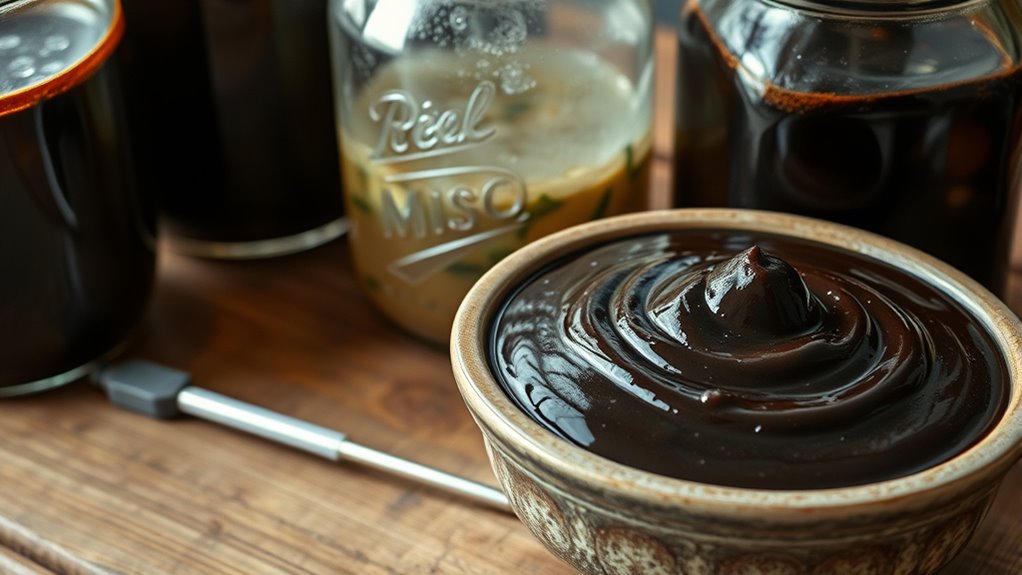

To successfully ferment miso at home, keep an eye on temperature and hygiene. Maintain a steady environment between 68°F to 86°F (20°C to 30°C), as cooler temps slow fermentation and warmer temps speed it up, affecting flavor and safety. Use clean, breathable vessels and regularly check for mold or off-odors. Controlling these factors helps create safe, tasting-perfect miso. Continual adjustments and careful monitoring will guide you toward flavorful, high-quality results.

Get kitchen staples and gadgets delivered free — and shop member deals
- Fast, free delivery on millions of items
- Access to Prime Big Deal Days deals on October 6–7
- Prime Video, Amazon Music and more included
Key Takeaways
- Maintain a consistent fermentation temperature between 68°F and 86°F to ensure proper microbial activity and flavor development.
- Use a reliable thermometer to monitor temperature regularly and adjust placement to avoid temperature fluctuations.
- Keep fermentation vessels in a dark, warm spot to promote even fermentation and prevent mold growth.
- Avoid temperature swings that can cause off-flavors or spoilage; stabilize environment conditions throughout fermentation.
- Watch for signs of contamination, such as mold or foul odors, especially if temperature exceeds recommended ranges.
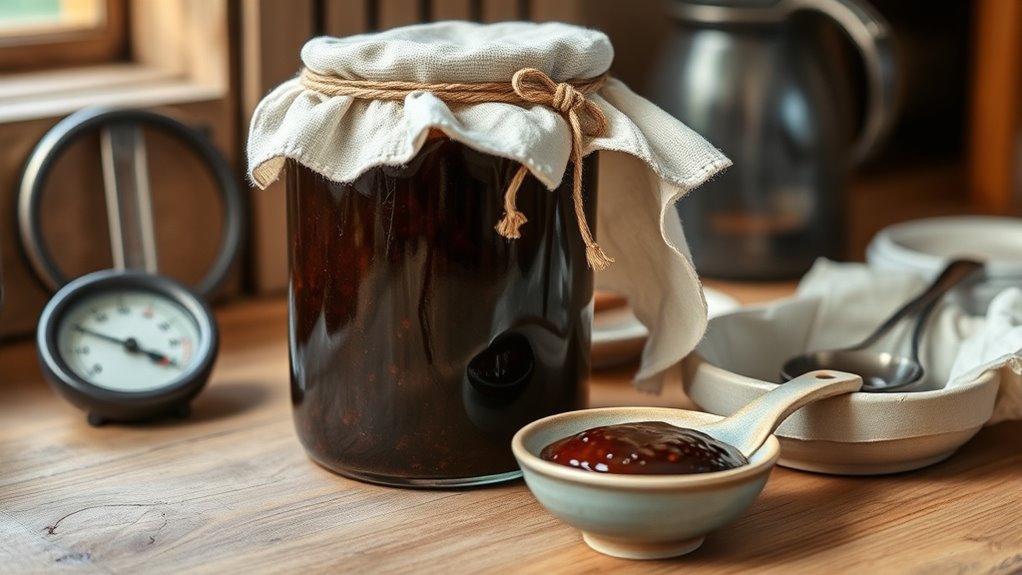
Have you ever wondered how to create rich, flavorful miso at home? The key lies in understanding the fermentation process and how to control the variables that influence it. When starting out, selecting the right starter cultures is essential because they provide the beneficial microorganisms needed to kickstart fermentation. You can find these cultures in commercial miso kits or from trusted suppliers specializing in fermentation starters. Once you have your cultures, choosing proper fermentation vessels becomes vital. Traditional wooden or ceramic containers are ideal because they allow for breathability and help maintain stable temperatures, but food-grade plastic or glass jars work well too. Just make certain these vessels are clean and free of contaminants before adding your ingredients.
The temperature at which you ferment your miso makes a significant difference in flavor development and safety. Ideally, you want to keep your fermentation environment between 68°F and 86°F (20°C to 30°C). Cooler temperatures slow down fermentation, resulting in a milder-tasting miso with a longer fermentation period. Warmer temperatures accelerate microbial activity, leading to a more robust flavor but increasing the risk of undesirable bacteria or mold if not carefully monitored. To maintain consistent temperatures, consider placing your fermentation vessels in a warm, dark spot away from direct sunlight. Using a thermometer is a good idea to keep an eye on the temperature, especially during hot or cold spells. Temperature control is crucial because it influences not only flavor but also the safety and overall success of your fermentation. Proper hygiene practices during preparation help prevent contamination and ensure a safe, high-quality product. Additionally, understanding the beneficial microorganisms involved in fermentation can help optimize the process and improve your miso’s flavor profile. Maintaining a clean environment also reduces the risk of contamination from unwanted microbes, which can be especially problematic at certain temperatures.
Controlling fermentation time also influences your miso’s flavor and texture. If you prefer a mild, sweet profile, ferment for about 6 to 8 weeks. For a deeper, more complex flavor, extend the fermentation to 12 months or longer. Keep in mind that during this period, temperature fluctuations can affect the fermentation rate. If it gets too warm, your miso might ferment too quickly, leading to off-flavors or spoilage. Conversely, if it’s too cold, fermentation may stall altogether. Regularly check your miso for signs of mold or undesirable odors, which could indicate temperature issues or contamination. If you spot any mold, it’s best to discard the batch to prevent health risks. Proper monitoring of fermentation environment conditions helps ensure a successful and safe outcome.
home miso fermentation starter culture
As an affiliate, we earn on qualifying purchases.
As an affiliate, we earn on qualifying purchases.
Frequently Asked Questions
Can I Use Non-Traditional Grains for Miso Fermentation?
You can definitely experiment with alternative grains for miso fermentation, especially if you’re seeking gluten-free options. Non-traditional grains like rice, millet, or chickpeas work well and can add unique flavors. Just keep in mind that different grains may require adjustments in fermentation time and temperature. Using these grains allows you to create personalized, gluten-free miso varieties while maintaining the traditional fermentation process.
How Do I Adjust Fermentation Time in Humid Climates?
Imagine a gentle breeze whispering through your miso jar. In humid climates, humidity effects can accelerate fermentation, making it feel like time is slipping away faster. To adjust fermentation duration, monitor the miso closely and taste regularly. You might need to shorten the fermentation period to prevent over-fermentation. Keep an eye on temperature and humidity levels, and consider using a cooler, less humid spot to slow the process if needed.
Is It Safe to Ferment Miso in Plastic Containers?
You might wonder if it’s safe to ferment miso in plastic containers. While plastic concerns are valid, food-grade plastic is generally safe for fermentation if you verify it’s BPA-free and non-reactive. However, container alternatives like glass or ceramic are often better because they don’t absorb odors or stains and are easier to clean. Using the right container helps prevent contamination and ensures your miso ferments safely and deliciously.
What Are Signs of Contamination During Fermentation?
You want to spot contamination during fermentation, so watch for signs of miso spoilage. Look for unusual mold growth, foul or sour odors, or slimy textures. If you notice any discoloration or bubbles that seem off, it could indicate contamination. These detection cues help you prevent unsafe miso from fermenting further. Trust your senses—early detection keeps your homemade miso safe and delicious!
Can I Speed up Miso Fermentation Without Compromising Quality?
You can’t rush the process without risking quality. If you want to speed up fermentation, increase the temperature slightly but keep it within a safe range to preserve quality. This accelerates fermentation speed, but watch for signs of over-fermentation or spoilage. Remember, haste makes waste—patience is key to developing rich, authentic flavors while maintaining safety and quality in your homemade miso.
Conclusion
Think of your miso as a quiet seed, waiting to grow with patience and care. When you master the right time and temperature, you nurture its transformation from simple ingredients into a rich, complex treasure. Each step is a gentle brushstroke in a living masterpiece. Trust the process, and your patience will bloom into deep, soulful flavor—proof that even in fermentation, time and temperature are the silent artists shaping your culinary journey.
Fall Picks
fall essentials
As an affiliate, we earn on qualifying purchases.