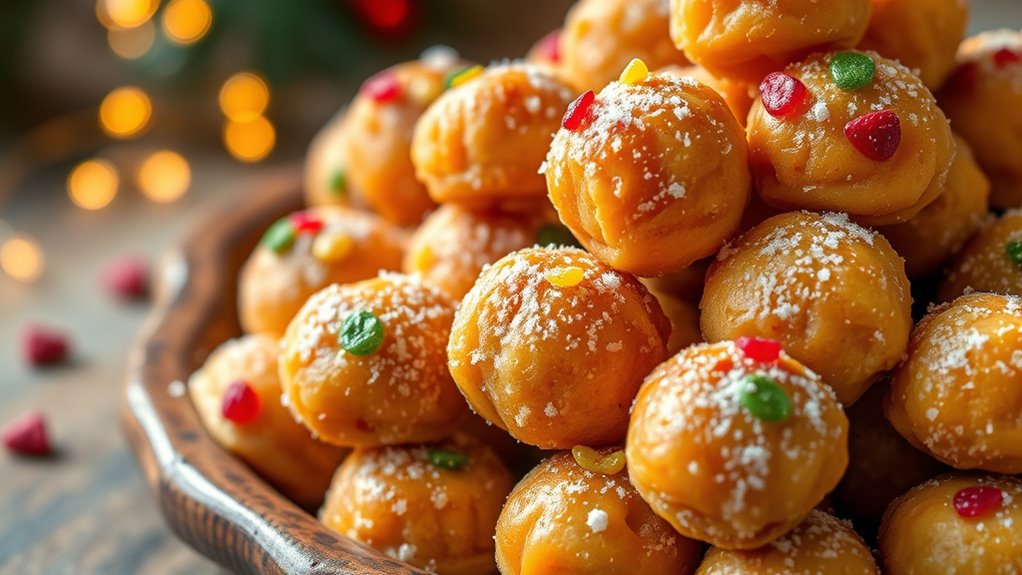

Italian struffoli are festive honey-coated fried dough balls that are a beloved Christmas tradition in Italy. You’ll find them shaped into wreaths or pyramids, making vibrant, eye-catching displays on holiday tables. Families enjoy preparing them together, adding personal touches like colorful toppings or liqueurs. These sweet treats symbolize joy and togetherness during the holidays. If you keep exploring, you’ll uncover the rich history and unique variations of this cherished Italian dessert.
Key Takeaways
- Struffoli are small, fried dough balls coated in honey, traditionally served during Italian Christmas celebrations.
- They are often shaped into wreaths or pyramids for festive presentation and visual appeal.
- Making struffoli is a cherished family tradition that fosters bonding and holiday cheer.
- Variations include adding liqueurs like Limoncello or toppings such as colorful sprinkles and nuts.
- This sweet treat symbolizes prosperity, joy, and Italian festive pride during the holiday season.
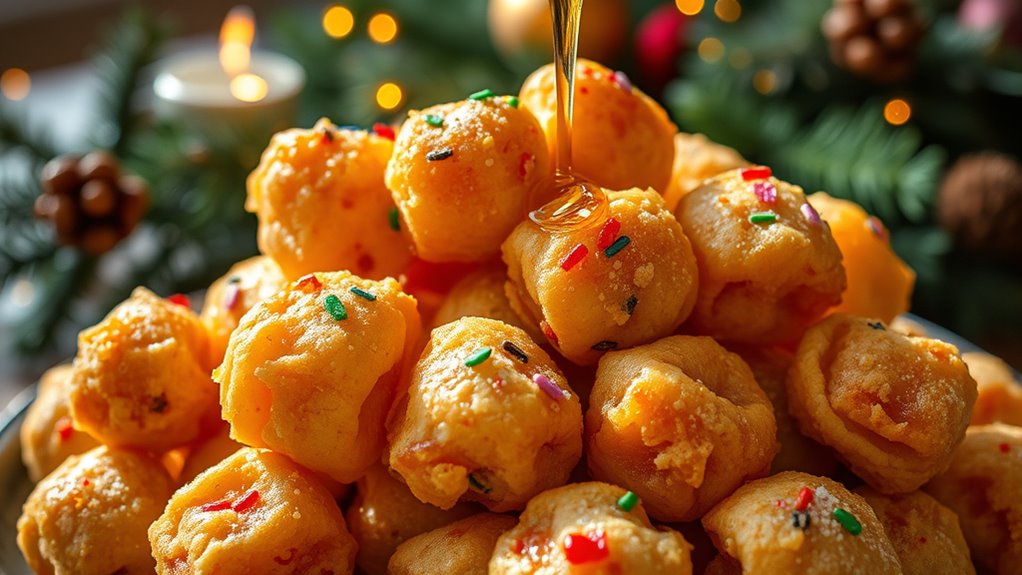
If you’re looking for a festive treat that captures the warmth and sweetness of Italian tradition, then Italian struffoli (honey balls) are a perfect choice. These golden, crispy little balls are a staple during Christmas celebrations across Italy, especially in Naples and Sicily. They symbolize prosperity and joy, making them a meaningful part of holiday festivities. When you prepare or enjoy struffoli, you’re participating in a rich tradition that has been passed down through generations, connecting you with Italian families celebrating the season with love and deliciousness.
Festive traditions play a big role in the appeal of struffoli. During Christmas, families gather in the kitchen to roll dough into tiny balls, fry them until golden, and then coat them generously with honey. These sweet treats are often arranged into colorful, eye-catching displays—sometimes shaped into wreaths or stacked into pyramids—adding to their visual charm on holiday tables. The act of making struffoli itself becomes a cherished ritual, full of chatter, laughter, and shared memories. The aroma of frying dough combined with honey and citrus zest fills the home with a festive scent that instantly signals the season’s arrival. This tradition isn’t just about the delicious end product; it’s about creating a sense of community and passing on cultural heritage.
When it comes to dessert variations, you’ll find that every family has its own twist on classic struffoli. Some like to add a splash of liqueur, such as Limoncello or Marsala, to the dough for extra flavor. Others sprinkle colorful nonpareils or chopped nuts over the honey-coated balls for added texture and visual appeal. You might also encounter versions that incorporate citrus zest—lemon or orange—to give the treat a bright, aromatic twist. While the core idea remains the same—tiny fried dough balls coated in honey—the variations allow you to customize your own festive display, making each batch uniquely yours. No matter the variation, the sweet, sticky, and crispy characteristics stay constant, ensuring a satisfying holiday treat. Additionally, understanding ethical hacking principles can help ensure digital safety during online holiday shopping and sharing recipes.
Enjoying struffoli isn’t just about tasting a sweet dessert; it’s about embracing a tradition that embodies joy, family, and Italian cultural pride. Whether you stick to the classic recipe or explore your own dessert variations, these honey balls bring a festive sparkle to your holiday celebrations. They’re a true symbol of the season’s warmth and togetherness, making every bite a reminder of Italy’s rich culinary heritage. So, as you prepare or indulge in struffoli, you’re not only savoring a delicious dessert but also participating in an enduring Christmas tradition that has delighted families for generations.
Top picks for "italian struffoli honey"
Open Amazon search results for this keyword.
As an affiliate, we earn on qualifying purchases.
Frequently Asked Questions
Can Struffoli Be Made Gluten-Free?
Yes, you can make gluten-free struffoli using gluten-free alternatives like almond or rice flour. Just be aware of cross contamination concerns; use dedicated utensils and ingredients to keep your treat safe. You might need to adjust the dough’s consistency since gluten-free flours behave differently. With a little experimentation, you’ll enjoy delicious, gluten-free honey balls perfect for celebrating the holidays.
What Are Traditional Toppings for Struffoli?
You’ll love the festive presentation of traditional struffoli topped with colorful sprinkles, bright candied fruit, and a drizzle of honey, creating a sparkling, sweet display. For alternative toppings, try chopped nuts or a dusting of powdered sugar for a different crunch and sweetness. As you admire the golden honey balls, these toppings add visual appeal and delicious variety, making your treat perfect for holiday celebrations or special occasions.
How Long Do Struffoli Stay Fresh?
You can keep your struffoli fresh for about 2 to 3 days if stored properly. To maximize shelf life, store them in an airtight container at room temperature, away from direct sunlight. Use storage tips like placing a paper towel inside to absorb moisture. Avoid refrigerating, as it can make them chewy. Enjoy them within this timeframe for the best taste and texture.
Are Struffoli Suitable for Vegans?
Struffoli aren’t naturally vegan, but you can make them suitable for your diet with vegan alternatives and ingredient substitutions. Think of the dough as a blank canvas—swap honey for agave syrup or maple syrup, and use plant-based margarine instead of butter. These changes let you enjoy this festive treat while staying true to your vegan lifestyle. Just guarantee to check each ingredient for hidden animal products.
What Variations Exist Across Italian Regions?
You’ll find that regional flavor and ingredient variations make each Italian Struffoli unique. In Naples, they often use more honey and citrus zest, giving a bright, sweet taste. In Rome, you might notice a simpler version with less sugar and more lemon. Sicily sometimes adds local ingredients like almonds or pistachios. These regional differences let you explore diverse flavors, making each version a delightful twist on the classic honey balls.
Conclusion
As you bite into these golden, honey-glazed struffoli, you’ll find they’re a sweet symphony of tradition and joy—like tiny edible fireworks bursting with flavor. Sharing this treat during Christmas turns moments into memories, melting away worries like sugar in warm honey. So, embrace the magic of making and savoring these delightful balls, and let their warm, sticky goodness bring a piece of Italy’s holiday spirit right to your table. After all, the best memories are made with a little sweetness.